When Do Projects Need Furniture Mockups?
A finish sample can look right on a desk and still fail on a rooftop. A spec sheet can confirm dimensions and still miss how a lounge chair sits beside a pool edge, under direct sun, or against a stone paver with heavy visual texture. That is usually when the real question shows up: when do projects need furniture mockups? For commercial, hospitality, and multi-unit residential work, the answer is earlier and more often than many teams expect.
Furniture mockups are not just a design-stage extra. They are a control point. They help architects, designers, procurement teams, and owners confirm that what was approved on paper will perform in the actual setting, at the required quality level, and at the scale the project demands. On straightforward orders with standard products and no unusual site conditions, a mockup may not be necessary. On projects with customization, multiple stakeholders, tight brand standards, or high replacement risk, it becomes a practical step in protecting schedule, budget, and final presentation.
When do projects need furniture mockups most?
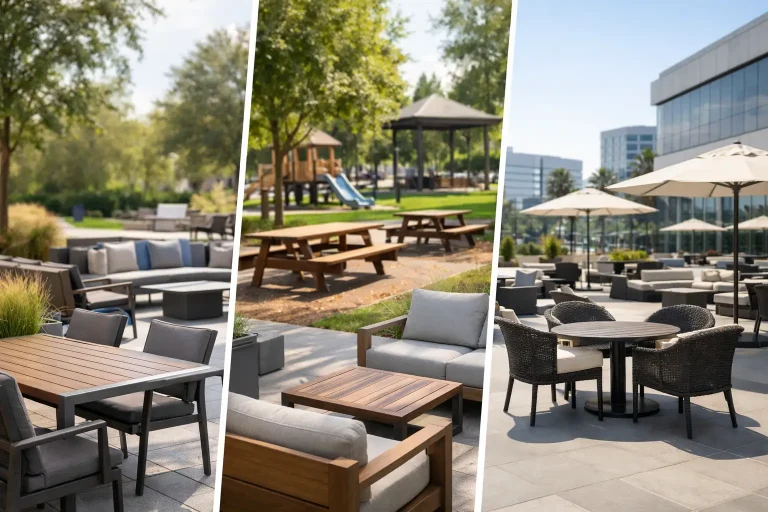
Projects typically need furniture mockups when approval risk is higher than the cost and time of producing a sample set. That includes hospitality venues, branded developments, luxury residential compounds, and outdoor commercial environments where guest experience and visual consistency matter. If one wrong decision could trigger a broad respecification, mockups are worth serious attention.
The strongest case appears when teams are approving custom dimensions, mixed materials, new finish combinations, or project-specific construction details. A 3D drawing can show intent, but it cannot fully replicate how woven texture reads in daylight, how cushion scale changes the visual weight of a dining chair, or how an arm height feels in a restaurant terrace with long guest dwell times. Mockups close that gap between design intent and physical reality.
They also become important when several decision-makers are involved. Owners may focus on brand alignment, designers on proportion and finish, operators on maintenance, and procurement on repeatability. A mockup gives every stakeholder one physical reference point instead of four separate interpretations.
Mockups make the biggest difference in outdoor projects
Outdoor furniture projects carry more variables than indoor installations. Sun exposure, moisture, salt air, drainage, heat gain, and cleaning requirements all affect product selection and approval. That is why outdoor environments often benefit more from mockups than interior spaces.
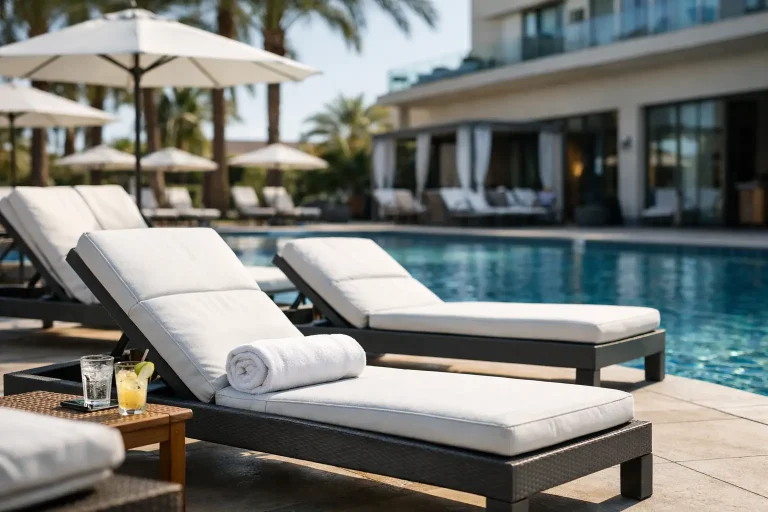
Poolside, rooftop, beachfront, and open-air dining projects especially benefit from physical review. Materials that appear balanced in a showroom can shift outdoors. A frame color may look cooler against water, a rope weave may read heavier under strong sun, and cushion thickness may feel oversized once grouped across a compact deck plan. These are not minor styling questions. They affect guest comfort, circulation, and the visual discipline of the entire property.
For contract-grade outdoor programs, mockups also help verify build quality in a more demanding use case. Teams can assess weld consistency, weave tension, finish application, drainage behavior, cushion recovery, and the practical durability of high-touch components before placing a large production order.
Where furniture mockups reduce the most risk
The value of a mockup rises with order size and complexity. A 20-chair order for a single terrace may be managed through drawings, swatches, and standard product references. A rollout across villas, restaurants, clubhouses, and shared amenities is different. Once quantities scale, small specification errors become expensive.
Hospitality projects are a prime example. A resort may need lounge seating, dining sets, pool furniture, shade solutions, and accessories to work as one coordinated language across multiple zones. If one collection reads too residential, one finish feels off-brand, or one cushion profile underperforms operationally, the issue affects more than appearance. It affects guest perception and long-term service efficiency.
Developers and procurement teams also use mockups to test repeatability. One approved sample should represent what production can reliably deliver across the full quantity. This is where manufacturing control matters. A supplier with in-house design support, material oversight, and production discipline can treat the mockup as a production benchmark rather than just a presentation piece.
The projects that usually need mockups
Some projects can move without mockups. Others should not. In practice, furniture mockups are most useful for custom hospitality schemes, outdoor amenity packages for residential developments, branded food and beverage terraces, resort pool decks, and any project with nonstandard materials or bespoke dimensions.
They are also strongly recommended when the furniture must integrate with architecture that is already highly defined. If stone, metalwork, lighting, and landscaping are tightly curated, furniture becomes part of the architectural finish package. At that point, relying only on renderings is a weak control method.
The same applies to projects with overseas approvals or remote stakeholders. Photos, finish chips, and technical drawings help, but they do not always create alignment. A physical mockup gives teams a shared standard before mass production begins.
When a mockup may not be necessary
Not every project needs one. If the order uses standard catalog items with no customization, the site conditions are typical, and the buyer has already approved the product line on past projects, a mockup may add time without enough return. Experienced procurement teams often know when prior performance and existing references are sufficient.
Budget and timeline also matter. If the project is urgent and the specification is low risk, it may be more efficient to proceed with documented approvals, material swatches, and detailed 3D drawings. The key is to be honest about what is actually known versus what is being assumed. Skipping a mockup only works when the unknowns are limited.
What a furniture mockup should confirm
A useful mockup does more than prove the item exists. It should confirm proportion, comfort, finish, color, construction quality, material compatibility, and the relationship between the furniture and the site. In outdoor settings, it should also help assess exposure performance and operational suitability.
For designers, that often means reviewing scale, silhouette, and visual balance within the actual project palette. For project managers and procurement teams, it means confirming that what was approved can be produced consistently, packed correctly, and delivered on time. For operators, it may mean testing cleanability, cushion handling, and real-world usability.
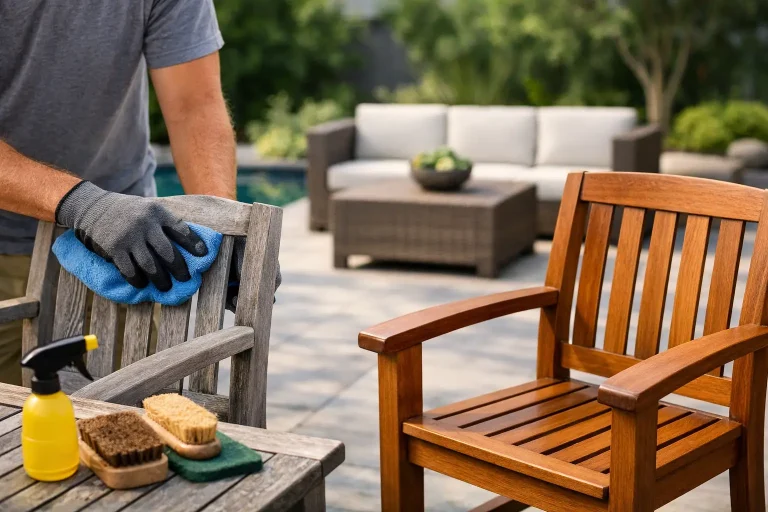
A mockup that only gets photographed and signed off misses part of its purpose. The most effective reviews involve actual use. Sit in the chair. Move the dining armchair under the table. Check spacing around loungers. Evaluate finish appearance at different times of day. The closer the review is to live operating conditions, the better the approval quality.
How mockups support faster approvals, not slower ones
Some teams avoid mockups because they see them as a schedule delay. In reality, they often shorten the overall approval cycle by preventing redesigns after production starts. A single early correction is cheaper and faster than a late-field adjustment across hundreds of pieces.
They also reduce friction between stakeholders. Instead of debating a rendering, teams can review one real sample and make decisions with confidence. That is especially useful in projects where design, procurement, and operations have different priorities. The mockup becomes a working approval tool, not a creative detour.
This is where structured supplier support matters. A partner that can align 3D drawings, sample reviews, finish options, and production standards under one process gives buyers more control. For large outdoor furnishing programs, that level of coordination is not a luxury. It is part of reliable project execution. PNZ Space Global approaches mockups this way, as one checkpoint within a larger system that connects design intent to manufacturing and delivery.
A practical way to decide
If the project includes custom product development, multiple approval layers, demanding outdoor exposure, or enough quantity that one mistake will multiply, use a mockup. If the products are standard, the application is familiar, and the buyer already trusts the specification from prior work, a mockup may be optional.
The right question is not whether mockups are good or bad for every project. It is whether the project carries enough visual, operational, or financial risk to justify a physical approval stage. In high-value environments, they usually do.
The closer furniture gets to being part of the brand experience, the less room there is for guesswork. A well-timed mockup gives the team something better than confidence. It gives them proof before the full order moves.