Aluminum vs Teak Outdoor Furniture
A rooftop lounge in full sun asks very different things from furniture than a shaded villa terrace or a beachfront restaurant. That is why the aluminum vs teak outdoor furniture decision should never start with appearance alone. For procurement teams, designers, and hospitality operators, the better question is simpler: which material performs better for the site, the use case, and the maintenance model behind it?
Both materials are proven choices in outdoor environments. Both can deliver long service life when properly specified. But they solve different project problems. Aluminum is typically selected for weight efficiency, low maintenance, and streamlined modern styling. Teak is chosen for its natural character, strong visual warmth, and long-term weather resistance. The right answer depends on traffic level, exposure, brand positioning, and how much upkeep a property is realistically prepared to manage.
Aluminum vs teak outdoor furniture for project use
In commercial and large residential projects, material choice affects more than aesthetics. It influences freight efficiency, installation speed, replacement planning, cleaning routines, and the consistency of the final presentation across multiple spaces.
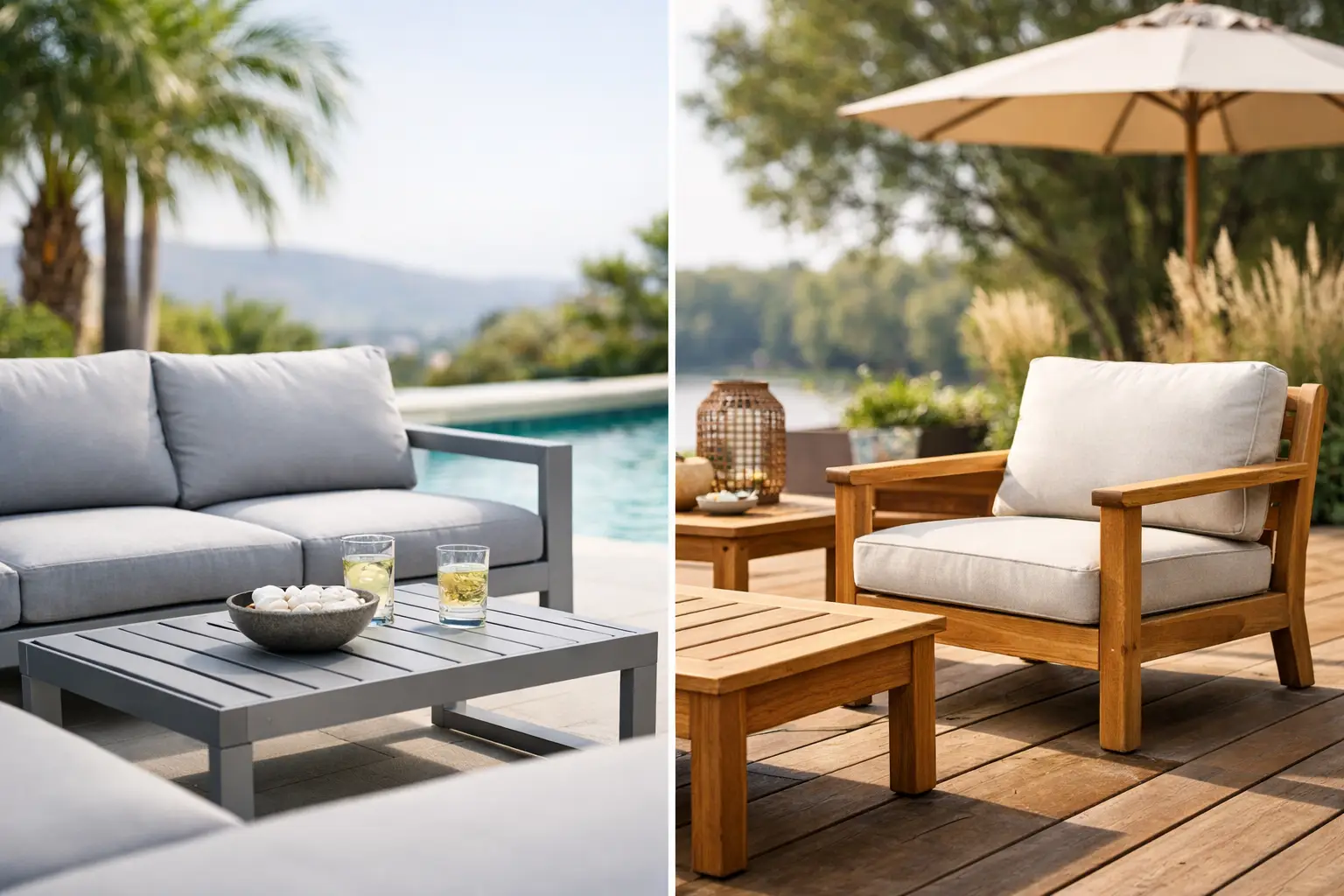
Aluminum is often the practical choice when a project requires larger quantities, repeatable finishes, and easier handling on site. It is lightweight compared with solid wood, which can simplify rooftop installations, furniture resets, and seasonal layout changes. Powder-coated aluminum also supports a wide range of finishes, from matte black and sand tones to custom colors that align with a brand or design scheme.
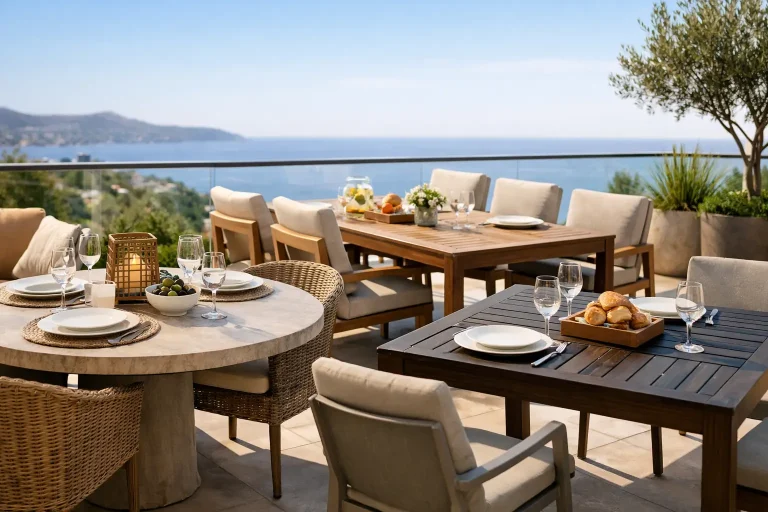
Teak plays a different role. It brings a premium, organic look that many hospitality and high-end residential projects want in dining terraces, pool decks, and private outdoor lounges. It reads as warm and established rather than purely minimal. For designers building a softer, more natural material palette, teak can anchor the entire setting.
Neither material is universally better. The better choice is the one that matches operational reality as closely as it matches the design intent.
Durability in sun, heat, and moisture
Outdoor performance starts with exposure. In hot climates, direct UV, temperature swings, pool chemicals, humidity, and airborne salt all matter.
Aluminum does not rot, crack, or absorb moisture in the way wood can. That makes it highly dependable in demanding outdoor conditions, especially when the frame is engineered for exterior use and finished with a high-quality powder coat. For poolside and coastal projects, aluminum is frequently specified because it handles wet conditions well and dries quickly. That said, finish quality matters. Lower-grade coatings can chalk, fade, or chip over time, particularly in harsh sun or high-use commercial settings.
Teak is one of the most durable hardwoods used in outdoor furniture, largely because of its natural oils and dense grain. It stands up well to moisture and can last for many years outdoors. This is why it remains a staple in luxury hospitality and marine-adjacent environments. But teak is not maintenance-free. It weathers visibly, and that weathering is either a benefit or a drawback depending on the client’s expectations.
If a project team wants teak to retain its original honey-brown tone, the furniture will need periodic care. If the client is comfortable with a silver-gray patina, maintenance becomes less intensive, but the visual outcome changes. That distinction should be clarified before approval, not after installation.
What high-traffic settings change
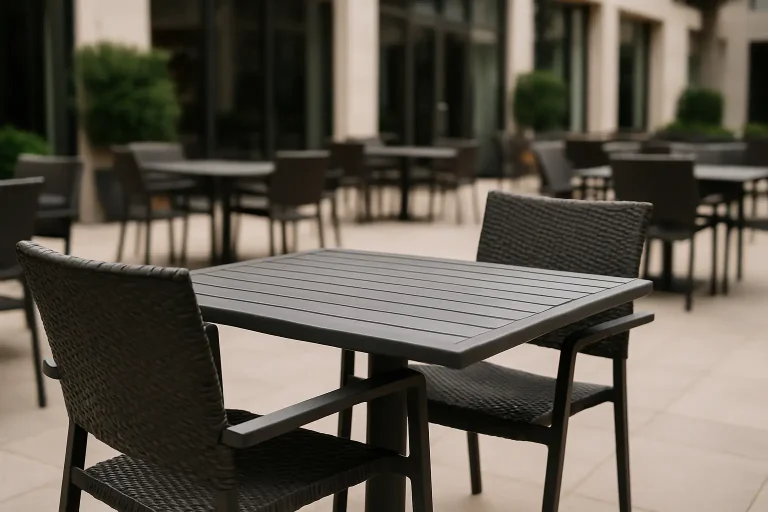
In a hotel terrace, restaurant patio, or shared amenity deck, furniture sees daily movement, frequent cleaning, and a higher risk of impact damage. Aluminum tends to perform well here because it is easier for staff to reposition and simpler to maintain at scale. Teak remains viable, but the property should be prepared for a more active care plan if appearance consistency is a priority across dozens or hundreds of pieces.
Maintenance and lifecycle cost
Initial cost gets attention, but lifecycle cost is usually the smarter metric.
Aluminum generally offers a lower-maintenance path. Routine cleaning usually involves mild soap, water, and periodic inspection of the finish and hardware. For operators managing multiple locations or large inventory counts, that maintenance profile can reduce labor over time. It also helps keep presentation consistent across outdoor dining, lounge, and poolside categories.
Teak requires a more deliberate maintenance decision. Left untreated, it will age naturally. Many clients appreciate that look. Others do not, especially in projects where furniture must keep a uniform, newly installed appearance for brand reasons. In those cases, teak may need cleaning, sealing, or oiling based on the finish strategy and exposure level. That adds labor and planning, particularly in hospitality environments with strict presentation standards.
This is where the aluminum vs teak outdoor furniture question becomes a budgeting exercise as much as a design one. If the operations team has limited bandwidth for upkeep, aluminum often wins on total cost of ownership. If the property can support the maintenance plan and wants the visual depth that only real wood provides, teak may justify the added effort.
Style, brand fit, and guest perception
Material selection sends a message before a guest ever sits down.
Aluminum supports crisp profiles, slimmer frames, and a more contemporary visual language. It works well in modern rooftops, urban hospitality settings, and commercial developments where clean lines and repeatable detailing matter. It also pairs easily with sling, rope, upholstered cushions, stone-look tabletops, and mixed-material collections.
Teak introduces warmth and texture that aluminum cannot fully replicate. It is especially effective in resort environments, villa projects, wellness spaces, and premium dining settings where the design goal is relaxed luxury rather than sharp minimalism. Even when used in simple forms, teak tends to feel substantial and elevated.
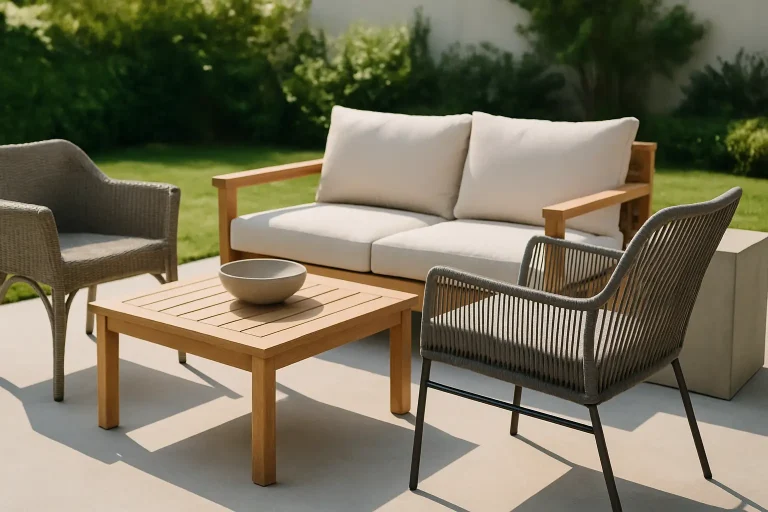
For many project teams, the answer is not either-or. Mixed-material collections often provide the most balanced result, such as powder-coated aluminum frames with teak arm caps or teak-accent dining pieces paired with aluminum lounge seating. This approach can preserve the warmth of wood while keeping the broader furniture package easier to manage.
When mixed materials make more sense
A project might use aluminum for pool chaises and stackable dining chairs, then specify teak for feature lounges or VIP areas. That kind of zoning supports performance where traffic is highest and adds richer material character where the guest experience is more curated.
Weight, logistics, and installation efficiency
For large projects, furniture material affects more than the final look. It affects the path to completion.
Aluminum is easier to handle, move, and stage. On rooftop projects, upper-floor terraces, and multi-phase installations, lighter furniture can reduce handling strain and speed up placement. It can also simplify future reconfiguration when operators adjust layouts for events or seasonal service changes.
Teak is heavier and often more labor-intensive to move, but that weight can also be an advantage in windy environments where furniture stability matters. The trade-off is straightforward: more substance, more handling effort.
From a procurement standpoint, consistency is critical. Commercial buyers need the same finish quality, build quality, and dimensional accuracy across an entire order, often spanning lounge, dining, and poolside categories. That is where manufacturing control matters as much as material choice. Suppliers with integrated production, finish oversight, and project support can help reduce costly surprises during approval and installation.
Which material is right for your project?
Choose aluminum when low maintenance, lighter weight, and modern repeatability matter most. It is often the stronger fit for high-volume hospitality, rooftop applications, pool environments, and projects where staff will move furniture frequently.
Choose teak when the project calls for natural warmth, premium visual character, and a hospitality or residential setting that benefits from a more organic finish story. It is especially well suited to luxury villas, resort dining, and outdoor spaces designed around texture and permanence.
If the brief includes both performance pressure and a design-led guest experience, a blended specification may be the smartest route. That is often how complex projects get the best result – using each material where it performs best.
At PNZ Space, this is the point where design intent and operational planning should meet. Material swatches, 3D drawings, mock-up approvals, and category-wide coordination across lounge, dining, and pool furniture help teams specify with fewer revisions and better long-term outcomes.
The best outdoor furniture choice is rarely the one that looks strongest in a sample alone. It is the one that still works after installation, through daily use, and across the full life of the project.