Pool Deck Furniture Hotels Can Depend On
A pool deck rarely fails because the design is bad. It fails because the furniture can’t keep up.
By the time a hotel hits peak season, loungers have been dragged across pavers a thousand times, towels and sunscreen have done their quiet damage, and the maintenance team has learned exactly which finishes are honest and which ones only look good on delivery day. Specifying poolside furniture is procurement under pressure: guest experience is public, replacement is expensive, and downtime is visible.
This guide is written for hospitality operators, designers, and procurement teams who need poolside furniture for hotels that performs in heat, UV, and high-traffic environments while still looking intentional and brand-right.
What “contract-grade” really means at the pool
At the pool, contract-grade is less about a label and more about predictable behavior under stress. You are dealing with constant UV exposure, rapid temperature swings, chlorine splash, salt air in coastal markets, and the most punishing factor of all: guests who treat everything like it is meant to be moved.
A true contract-grade pool collection should maintain structural stability, resist fading, and tolerate frequent cleaning without turning chalky, sticky, or corroded. It also needs to be serviceable. If you cannot replace glides, slings, cushions, or hardware without taking the entire unit out of circulation, you are building future costs into today’s purchase order.
The procurement trade-off is straightforward. Lightweight pieces are easier for staff to reset and for guests to move, but they can become wind liabilities and take more impact damage. Heavier builds reduce shifting and feel more premium, yet they increase labor friction for nightly staging and deep cleaning. The right answer depends on your wind exposure, staffing plan, and how tightly you manage the deck layout.
Poolside furniture for hotels: start with the layout and operations
Most spec problems begin when furniture is selected before the deck plan is locked. Pool environments are circulation environments: guests move from elevator to towel station to chair to bar to water, often in wet footwear. If the furniture footprint is too deep, too wide, or too “loungey” for the clearances, you will see constant shifting, blocked paths, and a deck that looks messy by noon.
Start with how the hotel intends to run the space.
If you are doing assigned seating or cabana service, you can justify deeper daybeds, larger side tables, and more layered zones because staff will maintain order. If it is first-come, first-served, prioritize pieces that reset quickly: stackable or nestable options, fewer loose parts, and consistent footprints that staff can align in minutes.
Also decide what “capacity” really means. A 120-key hotel does not necessarily need 120 loungers. It needs the right mix of loungers, upright chairs for food and beverage, and shade-supported seating so guests are not forced to choose between comfort and sun exposure.
Materials that survive heat, UV, and chemicals
Pool furniture materials are not interchangeable. They may look similar at specification stage and behave completely differently after one summer.
Aluminum frames
Powder-coated aluminum is a strong baseline for most hotel pools because it is corrosion-resistant, relatively lightweight, and clean-lined for modern properties. The details matter: look for thicker wall sections, proper weld finishing, and a powder coat system that is specified for outdoor UV exposure. In coastal or high-humidity environments, the quality of pretreatment under the coating is what separates stable finishes from blistering and underfilm corrosion.
Aluminum can read “cool” visually, which is an advantage for contemporary decks. The caution is surface temperature. Dark colors can become hot to the touch in direct sun, especially on arm caps and edges. If your brand palette is charcoal or black, consider textured finishes, lighter tones on touch points, or added cushions where skin contact is expected.
Teak and wood looks
Teak is a proven hospitality material when it is real teak with proper joinery and realistic expectations. It will weather, and that weathering is often desirable. The operational question is whether your team will oil and maintain it, or whether you want a consistent silver patina with simple cleaning. If your brand standard requires “always golden,” plan for maintenance labor and product, not just furniture cost.
If you are considering faux-wood aluminum (wood-look powder coat) for uniformity and reduced upkeep, it can be an excellent choice, but verify abrasion resistance. Pool decks are hard on edges.
Resin, woven, and polymer options
High-quality outdoor resin and engineered polymers can be practical on pool decks because they are easy to clean, resistant to moisture, and often stackable. The risk is selecting low-grade resin that becomes brittle or fades unevenly. If the property has strong sun and high surface temperatures, demand UV-stabilized formulations and check real sample behavior after exposure.
Woven looks can work beautifully for resort styling, but they require careful selection. Some weaves hold grit and sunscreen residue and can become a maintenance complaint. If you go woven, prioritize tight, cleanable weaves and confirm how the product is cleaned without damaging the color.
Slings and upholstery
For loungers and dining chairs near the pool, sling seating can be a smart operational choice. It dries fast, avoids saturated cushions, and reduces laundry and storage needs. The trade-off is comfort perception. Some guests expect cushions, especially in luxury segments. A hybrid approach often wins: sling loungers with optional cushions for premium zones or cabanas.
If you do cushions, specify outdoor foam, quick-dry constructions, and fabrics designed for UV and chlorine exposure. Also decide whether cushions will live outside or be stored daily. “Store daily” sounds disciplined until you count the labor and storage footprint.
The core product mix that keeps a pool deck functional
Pool decks perform best when the furniture mix matches how guests actually use the space. Over-indexing on any single item type usually creates operational issues.
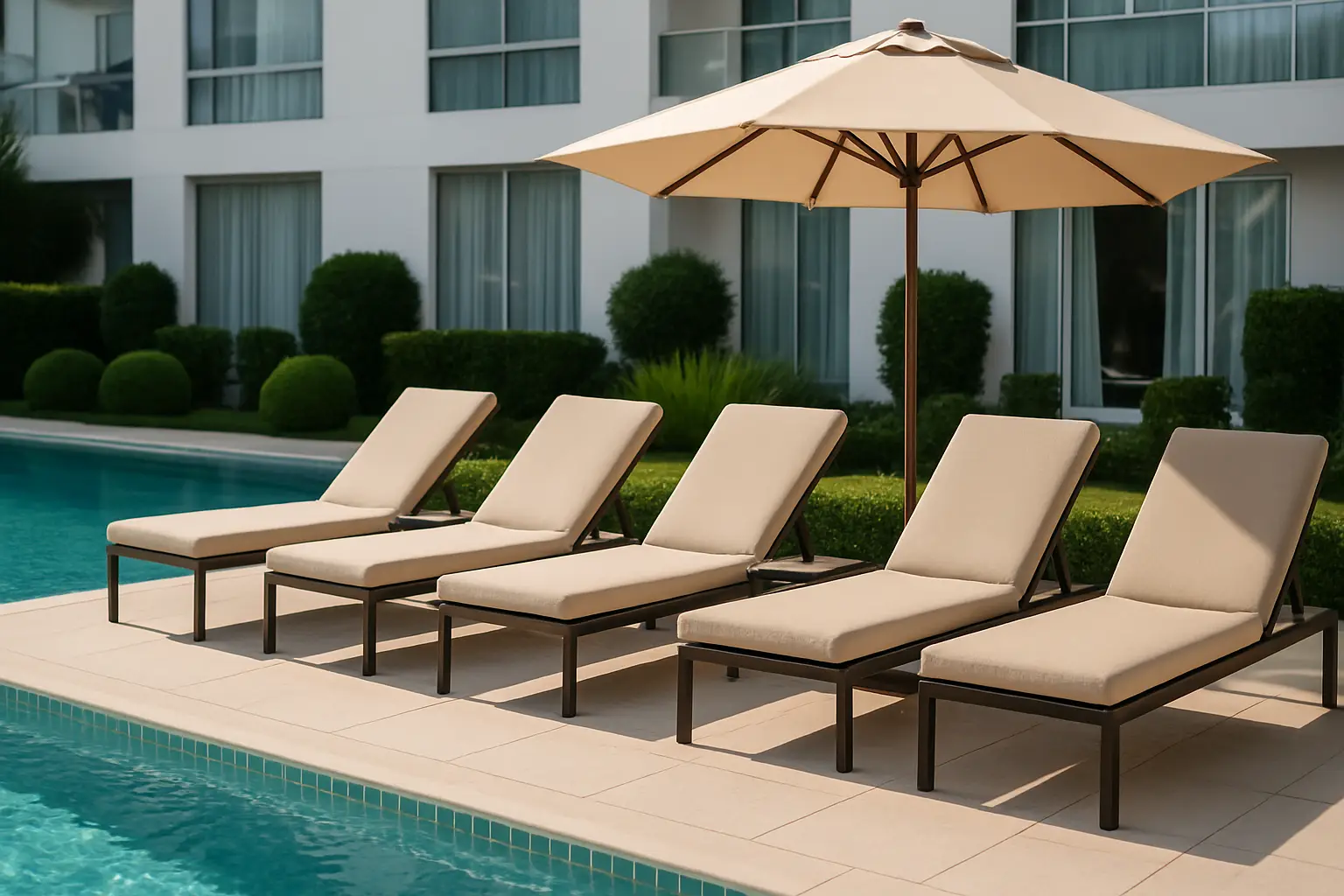
Loungers are the workhorse. Prioritize models with replaceable parts, stable rear legs, and back adjustments that lock cleanly. Add side tables that are heavy enough not to tip when guests set down drinks, but not so heavy that staff avoids moving them.
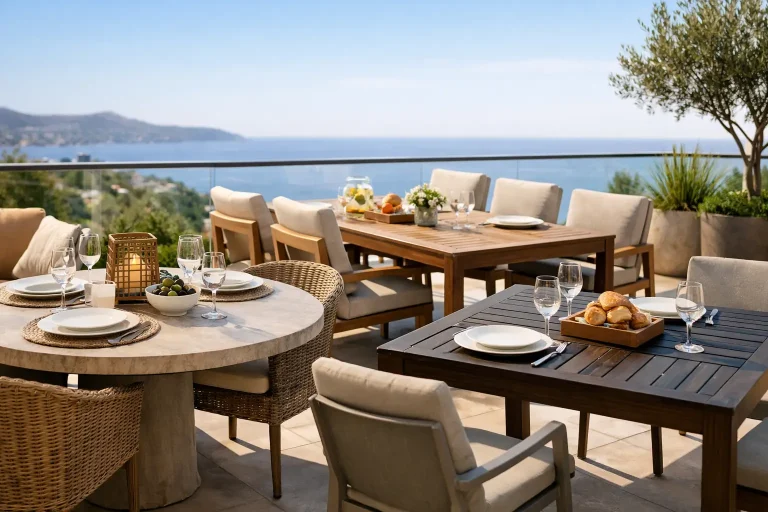
Dining-height seating matters if you serve food poolside. A deck with only loungers pushes guests to balance plates on their lap or abandon the area for indoor dining. A small number of two-tops and four-tops near the bar can increase spend and reduce mess.
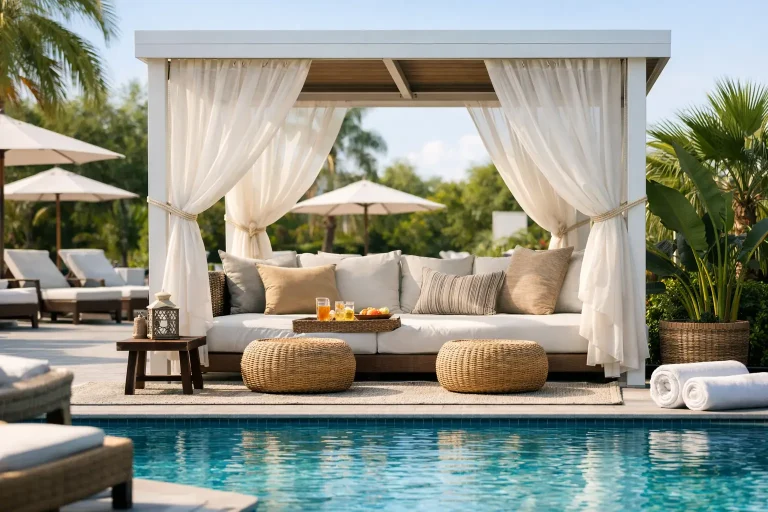
Daybeds and cabanas are revenue drivers when service and reservation systems support them. If they become unassigned “free-for-all” pieces, they often create guest friction. If you plan for cabanas, also plan for shade durability, curtain fabric performance, and replacement pathways.
Shade is not an accessory in many US markets – it is a compliance and comfort requirement. Umbrellas, pergolas, and shade structures should be specified with wind conditions in mind and paired with bases that match the deck surface and staffing reality.
Details that determine replacement cycles
Two loungers can look identical in a render and age at completely different rates. The difference is usually in the small, unglamorous details.
Glides and feet should be replaceable and appropriate for your deck surface. If you have pavers or textured stone, choose glides that resist abrasion and reduce noise.
Hardware should be corrosion-resistant and consistent. Mixed metals can create galvanic corrosion in humid environments. It is not just about stainless vs not – it is about the full system.
Stackability is useful, but only if the product is designed for it. Poorly stacked furniture is where frames get scratched, powder coat gets compromised, and you start the corrosion clock.
Finally, confirm that you can reorder matching items. Hotel pools rarely need a full replacement at once. You need continuity so you can replenish after damage, add capacity, or refresh zones without a visible patchwork.
Procurement and project execution: how to reduce risk
For hospitality, furniture selection is only half the project. The other half is execution: approvals, lead times, packaging, delivery sequencing, and installation.
Mock-ups are worth the time. A single approved lounger, side table, and cushion set tells you more than any spec sheet. You can evaluate comfort, height, touch temperature, and color accuracy in real light.
If you are running a multi-site rollout or have an opening date that cannot move, insist on a production plan that accounts for finish batching and shipment coordination. This is where vertically integrated suppliers tend to reduce variability because design, manufacturing, and distribution are managed under one operational umbrella.
PNZ Space Global supports pool deck projects with contract-grade outdoor collections plus 3D drawings, mock-up approvals, and coordinated delivery for hospitality timelines through its vertically integrated model – details at https://www.pnzspace.com.
Spec smarter for the guest experience you want
The best pool deck furniture choices feel obvious to guests. The lounger is comfortable without looking bulky. The table is exactly where your hand expects it to be. The finishes look calm and consistent from a distance, but up close they feel durable, not delicate.
That “effortless” look is usually the result of hard decisions: choosing materials that match your climate, selecting a product mix that matches service style, and insisting on details that protect replacement cycles. If you treat poolside furniture as an operational system, not a decor moment, you end up with a deck that stays photo-ready long after opening weekend – and your team spends less time fixing problems that were designed in.