Outdoor Lounge Seating That Performs at Resorts
A resort’s outdoor lounge isn’t “patio furniture.” It’s revenue per square foot, guest dwell time, brand photography, and a maintenance schedule that never stops. If the seating reads residential or ages unevenly, guests notice. If it’s overbuilt but uncomfortable, they leave early. Specifying outdoor lounge seating for resorts is a performance decision first, and a styling decision second – and the best results come when procurement, design, and operations are aligned from day one.
Start with the resort’s lounge behaviors, not a mood board
Resort lounge zones typically have three different jobs, even when they sit on the same deck.
First is the “arrival linger” area: lobby-adjacent terraces, waterfront promenades, and check-in sightlines where a guest sits for 10-20 minutes, often with luggage nearby. This zone benefits from upright comfort, clean circulation, and pieces that look premium from a distance.
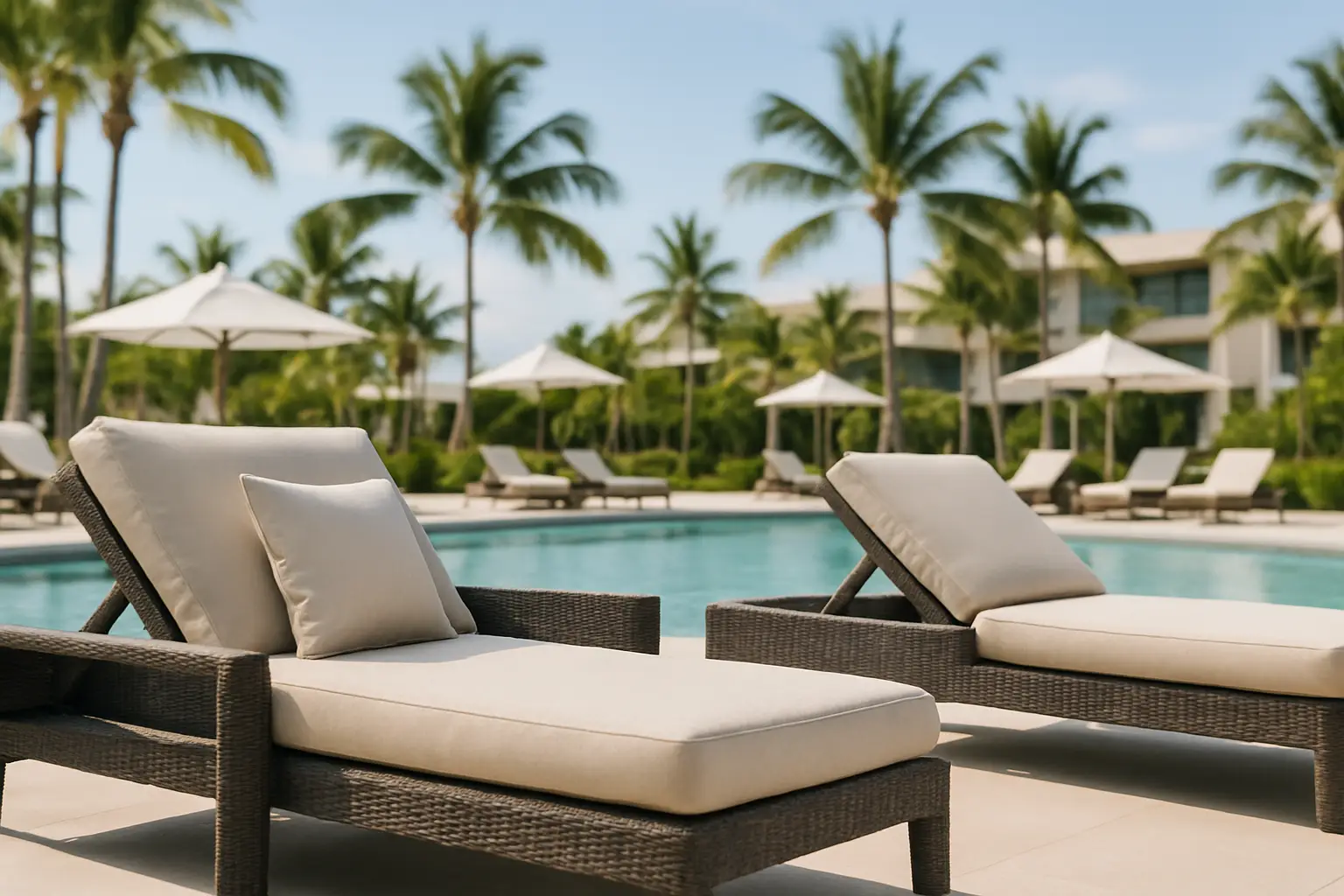
Second is the “long-stay” area: pool decks, beach clubs, cabana rings, and daybed lawns. Here the guest is committing for hours. Cushion depth, adjustability, and shade pairing matter as much as aesthetics.
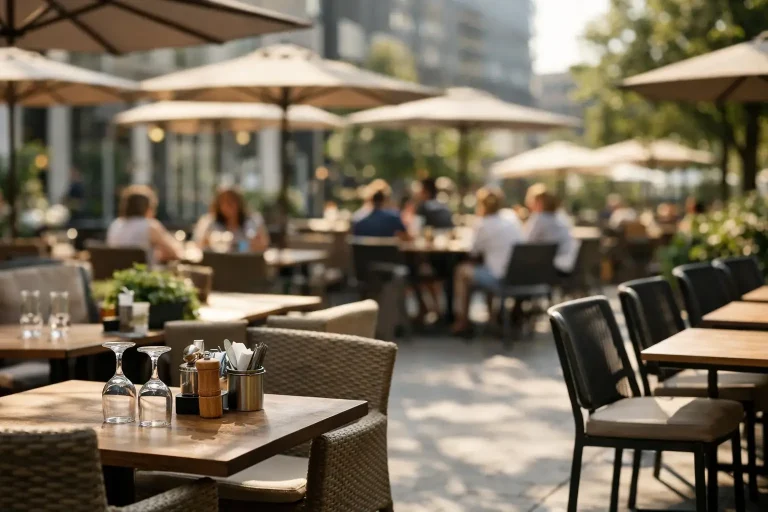
Third is the “social spend” area: bar terraces and dining-adjacent lounges where groups reorder and servers need access. This is where modular configurations and table heights quietly make or break service.
When you define the behavioral intent per zone, the furniture taxonomy gets clearer: loungers and daybeds where guests stay, club chairs and sofas where they socialize, and mixed-height tables that support food and beverage without forcing awkward posture.
Layouts that keep service moving and photos clean
Outdoor lounge seating fails most often in the space plan, not the product. The deck looks full on opening day, then operations starts pulling pieces apart to create pathways, and the design intent disappears.
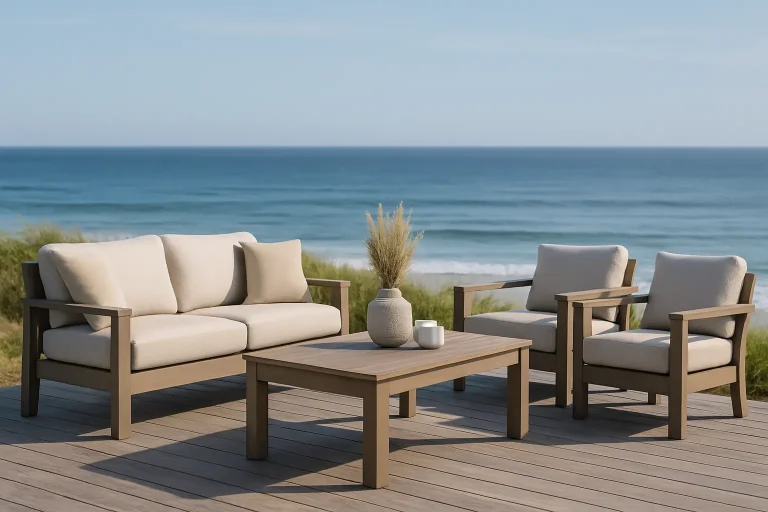
For high-turn areas, specify seating “islands” that can operate as complete settings – a sofa or pair of lounge chairs with a central coffee table, plus a side table on the service side. That last detail reduces staff reaching across guests and protects cushions from spills.
For pool decks, plan for sightlines and towel-drop behavior. Guests place towels and bags where you don’t want them. Giving them a clear landing zone – a small side table or integrated shelf – keeps pathways cleaner and reduces the temptation to drag loungers into fire lanes.
For daybeds and cabanas, treat them as micro-rooms. A daybed without an adjacent surface becomes a maintenance issue fast. Include at least one stable side table per bed and confirm that umbrella bases or shade structures don’t conflict with recline mechanisms.
If you’re managing multiple seating types, standardize footprints where possible. When a lounge chair, side table, and small round table share compatible dimensions, staff can reset the deck quickly after wind, events, or nightly cleaning.
Material decisions that match the site, not the catalog
“Outdoor-rated” is not a specification. Resorts need materials that tolerate daily cleaning, sunscreen, heat cycling, and – depending on the site – salt spray or sand abrasion.
Powder-coated aluminum remains a staple for frames because it balances weight, corrosion resistance, and production consistency. The trade-off is heat. Dark finishes can get hot in direct sun, so confirm touch temperatures in the real climate and consider lighter colors or textured coatings that visually hide micro-scratches.
For coastal properties, stainless hardware and disciplined joining details matter. Corrosion often starts where water sits: inside tubes, under caps, and at fastener points. Ask how water is managed inside the frame and whether components are designed for drainage.
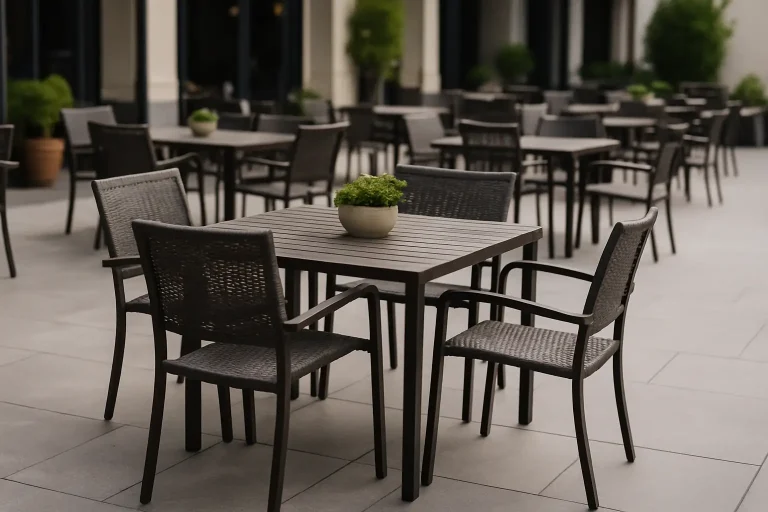
Woven looks can be effective when they’re specified as contract-grade, UV-stable material, not decorative weave. The advantage is visual warmth and a relaxed resort language. The trade-off is sand and debris collection. If your housekeeping team is already stretched, select weaves that are easier to rinse and avoid overly tight patterns that trap grit.
Teak and other hardwoods deliver a premium story, especially in villas and spa terraces. The honest trade-off is maintenance expectations. If the resort wants the “fresh oiled” look year-round, that’s a program, not a preference. If the team prefers silver patina, design around it and avoid mixing wood tones that will age at different rates.
Cushion and fabric specs that survive turnover
The comfort layer is where guest perception is won, and where operational pain usually shows up.
Start with foam and construction. Quick-dry systems and reticulated foam can reduce downtime after rain and daily cleaning. The trade-off is feel and cost. Some guests prefer a softer sit, so it may make sense to use different constructions by zone: more resilient, fast-drying cushions poolside; plusher seats in covered lounges.
Then get serious about fabric selection. In resort environments, you’re specifying for UV exposure, chlorine contact, sunscreen oils, and frequent wipe-downs. “Soft hand” is important, but stain release and colorfastness decide whether the deck looks new in six months or tired in one season.
Zippers, seams, and closures are not small details at scale. Hidden zippers protect the aesthetic, but they also need to be serviceable. Double-stitching and reinforced corners reduce blowouts when guests perch on edges or when staff moves furniture quickly between events.
If you’re using patterned fabrics, plan for replacement continuity. Resorts rarely replace every cushion at once. A strong vendor should help you define a repeatable fabric program so partial refreshes don’t look mismatched.
Product taxonomy that maps to how resorts actually buy
Procurement teams want clarity: what category solves what use case, how it ships, and how it’s supported after installation.
Loungers and chaises for pool and beach
Adjustable loungers are the workhorses of the deck. Confirm recline positions, pinch points, and whether the mechanism can be serviced without replacing the full frame. Stackability can reduce storage footprint, but it can also introduce scuffing and staff frustration if the stack is unstable. If the property doesn’t have adequate storage, specify fewer stacking requirements and prioritize durability and reset speed.
Daybeds for premium spend zones
Daybeds sell the “resort moment,” but they also create higher expectations. Specify them with the same discipline as indoor hospitality seating: stable bases, reinforced slats or platforms, and cushions that can be removed and cleaned without a wrestling match. If the property hosts events, confirm whether daybeds need to be movable, and what that means for weight and floor protection.
Modular outdoor sofas for flexible layouts
Modular is ideal when a deck needs to change from daytime lounge to evening entertainment. Make sure the modular system has consistent connectors and that pieces don’t drift on smooth tile. The trade-off with highly flexible systems is parts management. If operations loses connectors or rearranges without a plan, the space can look disorganized. A good specification includes a few “approved” configurations that staff can reset to.
Lounge chairs and occasional tables for circulation-heavy terraces
These pieces carry the design language. For high-traffic promenades, choose chair silhouettes that look intentional even when pulled slightly off-axis. Tables should be stable, easy to clean, and sized for real usage – a coffee plus a phone plus small plates, not just a decorative surface.
Logistics and project controls that protect timelines
Resort projects don’t fail because someone chose the wrong chaise. They fail when approvals, lead times, and installation realities aren’t managed upfront.
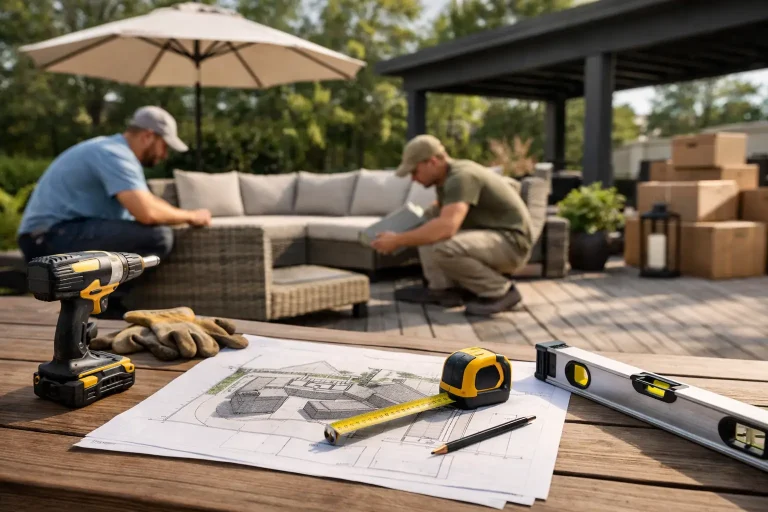
Mock-up approvals are worth the time. They let you validate seat height, cushion feel, finish accuracy, and how the furniture reads in the property’s actual daylight. The trade-off is schedule pressure, so build mock-up time into the procurement plan rather than treating it as a last-minute “nice to have.”
3D drawings are another practical control, especially when you’re coordinating shade structures, outdoor kitchens, or pool equipment. A correct plan prevents the common problems: lounger rows that block egress, daybeds that collide with umbrellas, and table heights that don’t work with service.
Finally, confirm packaging, delivery sequencing, and on-site handling. White-glove delivery matters when you’re installing in finished public areas with tight access, elevators, or delicate stone. The best suppliers can stage by zone so your team isn’t opening cartons across the property and losing hardware mid-install.
For teams that want a single vendor who can carry lounge seating, poolside categories, and supporting pieces while keeping specification control tight, PNZ Space Global supports resort procurement with contract-grade outdoor collections plus project services like 3D drawings and mock-up approvals via its in-house studio. Learn more at https://www.pnzspace.com.
What “value” looks like in resort outdoor seating
Resort buyers are often forced into a false choice: either buy a cheaper product and replace it, or buy a premium line and accept long lead times and limited flexibility. Real value is the ability to hit design intent, meet performance requirements, and keep the deck consistent across phases.
That means asking questions that connect design to operations. How quickly can the team replace a damaged cushion cover without pulling an entire set out of service? Are finishes consistent enough to expand the property next season without visible variation? Can the supplier support bulk orders and still respond fast when you need ten extra side tables for a new activation?
When those answers are clear, outdoor lounge seating becomes an asset you can program around, not a constant maintenance conversation.
The most reliable resort decks aren’t the ones with the most complicated furniture. They’re the ones where every piece earns its footprint – comfortable for guests, predictable for staff, and repeatable for the next phase of the property.