Poolside Daybed Layout for Resorts That Works
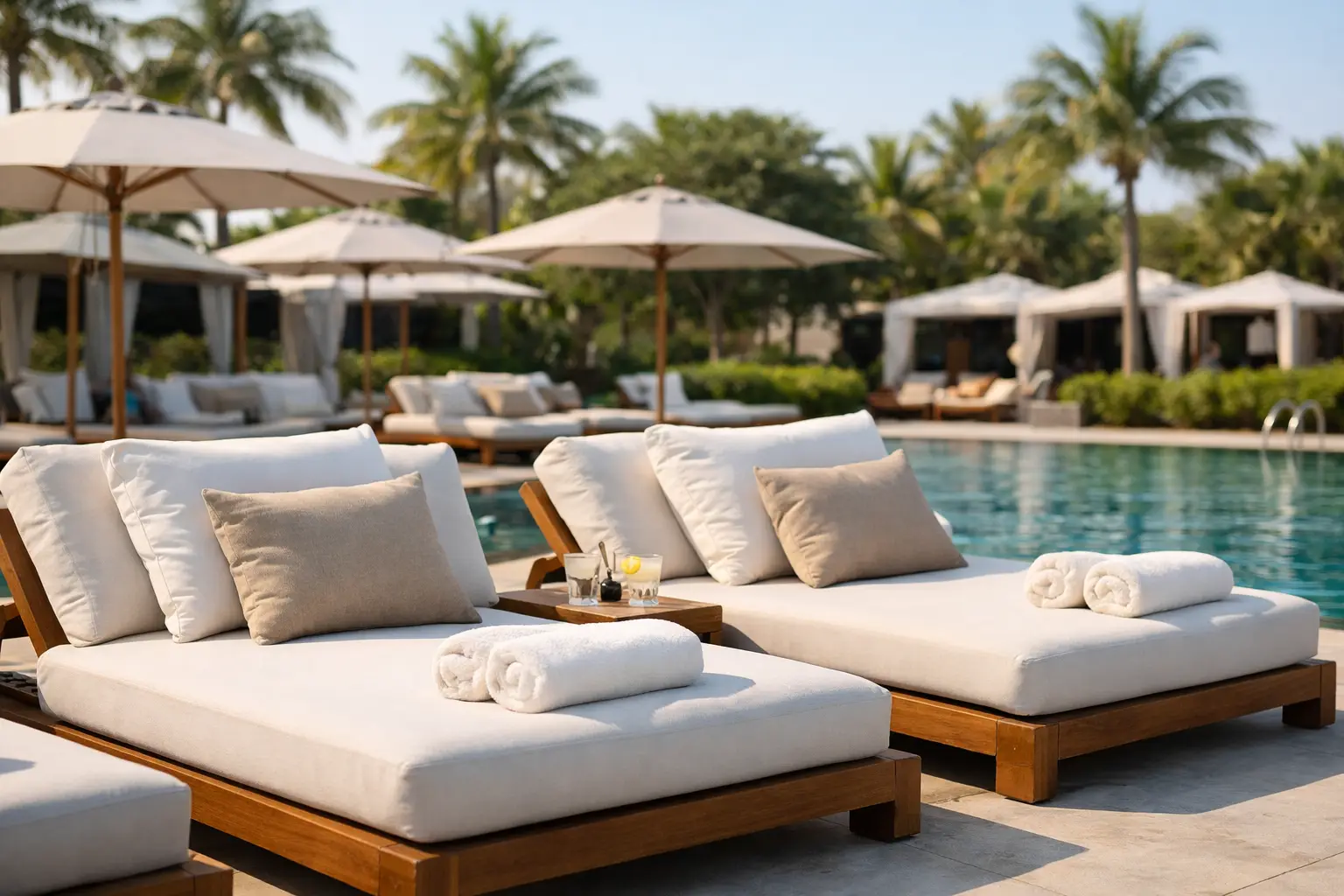
A strong poolside daybed layout for resorts is not just a styling decision. It affects guest spend, staff efficiency, sightlines, circulation, and the overall value of your pool deck footprint. When the layout is right, premium seating feels exclusive without blocking service routes or overcrowding the water’s edge. When it is wrong, even high-end furniture can read as disorganized and underperform.
For hospitality operators, architects, and procurement teams, the challenge is rarely choosing a beautiful daybed. The real work is fitting the right mix of formats, clearances, and zones into a deck that must perform all day under sun, water, food service, and heavy traffic. That is where layout discipline matters.
What a poolside daybed layout for resorts needs to achieve
The best layouts solve more than one problem at once. They create a premium guest experience, support revenue strategy, and make operations easier for teams managing towels, food service, cleaning, and turnover. A daybed placed purely for visual effect may photograph well, but if it interrupts circulation or leaves no room for side tables and service access, it will create friction immediately.
In resort settings, daybeds also signal hierarchy. They often sit above standard loungers in both price and perceived exclusivity. That means their position on the deck should feel intentional. Guests paying for a reserved experience expect a sense of privacy, a better viewing angle, and enough personal space to justify the upgrade.
A practical target is to treat daybeds as part of a full pool zoning plan rather than as isolated products. Standard loungers handle density. Dining handles dwell time with food and beverage. Shade structures shape comfort windows. Daybeds should occupy the premium layer between visibility and retreat.
Start with zones, not furniture counts
Many resort layouts go off track because the furniture count comes first. A better process starts by defining how the pool deck operates across different periods – morning sunbathing, midday shade demand, afternoon family traffic, and evening activation if the venue stays open after dark.
Begin with the high-value zones. These usually include the main water-facing edge, quieter perimeter areas, adults-only corners, and any elevated or framed positions with the best views. Not every one of these zones should be filled with daybeds. In some cases, too many large-format units flatten the experience and reduce flexibility.
A better mix is to reserve daybeds for the areas where guests will pay for the extra privacy and comfort. Closer to active family zones, compact loungers often perform better because they turn faster and allow denser layouts. In quieter sections, double daybeds or cabana-style configurations can justify larger footprints and stronger rate premiums.
This is also where adjacency matters. Daybeds near bar service, towel stations, and restrooms tend to book well, but they should not sit directly in front of those operational nodes. The premium experience disappears quickly when a guest feels parked in a service corridor.
Spacing is where layouts succeed or fail
The biggest mistake in poolside planning is underestimating clearance. Daybeds are larger than standard loungers, but the real space requirement extends beyond the product frame. Guests need room to enter and exit comfortably. Staff need room for tray service, cleaning, and linen resets. Nearby seating needs enough separation to preserve privacy.
As a general planning principle, think in layers of space rather than single dimensions. There is the furniture footprint, the personal comfort buffer, and the service circulation band. If one of those layers is missing, the layout will feel tight even when the deck appears visually open on paper.
Front-row daybeds facing the pool need enough setback to keep the pool edge readable and safe. Side-by-side installations need enough distance to avoid a crowded, cabana-row effect unless that density is intentional for a beach-club model. Back-row daybeds should not be pushed so close to planting, walls, or screens that housekeeping and maintenance become difficult.
This is where 3D planning adds real value. Flat layouts can mislead teams into approving densities that fail in real operation. Reviewing scaled drawings with circulation paths, side tables, umbrellas, and service approach built in will usually expose space conflicts early.
Balance privacy with visibility
A resort daybed should feel sheltered, not hidden. That distinction matters. Guests want some separation from adjacent parties, but operators still need clear sightlines for service, supervision, and security.
The most effective layouts use orientation and layering rather than heavy enclosure. A slight angle shift, paired planters, low screens, or offset placement can create personal territory without cutting off visual connection to the pool. This approach also keeps the deck looking open and premium rather than segmented into hard partitions.
There is also a commercial trade-off. Highly private daybeds can command a premium, especially in luxury resorts or adults-only settings. But if every unit is screened too heavily, the deck can lose energy and visual merchandising value. Some of the strongest-selling seats are the ones other guests can see and aspire to book.
Shade strategy should shape the layout
No poolside daybed layout for resorts performs well for long without a clear shade plan. In hot climates, shade is not an accessory. It determines dwell time, guest comfort, and whether premium seating remains usable through peak hours.
This does not mean every daybed needs permanent overhead coverage. It means the layout should account for changing sun angles and offer a mix of exposure levels. Some guests want full sun in the morning and partial shade later. Others will choose a shaded daybed first, even at a higher rate.
Freestanding umbrellas offer flexibility, but they require base clearance and can complicate service routes if squeezed into tight rows. Integrated canopies create a stronger resort look and cleaner zoning, but they need careful wind and maintenance consideration. Pergolas and cabanas establish destination zones, though they commit more square footage and reduce reconfiguration options.
The right answer depends on brand positioning, local climate, and operating model. Luxury properties often benefit from a layered mix, with a few highly premium shaded daybeds anchoring the deck and more open units surrounding them.
Material selection affects layout performance
Layout and specification are linked. A daybed that looks right in a concept board but performs poorly under chlorine exposure, UV, and heavy turnover will create operational problems fast. Cushion thickness, drainage, frame weight, and ease of cleaning all affect where and how units should be placed.
Heavier contract-grade frames are usually better for exposed, high-traffic pool decks because they stay stable and hold alignment. Quick-dry foam and performance fabrics support faster resets and reduce downtime after splashing or weather events. Modular formats can be useful where operators want to reconfigure zones for events, but they should lock together cleanly and maintain a premium visual line.
For procurement teams, this is why supplier capability matters beyond product styling. Material options, finish consistency, mock-up reviews, and approval-stage drawings reduce risk before rollout. On larger hospitality projects, the daybed is only one part of a coordinated outdoor package, so alignment across lounge seating, side tables, umbrellas, and accessories improves both layout logic and delivery control.
Design for revenue, not just occupancy
A full pool deck is not automatically a successful one. Resorts should evaluate whether daybeds are increasing revenue per square foot, supporting upsell programs, and improving guest satisfaction enough to justify the footprint they occupy.
In many properties, fewer daybeds in better positions outperform larger quantities placed without hierarchy. Premium furniture should create a booking decision. That usually comes from a better view, better spacing, stronger shade, and a more complete service setup with tables, storage, and access.
It also helps to think in tiers. Some daybeds can be positioned as top-tier reserve seating with superior proximity and privacy. Others can function as mid-premium options that widen access without diluting exclusivity. This gives operators pricing flexibility while preserving the aspirational feel of the pool deck.
For groups managing multi-site rollouts, consistency matters too. A repeatable planning logic across properties supports procurement efficiency and brand recognition, but each site still needs adjustments for climate, deck geometry, and guest mix. That is where a vertically integrated partner such as PNZ Space can add value – not only by supplying contract-grade product at scale, but by supporting specification, 3D planning, and project execution from concept through delivery.
The layouts that last are the ones built around operations
The best pool decks look effortless because the planning behind them is precise. Daybeds are large, visible, and commercially important, so they need more than decorative placement. They need spacing that respects service, zoning that supports guest behavior, and materials that hold up under real resort conditions.
If you are planning a new resort deck or upgrading an existing one, start by asking how the space needs to perform at peak occupancy, not how many units can fit. That single shift usually leads to a better layout, a stronger guest experience, and a poolside setting that earns its footprint every day.