Outdoor Cabana at the Pool: What to Specify
A pool deck can look complete on plan and still fail in use. The gap usually shows up in shade, privacy, and guest comfort. That is where an outdoor cabana at the pool moves from a decorative add-on to a specification decision that affects circulation, dwell time, and the overall value of the space.
For designers, developers, and hospitality operators, the cabana is rarely a standalone purchase. It sits inside a broader poolside program that includes loungers, side tables, towel storage, planters, lighting, and service access. When the cabana is specified correctly, it improves the performance of all of them. When it is chosen only for looks, it often creates operational issues that show up after installation.
Why an outdoor cabana at the pool matters
At poolside, shade products are judged in real conditions, not in a showroom. Heat load, reflected glare, wind exposure, humidity, chlorine, sunscreen residue, and heavy guest turnover all test the product at once. A cabana has to do more than provide cover. It should define a zone, support how people move through the deck, and hold up under constant use.
In residential projects, a cabana often creates a private retreat that makes the pool area feel more complete and more valuable. In hospitality settings, it can become a premium-use asset tied to guest experience and revenue. In both cases, the specification needs to balance aesthetics with performance. A soft, resort-style silhouette may be right for one property, while a clean-lined, architectural frame may better suit a modern villa, branded residence, or upscale hotel deck.
That is why the first question is not which style looks best. It is how the cabana will be used, by whom, and at what frequency.
Start with use case before style
An outdoor cabana at the pool can serve very different functions. It may be a quiet retreat for two loungers, a family shade zone near shallow water, a VIP hospitality unit with beverage service, or a semi-private enclosure positioned to support spa or resort programming. Each use case changes the correct specification.
If the project is residential, comfort and visual integration usually lead the conversation. The cabana should complement the architecture and create a destination without overwhelming the pool deck. If the project is commercial or hospitality-based, operational factors become much more important. Housekeeping access, fabric cleanability, replacement planning, and long-term finish consistency all matter because the product will be used hard and judged daily.
This is also where many buyers underestimate scale. A cabana that looks generous in a product photo can feel undersized once cushions, side tables, curtains, and occupants are added. Oversizing is not always the answer either. A larger footprint can disrupt circulation, block sightlines, or reduce the number of loungers a deck can support. The right size is the one that works within the full pool furniture layout, not just as an isolated object.
Structural decisions that affect long-term performance
The structure is where procurement teams should spend real attention. Poolside environments are unforgiving, especially in coastal, humid, or high-UV regions. Frame material, joinery quality, finish system, and anchoring approach all influence service life.
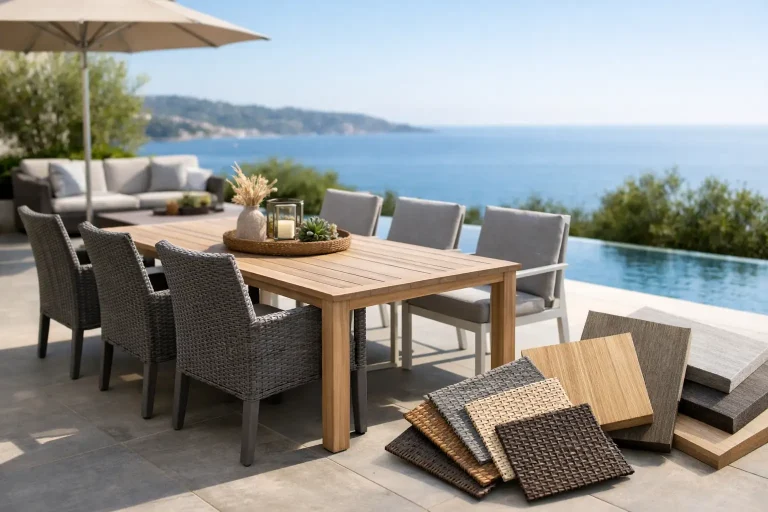
Powder-coated aluminum remains a strong choice for many projects because it balances corrosion resistance, lighter handling weight, and clean modern detailing. For some design directions, mixed materials such as aluminum with teak-look accents or woven panels can add warmth, but every material transition introduces another maintenance consideration. If the project needs a natural aesthetic, the question is not simply whether wood looks good. It is whether the selected species, finish schedule, and maintenance plan match the operator’s reality.
Anchoring is another detail that should never be left to the last stage. Some cabañas need permanent fixing for safety and code alignment, while others are better suited to semi-flexible layouts. Wind conditions, deck substrate, and service access all affect that choice. A strong supplier should be able to support these decisions early, ideally through drawings and layout coordination rather than field improvisation.
Fabric, drapery, and cushion specification
Soft elements usually make the sale, but they also create most of the maintenance burden. Curtains, canopy fabric, and cushions define the comfort level of the cabana, yet they are the first components to show wear if they are not specified for outdoor commercial use.
Solution-dyed performance fabrics are often the right baseline for colorfastness and UV stability. But that is only part of the decision. Buyers should also look at drying behavior, resistance to mildew, seam construction, and how easily covers can be removed or replaced. In hospitality settings, white or light neutral fabrics may fit the brand image, but they can raise operational pressure unless the property has the labor systems to maintain them properly.
Privacy drapery is another area where the design intent and real-world use need to align. Full curtains can create a premium, secluded feeling, but they also catch wind, hold moisture longer, and require more upkeep. Open-sided or partially screened configurations can be the better choice in high-traffic or high-wind environments. It depends on whether privacy, airflow, or maintenance efficiency is the top priority.
Layout and adjacency on the pool deck
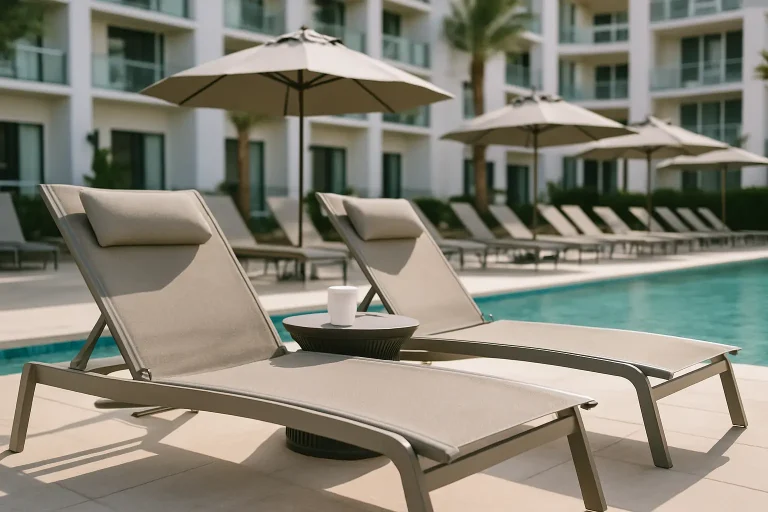
A cabana performs best when it is planned as part of a category-based pool environment. That means considering how it works with lounge chairs, occasional tables, umbrella zones, dining areas, and storage or service pathways.
Placement near the pool edge may maximize the resort feel, but it can also increase exposure to splashing, chemical residue, and constant foot traffic. Setting the cabana slightly back can improve durability and privacy while still preserving a strong visual connection to the water. For hospitality operators, adjacency to food and beverage service can be a commercial advantage, but only if staff can move efficiently without crossing guest relaxation zones.
Sightlines matter as well. In family-oriented properties, operators may want cabanas that allow supervision of children in the pool. In luxury environments, the priority may be shielding premium guests from the busiest circulation areas. Neither approach is universally correct. The layout should reflect the property’s operating model.
Design language should support the project, not compete with it
The best cabana does not always command the most attention. In many successful projects, it reinforces the broader design language through material consistency, proportional balance, and finish coordination with surrounding poolside furniture.
That can mean matching frame colors to loungers, echoing the geometry of adjacent dining collections, or selecting textiles that carry through the outdoor palette without making the deck feel repetitive. It can also mean choosing restraint. On a visually busy pool deck, a simpler cabana may elevate the overall result more effectively than an ornate one.
For developers and procurement teams working at scale, repeatability matters here. If the project includes multiple villas, branded residences, or hospitality zones, the chosen cabana should be easy to replicate with finish consistency across units and phases. That is where vertically integrated production and specification control become especially valuable. A supplier with in-house design support, mock-up approval capability, and manufacturing oversight can reduce variation and keep the concept intact from sample stage to delivery.
What buyers should verify before approval
An outdoor cabana at the pool should be reviewed like any other contract-grade product package. Appearance matters, but documentation matters more. Buyers should confirm frame construction, finish specifications, fabric performance, dimensions, lead times, replacement planning, and installation requirements before sign-off.
They should also ask practical questions. Can the canopy fabric be replaced without replacing the entire frame? Are cushions standardized enough for future replenishment? Will the finish hold up in a chlorine-heavy environment? How will the product be delivered and installed on a constrained site? These are not minor procurement details. They directly affect lifecycle cost, guest satisfaction, and project continuity.
This is where a one-stop supplier can make a measurable difference. When the cabana is specified alongside pool loungers, side tables, umbrellas, dining furniture, and accessories, coordination becomes faster and far more controlled. Teams can review materials together, align finish direction across categories, and avoid the common problem of piecing together a pool deck from vendors with different lead times and quality thresholds. For project-driven buyers, that reduction in friction is often as valuable as the product itself.
A well-specified cabana should feel effortless once it is in place. Guests notice comfort, shade, and privacy. Project teams notice that installation went to plan, materials arrived as approved, and the space performs the way it was sold. That is the standard worth designing for.