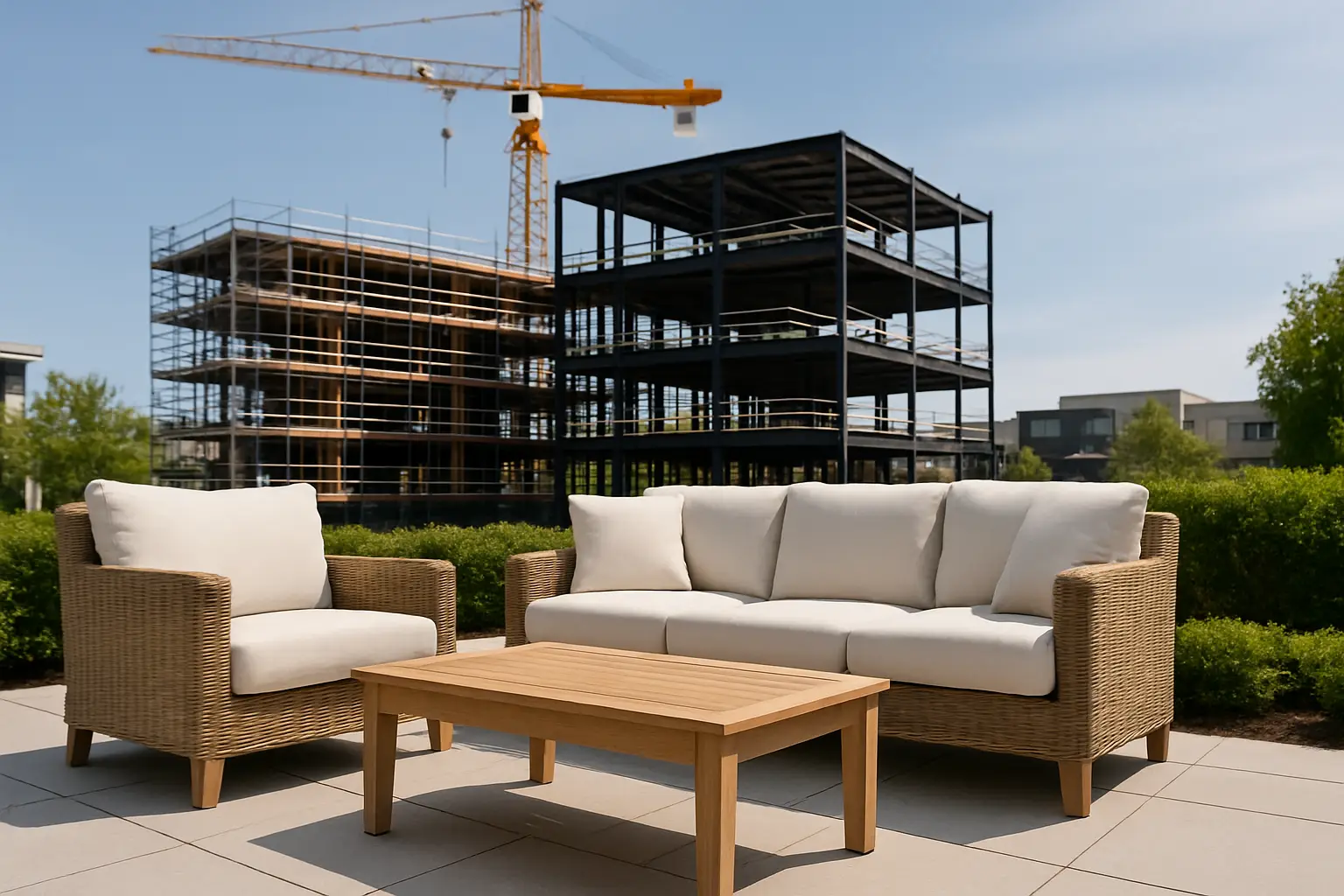
Outdoor Furniture Lead Times That Won’t Derail Builds
You can pour the slab on schedule, pass inspections, and have the landscape looking perfect – then lose the handover date because the outdoor dining chairs are “four to six weeks out” that turns into twelve.
Outdoor furniture is one of the most visible scope items on a terrace, rooftop, pool deck, or resort courtyard. It is also one of the easiest to underestimate because it sits at the intersection of design approvals, manufacturing capacity, freight, and install coordination. If you manage project procurement, you already know the real question isn’t “What’s the lead time?” It’s “What’s the lead time for this exact spec, in this quantity, for this ship-to, with this approval path?”
This is a practical guide to outdoor furniture lead times for projects: what actually drives them, where timelines tend to slip, and how to plan procurement so furniture supports the schedule instead of becoming the reason it moves.
What outdoor furniture lead times for projects really include
When teams talk about “lead time,” they often mean “time until it ships.” On a project schedule, that definition is too narrow. For procurement planning, lead time should be treated as the full duration from spec alignment to install readiness.
For outdoor furniture, that typically includes three phases.
First is pre-production: confirming quantities, selecting finishes, ensuring performance requirements are clear (marine-grade hardware, UV stability, fire and slip considerations where relevant), and completing drawings or layout confirmation for the space.
Second is production: material allocation, fabrication, finishing, upholstery (if applicable), curing or set times for coatings, QC, and packaging.
Third is logistics: export handling, ocean or air transit, customs clearance, inland trucking, site delivery windows, and the last-mile reality of getting bulky items into elevators, through service corridors, or onto rooftops.
A supplier can quote “30 days” and still miss your handover if your approval cycle consumes two weeks up front and your site can only accept deliveries on Tuesdays after 10 a.m. That’s why lead time must be mapped to your critical path, not treated like a catalog footnote.
The lead time drivers most teams miss
Outdoor categories look simple until you view them through a project lens. The biggest lead-time swings usually come from a handful of drivers.
Specification complexity and finish decisions
Fastest is typically a stocked, standard finish in standard quantities. The moment you introduce a custom powder coat color, a bespoke tabletop size, or a new strap or rope color, you’re no longer buying “a chair.” You’re buying an approval and production path.
Even small finish changes create real work: sampling, color matching, test panels, and sometimes retooling or reprogramming. None of that is bad – it’s often what makes the space feel designed rather than generic – but it needs to be scheduled as intentionally as millwork.
Volume, batching, and factory slotting
High volume does not automatically mean slow. What it changes is batching and line scheduling. A factory can produce 20 loungers quickly, but 400 loungers plus 400 side tables plus 200 dining chairs in mixed finishes requires planned sequencing and material staging.
If a supplier controls manufacturing, they can slot production and allocate capacity more predictably. If they rely on multiple subcontractors, timelines tend to become “best effort” because the real constraint sits outside their direct control.
Material availability and outdoor-grade components
Outdoor performance depends on components that can be surprisingly specific: quick-dry foam, solution-dyed acrylic fabrics, tempered glass thicknesses, specific teak grades, or stainless hardware. A project can lose weeks waiting on one component that didn’t get reserved early.
This is why “value engineering” late in the process can backfire. Swapping a fabric to hit budget might save dollars but reset procurement clocks if the alternate textile has a longer mill lead time or requires new testing.
Approval discipline (drawings, mock-ups, and sign-offs)
The most common schedule killer is not production. It is indecision.
If you need 3D drawings, layout support, or mock-up approvals, build that into the timeline and set a firm internal SLA for feedback. A supplier can turn drawings quickly, but they cannot approve them for you. Every open decision pushes material ordering downstream.
Logistics reality: transit, customs, and site constraints
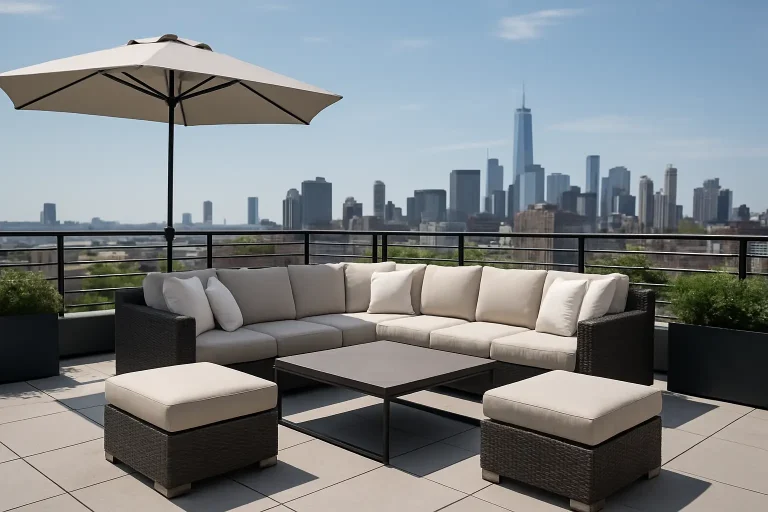
International transit is the obvious factor, but site constraints are the quieter one. Rooftop deliveries require lifting plans. Hotels have restricted delivery hours. Residential compounds may require pre-registered vehicles and security checks.
Furniture can be “on time” to the port and still be “late” to the patio if the delivery appointment slips two weeks due to site access constraints.
Typical lead time ranges by outdoor category (what to expect)
Lead times vary by supplier model, seasonality, and how custom your spec is. That said, most projects fall into recognizable patterns.
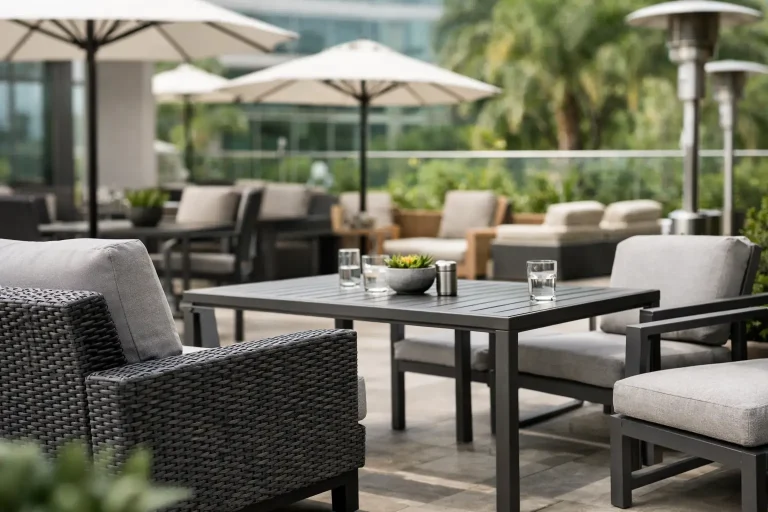
Stocked or standard lounge seating and dining sets are often the quickest when finishes and fabrics are already in the supplier’s program and quantities are reasonable. Custom upholstery, new fabric selections, or mixed-finish schemes can add meaningful time because upholstery and finishing are where approvals and cure times live.
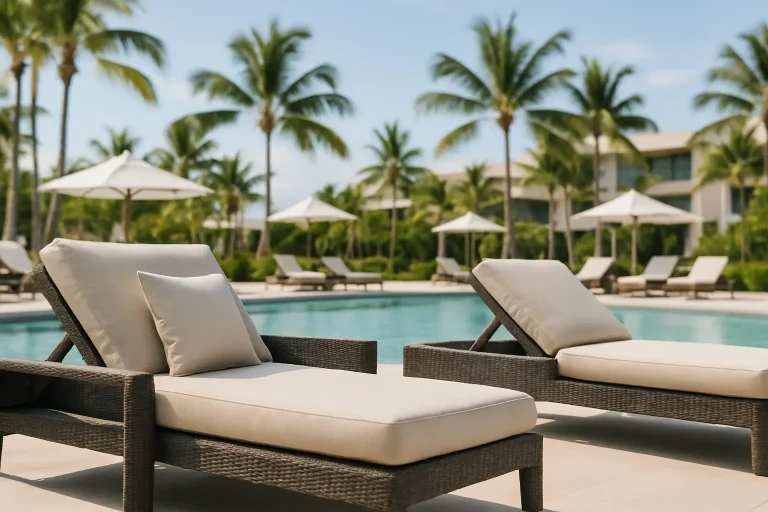
Poolside furniture can be deceptively variable. Sun loungers, cabanas, and pool accessories may require heavier frames, specific sling materials, and hardware that performs in high-chlorine environments. If you need branded embroidery, custom cushions, or matching shade solutions, expect the schedule to behave like a coordinated package rather than individual SKUs.
Shade solutions and accessories frequently sit on longer timelines than buyers assume. Umbrellas, pergolas, and large-format shade structures can involve engineering review, wind-load considerations, and specialized packaging. Accessories like outdoor rugs, fire features, or specialty lighting may come from separate production streams and can easily become the last missing items.
The procurement takeaway is simple: don’t plan lead time by the “big pieces” alone. Plan by the slowest scope item in the outdoor package.
How to keep the schedule intact without sacrificing design
Speed and design quality are not enemies, but they do require a tighter process than many teams apply to outdoor furniture.
Lock the spec earlier than you think you need to
Outdoor furniture is often treated as a late-stage styling decision. On a project timeline, it should be treated more like a long-lead finish package.
If your concept design is approved, start the procurement conversation immediately, even if you’re still finalizing small details. The goal is to identify which choices are schedule-sensitive. Sometimes you can hold one variable (like cushion piping) while locking the materials that truly drive lead time (frame finish, fabric program, tabletop material).
Use alternates strategically, not emotionally
Alternates are useful when they are pre-vetted. They are dangerous when they are last-minute substitutes.
A strong approach is to carry a short list of approved alternates that match the performance spec and aesthetic intent. That way, if one finish or fabric becomes constrained, you can pivot without reopening the entire design discussion.
Ask for a project-grade timeline, not a generic quote
A lead time statement like “6-8 weeks” is not a schedule. For projects, you need milestones.
At minimum, align on when drawings are due, when approvals must be returned, when production starts, when it completes, when goods ship, and what the realistic delivery window is for your site. If you’re furnishing multiple areas (rooftop lounge, pool deck, restaurant terrace), confirm whether deliveries can be phased or must arrive as one consolidated shipment.
Treat mock-ups like schedule insurance
Mock-ups can feel like an extra step, but they often prevent the most expensive delay: rework after production.
If a project requires a particular rope color, slat spacing, or cushion firmness, approve it early. A fast mock-up approval cycle can save weeks later by eliminating the need to remake finished goods or re-order fabric.
Align packaging and installation requirements upfront
Outdoor projects fail at the finish line when packaging doesn’t match site realities. Confirm whether items arrive assembled or knocked down, how they’re protected, and what the installation scope includes.
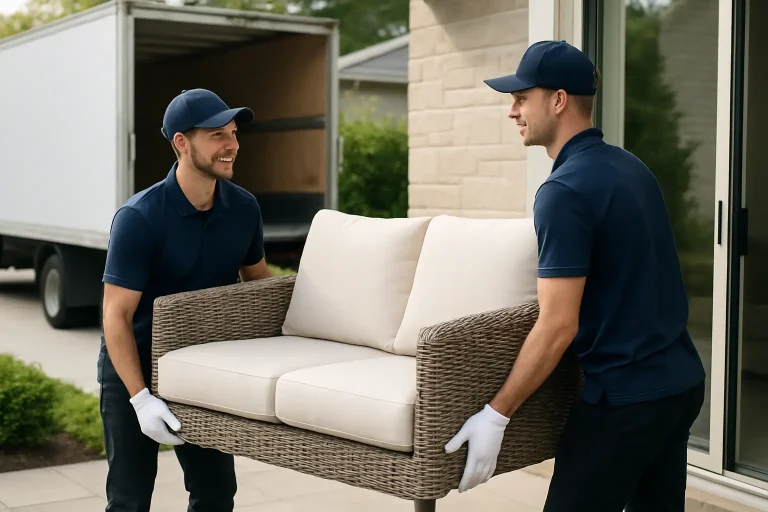
If the building has strict waste removal rules, or if staging space is limited, your delivery plan needs to reflect that. White-glove delivery and placement can be a major advantage when the site is constrained and punch-list timing is tight.
Seasonality and the “rush tax” in outdoor procurement
Outdoor furniture has peak seasons, and production capacity is real. When demand spikes, the same product can swing from manageable to constrained even without any spec changes.
If your project is targeting spring and summer openings, assume that both production and logistics lanes will be more competitive. You can still hit the date, but it usually requires earlier deposits, faster approvals, and fewer late-stage changes.
Rushing is also a trade-off decision. Expediting via air freight can protect opening dates but may not be economical for bulky items like loungers and dining sets. A more controlled approach is often to phase deliveries: prioritize the critical public-facing zones first, then deliver secondary areas once ocean freight arrives.
What to request from your supplier before you award
The fastest projects are the ones where procurement expectations are explicit.
Before you award, confirm the supplier’s ability to provide shop drawings or 3D layouts if needed, the mock-up process, the finish and fabric programs available without custom development, and the realistic production capacity for your quantities. Clarify how QC is handled for contract-grade performance and what happens if there is damage in transit or a shortage.
If you are managing multiple properties or a multi-site rollout, ask how the supplier maintains consistency across batches. Outdoor furniture is unforgiving when “white” is three different whites across three deliveries.
For teams that want one accountable partner from design support through logistics, a vertically integrated supplier like PNZ Space Global can simplify lead times by keeping design, manufacturing, and project coordination under one operational roof.
A planning mindset that consistently beats lead time risk
Outdoor furniture lead times for projects are manageable when they’re treated as a system. The system is approvals plus production plus logistics, all tied to real site constraints.
If you want fewer surprises, plan the outdoor package the way you plan stone, glazing, or millwork: lock the critical specs early, use mock-ups to remove ambiguity, and demand milestone-based timelines instead of generic ranges. Then protect those decisions like you would any other critical-path scope.
The best outdoor spaces feel effortless for the guest. Behind the scenes, they are the result of disciplined decisions made early enough to let manufacturing and logistics do their job without drama.