How to Choose Outdoor Furniture for Coastal Humidity
Salt air rarely fails all at once. It shows up as pitting on exposed metal, mildew in damp cushions, swollen wood joints, and finishes that looked excellent at delivery but break down under constant moisture. That is why understanding how to choose outdoor furniture for coastal humidity matters long before a project reaches installation. For developers, designers, hospitality operators, and procurement teams, the right decision is not just about style. It is about specifying materials, finishes, construction methods, and maintenance expectations that can perform in a wet, saline environment without creating replacement cycles that erode budgets.
How to choose outdoor furniture for coastal humidity starts with the material
In coastal settings, humidity is only part of the problem. Moisture combines with salt, heat, UV exposure, and wind-driven particles that accelerate wear. A chair that performs well in a dry inland setting may fail quickly on a beachfront terrace or a pool deck within a few hundred yards of the water.
Powder-coated aluminum is often one of the safest specifications for coastal projects because it is lightweight, corrosion resistant, and commercially practical across dining, lounge, and poolside applications. That said, not all aluminum furniture is equal. The grade of aluminum, weld quality, pretreatment, and powder-coating process all affect performance. If the coating is compromised by poor preparation or impact damage, corrosion can still begin at weak points.
Marine-grade stainless steel can also work, but this is where many projects get oversimplified. Stainless steel is not automatically coastal-proof. Lower grades can tea-stain or corrode when exposed to salt air, especially if maintenance is inconsistent. For hospitality or multifamily projects, stainless can be the right visual choice, but only when the grade, finish, and cleaning protocol are clearly defined.
Synthetic resin wicker remains a strong option when specified correctly. The frame matters as much as the weave. High-density polyethylene wicker over an aluminum frame typically outperforms cheaper alternatives built on steel or low-grade plastic. In humid conditions, inferior wicker can become brittle, fade unevenly, or loosen under heat and moisture swings.
Teak is another common coastal material, especially for luxury residential and resort settings. It naturally handles moisture better than many woods because of its dense grain and oil content. Still, buyers should be clear about the trade-off. Teak weathers attractively, but it changes appearance over time unless maintained. If a project requires a consistent golden tone, that maintenance needs to be built into operations from the start.
What to avoid in humid coastal environments
The wrong specification usually comes from assuming all outdoor-rated furniture is suitable for all outdoor conditions. Coastal humidity is less forgiving.
Steel frames, unless they are heavily protected and used in lower-risk settings, can become a maintenance liability near the coast. Once the protective finish is chipped or scratched, rust can spread quickly. This is especially risky for high-traffic commercial environments where furniture is moved often.
Low-grade wood is another frequent issue. In humid air, porous or improperly treated wood can absorb moisture, swell, crack, or support mold growth. That may be acceptable for short-cycle seasonal use, but it is not ideal for long-term hospitality or development projects.
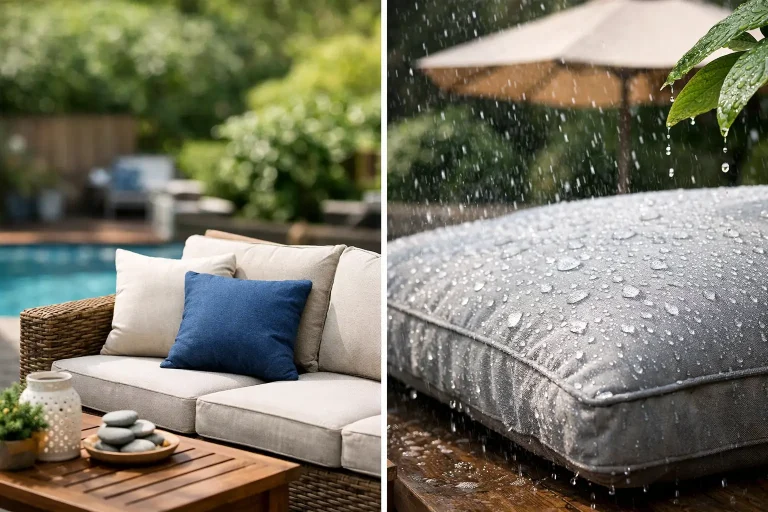
Standard indoor-outdoor cushions also deserve scrutiny. Many look suitable at first glance but retain water in the foam core, dry slowly, and develop odor or mildew. In coastal settings, cushion construction is not a secondary detail. It is part of the core performance specification.
How to choose outdoor furniture for coastal humidity by category
Different zones on a property face different exposure levels, so material decisions should follow product use rather than relying on one finish across the entire project.
Lounge seating
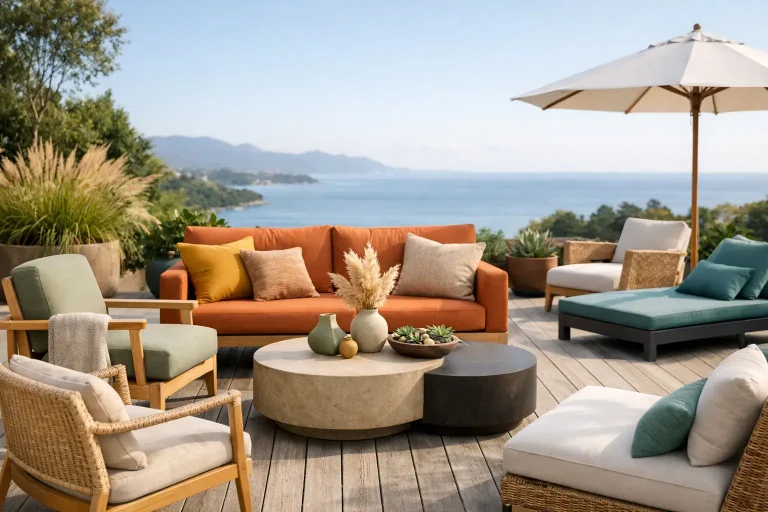
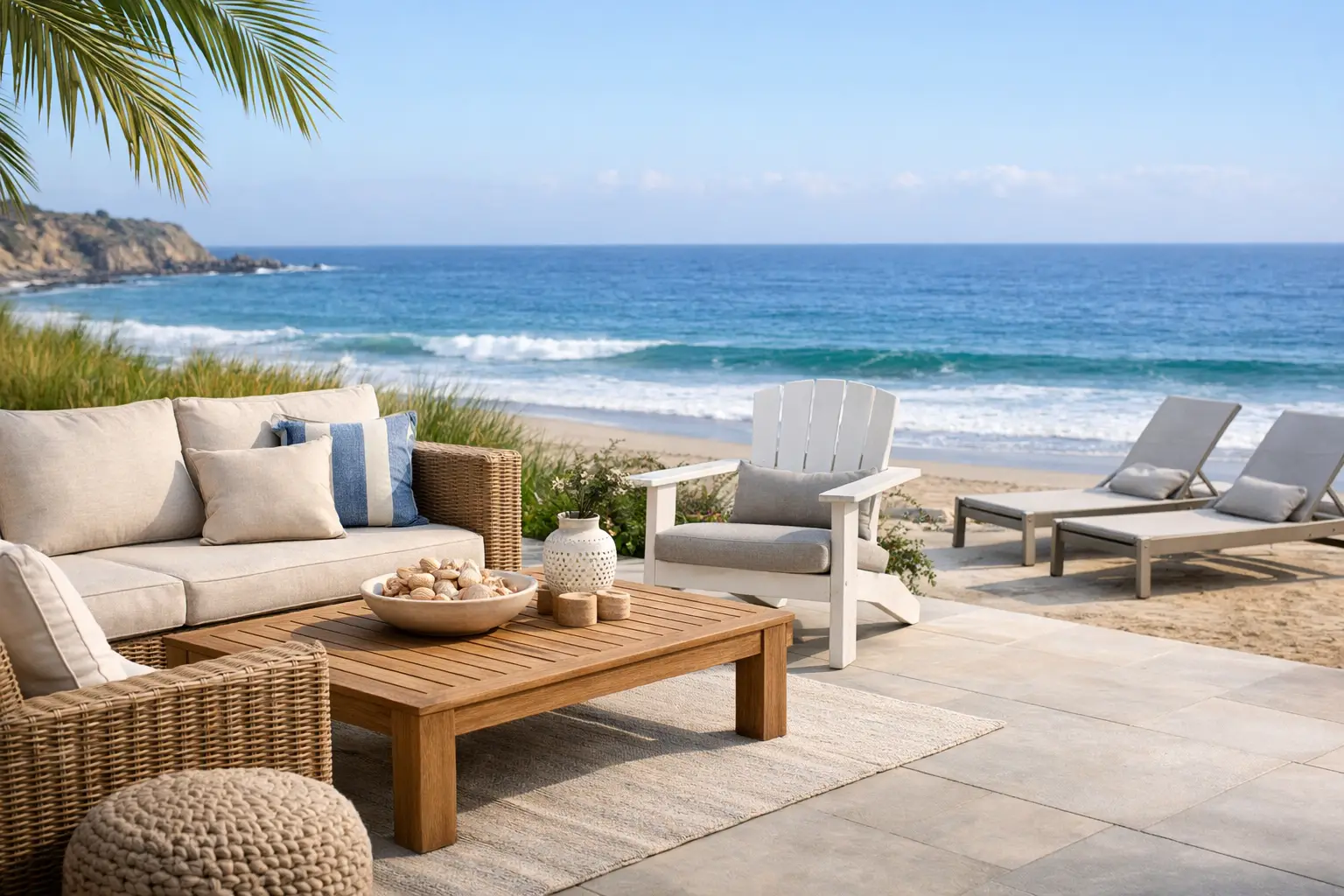
For lounge areas, comfort often drives specification, but frame durability and cushion engineering should carry equal weight. Aluminum frames with performance upholstery and quick-dry foam are a dependable choice for terraces, rooftops, and resort lounges. If woven detailing is part of the design direction, specify UV-stabilized synthetic rope or high-quality resin wicker rather than natural fibers, which tend to absorb moisture and degrade faster.
Dining sets
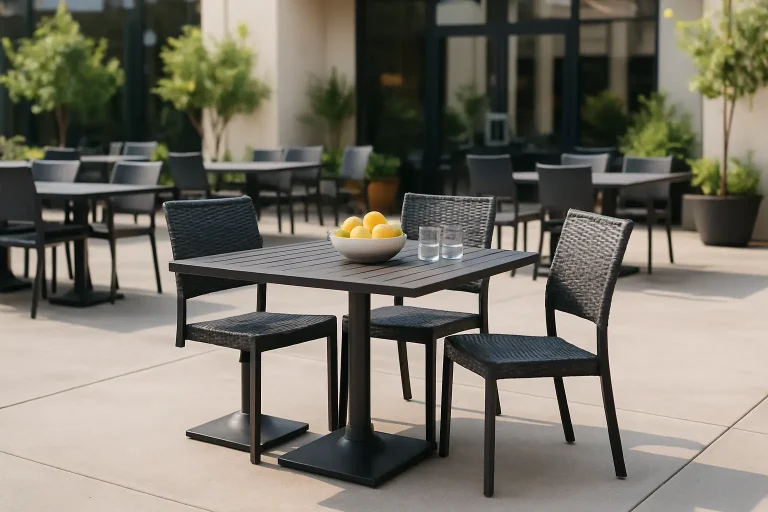
Dining furniture takes more abrasion, more movement, and more frequent cleaning. That makes powder-coated aluminum particularly useful in restaurants, hotel terraces, and residential club spaces. Tabletops should also be reviewed carefully. Sintered stone, compact surfaces, and tempered glass can perform well, while some lower-grade laminates or unsealed porous materials may not hold up under wet conditions and repeated sanitation.
Poolside furniture
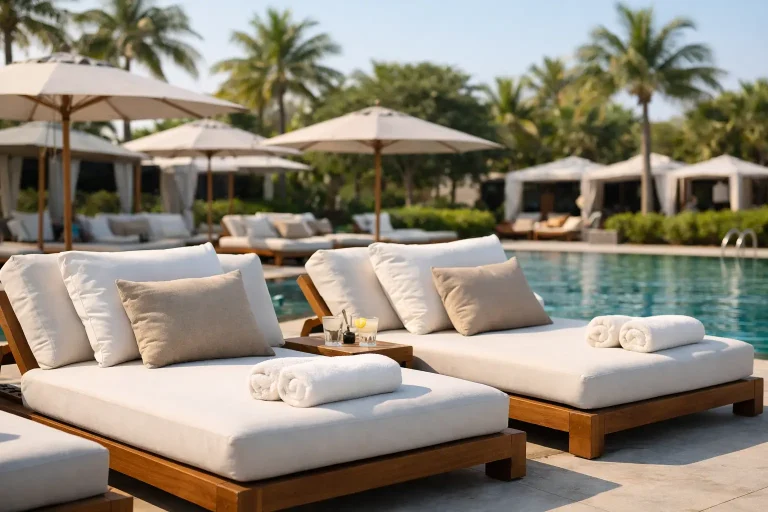
Pool decks combine humidity with splash exposure, sunscreen contact, and frequent repositioning. Sling chairs, aluminum loungers, and non-porous surfaces generally outperform heavily upholstered pieces in these zones. If cushions are required for the guest experience, removable, ventilated, quick-dry systems are easier to maintain than dense upholstered bodies that trap moisture.
Shade and accessories
Umbrellas, side tables, storage units, and accessories are often under-specified, yet they fail just as visibly. Umbrella frames should be corrosion resistant, and fabrics should resist mildew as well as fading. Small accessories need the same finish discipline as major furniture pieces because they are often exposed with less protection and more handling.
Cushion and fabric specifications matter more than most buyers expect
In humid climates, cushions are often the first element to show performance problems. The key issue is drying speed. If water enters the cushion and has no efficient path out, humidity lingers inside the core and creates the conditions for mildew, odor, and fabric breakdown.
Quick-dry foam is typically the better specification for coastal projects because it allows water to pass through rather than remain trapped. Open-weave mesh bottoms, vented construction, and removable covers can also improve performance. For commercial applications, fabrics should be selected not only for UV resistance and colorfastness, but also for cleanability and resistance to microbial growth.
This is one of the clearest areas where short-term savings can become long-term cost. A lower-cost cushion package may reduce initial spend, but if it slows housekeeping, requires frequent replacement, or undermines the guest experience, it is rarely the better procurement decision.
Finish quality, joinery, and testing separate good products from risky ones
A coastal specification should never stop at the material label. Buyers should ask how the product is made.
On aluminum pieces, examine weld consistency, coating coverage, and whether hidden areas receive the same protection as visible surfaces. On teak, review moisture content, joinery quality, and finishing options. On woven pieces, inspect tension consistency and how the weave terminates at corners and stress points. On upholstered products, ask how water exits the frame and whether hardware is protected from internal corrosion.
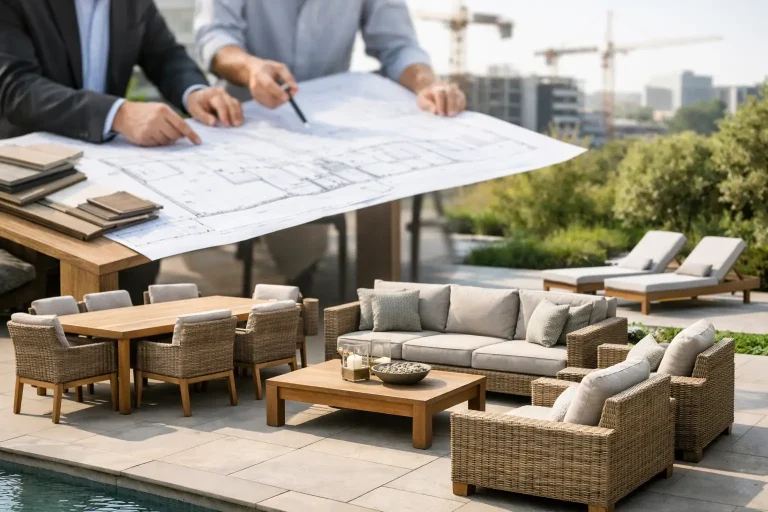
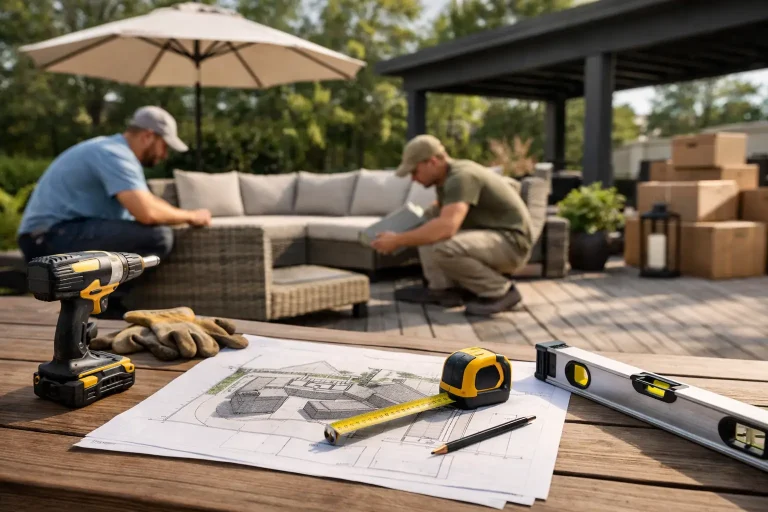
For larger projects, samples and mock-ups are worth the time. They allow stakeholders to review not only aesthetics but also drain paths, fabric hand feel, finish texture, and overall build quality. In a coastal environment, these details directly affect lifecycle performance.
Procurement questions that reduce failure later
Buyers sourcing at scale should evaluate coastal furniture the same way they evaluate any contract-grade specification – by performance, repeatability, and supplier control.
Ask whether the supplier can provide material swatches, finish samples, and construction details before approval. Confirm whether the product line is standardized enough to support reorders and phased expansions. Review lead times, packaging standards, and replacement-part availability, especially for multi-site or hospitality projects where downtime has operational cost.
This is where vertically integrated supply has a practical advantage. When design, manufacturing, quality control, and logistics are aligned, there is less room for specification drift between approved sample and delivered goods. For buyers managing villas, hotel pools, rooftop lounges, or mixed-use developments, that consistency matters as much as the design itself. At PNZ Space, that project discipline is supported by in-house design services, mock-up approvals, and production oversight built for complex outdoor furnishing programs.
Match the furniture to the exposure, not just the design brief
Not every coastal project needs the same solution. A covered dining terrace in a humid bayfront city has different requirements than an exposed oceanfront pool deck. A private villa may accept a higher-maintenance teak program for the sake of appearance, while a hotel operator may prefer aluminum and sling construction to simplify upkeep and preserve uniformity across many units.
The best specification usually comes from zoning the site by exposure level, usage intensity, and maintenance capacity. That approach produces better outcomes than trying to force one furniture family into every area. It also helps balance budget – premium materials can be reserved for the spaces where they deliver the most visible value, while high-efficiency contract-grade options support harder-working zones.
Coastal humidity does not require compromising on design. It requires being more disciplined about what sits beneath the design. When the material, finish, cushion build, and supplier capability are aligned with the environment, outdoor spaces stay usable, presentable, and easier to operate long after installation day.