Choosing an Outdoor Dining Furniture Supplier
A restaurant terrace with 120 seats, a hotel pool deck, and a multi-villa residential project do not fail for the same reason – but they often get delayed by the same one. The wrong outdoor dining furniture supplier creates friction at every stage: incomplete specifications, inconsistent finishes, uncertain lead times, and last-minute substitutions that ripple across the whole project. For procurement teams, designers, and operators, supplier choice is not a sourcing detail. It is a delivery decision.
What a strong outdoor dining furniture supplier actually does
In contract and hospitality work, outdoor dining furniture is not just tables and chairs. It is a coordinated system of product performance, visual consistency, compliance with project requirements, and dependable execution at volume. A capable supplier should be able to support layout planning, material selection, finish coordination, and delivery scheduling without losing control of quality.
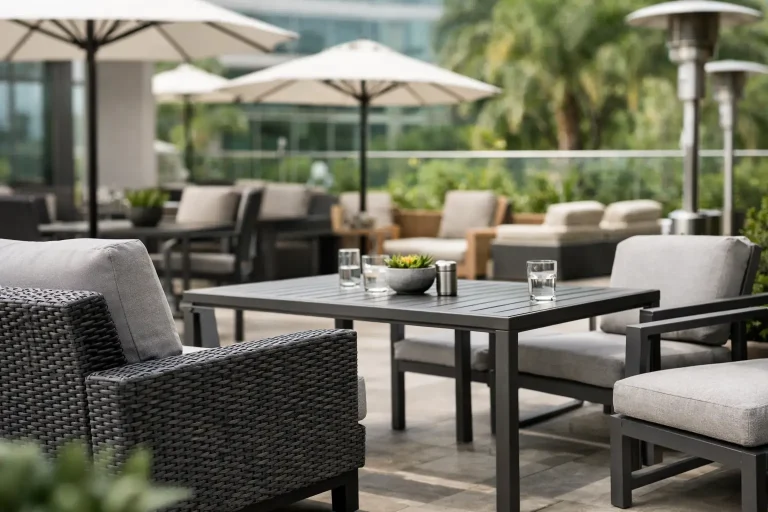
That matters because dining environments carry more pressure than many other outdoor zones. Chairs are moved constantly. Tabletops are exposed to food service, cleaning chemicals, sun, and moisture. Bases need stability on different surfaces. Cushions, if specified, must be practical to maintain and suitable for the climate. If the supplier treats dining as a simple catalog sale, the client usually absorbs the complexity later.
The strongest suppliers operate with a broader project view. They understand how outdoor dining connects to adjoining lounge areas, poolside spaces, and shade requirements. That wider scope reduces sourcing fragmentation and helps maintain a cohesive design language across the property.
How to evaluate an outdoor dining furniture supplier
The first filter is operational control. If a supplier relies heavily on third parties for design interpretation, manufacturing, and logistics, there are more points where specifications can drift. A vertically integrated model gives buyers a clearer chain of accountability. It also improves response time when changes are required, whether that means adjusting dimensions, reviewing finish options, or confirming production status.
Factory capacity is another practical consideration. Large projects rarely move in perfect phases. Quantities increase, approvals shift, and site readiness changes. A supplier with real manufacturing scale is better positioned to absorb those changes without undermining the schedule. For B2B buyers, this is not about impressive claims. It is about whether the supplier can repeat quality across dozens or hundreds of units while keeping lead times under control.
Design support should also be part of the evaluation. On paper, a chair may fit the aesthetic. In the field, seat height, table clearance, stacking requirements, and circulation space can expose problems quickly. Suppliers that provide 3D drawings, mock-up approvals, and in-house design consultation reduce those risks before production begins. That level of support is especially valuable when multiple stakeholders need to sign off, from designers and developers to operations teams.
Then there is SKU depth. A broad and organized catalog helps in two ways. First, it gives specifiers more flexibility to match project needs without shifting vendors. Second, it makes it easier to build complete outdoor schemes with coordinated dining, lounge, and accessory categories. That consistency is often what separates a finished commercial environment from a patchwork procurement exercise.
Materials, finishes, and why context matters
A dependable outdoor dining furniture supplier should be confident discussing trade-offs, not just showing attractive product images. Material choice depends on use case, climate, maintenance expectations, and budget.
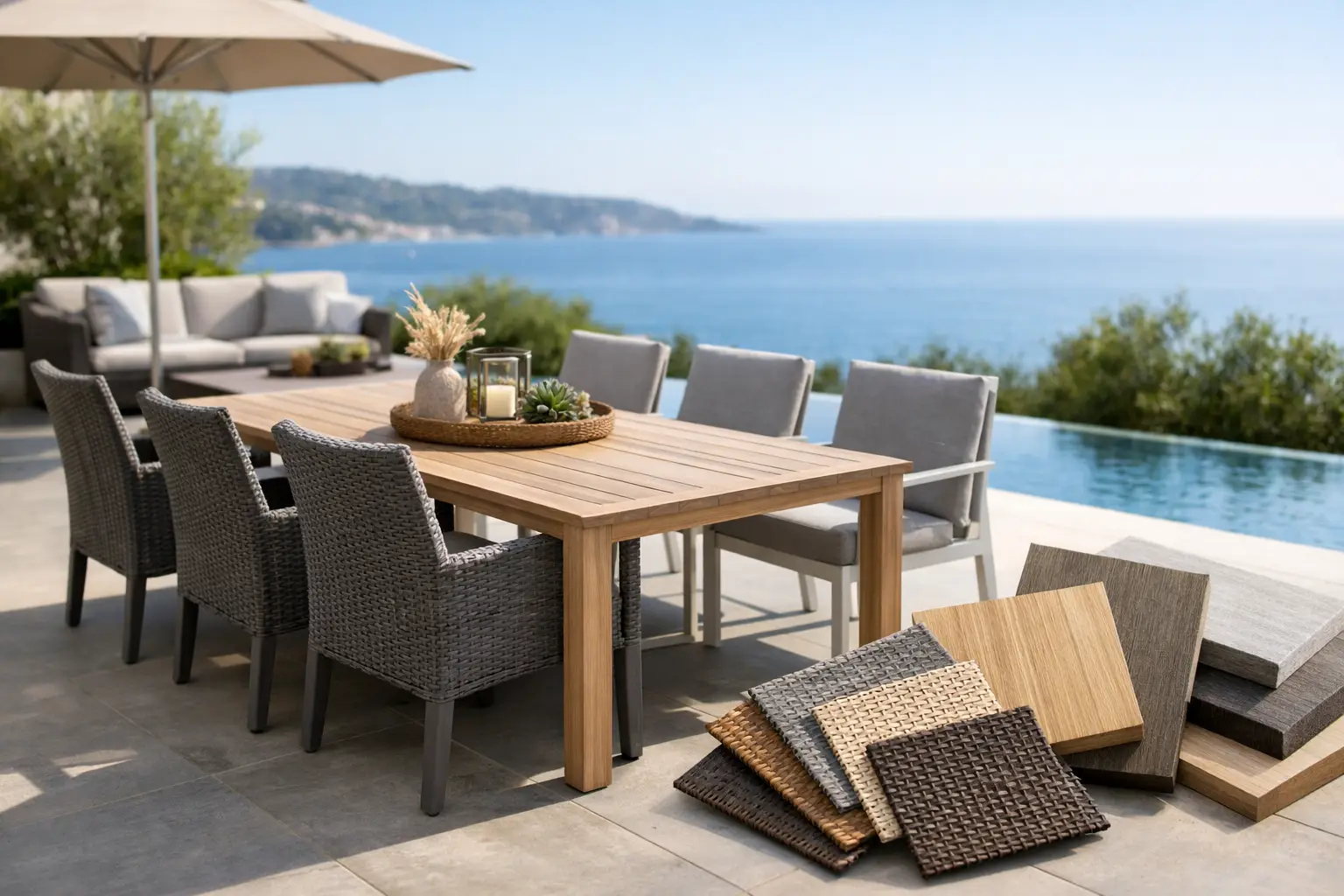
Powder-coated aluminum works well for many commercial and hospitality settings because it is lightweight, corrosion-resistant, and easy to maintain. Teak delivers warmth and a premium look, but it comes with weathering considerations that need to be understood upfront. Synthetic wicker can be effective in certain aesthetics and operating models, though quality varies significantly. High-pressure laminate, sintered stone, and ceramic-style table surfaces each bring different strengths in scratch resistance, heat tolerance, and visual character.
There is no single best material for every outdoor dining project. A beachfront restaurant has different demands than a private villa terrace. A rooftop venue with frequent furniture movement may prioritize lighter frames and stackable seating. A luxury resort may accept more material maintenance in exchange for a specific design statement. The supplier should help the buyer navigate those variables, not force every project into the same product formula.
Why customization can save a project
Customization is often treated as a premium feature. In reality, it is frequently a practical requirement. Dining chair dimensions may need to align with a specific table program. Finish tones may need to match architectural materials. Cushion fabrics may require commercial-grade performance in a defined color direction.
The key question is whether customization is controlled. A supplier that offers flexible materials and finishes but lacks production discipline can create more risk than value. Controlled customization means options are broad enough to support design intent while still staying within reliable manufacturing parameters and delivery timelines.
Delivery reliability is part of product quality
For procurement teams and project managers, delivery performance is not separate from the furniture itself. An excellent product that arrives late, incomplete, or poorly coordinated can still disrupt opening dates and installation programs.
This is where logistics capability becomes a real differentiator. White-glove delivery, staged shipments, export experience, and installation coordination all matter when projects involve multiple zones or sites. Hospitality and development clients especially benefit from suppliers that can manage complexity beyond the factory floor.
Communication is just as important. Buyers need clear updates on approvals, production, shipping, and final delivery windows. Vague timing creates downstream issues for contractors, operators, and FF&E teams. A reliable supplier communicates early, flags constraints quickly, and offers solutions before delays become expensive.
One supplier or many?
Some buyers prefer to split categories across several vendors, believing it creates more flexibility or sharper pricing. In some cases, that can work. If the project is small or highly specialized, a multi-vendor approach may make sense.
But for larger outdoor programs, consolidating with a supplier that covers dining, lounge, poolside furniture, shade solutions, and accessories usually creates better control. It simplifies approvals, reduces coordination gaps, and improves consistency in finish, quality, and delivery planning. It also gives the project team one point of accountability instead of several partial ones.
That is why many contract buyers now look for a total outdoor partner rather than a single-category vendor. The more complex the project, the more valuable that model becomes.
What B2B buyers should ask before placing an order
A strong proposal should answer practical questions without hesitation. Can the supplier support high-volume orders with consistent quality? Can they provide drawings, samples, and mock-up approval support? How broad is the material and finish range? What level of customization is realistic within the required timeline? How are logistics handled for local and international projects? What happens if quantities change midstream?
The quality of those answers often reveals more than the product sheet. Experienced suppliers speak in specifics. They understand how projects move from concept to procurement to installation, and they know where delays and quality failures usually occur.
For that reason, many buyers are shifting away from vendors that only sell inventory and toward suppliers that combine design capability, manufacturing control, and delivery execution. PNZ Space Global fits that model with vertically integrated operations, a 20,000-square-meter factory, broad category coverage, and project support that includes 3D drawings, mock-up approvals, and design consultation. For clients managing commercial, hospitality, or residential projects at scale, that kind of structure reduces procurement friction in a measurable way.
The best supplier is the one that reduces risk
Price will always matter. So will aesthetics. But in outdoor dining projects, long-term value comes from a supplier’s ability to protect the schedule, maintain specification integrity, and deliver products that perform in the real operating environment.
That means looking beyond a single hero collection or a competitive quote. It means assessing whether the supplier can support the full life of the project – from design intent and material selection to production consistency and final placement on site. The right outdoor dining furniture supplier does more than fill an order. They help the project stay buildable, presentable, and on time.
If you are specifying for a terrace, rooftop, resort, restaurant, or multi-unit development, the smartest first step is not asking which chair looks best. It is asking which supplier can still perform when the order gets larger, the timeline gets tighter, and the details get harder.