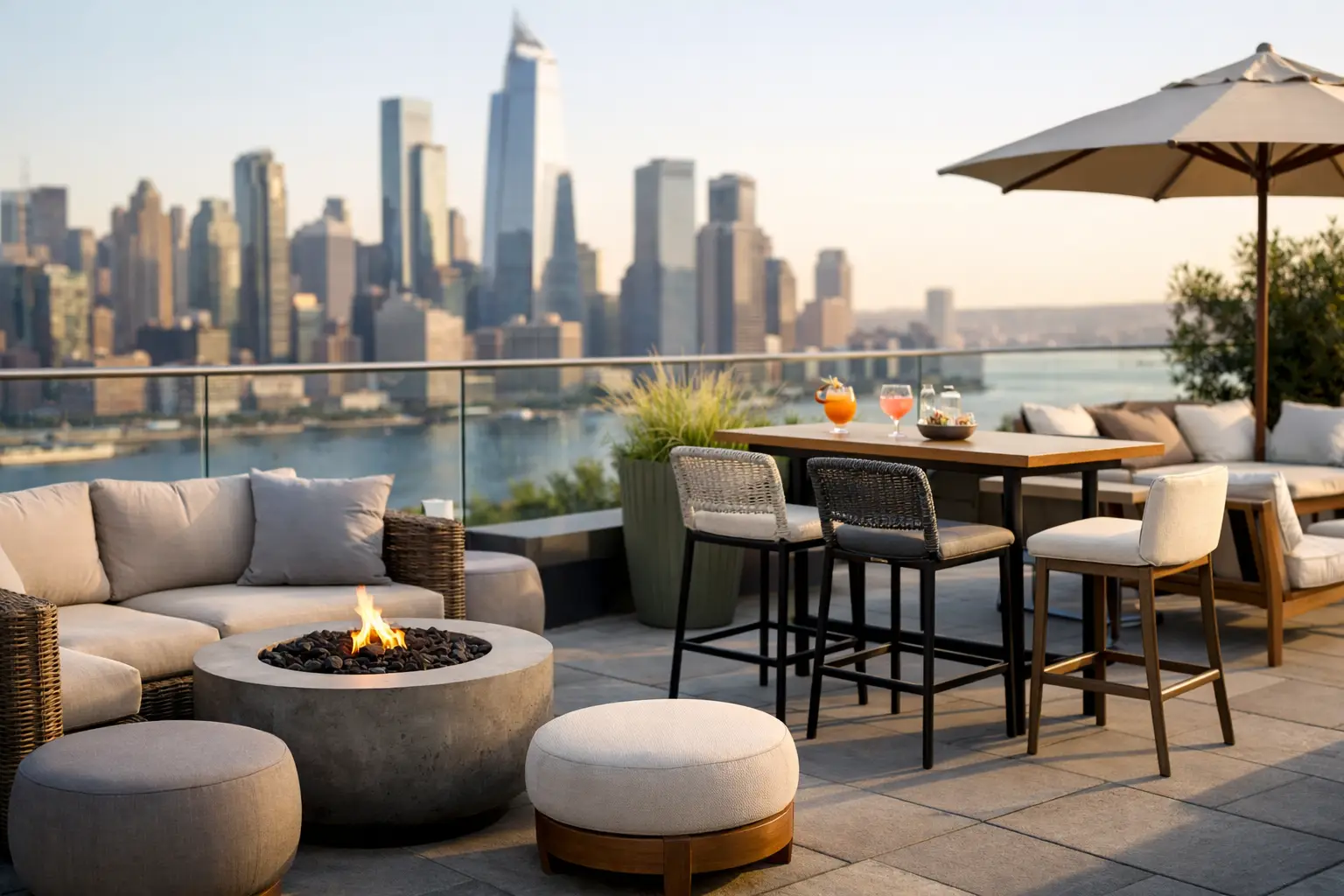
Best Outdoor Furniture for Rooftop Bars
A rooftop bar can look exceptional in renderings and still fail on opening week if the furniture is wrong. The best outdoor furniture for rooftop bars has to do more than photograph well – it has to handle UV exposure, wind load, beverage traffic, tight service circulation, and constant guest turnover without losing its shape or finish.
For hospitality operators, architects, and procurement teams, this is not a styling-only decision. Rooftop environments compress several performance demands into one space. Furniture must be commercial-grade, easy to maintain, comfortable enough to extend dwell time, and consistent enough to support brand identity across every seat, table, and lounge zone. That is why rooftop bar specification works best when product selection is tied to layout, operations, and long-term replacement planning from the start.
What makes the best outdoor furniture for rooftop bars
Rooftop bars ask more from furniture than most outdoor venues. Exposure is usually harsher, storage is limited, and layouts often need to support multiple dayparts. A relaxed afternoon lounge, a high-volume sunset service, and a private evening event may all happen in the same footprint.
That changes the buying criteria. Residential-grade pieces rarely hold up under this kind of use. Contract-grade construction matters because frames, finishes, cushions, and joinery are all under pressure from repetition and exposure. Powder-coated aluminum remains a strong choice for many rooftop applications because it is lightweight enough for handling and installation while resisting corrosion. Teak can work beautifully in premium concepts, but it needs a realistic maintenance plan. Synthetic rope and performance upholstery can add visual warmth, though they should be selected with cleaning protocols in mind.
Weight is another trade-off that buyers often underestimate. Heavier furniture can improve stability in elevated settings, but overly heavy pieces complicate rooftop delivery, reconfiguration, and service handling. The right balance depends on the building, the operator, and whether the concept prioritizes fixed layouts or frequent resets.
Start with zoning, not individual pieces
The fastest way to overspend on a rooftop bar is to source furniture item by item. Strong rooftop schemes are built in zones. That means deciding how much of the deck should function as lounge seating, how much should be dedicated to dining or bottle service, and where circulation needs to stay clear for staff and guests.
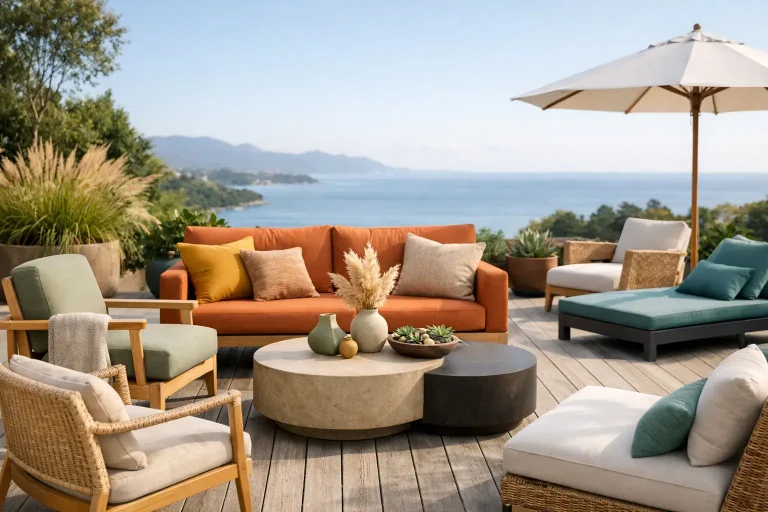
Lounge zones usually do the hardest branding work. They create the first impression, shape the social energy, and often drive higher-margin experiences. Deep seating with low tables can be effective for premium sections, especially when paired with modular units that adapt to group sizes. The key is scale. Oversized lounge pieces may look impressive in a catalog, but on a rooftop they can quickly reduce capacity and create awkward traffic flow.
Dining and bar-height seating serve a different purpose. They increase turnover, support food-and-beverage service, and help operators monetize smaller footprints. In many cases, the best mix is not one furniture style but a coordinated collection of seating heights and table formats that work together visually while supporting different guest behaviors.
Lounge seating that earns its footprint
For most rooftop bars, lounge furniture should be specified as a revenue tool, not a decorative layer. Sectionals, club chairs, loveseats, and modular sofas can define premium seating areas and support longer guest stays. But every upholstered seat on a rooftop comes with maintenance implications.
Quick-dry foam and performance fabrics are essential in exposed settings. Cushions should recover shape quickly and resist moisture retention. Removable covers can help, but only if the operator has the labor and storage process to manage them. In high-volume hospitality settings, simpler cushion profiles often outperform highly tailored ones because they are easier to clean and replace.
Frame material also matters. Aluminum-framed lounge collections are often the most practical choice because they offer a strong strength-to-weight ratio and broad finish flexibility. Woven resin and rope details can soften the look and align with upscale hospitality concepts, though textured surfaces may require more frequent cleaning in dusty or high-pollution environments.
Dining sets and bar-height furniture for service efficiency
Not every rooftop guest wants a low lounge experience. Dining chairs, side chairs, bar stools, and compact tables are what keep service moving. These pieces need to support quick seating changes, stable tabletops, and easy cleaning between covers.
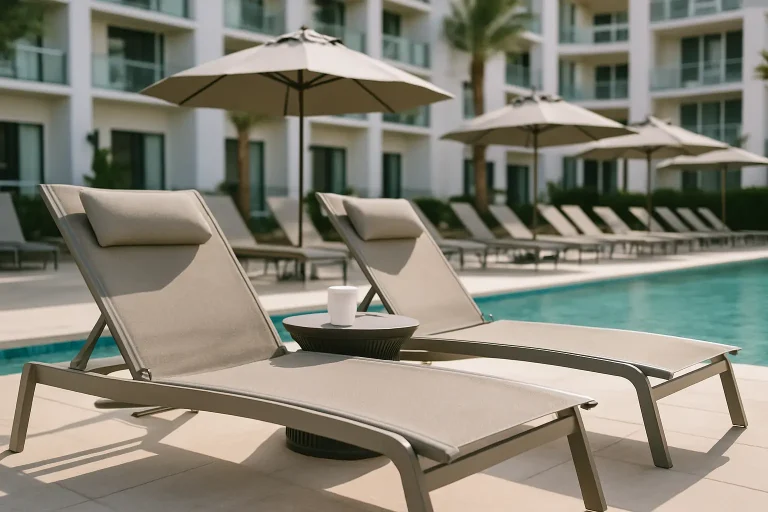
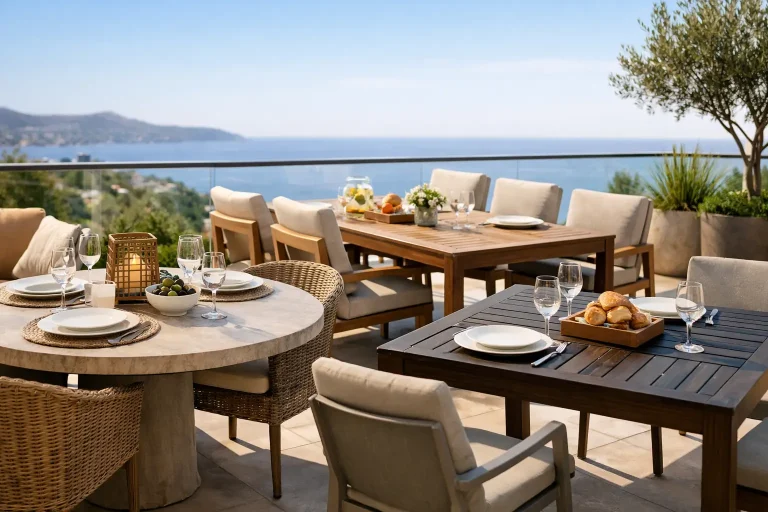
For dining areas, stackable or easy-to-move chairs can improve operational efficiency, especially in venues that host private events. A clean-lined aluminum dining chair with a durable sling or upholstered seat often delivers the best blend of comfort and speed. If the concept leans more upscale, fully upholstered dining chairs can elevate the guest experience, but they should be selected only when staff capacity supports the added maintenance.
Tabletops deserve careful attention. Stone-look surfaces, HPL, sintered stone, and other commercial outdoor materials often outperform softer decorative finishes because they resist staining, heat, and repeated cleaning. Table bases should be engineered for stability on rooftop surfaces, especially in windy conditions or on decks that may not be perfectly level.
Bar-height furniture can increase the energy of the space and maximize sightlines, but it is not right for every rooftop. If the guest demographic skews toward long dwell times or luxury service, too many high-top seats can reduce comfort. A measured mix tends to perform better.
The overlooked category: shade and accessories
The best outdoor furniture for rooftop bars is not limited to chairs and tables. Shade structures, planters, side tables, and outdoor accessories often determine whether the space functions well during peak hours.
Umbrellas and shade solutions can extend usable hours and improve guest comfort, but rooftops introduce engineering concerns that ground-level patios do not. Base weights, wind ratings, and clearance all need to be reviewed early. In some projects, fixed shade structures make more sense than movable umbrellas. In others, movable solutions preserve layout flexibility and event adaptability.
Accessories should be specified with the same discipline as seating. Planters can define zones and soften hardscape, but they also add weight and maintenance. Side tables improve lounge usability and beverage service, while integrated lighting elements can strengthen the evening atmosphere. The point is not to over-accessorize. It is to make every added piece support operations and guest flow.
Material selection depends on concept and climate
There is no single answer to the best material package for rooftop bars because climate, service style, and brand positioning all change the equation. Coastal projects may prioritize corrosion resistance above all else. Urban rooftops in high-heat regions may care more about surface temperature, UV durability, and dust management.
Powder-coated aluminum remains one of the most reliable contract options across many commercial rooftop projects. It offers design flexibility, manageable weight, and strong weather resistance. Teak delivers a premium visual language, but procurement teams should be aligned on natural weathering and upkeep. Outdoor wicker and resin can work for relaxed hospitality concepts, though quality varies widely and lower-grade versions can age poorly under heavy commercial use.
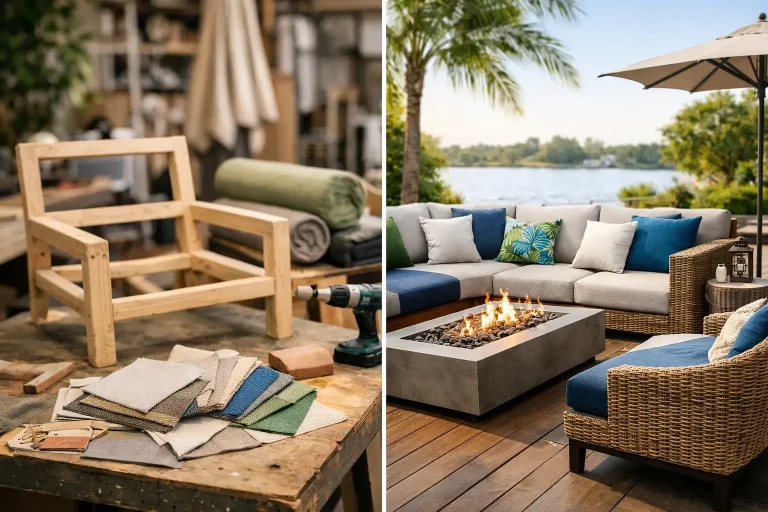
Cushion textiles should be chosen based on both appearance and replacement planning. Light colors can create a refined hospitality look, but they show spills faster. Darker tones hide wear better, though they may absorb more heat in direct sun. That is where swatches, mock-ups, and use-case testing become valuable before full rollout.
Procurement mistakes that cost more later
The most expensive rooftop furniture is often the product that looked efficient at order stage but creates problems after installation. One common mistake is buying based on appearance alone without considering access limitations. If the elevator, stair route, or crane plan is not reviewed early, even the right product can become a delivery problem.
Another mistake is under-specifying for traffic. A rooftop bar may appear design-led, but it still operates like a commercial venue. Chairs get dragged. Tables get bumped. Cushions get cleaned repeatedly. If the construction standard does not match the revenue model, replacement cycles arrive too soon.
Fragmented sourcing can create a different set of problems. When seating, tables, umbrellas, and accessories come from too many vendors, finish consistency, lead time coordination, and warranty handling become harder to manage. For multi-zone rooftop projects, a single-source supplier with design support, specification control, and logistics coordination usually reduces friction significantly.
That is where an integrated partner such as PNZ Space can add practical value – not just through product breadth across lounge, dining, shade, and accessories, but through the support that helps commercial teams move from concept approval to delivery with fewer surprises.
Specify for the rooftop you operate, not the one you imagined
The strongest rooftop bars balance visual impact with operating discipline. They do not treat furniture as a last-step purchase. They treat it as part of the business model, because seat comfort influences dwell time, layout affects revenue per square foot, and material quality shapes maintenance costs over years, not weeks.
If you are selecting the best outdoor furniture for rooftop bars, start with how the venue actually runs. Measure circulation, define service zones, pressure-test materials, and choose contract-grade pieces that can hold their finish and function under real hospitality use. A rooftop earns its reputation one service at a time, and the furniture should be built to keep up.