The Future of Contract Outdoor Furniture
A rooftop lounge that looks sharp on opening day but fades, wobbles, or misses replacement deadlines by the second season is not a design win. For developers, hospitality groups, procurement teams, and design firms, the future of contract outdoor furniture is not about chasing novelty. It is about specifying products that perform harder, ship faster, adapt to more use cases, and hold their visual standard across scale.
That shift is already changing how outdoor environments are designed and purchased. Contract buyers are asking tighter questions about lead times, SKU depth, material behavior, mock-up approvals, and project coordination across multiple categories. A chair is no longer just a chair. It is a line item connected to warranty risk, maintenance budgets, installation sequencing, and guest experience.
What the future of contract outdoor furniture really looks like
The market is moving toward outdoor collections that do more than survive weather. They need to support branded environments, accelerated construction schedules, and higher expectations from guests and residents. In practice, that means contract furniture is becoming more performance-driven and more procurement-friendly at the same time.
Design still matters, of course. A pool deck, terrace, restaurant patio, or villa garden must feel intentional and current. But aesthetic value now has to stand beside operational value. Buyers want clean lines and material flexibility, but they also want confidence that the same finish can be repeated across phases, the same frame can be specified across properties, and the same supplier can support lounge, dining, shade, and accessories without creating supply chain drag.
This is where the category is becoming more disciplined. The best outdoor programs are being built around repeatability, easier specification, and fewer weak points in fulfillment.
Materials are getting smarter, not just tougher
For years, durability claims in outdoor furniture were treated like broad marketing language. That is changing. Commercial buyers now expect more precise material logic based on climate, usage level, and maintenance realities.
Powder-coated aluminum remains central because it balances corrosion resistance, weight, and design flexibility. That said, not every aluminum build performs equally. Frame thickness, weld quality, coating process, and touchpoint engineering all matter in contract settings where furniture is moved often and used heavily.
Performance fabrics are also evolving beyond basic fade resistance. Buyers are looking for upholstery options that can handle UV exposure, moisture, staining, and frequent cleaning without losing shape or texture. In hospitality, especially, the real measure is not whether fabric survives one summer. It is whether it still supports the property standard after repeated turnover cycles.
Engineered woods, ceramics, sintered surfaces, and synthetic woven materials will keep gaining ground where natural appearance is important but upkeep must stay controlled. Still, there is always a trade-off. Some materials deliver a warmer look but require more maintenance. Others offer superior durability but a more technical feel. The future of contract outdoor furniture favors suppliers that can explain those trade-offs clearly instead of forcing a one-material answer on every project.
Customization will become a baseline expectation
Large projects rarely fit neatly into standard catalog options. A resort may need a custom sling color to align with brand identity. A residential development may need dining chairs scaled for compact balconies. A beach club may want daybeds and pool loungers adjusted for local usage patterns and storage constraints.
Customization used to be treated as a premium extra. Increasingly, it is becoming part of normal contract service. That does not always mean designing from scratch. More often, it means giving buyers meaningful control over finish, fabric, dimensions, cushion construction, tabletop material, and category coordination.
The key difference is operational. Customization only helps if it is backed by manufacturing control, accurate drawings, and disciplined approval workflows. Otherwise, it slows the job down and introduces risk. Buyers are becoming more selective about who they trust with custom work because every variation affects timelines, freight planning, and installation readiness.
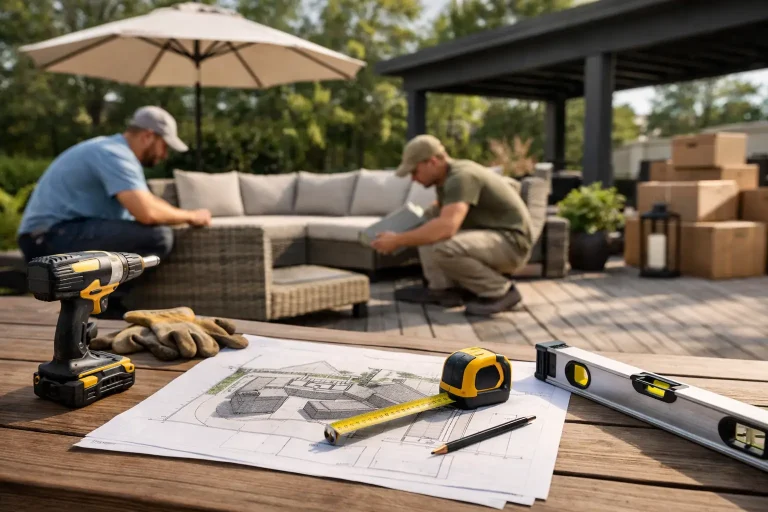
That is why in-house design support matters more than ever. 3D drawings, finish reviews, and mock-up approvals are becoming practical tools for de-risking procurement, not just nice add-ons.
Procurement speed will shape winners and losers
Many outdoor furniture problems are not design problems. They are scheduling problems. A delayed mock-up pushes approvals. A fragmented vendor list complicates coordination. A replacement item stuck in a long lead-time cycle affects handover dates or opening readiness.
The future of contract outdoor furniture belongs to suppliers built for execution, not just presentation. Vertically integrated operations will have a clear advantage because they can control more of the process, from product development and manufacturing through quality checks and delivery planning. That control becomes especially valuable on phased developments, hospitality rollouts, and multi-site commercial programs.
For procurement teams, this means the supplier conversation is getting more technical. Capacity, factory footprint, machinery, quality assurance, and logistics support are no longer background details. They are part of the specification decision.
It also means buyers will continue consolidating spend with partners who can supply across categories. There is a real efficiency gain in sourcing lounge seating, dining sets, pool furniture, shade solutions, and accessories through one coordinated channel when timelines are tight and consistency matters.
The catalog is still important, but how it is structured matters more
A large product range alone is not enough. Buyers need a catalog that supports how projects are actually specified. They think in environments and use cases: rooftop dining, poolside relaxation, shaded hospitality lounges, outdoor waiting areas, villa terraces. They also think in coordinated packages rather than isolated pieces.
This is why product taxonomy is becoming more strategic. Clear category depth in lounge, dining, pool, and accessories helps teams compare options faster, align aesthetics across zones, and keep approvals moving. SKU breadth adds value when it reduces compromise, not when it creates noise.
The strongest suppliers will be those that make selection easier while still offering flexibility. That includes curated collections, finish consistency across product families, and material swatches that help teams make confident decisions early. Buyers do not need more choice for its own sake. They need a controlled range that simplifies specification and protects design intent.
Outdoor spaces are being expected to work harder
The old line between indoor and outdoor commercial space is getting thinner. Hotels want terraces that function like premium lounges. Restaurants want patios that hold the same brand language as the interior. Residential developers want shared amenities that photograph well, endure heavy use, and remain easy to maintain.
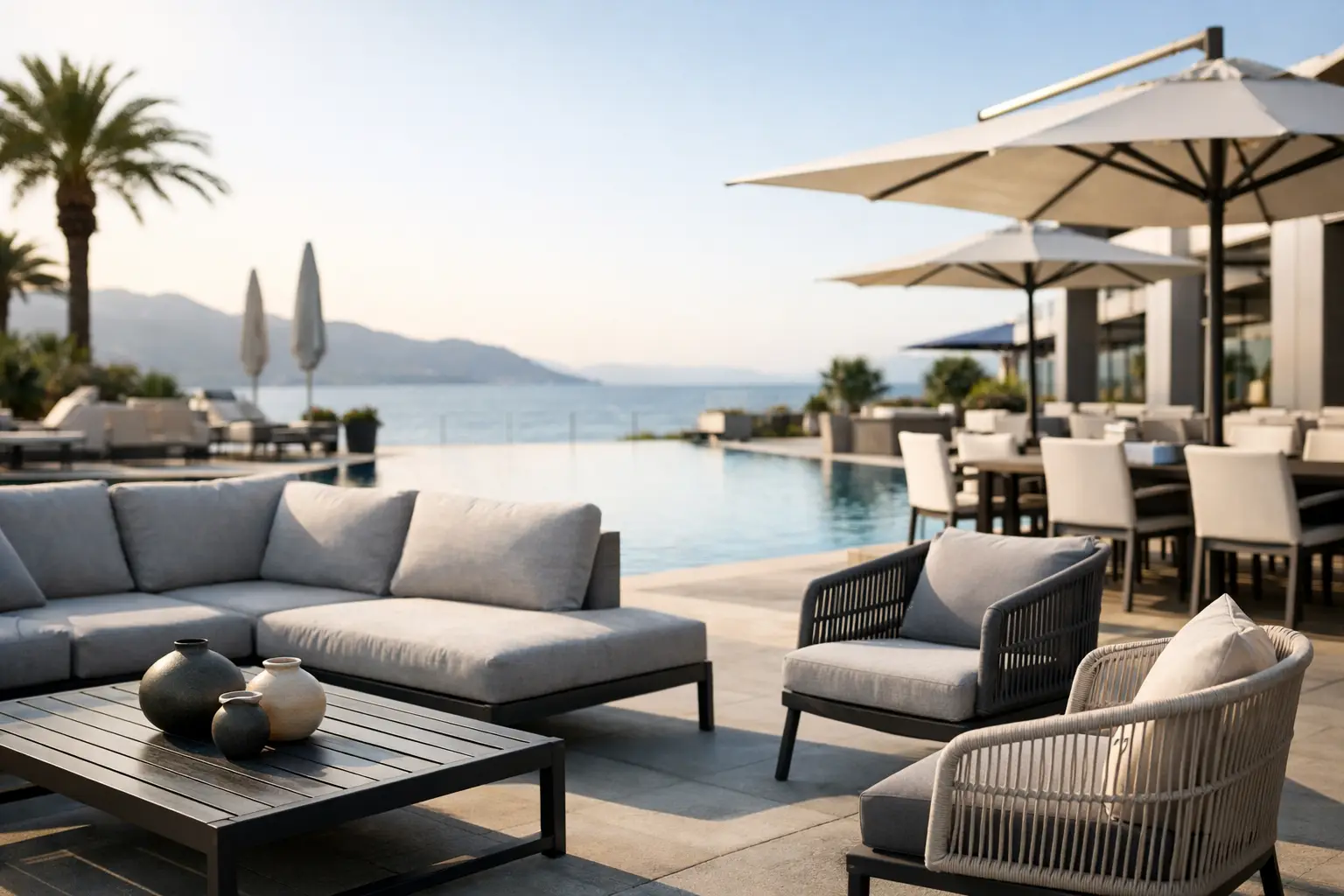
That puts more pressure on furniture selection. Pieces now need to support longer dwell time, multiple user groups, and changing layouts. Modular seating, stackable dining formats, movable shade, and mixed-material tables are gaining relevance because operators need flexibility without sacrificing appearance.
There is also growing demand for furniture that can transition across sectors. A collection specified for upscale residential may also work in hospitality or mixed-use projects if the construction is strong enough and the finish options are broad enough. This cross-application value matters to developers and procurement teams trying to standardize quality across portfolios.
Service will become part of the product
As projects become more complex, service is no longer separate from furniture. It is part of the total value. Buyers want responsive communication, accurate quoting, realistic lead times, and support that continues after the PO is placed.
That is one reason end-to-end suppliers are gaining ground. When design consultation, shop drawings, mock-up approvals, manufacturing, and white-glove delivery sit within one coordinated system, there are fewer handoff failures. For high-volume and deadline-sensitive projects, that structure reduces friction in ways that matter more than a marginal price difference.
PNZ Space Global operates in that lane, where design support and production capacity need to work together rather than compete for attention. For contract buyers, that model reflects where the market is headed: fewer disconnected vendors, more accountable project partners.
Sustainability will stay relevant, but performance will decide adoption
Sustainability will continue to influence outdoor furniture decisions, but contract buyers are practical. Materials and processes need to show real operational value, not just a better story. If a supposedly greener option fails early, needs frequent replacement, or creates maintenance issues, it loses credibility fast.
The more durable path is a balanced one. Long-lasting materials, efficient manufacturing, replaceable components, and better quality control often do more for lifecycle performance than broad environmental claims alone. Buyers are increasingly aware of this. They want responsible options, but they also want proof that those options can withstand commercial use and climate exposure.
That is the broader lesson shaping the market. The future of contract outdoor furniture will not be defined by trend language. It will be defined by whether products and suppliers can support real project pressures – design consistency, volume demand, customization, lead-time discipline, and long-term performance. For buyers specifying outdoor environments at scale, the strongest decision is usually the one that makes the next approval, the next shipment, and the next season easier to manage.