B2B Outdoor Furniture Project Support That Delivers
A rooftop lounge falls behind schedule for the same reasons again and again – late approvals, unclear specifications, fragmented sourcing, and suppliers that can ship product but cannot support the project around it. That is where b2b outdoor furniture project support becomes a deciding factor, not an add-on. For developers, designers, hospitality buyers, and procurement teams, the real value is not just getting furniture delivered. It is getting the right product specified, approved, produced, and installed without losing time at every handoff.
Outdoor projects are rarely simple. A villa terrace needs a different product mix than a resort pool deck. A restaurant patio has different wear requirements than a residential community clubhouse. Even when the aesthetic direction is clear, project execution depends on dimensions, finish selections, fabric approvals, commercial durability, packaging, freight coordination, and final placement. When those pieces are managed by different vendors, the risk compounds quickly.
What b2b outdoor furniture project support should actually include
Strong b2b outdoor furniture project support starts well before production. It begins at the specification stage, where buyers and design teams need practical guidance on product suitability, dimensions, material options, and lead times. If a supplier only provides a catalog and a quote, the project team still carries most of the coordination burden.
A true project partner helps shape the package from the start. That means reviewing layouts, recommending products by use case, advising on commercial performance, and identifying where customization makes sense and where standardization protects timelines. There is always a balance. A fully custom outdoor program can create a stronger brand experience, but it can also introduce longer approval cycles and tighter production windows. The right support model makes those trade-offs visible early.
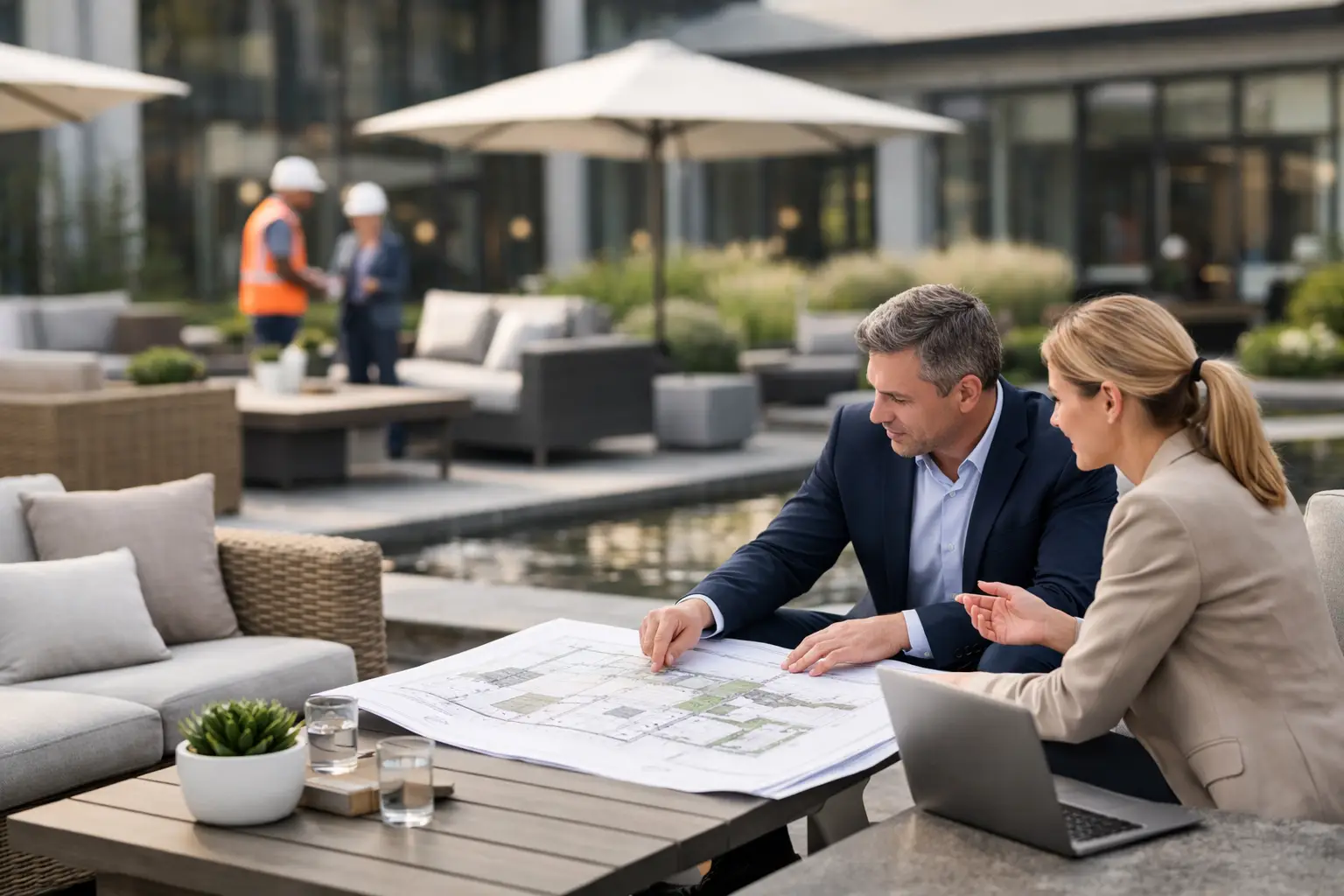
For many teams, 3D drawings are one of the most practical forms of support because they reduce interpretation gaps. A product may look right on a tear sheet and still feel oversized on a narrow balcony or underscaled on a hotel terrace. Visual planning helps clients confirm proportion, circulation, and furniture grouping before purchase orders are finalized. That shortens revision cycles and improves confidence across stakeholders.
Why project support matters more in outdoor environments
Outdoor furniture is exposed to harsher variables than many indoor programs. Sun exposure, humidity, chlorine, sea air, heavy turnover, and cleaning protocols all affect performance. A product that works well in one environment may not hold up in another, even if the design language is similar.
This is why support cannot stop at product availability. Buyers need guidance on frame materials, cushion construction, tabletop surfaces, sling performance, and maintenance expectations. A hospitality operator furnishing a beachfront property may prioritize corrosion resistance and quick-dry performance. A residential developer may care more about visual consistency across multiple unit types and common areas. A supplier with project experience should be able to advise on both.
There is also the issue of category coordination. Outdoor spaces are seldom furnished with one product line alone. Lounge seating, dining sets, poolside chaises, umbrellas, daybeds, side tables, and accessories need to work together visually and operationally. If these categories are sourced separately, finish matching and delivery synchronization become harder to control. A broader assortment under one roof simplifies that process.
Support that reduces procurement friction
Procurement teams usually do not need more options. They need fewer variables. Good project support removes friction by consolidating communication, aligning approvals, and keeping documentation consistent.
That often starts with a supplier that can support large SKU breadth while still giving buyers clear paths to specification. Catalog depth is useful only when it is paired with organization – lounge, dining, pool, shade, and accessories presented in a way that mirrors how projects are actually bought. This matters when a team is furnishing a mixed-use development or hospitality site with several outdoor zones that need different product types but one coordinated procurement process.
Material swatches and mock-up approvals also have a direct procurement benefit. They help teams avoid costly surprises after production starts. Fabric color, weave texture, frame finish, and tabletop tone can shift a project from approved concept to rejected delivery if expectations are not aligned early. Physical review points create discipline in the process. They may add a step, but they often prevent weeks of rework.
For complex or multi-site projects, responsiveness is just as important as product quality. Delays often come from unanswered technical questions, revised quantities, or shipping updates that arrive too late. Service-led support means the supplier stays engaged after the quote and through fulfillment, not just during the sales cycle.
The operational side of dependable b2b outdoor furniture project support
Design support is valuable, but without operational control it has limits. Outdoor furniture projects often fail in production and logistics, not in concept. That is why vertically integrated manufacturing matters. When design, production, quality control, and delivery coordination are connected, project teams get better visibility and stronger accountability.
A supplier with factory ownership or direct production control can usually move faster on custom revisions, maintain tighter consistency across large quantities, and manage quality issues before they become site problems. This becomes especially important on contract and hospitality work, where dozens or hundreds of units must arrive with the same finish, upholstery standard, and construction quality.
Scale also matters. A substantial manufacturing footprint and modern machinery are not just marketing points. They indicate capacity to handle volume without treating every large order as an exception. For developers and hospitality groups, that reduces the risk of split shipments, inconsistent quality, or delayed replenishment when scope expands mid-project.
Logistics support is the final test. White-glove delivery, staged coordination, and installation planning can protect a project timeline in ways standard freight never will. This is especially relevant for furnished terraces, restaurants, hotels, and rooftop spaces with access constraints. The best support model extends beyond the warehouse door and accounts for on-site realities.
What decision-makers should look for in a supplier
The right supplier should be able to answer practical questions without hesitation. Can they provide 3D drawings to support design review? Do they offer mock-up approvals before full production? Can they coordinate lounge, dining, pool, and accessory categories in one order stream? What level of customization is realistic within the timeline? How do they manage freight, delivery, and final placement?
It is also worth looking at proof of execution, not just product styling. Has the supplier delivered volume at scale? Do they have the manufacturing capacity to support phased developments and repeat orders? Can they maintain communication when timelines tighten? Attractive product is easy to present. Reliable fulfillment is harder to prove and far more valuable.
In many cases, the best choice is a supplier that acts as both design collaborator and production partner. That combination shortens decision cycles because the team recommending a finish or product mix also understands what can be manufactured efficiently and delivered on time. It keeps creative ambition grounded in operational reality.
A better model for outdoor project delivery
For B2B buyers, outdoor furniture should not be managed as a series of isolated purchases. It should be handled as a project system – one that connects concept development, specification, approvals, production, and installation. That is the standard serious commercial and hospitality projects now require.
This is where a vertically integrated partner such as PNZ Space Global stands apart. With in-house design support, 3D drawings, mock-up approvals, broad outdoor categories, and manufacturing capacity built for contract-grade fulfillment, the process becomes easier to control from first layout to final placement. Buyers gain speed, clearer accountability, and fewer disconnects between what was approved and what arrives on site.
The smartest outdoor projects are not just well designed. They are well supported. When project support is built into the sourcing model, teams spend less time solving preventable issues and more time delivering spaces that perform the way they were intended to.