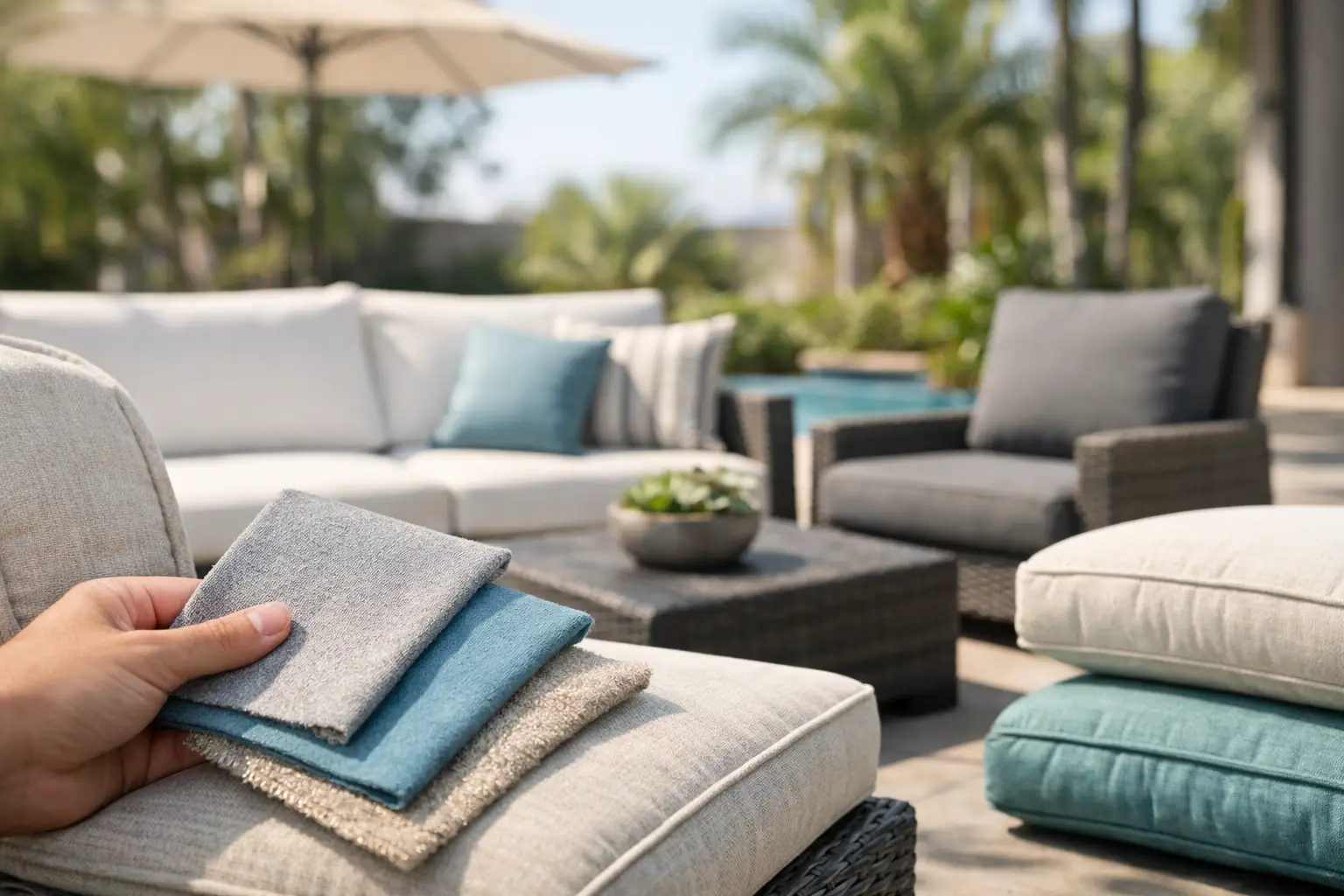
How to Choose Commercial Outdoor Cushions
A cushion failure rarely starts with the fabric sample. It shows up six months later on a pool deck, a rooftop lounge, or a restaurant terrace – when seats flatten, colors fade unevenly, and housekeeping starts moving pieces out of service. That is why knowing how to choose commercial outdoor cushions matters at the specification stage, not after installation.
For commercial projects, cushions are not a finishing touch. They are a performance component tied to guest comfort, brand presentation, maintenance labor, replacement cycles, and total project cost. The right specification supports long-term use in heat, sun, moisture, and heavy traffic. The wrong one creates callbacks, inconsistent appearance, and avoidable replenishment orders.
How to choose commercial outdoor cushions for real-world use
The first question is not which color looks best. It is where the cushion will live and how hard it will be used. A shaded restaurant patio, a beachfront resort, a rooftop in full sun, and a villa terrace all place different demands on the same product category.
Start with exposure. Full-sun environments need fabrics with strong UV resistance and colorfast performance. Poolside and coastal projects need materials that can handle water, humidity, and frequent cleaning without trapping moisture. High-turnover hospitality seating needs cushion construction that recovers shape quickly and maintains a clean, tailored profile after repeated use.
Then look at the operating model. If the client has a dedicated facilities team, they may be able to manage covers, storage, and routine care. If not, the better choice is often a lower-maintenance cushion specification with forgiving textures, practical colors, and materials that tolerate daily wipe-downs. Good procurement is rarely about chasing the most premium option on paper. It is about matching performance to the realities of the site.
Fabric should be specified for exposure, not just appearance
In commercial outdoor settings, fabric selection does most of the visible work. It influences first impression, durability, maintenance frequency, and how fast a seating area starts to look tired. A strong outdoor fabric should resist fading, mildew, and abrasion while still aligning with the design language of the project.
Solution-dyed acrylic and other contract-grade outdoor textiles are common choices because the color runs through the fiber rather than sitting on the surface. That generally gives better fade resistance in strong sun. For hospitality and food-and-beverage settings, stain resistance and cleanability are just as important as UV performance. A fabric can look excellent in a swatch book and still become a problem if it marks easily or needs specialized cleaning.
Texture also matters. Heavily textured fabrics can add depth, but they may hold dirt more visibly in dusty environments or become harder to maintain in high-use dining areas. Smoother weaves are often easier for housekeeping teams to manage. The trade-off is that they can show creasing or wear differently, so the right answer depends on the location and service model.
Color selection affects maintenance as much as design
Neutral tones are popular for a reason. They support broad design schemes and often age more gracefully across large installations. But not every neutral performs the same way. Very light fabrics can show sunscreen, food, and drink stains quickly. Very dark fabrics may reveal salt residue, dust, or heat buildup in exposed environments.
For commercial work, consistency across batches is another consideration. Large projects and phased installations need reliable color continuity. This is where working with a supplier that controls production and manages approvals carefully can reduce risk.
Foam and fill determine whether the seat still performs next season
If fabric carries the visual load, foam carries the operational one. Commercial outdoor cushions should provide comfort without losing shape too quickly, and they should dry efficiently after exposure to rain, splashing, or humidity.
Open-cell quick-dry foam is often the right choice for exposed outdoor settings because it allows water to pass through rather than remain trapped inside. That helps reduce dry time and lowers the chance of odor or mildew issues. In covered areas, other cushion constructions may work well, but exposed sites usually benefit from drainage-focused designs.
Density and firmness should be specified based on use. A resort lounge chair, a dining chair, and a deep seating sofa do not need the same feel. Softer is not always better. In hospitality, a cushion that feels plush on day one but collapses under repeated use becomes a service issue. A slightly firmer, better-structured seat often performs more consistently over time.
The shape retention of back cushions matters too. Loose, overstuffed backs may look inviting in staged photography, but they can become misshapen quickly in high-traffic commercial settings. Boxed cushions with controlled fill and stable construction usually maintain a sharper appearance across repeated use.
Fit, patterning, and construction separate contract-grade from generic
Many cushion problems come down to fit. If the cover is too loose, it wrinkles and looks underfilled. If it is too tight, it stresses seams and distorts corners. For commercial projects, cushions should be patterned to the furniture frame, not treated as generic add-ons.
This is especially important when specifying large volumes across lounge, dining, pool, and sectional formats. Seat depth, back angle, corner radius, and fastening method all influence final performance. Ties, zippers, seam placement, welting, and underside fabric choices should be considered early, because these details affect appearance, stability, and maintenance.
A rooftop banquette and a pool lounger may both require custom cushions, but their specifications should differ. The banquette may prioritize a crisp architectural fit and coordinated upholstery lines. The lounger may prioritize quick drying, easy replacement, and secure attachment in windy conditions. One specification does not fit every zone.
Ask how the cushions will be cleaned and replaced
For procurement teams, serviceability is a serious part of the decision. Removable covers can be useful, but only if the cleaning process is realistic for the operator. Hidden zippers, replaceable inserts, and standardized sizing across multiple seating pieces can make replenishment easier later.
If the project includes many identical units, it helps to confirm whether replacement cushions can be reordered with consistent dimensions and finish details. That becomes even more valuable for hospitality groups managing multiple sites or phased openings.
Commercial outdoor cushions need to match the furniture category
The best cushion specification is usually tied to the furniture application. Deep seating needs enough structure to support longer dwell times without looking over-compressed. Dining cushions should support posture and easy ingress and egress. Poolside cushions need fast drainage and materials that stand up to chlorine, sunscreen, and frequent towel turnover.
This is why a catalog-first approach works well for commercial planning. Cushion decisions should sit within the broader furniture package, not apart from it. When lounge, dining, pool, and accessory categories are specified together, the result is usually more consistent in both appearance and performance.
For designers and project managers, that integrated approach also simplifies approvals. Material swatches, mock-up reviews, and coordinated finish decisions reduce the risk of late-stage mismatch between furniture frames and soft components. On large projects, that control matters.
Lead time, scale, and supply stability belong in the selection process
Learning how to choose commercial outdoor cushions is not only about materials. It is also about execution. A strong cushion specification can still fail the project if the supplier cannot deliver production consistency, volume capacity, or on-time shipment.
Commercial buyers should look at manufacturing control, customization capability, and project support. Can the supplier produce at scale without compromising fit and finish? Can they support material approvals, mock-ups, and dimensional coordination? Can they align cushion production with the broader furniture delivery schedule?
For multi-site hospitality, residential developments, and international shipments, operational discipline matters as much as design. A vertically integrated supplier with design support, material flexibility, and white-glove logistics can reduce procurement friction from concept through installation. For many buyers, that reliability is the difference between a smooth rollout and a reactive one.
How to choose commercial outdoor cushions without overbuilding the spec
There is a tendency in commercial sourcing to overspecify everything in response to risk. Sometimes that is justified. Often it adds cost where it does not add useful performance.
An exposed beachfront deck deserves a more demanding cushion build than a shaded private terrace. A luxury hotel pool may need a higher visual standard and faster replacement capability than a low-traffic residential common area. The goal is not to buy the heaviest specification available. It is to buy the right one for the environment, use level, and maintenance capacity.
That is where design consultation and material guidance become valuable. Suppliers that can support 3D drawings, mock-up approvals, and finish coordination help teams make better decisions before purchase orders are locked. When those services sit alongside manufacturing and logistics, the process gets tighter and more predictable.
If you are specifying cushions as part of a larger outdoor package, treat them as an operational asset, not a soft accessory. The right choice will hold its line visually, perform under pressure, and make the entire furniture program look better for longer. For projects that need that level of control, PNZ Space Global approaches cushions the same way it approaches the rest of the outdoor environment – as part of a complete, deliverable solution.