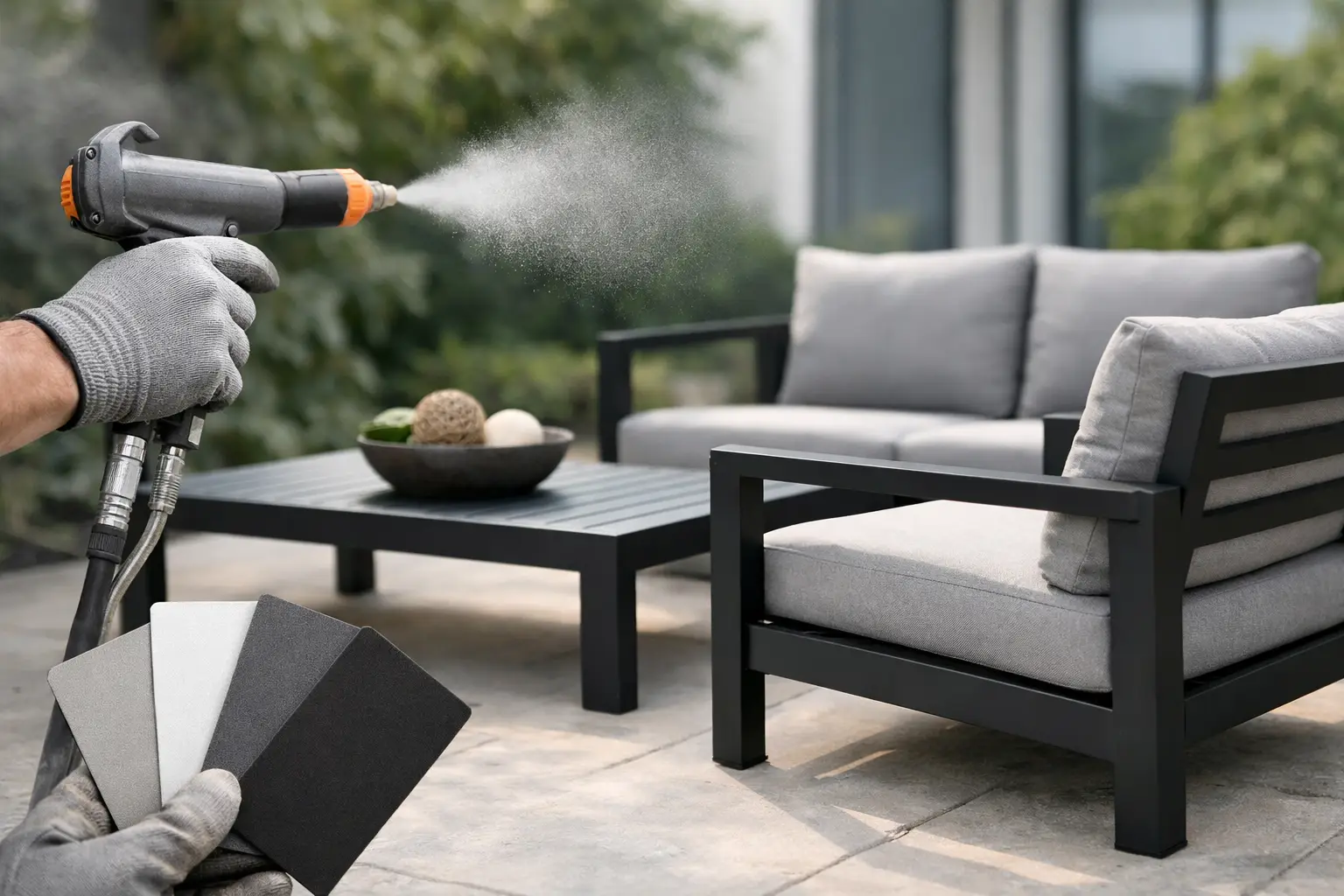
How to Choose Powder Coated Aluminum Furniture
A chair can look right in a showroom and fail fast on a rooftop, pool deck, or hotel terrace. That is usually where buyers learn the difference between decorative outdoor furniture and contract-grade performance. If you are evaluating how to choose powder coated aluminum furniture, the real question is not just style. It is whether the frame, finish, joinery, and supplier support can hold up under your project conditions, timeline, and maintenance expectations.
For procurement teams, designers, and developers, powder coated aluminum is popular for good reason. It is lighter than many metals, resists rust, and supports a wide range of clean architectural profiles. But not all aluminum furniture performs the same. The quality gap often comes down to what sits under the finish, how the finish is applied, and how well the product is engineered for actual use.
Why powder coated aluminum is widely specified
Outdoor environments punish furniture in different ways. Coastal air introduces salt. Pool areas add chlorinated moisture. Rooftops combine heat, UV exposure, and wind. Hospitality settings add constant use, rearrangement, and cleaning cycles. Powder coated aluminum is often specified because it addresses several of those pressures at once.
Aluminum does not rust like steel, which makes it a practical base material for wet or humid conditions. A quality powder coated finish adds another protective layer while giving specifiers broader control over color, texture, and sheen. That combination makes it suitable for dining, lounge, poolside, and balcony applications where design consistency matters as much as weather resistance.
Still, the phrase itself can be misleading. Powder coated aluminum furniture is not automatically premium. Some pieces are engineered for light residential use. Others are built for contract environments with thicker frames, better pretreatment, tighter welds, and more consistent finish application. For B2B buyers, those distinctions affect replacement cycles, guest experience, and long-term operating cost.
How to choose powder coated aluminum furniture for project use
The fastest way to make a better decision is to start with the setting, not the catalog image. A villa patio, a resort pool deck, and a restaurant terrace may all need aluminum furniture, but they do not need the same specification.
Start with the exposure level
Begin by defining where the furniture will live and how hard it will be used. For a shaded residential terrace, you may be able to prioritize finer detailing and lighter-weight pieces. For beachfront hospitality or high-turn commercial dining, finish durability and frame integrity should move to the top of the list.
Ask whether the furniture will face direct sun for most of the day, regular water exposure, strong wind, or heavy daily traffic. If the answer is yes to several of those conditions, the product should be selected as a performance item first and a styling item second. That does not mean compromising on aesthetics. It means making sure the look is supported by the right construction.
Evaluate the aluminum frame itself
A powder coat can hide weak engineering. That is why the frame deserves close attention before color and texture are even discussed.
Look at the thickness and feel of the profile. Thin aluminum can help hit a lower price point, but it may flex more, dent more easily, and perform poorly in high-use spaces. Frame geometry also matters. A well-designed chair or table does not rely only on material thickness. It uses smart proportions, reinforced stress points, and stable leg placement to improve load performance and reduce wobble over time.
Weld quality is another checkpoint. Smooth, consistent welds usually indicate better manufacturing discipline. Sloppy welds, visible grinding marks, or uneven joints can be signs of rushed production. On stackable or movable pieces, that becomes more than a cosmetic issue because repeated handling puts extra stress on connection points.
Look beyond the word powder coat
The finish is only as good as the process behind it. Buyers often compare color cards and texture samples, but the better question is how the coating system is prepared and applied.
Pretreatment is critical. Proper cleaning and surface preparation help the coating adhere correctly and resist peeling, bubbling, or premature wear. In demanding outdoor environments, this is often the difference between a finish that ages evenly and one that breaks down early around edges, welds, and contact points.
You should also assess coverage consistency. A high-quality powder coated finish should appear uniform across the frame, with no thin spots, drips, pinholes, or rough transitions. Textured finishes can be more forgiving visually and may hide minor wear better in commercial settings. Smoother finishes can look more refined, but they may show scratches faster in high-traffic environments. That is a trade-off worth making deliberately.
Match the finish to the application, not just the palette
Color selection is often driven by the design scheme, but operational reality should shape the final finish choice. Dark frames can look sharp and architectural, especially for modern outdoor dining and lounge concepts, yet they may show dust, salt residue, or surface scratches more readily. Very light tones can help maintain a bright, resort-style appearance, though they may reveal grime in foodservice settings.
Texture plays a practical role too. Matte and fine-textured coatings tend to perform well visually in commercial use because they soften fingerprints and minor abrasion. Gloss finishes can feel more decorative and may work well for lower-contact pieces, but they usually require more upkeep to maintain a pristine look.
If your project includes multiple zones such as poolside loungers, dining chairs, bar stools, and accent tables, consistency matters. The finish should work across the full furniture package, not just on a hero item. This is where a supplier with a broad outdoor catalog and controlled manufacturing becomes valuable. It is easier to maintain design continuity when frames, finishes, and related categories are coordinated under one source.
Check comfort and function at the same time
Commercial buyers sometimes overcorrect toward durability and end up specifying furniture that performs structurally but underdelivers in user experience. That is a costly mistake in hospitality and shared residential environments, where comfort influences dwell time, guest perception, and repeat use.
Seat height, back angle, arm profile, and cushion integration all matter. So does furniture weight. Very lightweight aluminum pieces are easy to move, which can help operations, but they may feel insubstantial in premium environments or shift too easily in windy locations. Heavier pieces often feel more stable and substantial, though they can slow down setup and cleaning. Again, it depends on the site.
For dining settings, test whether chairs tuck cleanly, stack efficiently if needed, and hold up to frequent repositioning. For lounge applications, evaluate not only the frame but also how sling, rope, teak accents, or cushions interface with the aluminum structure. The frame is the foundation, but the total product performance comes from how all materials work together.
Ask the supplier questions that reveal execution strength
If you are sourcing at scale, the product is only part of the decision. Supply reliability, finish consistency across batches, and project support can have just as much impact on the outcome.
Ask whether the supplier controls design, manufacturing, and quality checks internally or relies heavily on fragmented outsourcing. Vertical integration usually means better oversight on frame fabrication, finish standards, mock-up approvals, and timeline management. It also gives buyers more confidence when they need custom dimensions, finish matching, or coordinated category sourcing.
It helps to ask practical questions, not just technical ones. Can they provide finish swatches and material samples? Can they support 3D drawings or mock-up approvals before mass production? Can they manage large-volume delivery across multiple sites without compromising finish consistency? Those answers tell you whether the vendor is set up for project fulfillment or only for one-off sales.
For large residential, hospitality, or developer-led projects, support after specification is where value becomes visible. A dependable partner should be able to guide product selection by use case, align options across lounge and dining categories, and maintain delivery discipline. That is especially relevant when outdoor furniture is one package within a larger construction or renovation schedule.
Red flags to catch before you place the order
There are a few warning signs worth taking seriously. If the product details are vague, the finish process is not clearly explained, or the supplier cannot speak confidently about use cases, proceed carefully. The same applies if samples look good but frame joints feel light, unstable, or inconsistent.
Another red flag is choosing only by price. Lower-cost aluminum furniture can work for low-demand applications, but in commercial environments it often shifts cost downstream through maintenance, finish failure, guest complaints, and early replacement. That does not mean the most expensive option is always right. It means the specification should reflect the true operating conditions and expected lifespan.
At PNZ Space, this is exactly where project support matters most. Buyers sourcing for villas, hotels, rooftops, restaurants, and pool environments need more than attractive product images. They need coordinated outdoor categories, manufacturing control, finish flexibility, and the ability to move from concept approval to delivery without friction.
The best powder coated aluminum furniture is not simply the piece with the right silhouette. It is the one that still looks intentional after weather, use, cleaning, and time have done their work.