Outdoor Planters for Commercial Terraces
A terrace can have the right furniture, the right lighting, and the right view – and still feel unfinished. In most commercial settings, that missing layer is planting. The right outdoor planters for commercial terraces do more than hold greenery. They define circulation, soften hard architecture, create privacy, and help a space feel intentional from the first guest impression to daily operations.
For developers, hospitality operators, architects, and procurement teams, planters are not an afterthought. They are part of the specification package. If they fail, the terrace quickly shows it through cracked shells, water staining, unstable placement, dead plants, or maintenance complaints. If they are specified well, they support the full project: better zoning, stronger visual identity, and a more polished guest experience with less operational friction.
What commercial terraces need from planters
Residential logic does not always hold up on a commercial terrace. A planter in a private home may only need to look good in one season and support light use. A commercial installation faces heavier traffic, more frequent cleaning, tighter brand standards, and more scrutiny from operations teams.
That changes the buying criteria. Outdoor planters for commercial terraces need to work as design elements and performance assets at the same time. Size matters, but so do weight, drainage strategy, UV stability, wind resistance, and how easily the planter integrates with furniture layouts and access paths.
The terrace type also matters. A rooftop restaurant may need planters that double as spatial dividers without overloading the slab. A hotel terrace may prioritize a consistent finish palette across multiple zones. A mixed-use development may need modular units that can be repeated at scale with clean procurement and delivery scheduling. The best specification is rarely about one feature. It is about how all the variables work together on site.
How to specify outdoor planters for commercial terraces
The fastest way to create problems is to choose planters by appearance alone. Commercial projects benefit from a more structured approach, starting with function before finish.
Start with the planter’s job
Some planters are primarily decorative. Others create privacy between dining tables, mark the edge of a lounge zone, guide traffic flow, or screen mechanical elements. When the function is clear, size and shape become easier to define.
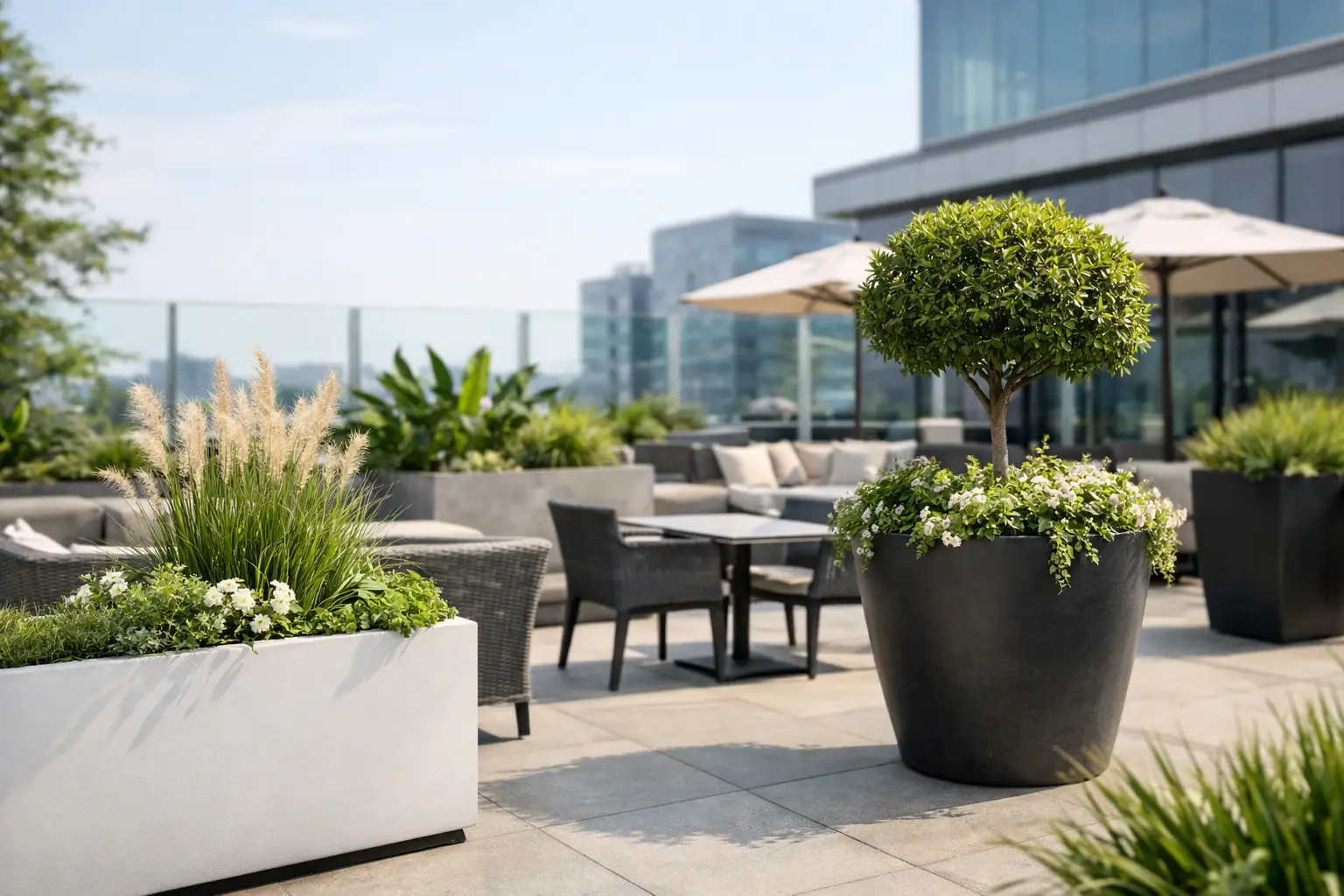
Long rectangular trough planters are often effective for zoning and perimeter definition. Tall square or tapered planters can anchor entries, corners, and transition points. Low, wider formats are useful when preserving sightlines matters. There is no universal best shape. It depends on whether the terrace needs openness, screening, or rhythm.
Match scale to the architecture and furniture plan
On commercial terraces, under-scaled planters tend to disappear, while oversized pieces can disrupt service flow. A narrow café terrace may need slimmer forms that preserve aisle clearance. A large hospitality rooftop can carry bigger statement planters that balance sectional seating, umbrellas, and bar fronts.
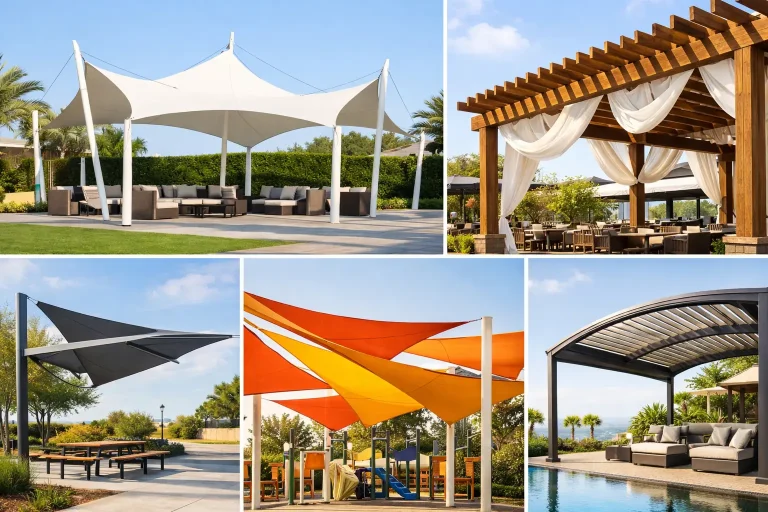
This is where design coordination matters. Planters should not be specified in isolation from lounge seating, dining sets, shade structures, and circulation widths. In practice, they work best when they are treated as part of the outdoor layout package rather than accessories added at the end.
Think through weight before delivery day
Material choice affects performance, but it also affects handling, freight, installation, and structural planning. Heavier materials can improve stability in windy conditions, but they may complicate rooftop logistics or require more coordination during placement. Lighter planters are easier to move and often better for upper-level terraces, but they still need enough stability for public use.
There is always a trade-off. A planter that is ideal for visual mass may be less practical for a terrace with load constraints. A lighter shell may solve installation issues but require ballast or careful planting strategy. These decisions are easier when they are made early with the full project team.
Material selection is a performance decision
Material is often where cost, aesthetics, and lifecycle value collide. Commercial buyers should evaluate finish consistency, weather resistance, and maintenance burden alongside upfront price.
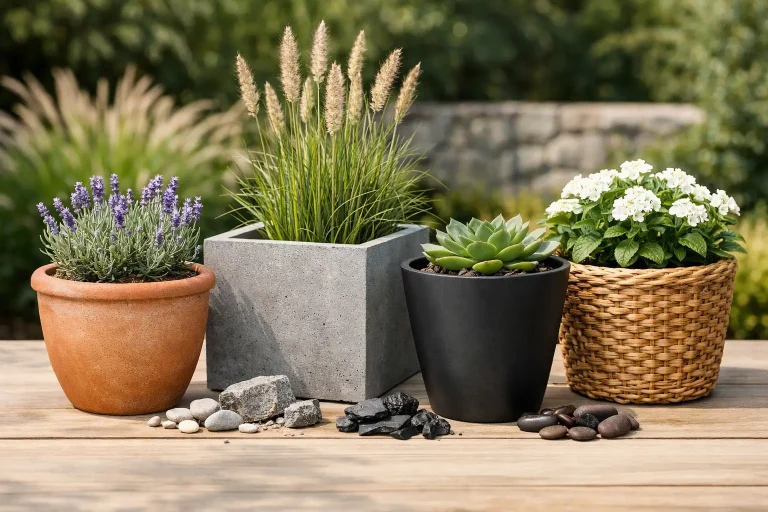
Fiberglass planters are a common commercial choice because they offer a clean look, broad finish flexibility, and lower weight than many traditional materials. For hospitality and large-scale terrace projects, that combination can be efficient. Powder-coated metal can deliver sharp contemporary lines, though specification details matter in coastal or high-moisture environments. Concrete and stone-look options bring visual permanence and can work well in large-format spaces, but weight and placement need careful review.
Not every terrace needs the same answer. In a luxury hotel setting, the visual language may justify a more substantial expression. In a multi-site rollout, repeatability, freight efficiency, and consistency often become the priority. The right material is the one that supports the environment, maintenance model, and procurement strategy over time.
Drainage, irrigation, and maintenance cannot be secondary
The best-looking planter will still become a problem if water management is not resolved. Poor drainage can damage plants, stain terrace finishes, and create maintenance issues that operators notice immediately.
Planters for commercial use should be specified with a clear drainage approach based on the site. In some projects, direct drainage may be workable. In others, especially where finished surfaces or occupied spaces sit below, integrated liners, reservoirs, or controlled drainage solutions are the better path. There is no shortcut here. Terrace waterproofing, plant health, and cleaning protocols all connect back to this decision.
Maintenance access deserves the same attention. Can staff reach the planter safely for pruning and replacement? Are the selected plants realistic for local sun, wind, and irrigation conditions? Will the finish show dirt and water marks too easily in a high-visibility hospitality setting? These questions affect long-term satisfaction as much as the initial look.
Design consistency matters at commercial scale
One planter can be selected by instinct. Fifty planters across a hospitality property need a system. Consistency in dimensions, finish, profile, and placement creates a stronger result and simplifies procurement.
This is especially relevant in projects with multiple outdoor zones. A restaurant terrace, rooftop lounge, pool deck, and arrival area may each need different planter sizes, but they should still feel like one coordinated language. That often means working within a controlled family of shapes and finishes rather than sourcing each area independently.
For B2B buyers, this is where vertically integrated supply becomes valuable. When planters and outdoor furnishings are coordinated through one project partner, finish matching, mock-up review, quantity planning, and delivery timing become easier to control. It reduces the common disconnect between design intent and execution.
Common mistakes buyers can avoid
Most terrace planter failures are predictable. The usual issues are sizing too small for the space, selecting materials without considering rooftop logistics, ignoring drainage, or treating planters as a styling layer instead of an operational component.
Another frequent mistake is failing to account for wind. Tall, top-heavy planters may look right in renderings but perform poorly on exposed terraces. Plant choice plays into this as well. A dramatic planting scheme may be hard to maintain if the site faces intense sun, heat reflection, or seasonal gusts.
Budgeting only for the container is another weak point. Commercial planning should include liners if needed, planting media, irrigation coordination, installation, and replacement strategy. A lower initial planter cost can disappear quickly if maintenance and failure rates rise later.
A better procurement approach for terrace projects
Planter sourcing works best when it follows the same discipline as furniture sourcing. That means clear dimensions, approved finishes, coordinated layouts, and realistic lead times. It also means choosing a partner that can support the full process instead of simply shipping product.
For architects, designers, and project managers, that support may include 3D review, mock-up approvals, material options, and coordinated delivery with other outdoor categories. For developers and operators, it means fewer handoff points and better control over timeline risk. On larger commercial terraces, that operational layer is not a bonus. It is part of what protects the project.
PNZ Space Global approaches outdoor projects with that full-scope mindset, supporting specification, production, and delivery across contract-grade environments where execution matters as much as design.
The best planter strategy is not the one that looks strongest in a sample photo. It is the one that still performs after installation, through traffic, weather, cleaning cycles, and daily use. When planters are specified with the same rigor as seating, shade, and dining, the terrace feels complete – and it keeps working that way.