8 Hotel Outdoor Furniture Trends for 2026
Hotel outdoor spaces are carrying more revenue than ever. A pool deck is no longer just a pool deck. It is a day-use lounge, a private event backdrop, a food-and-beverage zone, a social media setting, and in many properties, a core part of the guest decision before booking. That shift is exactly why outdoor furniture trends for hotels 2026 are moving beyond style alone. Buyers are asking harder questions about durability, lead times, flexibility, and how quickly a concept can move from drawing to installation.
For hospitality teams, the real trend is not one finish or one silhouette. It is performance-led design. The properties getting the best long-term value are specifying outdoor collections that look elevated on opening day and still perform after heavy traffic, UV exposure, pool chemicals, and frequent layout changes.
Outdoor furniture trends for hotels 2026 start with adaptable layouts
Fixed layouts are losing ground to modular planning. Hotels want outdoor environments that can shift between breakfast service, daytime lounging, sunset dining, and private functions without replacing the entire furniture package.
That is driving demand for sectional lounge seating, movable dining groupings, and lightweight occasional tables that staff can reconfigure quickly. On rooftops and terraces, this matters even more. Space is limited, guest expectations are high, and every square foot needs to work harder.
The trade-off is straightforward. Highly flexible setups can create operational complexity if pieces are too small, too easy to separate, or not engineered for commercial use. The best specifications balance movement with stability. Contract-grade frames, stackable or nesting formats where appropriate, and coordinated collections across lounge and dining categories give operators flexibility without creating visual clutter.
Mixed materials are replacing one-note looks
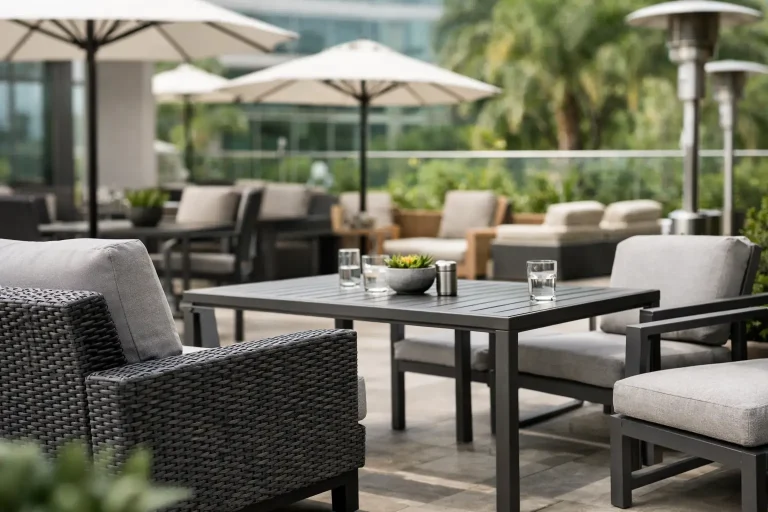
In 2026, hospitality outdoor design is leaning toward layered material palettes rather than single-material collections repeated across the property. Teak-look finishes paired with powder-coated aluminum, rope accents combined with upholstered cushions, and stone-top tables used alongside woven textures create a more residential and premium guest experience.
This is not just a style move. Mixed materials help properties define zones without losing cohesion. A hotel can use a cleaner aluminum profile on poolside furniture, warmer wood-look dining pieces near restaurant terraces, and softer woven lounge seating in cabanas while maintaining a connected design language.
It depends on climate, maintenance capacity, and brand positioning. Natural teak can be the right choice for some luxury properties, but many hospitality buyers are shifting toward lower-maintenance alternatives that preserve the look while reducing upkeep. In high-turnover environments, the finish story needs to support operations, not fight them.
Texture is doing more work than color alone
Neutrals remain dominant, but the difference now is texture. Instead of relying on bold color to create impact, designers are specifying tactile surfaces, matte finishes, braided rope details, slatted frames, and subtle contrast in upholstery. This approach photographs well, ages better, and gives hotels more room to refresh accessories seasonally without replacing core furniture.
For procurement teams, textured neutrals also simplify multi-site consistency. A restrained base palette can travel across urban hotels, resorts, and branded residences with fewer approval issues.
Low-profile silhouettes are staying, but comfort standards are rising
The clean, low-slung outdoor look is still in demand, especially for luxury hospitality and modern resort concepts. But there is a clear shift in how buyers evaluate those profiles. A sleek frame is no longer enough. Guests expect deeper seating, better cushion construction, supportive angles, and furniture that encourages longer dwell time.
That has direct revenue implications. If a lounge chair looks sharp but feels rigid after twenty minutes, guests move on. If a poolside sectional invites guests to stay through lunch and drinks, the furniture is doing real commercial work.
This is where mock-up approvals and prototype reviews matter. On paper, several collections can look similar. In use, seat depth, arm height, foam density, and fabric choice create very different outcomes. Hospitality operators should be testing comfort as seriously as aesthetics.
Poolside furniture is becoming more specialized
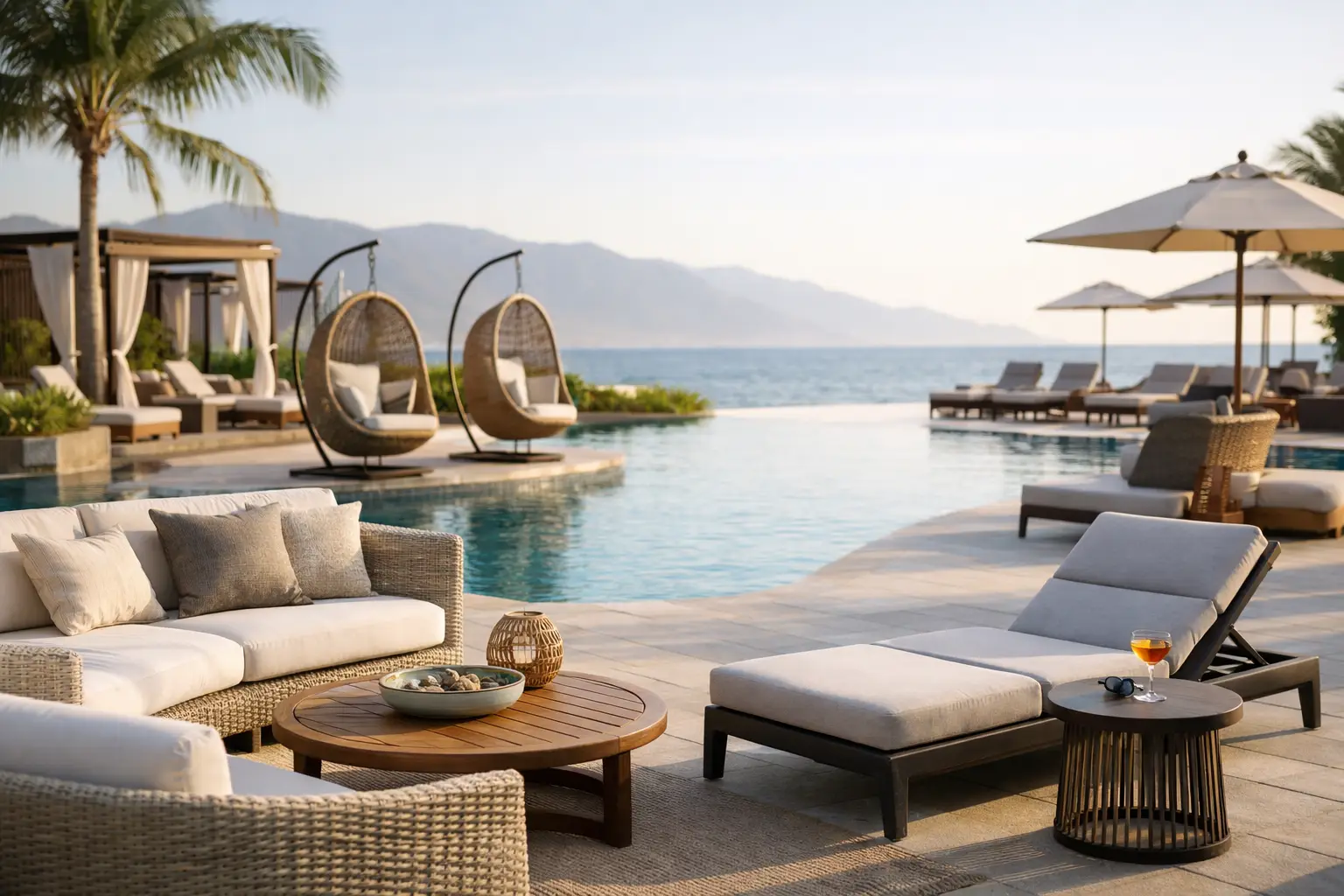
One of the clearest outdoor furniture trends for hotels 2026 is the growing separation between general outdoor seating and true poolside specification. Properties are paying closer attention to what belongs near chlorinated water, what overheats in direct sun, and what can handle wet-use turnover throughout the day.
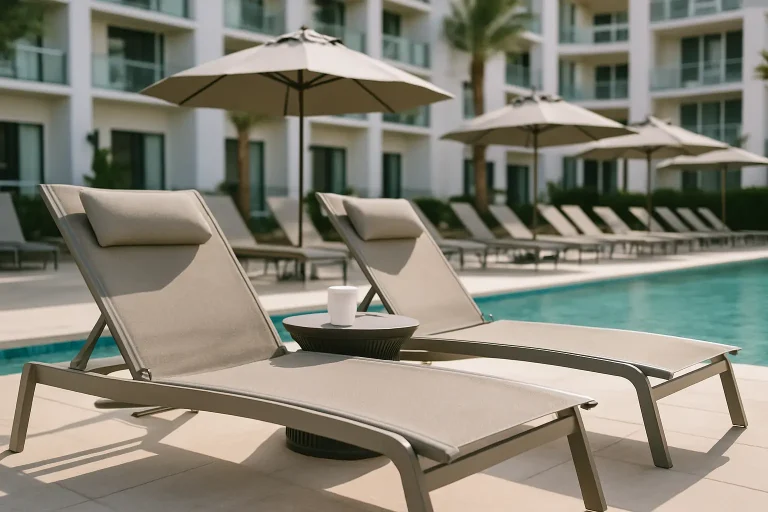
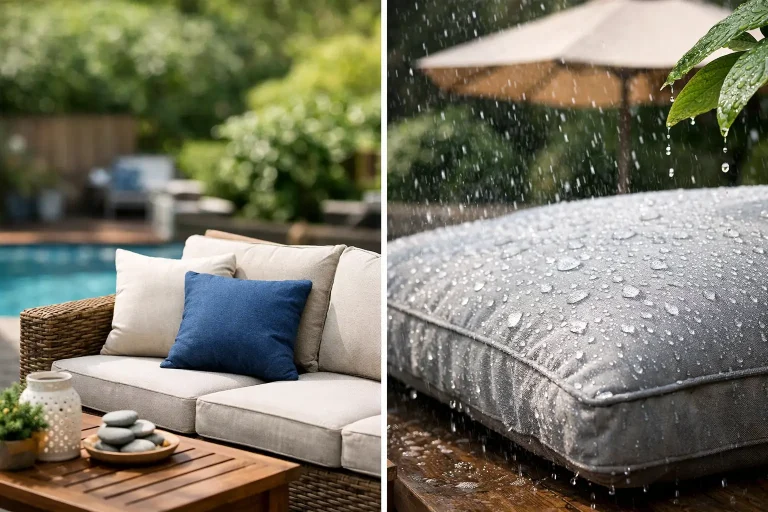
That is increasing demand for sling loungers, quick-dry cushions, high-performance upholstery, and side tables built with finishes that resist staining and surface degradation. In all-day pool environments, lightweight serviceability matters too. Staff need pieces that can be cleaned, repositioned, and maintained without taking sections of the deck offline.
Shade is now part of the furniture plan
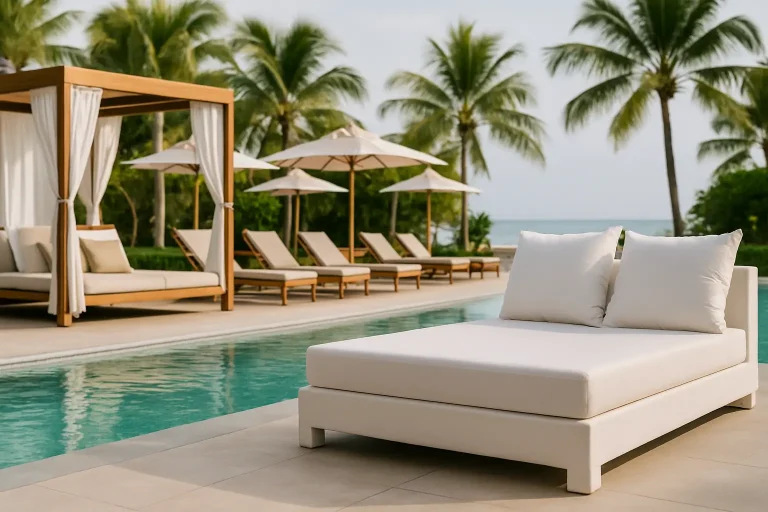
Shade solutions are no longer treated as an accessory that gets handled later. Umbrellas, cabana structures, and coordinated shaded lounge zones are being specified alongside seating from the start.
This matters for guest comfort, of course, but also for furniture lifespan. UV exposure affects fabrics, finishes, and cushions over time. A better shade plan protects both the guest experience and the asset itself. For hotels in high-heat regions, shade integration should be considered part of the core outdoor procurement package, not an afterthought.
Dining spaces are becoming softer and more residential
Outdoor dining furniture for hotels is moving away from strictly utilitarian profiles. Guests want restaurant terraces and breakfast patios to feel curated, not institutional. That is why 2026 specifications are showing more upholstered dining chairs, warmer finishes, rounded table forms, and layouts that blur the line between restaurant seating and lounge seating.
For operators, the question is where to draw the line. Fully upholstered dining formats can elevate the space, but they also require the right fabrics, drainage considerations, and maintenance routines. In high-volume service areas, a hybrid approach often works better: durable frames and easy-clean surfaces paired with selective cushioning where comfort has the biggest payoff.
This is also where a broad SKU range helps. Hotels rarely need one furniture type. They need bar-height seating, two-top and four-top dining, banquette-adjacent chairs, and overflow pieces that still match the design intent. The outdoor dining package has to function like a system.
Customization is moving from luxury extra to procurement requirement
Hospitality buyers are under pressure to differentiate properties without creating risk in production and delivery. That is why customization is becoming less about bespoke for its own sake and more about controlled flexibility.
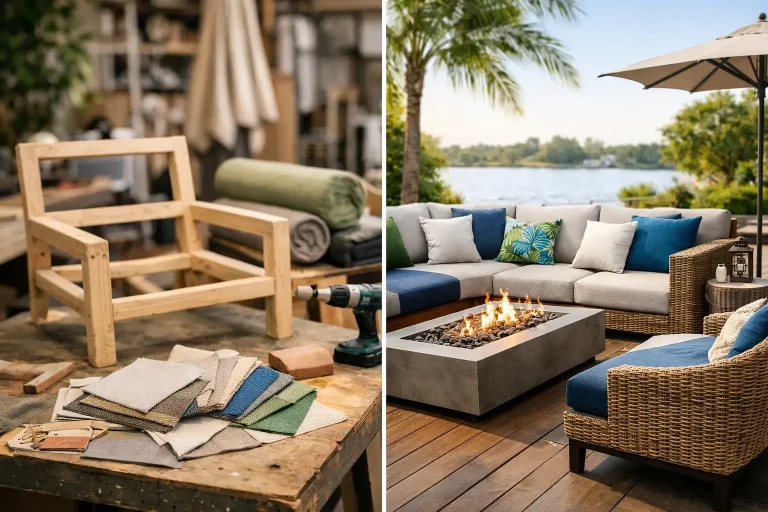
In practice, that means selecting from approved frame finishes, rope colors, fabric programs, table-top materials, and cushion details that fit brand standards while staying inside realistic lead times. The right supplier support makes a major difference here. 3D drawings, material swatches, and mock-up approvals reduce revision cycles and help project teams move faster with fewer surprises.
For large hotel programs or multi-site rollouts, customization needs guardrails. Too many one-off decisions can slow procurement, complicate replacement orders, and create inconsistency between properties. The strongest results come from a standardized furniture language with selective customization at high-visibility touchpoints.
Procurement teams are prioritizing supply certainty, not just design
A furniture trend is only useful if it can be delivered on schedule and installed without friction. That is why specifiers are putting more weight on manufacturing control, material availability, quality assurance, and logistics support.
This shift favors vertically integrated suppliers that can manage design development, production, packaging, and delivery under one operating structure. For hotel projects, especially those with phased openings or overseas coordination, fragmented sourcing creates risk fast. A missed shipment can delay site readiness. A finish mismatch can stall approvals. A lack of replacement continuity can create long-term operating problems.
Operational strength is becoming part of the design decision. Buyers want evidence that a supplier can support volume, maintain quality across categories, and deliver consistently across lounge, dining, pool, shade, and accessory lines.
PNZ Space Global is aligned with that requirement because the market is asking for more than product. It is asking for end-to-end execution, from design consultation and 3D development to mock-up approval and white-glove delivery.
What hotel teams should do with these 2026 trends
The smartest way to approach 2026 is not to chase every trend at once. Start with how each outdoor zone performs. A rooftop bar needs different furniture logic than a family pool deck. A beachfront resort terrace will have different material priorities than a city hotel courtyard.
Then look at the project through three filters: guest comfort, operating efficiency, and replacement continuity. If a collection meets only one or two of those tests, it may not hold up over the full life of the property.
The hotels that will get the best results in 2026 are not simply buying newer outdoor furniture. They are specifying outdoor environments with more intent – adaptable layouts, stronger materials, clearer zoning, and supplier partners that can carry the project from concept to completion. That is where trend awareness becomes a real procurement advantage.