Choosing Commercial Patio Furniture
A rooftop lounge that photographs well on opening night can still become a maintenance problem by mid-season. Cushions fade, frames loosen, finishes fail, and replacement timelines start eating into operating margins. That is why commercial patio furniture has to be specified differently from residential outdoor pieces. For developers, hospitality teams, designers, and procurement leads, the real question is not just how it looks on day one. It is how it performs across climate, traffic, cleaning cycles, and delivery deadlines.
What commercial patio furniture needs to do
In commercial settings, furniture is part design decision, part operational asset. It needs to support brand presentation, guest comfort, and long-term durability without creating procurement headaches later. A restaurant terrace has different pressure points than a resort pool deck, and a multi-unit residential project has different requirements than a boutique hotel courtyard. Still, the fundamentals stay the same.
Commercial patio furniture should hold up under repeated use, move efficiently through installation, and fit the visual language of the property. It also needs to be specifiable at scale. That means consistent dimensions, finish control, material clarity, and the ability to reorder matching pieces when projects expand or replacements are needed.
For B2B buyers, this is where many sourcing decisions go wrong. A product may appear suitable in photos, but if the supplier cannot support approvals, volume production, packaging coordination, and on-time delivery, the risk shifts back to the project team.
How to evaluate commercial patio furniture for real-world use
The most effective specifications start with environment, not style. Heat, UV exposure, humidity, coastal air, and frequency of use all shape what should be selected. In the GCC and other high-exposure markets, the material conversation matters early because poor choices become visible fast.
Material selection affects more than durability
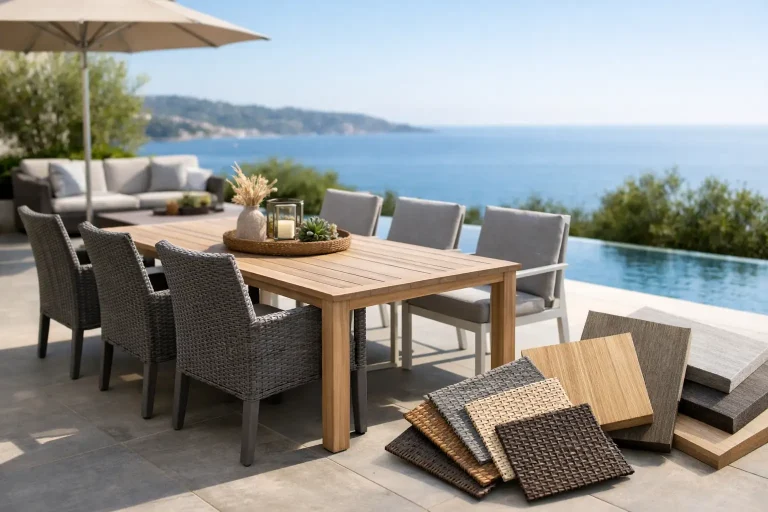
Powder-coated aluminum remains a strong option for many commercial applications because it is lightweight, corrosion-resistant, and easier to handle across larger installations. Teak brings warmth and a premium look, but it requires clear maintenance expectations. Synthetic wicker can work well in hospitality and residential amenity spaces when the fiber quality is strong and the frame beneath it is engineered for contract use. Upholstered elements need performance fabrics that are selected for UV resistance, cleanability, and color retention, not just softness.
There is no single best material across all projects. Poolside environments often prioritize quick-dry construction and easy cleaning. Dining settings may need stackability, tighter footprints, or tabletops that tolerate heavy turnover. Lounge zones usually carry more visual weight, so comfort and form become more prominent. The right answer depends on use case, exposure, and how operations teams will maintain the space after handover.
Construction quality shows up later
Commercial buyers should look past surface styling and ask how each piece is built. Weld integrity, joinery, frame thickness, cushion density, and hardware specification all matter. These are the details that determine whether a chair stays stable after hundreds of uses or whether a sun lounger keeps its shape after a season of constant occupancy.
This is also why factory control matters. When a supplier is vertically integrated, there is better visibility into materials, production consistency, and lead time management. That becomes especially valuable on projects where multiple outdoor zones need a coordinated look across lounge, dining, pool, and accessory categories.
Designing by zone instead of buying piece by piece
Many outdoor projects underperform because they are furnished as isolated product purchases rather than complete environments. A better approach is to define each zone by function, circulation, and guest behavior, then specify furniture accordingly.
Lounge areas
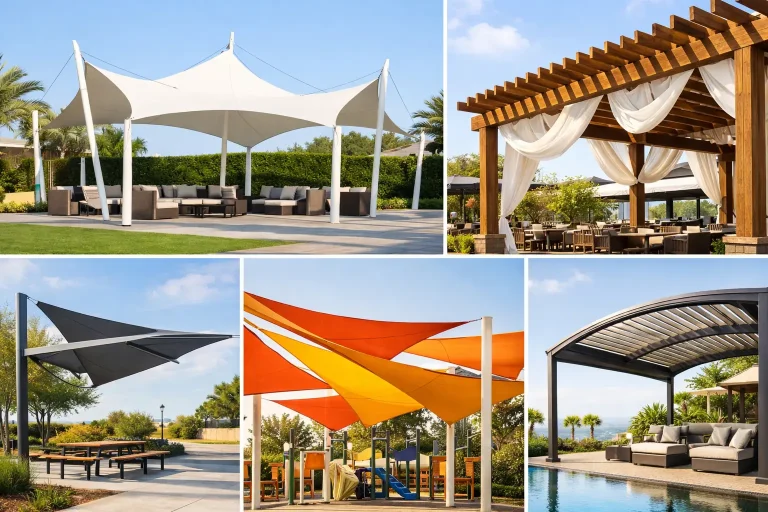
Commercial lounge settings often carry the strongest brand impression. Hotel terraces, clubhouse patios, and rooftop venues need lounge seating that feels generous without overwhelming the layout. Modular systems can be useful here because they provide flexibility across footprints and allow project teams to adjust the plan during design development. Occasional tables, fire table integration, and shade coordination should be considered at the same time rather than added later.
Dining spaces
Outdoor dining requires a tighter operational lens. Table sizes, chair movement, cleaning access, and turnover rates all affect what works. A visually striking chair that is difficult to stack or maintain may create unnecessary labor costs. Likewise, a table finish that marks easily can undermine the guest experience even if it looks strong in the initial renderings.
Pool and resort environments
Poolside furniture faces some of the harshest conditions. Constant sun, water exposure, sunscreen residue, and frequent repositioning all test product performance. Chaises, side tables, daybeds, umbrellas, and cabanas need to be selected as a system. Visual cohesion matters, but so does ease of replacement and the availability of matching accessories over time.
Why project support matters as much as product
Commercial patio furniture is rarely a simple add-to-cart purchase. Most serious projects involve approvals, revisions, finish decisions, quantity forecasting, and installation planning. Buyers need a supplier that can support that process from concept through delivery.
3D drawings can help design teams validate scale and layout before purchase orders are finalized. Mock-up approvals reduce ambiguity around materials and finishes. Material swatches make it easier to align stakeholders across design, ownership, and procurement. These services save time because they catch problems before production begins.
This is where a supplier’s operating model becomes a commercial advantage. A large SKU base gives teams more flexibility when balancing budget, style, and lead time. In-house design support helps simplify specification. Manufacturing capacity supports volume requirements without forcing buyers to split categories across multiple vendors. White-glove delivery adds another layer of control when projects need coordinated installation rather than curbside drop-off.
For buyers managing hotels, restaurants, branded residences, and multi-site developments, reducing vendor fragmentation is not just convenient. It lowers risk.
Commercial patio furniture and the cost of getting it wrong
The cheapest outdoor package is often the most expensive one over time. Early replacement, guest complaints, finish failure, inconsistent reorders, and shipping delays all create downstream cost. That cost may show up as maintenance spend, missed opening dates, or labor hours spent solving issues that should have been prevented during sourcing.
Procurement teams already understand unit pricing. The harder part is calculating lifecycle value. A better commercial patio furniture program balances acquisition cost with product longevity, reorder confidence, and supplier responsiveness. If a supplier can deliver at scale, maintain specification consistency, and support timeline pressure, that value extends beyond the furniture itself.
It also protects design intent. Too many projects start with a strong visual concept and end with substitutions caused by stock limitations or fragmented sourcing. Working with a single outdoor specialist can preserve cohesion across categories while keeping the procurement path cleaner.
What to ask before you place the order
Before committing to a supplier, commercial buyers should ask practical questions. Can the supplier support custom dimensions, materials, or finishes if the project requires them? Are drawings and mock-ups available? Can lounge, dining, poolside, and accessory categories be coordinated under one procurement stream? What does lead time look like at project scale, not just for samples? How are packaging, shipping, and final delivery handled?
Those questions reveal whether a supplier is built for project execution or only for transactional sales. For contract and hospitality work, that distinction matters.
A partner such as PNZ Space Global, with vertically integrated manufacturing, in-house design support, and a broad contract-grade catalog, is positioned to help teams manage both aesthetics and execution. That combination is especially useful when projects need material flexibility, approval support, and dependable delivery across high volumes.
The best outdoor spaces do not happen because a few attractive pieces were selected. They happen because every decision, from frame construction to freight coordination, was made with the end use in mind. When commercial patio furniture is specified that way, the result is not only a better-looking project. It is a space that keeps performing long after opening day.