Best Outdoor Furniture Accessories for Hotels
A pool deck can have the right loungers, a rooftop bar can have the right seating mix, and a resort terrace can still feel unfinished. That gap is usually in the details. The best outdoor furniture accessories for hotels are not decorative add-ons. They shape guest comfort, extend product life, improve service flow, and help outdoor spaces perform under daily commercial use.
For hospitality teams, accessories should be specified with the same discipline as seating and tables. A side table that holds up to constant turnover, an umbrella base that performs in exposed wind conditions, or a storage solution that simplifies nightly reset all have a direct effect on operations. In hotel environments, the right accessory package protects the larger furniture investment and supports a more consistent guest experience.
What hotels should expect from outdoor accessories
Hotel outdoor areas are high-contact, high-visibility environments. Guests notice whether a chaise has a convenient table beside it, whether there is enough shade at peak afternoon hours, and whether a dining terrace feels controlled or cluttered after a busy service. Accessories need to do more than complete the look. They need to solve practical problems without adding maintenance burden.
That means contract-grade construction matters. Materials should resist UV exposure, moisture, staining, and frequent cleaning. Weight matters too. Accessories that are too light may shift constantly in windy settings, while pieces that are too heavy can slow down staff during resets and reconfigurations. The right choice depends on the zone, the climate, and how often the area is rearranged.
Best outdoor furniture accessories for hotels by priority
Shade solutions that support revenue-generating space
Shade is usually the first accessory category that affects both guest comfort and commercial performance. On a restaurant terrace, inadequate shade shortens dwell time. On a pool deck, it can push guests away from premium seating zones during the hottest hours. Umbrellas, cantilever systems, privacy screens, and cabana-style accessories should be chosen as operational tools, not just visual accents.
Freestanding umbrellas work well when flexibility is important and the layout changes often. Cantilever umbrellas make more sense when hotels want fewer center poles interrupting service or sightlines. For larger hospitality footprints, modular shade systems can create more consistent coverage across dining or lounge zones. The trade-off is cost and planning. Larger shade systems require more coordination upfront, but they often reduce replacement frequency and improve the look of the space.
Base weight, canopy fabric, and replacement-part availability are just as important as appearance. Hotels should avoid specifying shade products that look right in a rendering but become difficult to maintain once exposed to wind, chlorine, salt air, or heavy handling.
Outdoor side tables and service tables
A lounge chair without a practical table beside it creates friction immediately. Guests need a place for drinks, phones, towels, menus, and personal items. Staff need surfaces that support quick service without overcrowding pathways. That is why side tables are among the highest-value accessories in hospitality outdoor design.
The best options use materials that can handle wet glasses, sunscreen residue, and repeated cleaning without obvious wear. Compact tables are ideal at the pool, while larger occasional tables work better in conversation areas and outdoor lounges. Nesting formats can be useful in flexible spaces, although simpler fixed designs are often better for long-term durability in heavy-use properties.
Hotels should also think in ratios. Too few tables make the space feel under-equipped. Too many create visual noise and reduce circulation. The right specification comes from understanding guest behavior in each zone, not from applying one standard across the property.
Planters and space-defining accessories
Planters do more than add greenery. In hotels, they help organize movement, soften hardscape, create privacy, and visually separate functions without full built partitions. A rooftop lounge may use planters to frame VIP seating. A resort restaurant may use them to define queue areas or edge dining sections. Around pools, they can create a more premium feel while helping guide traffic.
The key is scale. Small decorative planters often disappear in large commercial settings. Oversized planters usually perform better because they hold visual weight and are less likely to be displaced. Material choice matters as well. Lightweight composite may help with rooftop load considerations, while heavier constructions may be better at ground level in exposed conditions.
Drainage and maintenance access should be discussed early. Beautiful planters that leak, stain paving, or complicate irrigation can become an operations problem quickly.
Outdoor lighting accessories for atmosphere and safety
Many hotel outdoor spaces have enough furniture but still fail after sunset. Portable lamps, lantern-style lighting accents, and integrated table lighting can change how a terrace or lounge operates at night. They extend usability, support ambiance, and improve perceived quality.
For hospitality use, rechargeable and commercial-grade portable lighting is often the most practical route. It allows flexible placement without invasive electrical work and helps properties adapt layouts for events. That said, battery life, charging logistics, and replacement cycles must be considered. A portable lamp program only works if the operations team can manage it easily.
Lighting accessories should also match the intended pace of the space. A quiet courtyard needs a different lighting feel than a high-energy rooftop bar. Warm, low-glare light is usually the safest direction, but output levels need to reflect circulation, table service, and brand positioning.
Protective covers and storage accessories
Not every accessory is guest-facing, and that is exactly the point. Protective covers, cushion storage boxes, and accessory carts have a direct effect on lifecycle cost. Hotels that invest heavily in outdoor furniture but ignore protection often end up replacing pieces sooner than expected.
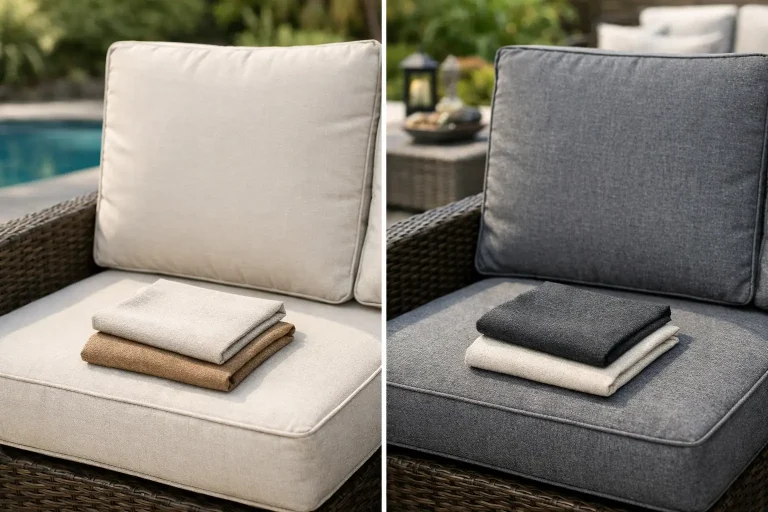
Covers should be breathable, correctly fitted, and easy for staff to install quickly. If the process is awkward, usage drops. Storage accessories also need to match the property’s actual reset routines. A luxury resort may have dedicated overnight furniture teams, while a smaller hotel may need compact solutions that reduce labor time.
This category is rarely the most visible during procurement, but it often delivers the clearest operational return. Protecting finishes, fabrics, and cushions through weather shifts and off-hours exposure helps preserve the visual standard guests expect.
Matching accessories to hotel zones
Pool decks
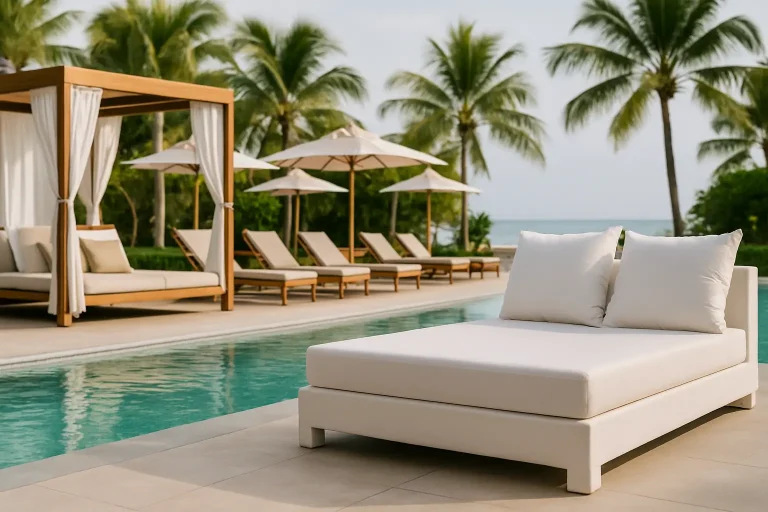
Pool environments are tough on materials. Water, chlorine, UV exposure, and constant towel-and-drink traffic create a harsh test. Accessories here should prioritize easy-clean surfaces, stable bases, and practical placement. Side tables, umbrella systems, towel valet units, and covered storage all tend to earn their keep quickly.
Rooftop lounges
Wind load and visual coherence are usually the main issues on rooftops. Accessories should be selected with weight, anchoring strategy, and skyline aesthetics in mind. This is not the place for lightly built decorative items that shift easily or degrade fast.
Outdoor dining terraces
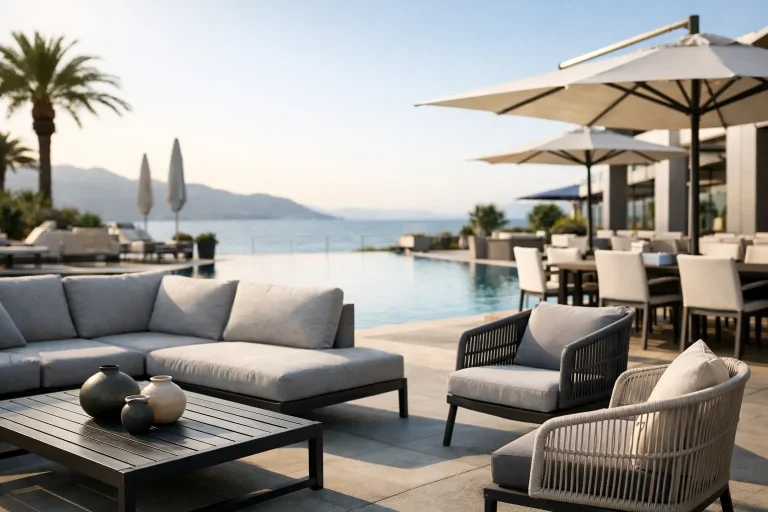
Dining spaces benefit from accessories that support service rhythm. Shade, table lighting, planters, and traffic-defining elements all help. The goal is to improve comfort without crowding staff routes or reducing seat efficiency.
Guest room terraces and villas
In private outdoor settings, accessories can be more residential in feel, but they still need contract-grade durability. Side tables, lanterns, small planters, and compact shade options work well here, especially when the design language needs to align with the interior experience.
Procurement factors that matter more than trends
Accessories are often where hotel buyers lose consistency. A property may specify core furniture carefully, then fill accessory needs from multiple sources with mixed materials, variable lead times, and uneven quality. That creates visual fragmentation and complicates replacements later.
A better approach is to source accessories within a coordinated outdoor program. That gives design teams better finish control and gives procurement teams clearer timelines, approvals, and replenishment pathways. For larger hospitality projects, this is where a vertically integrated supplier adds real value. When design support, manufacturing control, mock-up approvals, and delivery coordination sit under one roof, specification risk drops.
For decision-makers managing multiple zones or multiple properties, accessory sourcing should be judged on the same criteria as primary furniture: durability, repeatability, customization options, and fulfillment reliability. PNZ Space Global approaches outdoor projects this way because hospitality environments do not reward fragmented procurement.
How to choose the best outdoor furniture accessories for hotels
Start with function, not decoration. Identify what each zone needs to improve comfort, service, protection, or space definition. Then test every accessory against commercial use conditions, staffing realities, and maintenance routines.
After that, review material compatibility across the broader outdoor package. Accessories should feel integrated with lounge, dining, and poolside furniture rather than added at the end. Finally, verify execution capacity. Hotels need suppliers that can support drawings, finish decisions, mock-up review, and on-time delivery at project scale.
The right accessories do not call attention to themselves. They make the terrace easier to use, the pool deck more premium, the restaurant more comfortable, and the furniture package more durable. That is usually the difference between an outdoor space that photographs well and one that performs season after season.