Choosing an Outdoor Furniture Manufacturer
A missed ship date on a rooftop lounge or resort pool deck does more than delay furniture delivery. It pushes opening schedules, disrupts installation sequencing, and creates cost pressure across trades. That is why choosing the right outdoor furniture manufacturer is not simply a sourcing decision. For developers, designers, hospitality buyers, and procurement teams, it is a project execution decision.
The market is crowded with suppliers that present strong imagery and broad claims. What separates a dependable manufacturing partner from a catalog reseller is operational control. When outdoor products need to meet specification, survive climate exposure, and arrive on time in project volume, the manufacturer behind the product matters as much as the design itself.
What a serious outdoor furniture manufacturer should actually control
For contract and hospitality work, vertical integration is not a branding phrase. It is a practical advantage. A manufacturer that controls design, production, quality review, and delivery coordination can solve problems earlier and with less friction. That becomes especially valuable when a project includes custom dimensions, material changes, finish approvals, or phased delivery across multiple sites.
An outdoor furniture manufacturer with in-house production visibility can give buyers clearer answers on lead times, MOQ requirements, finish consistency, and replacement planning. If you are furnishing villas, restaurant terraces, hotel decks, or shared amenity spaces, those answers affect budgeting and scheduling immediately.
Factory scale matters too, but only when paired with process. A 20,000-square-meter production footprint, modern machinery, and skilled artisans indicate capacity. The real value is what that capacity enables – repeatable quality, broader SKU availability, and the ability to support both standard collections and project-specific customization without losing delivery discipline.
Design support is part of procurement, not an extra
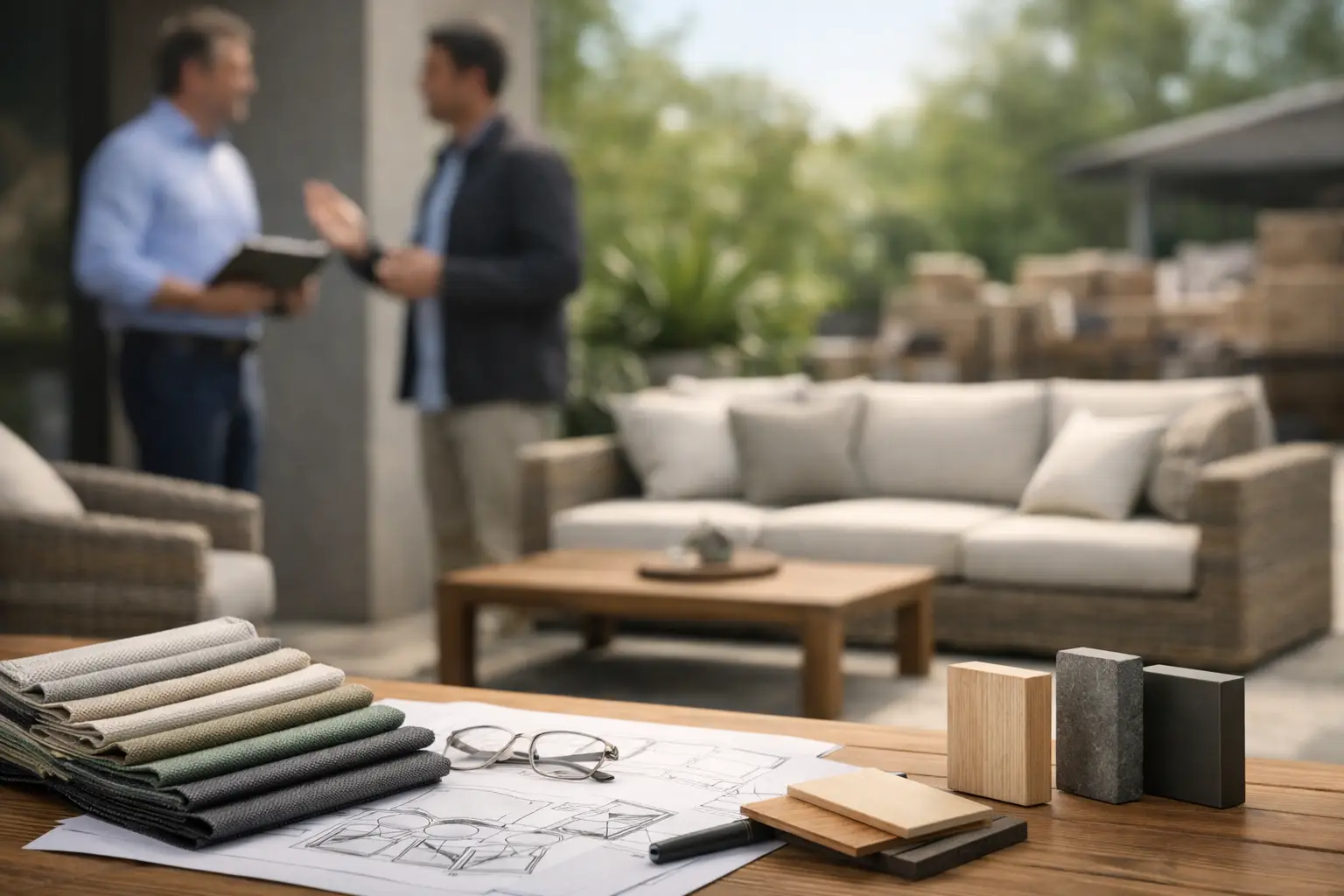
Many commercial buyers still treat design support and manufacturing as separate tracks. In practice, that split often slows approvals. When the same partner can support 3D drawings, mock-up review, material swatches, and specification alignment, decisions move faster and risk drops.
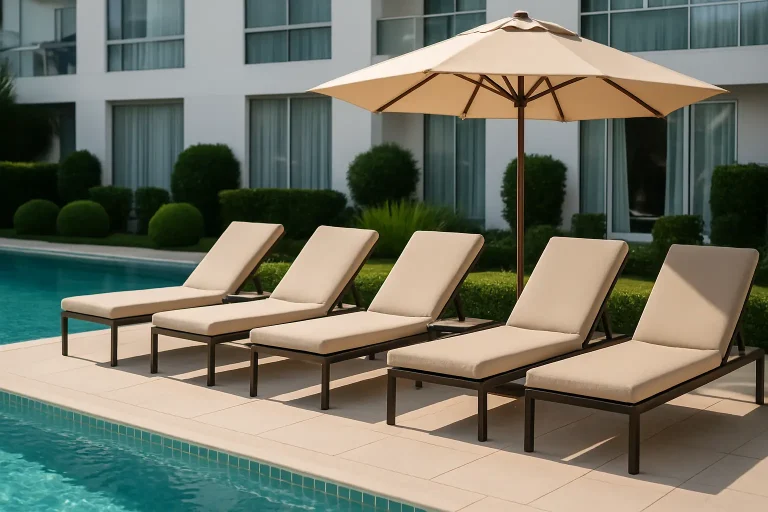
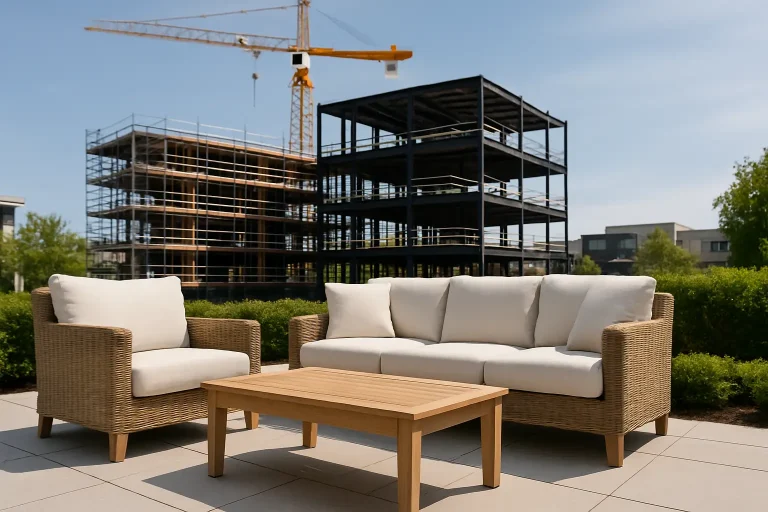
This is especially true in outdoor settings, where furniture selection affects traffic flow, shade planning, service circulation, and the visual relationship between architecture and landscape. Lounge seating for a rooftop is not specified the same way as poolside chaises for a resort or dining sets for a high-turn restaurant terrace. Each setting has different priorities around footprint, stackability, maintenance access, finish wear, and guest use patterns.
A manufacturer with an in-house design studio can help resolve those details before they turn into site issues. That does not mean every project needs custom product development. Often, the better move is adjusting materials, cushions, dimensions, or finishes within an existing line so the result fits the project without extending the timeline unnecessarily.
Product breadth reduces sourcing friction
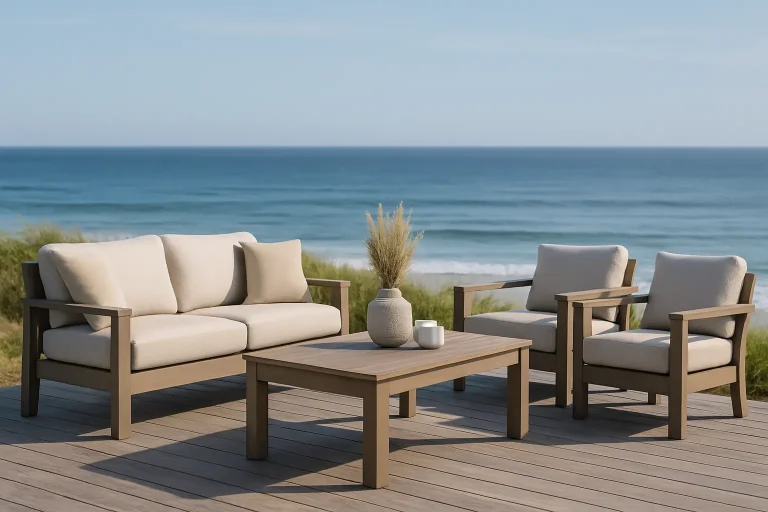
Buyers furnishing outdoor environments at scale rarely need one hero product. They need a coordinated package. Lounge seating, dining, poolside furniture, shade solutions, and accessories all need to work together visually and operationally.
That is where a one-stop supplier creates real procurement value. If seating, tables, umbrellas, and supporting accessories come from different vendors, every approval path becomes more complicated. Finish matching gets harder. Lead times no longer align cleanly. Freight and installation planning become fragmented.
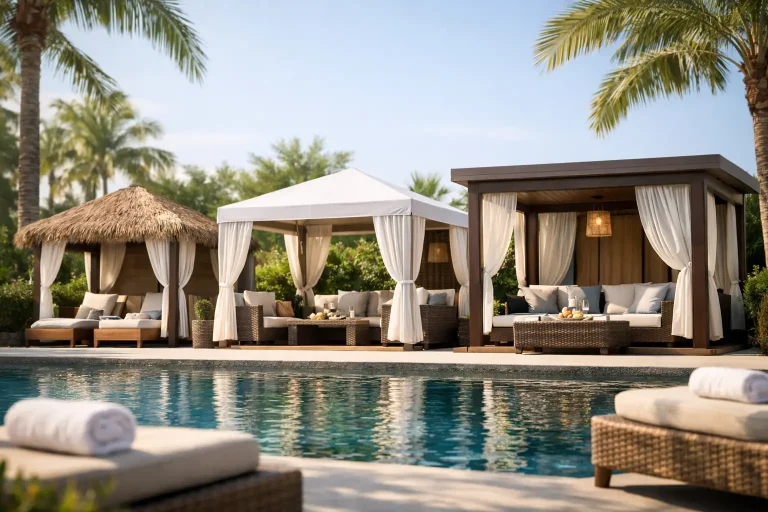
A broader catalog gives specifiers more flexibility while keeping purchasing consolidated. It also makes phased expansion easier. If a property owner adds a second terrace, refreshes a cabana zone, or rolls out a concept across multiple locations, a deep SKU base supports continuity instead of forcing a redesign.
Quality in outdoor furniture is about materials and consistency
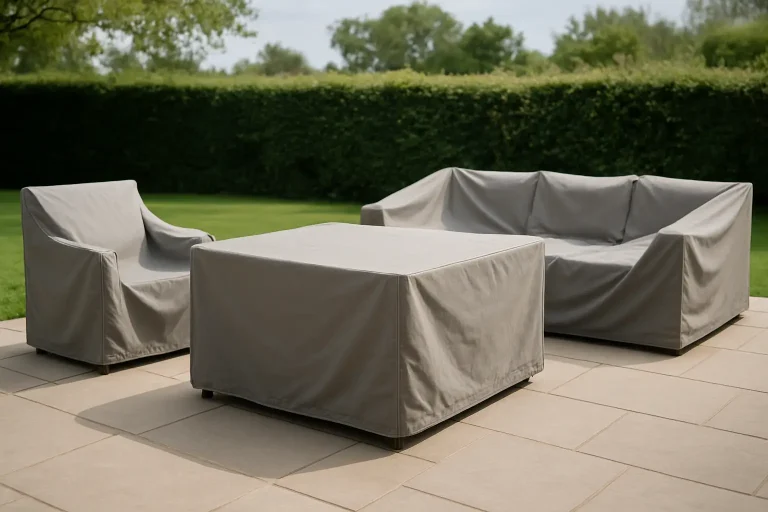
Outdoor furniture is judged quickly by appearance, but performance over time is what protects the investment. Commercial and hospitality environments put constant pressure on frames, finishes, cushions, and joinery. Heat, UV exposure, moisture, pool chemicals, and repeated guest use expose weak manufacturing fast.
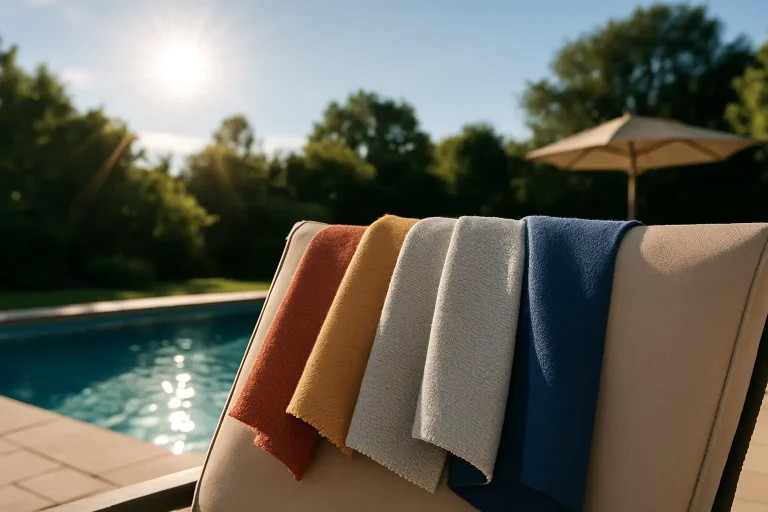
That is why material flexibility should be matched by material discipline. It is one thing to offer aluminum, teak-look finishes, rope details, woven elements, or performance fabrics. It is another to manufacture them consistently across volume orders and repeat orders.
For procurement teams, consistency is not a minor detail. A replacement order six months later should not look like it came from a different supplier. Cushion density, frame color, weave tone, and table finish need to stay aligned with what was originally approved. The stronger the manufacturer’s process control, the lower the risk of visible variation across a project.
Delivery performance is part of the product
Outdoor furniture for commercial use is often purchased against fixed project dates. Soft openings, handovers, seasonal launch windows, and hospitality events leave little room for supplier drift. A beautiful product that arrives late is still a project failure.
That is why experienced buyers look beyond unit pricing. They ask how the manufacturer handles production planning, export coordination, packaging standards, and final-mile support. White-glove delivery can matter just as much as factory output, particularly for premium residential compounds, hotels, and high-visibility commercial spaces where damage, site congestion, or installation errors can derail the final phase.
A reliable partner should be able to communicate lead times clearly, flag risks early, and coordinate delivery in a way that supports the installation schedule rather than complicating it. For GCC projects and international shipments, this level of responsiveness is not optional. It is part of contract readiness.
Where trade-offs show up
Not every project needs the same kind of outdoor furniture manufacturer. A boutique residential project may prioritize custom finish work and design distinction over maximum SKU depth. A large hospitality rollout may value production capacity and repeatability first. A developer with multiple asset types may need both.
There is also a practical trade-off between full customization and delivery speed. Custom dimensions, new materials, and non-standard finishes can create a stronger design outcome, but they also add approvals, prototyping, and production variables. Sometimes the smart decision is to work from a proven product family and customize selectively where impact is highest.
Price creates another trade-off. Low-cost sourcing can look attractive early, especially when comparing item by item. But if the supplier lacks quality control, packaging discipline, or the ability to manage replacements efficiently, the total project cost rises later through delays, damages, and resubmission cycles.
What B2B buyers should ask before moving forward
When evaluating an outdoor furniture manufacturer, the most useful questions are operational. Can they support contract-grade volume without losing finish consistency? Do they offer mock-up approvals and 3D drawings? How broad is the outdoor assortment, and can it cover lounge, dining, pool, and shade requirements from one source? What level of communication should your team expect during production and delivery?
You should also ask how the supplier manages customization. Some companies say yes to every request, then struggle to execute. A stronger partner will be clear about what can be adjusted efficiently, what requires additional development, and what timeline impact to expect.
Past delivery performance matters as well. High-volume fulfillment, large SKU availability, and a documented record of on-time project delivery say more than marketing language ever will. Buyers responsible for deadlines need evidence that the supplier can scale.
Why the right manufacturer becomes a long-term asset
Once a project team finds a dependable manufacturing partner, procurement gets faster. Design teams know what is possible. Approvals move with less back-and-forth. Owners gain confidence that future phases and replacement orders will stay aligned with the original standard.
That is the real advantage of working with a vertically integrated supplier like PNZ Space Global. You are not only purchasing furniture. You are reducing coordination points across design, manufacturing, logistics, and installation support. For project-driven buyers, that control translates directly into fewer surprises and stronger delivery outcomes.
The best outdoor spaces are remembered for how naturally everything fits together – the seating layout, the materials, the comfort, the durability, the timing. A capable manufacturer helps make that happen before the first piece ever reaches the site. Choose the partner that can carry the project, not just ship the product.