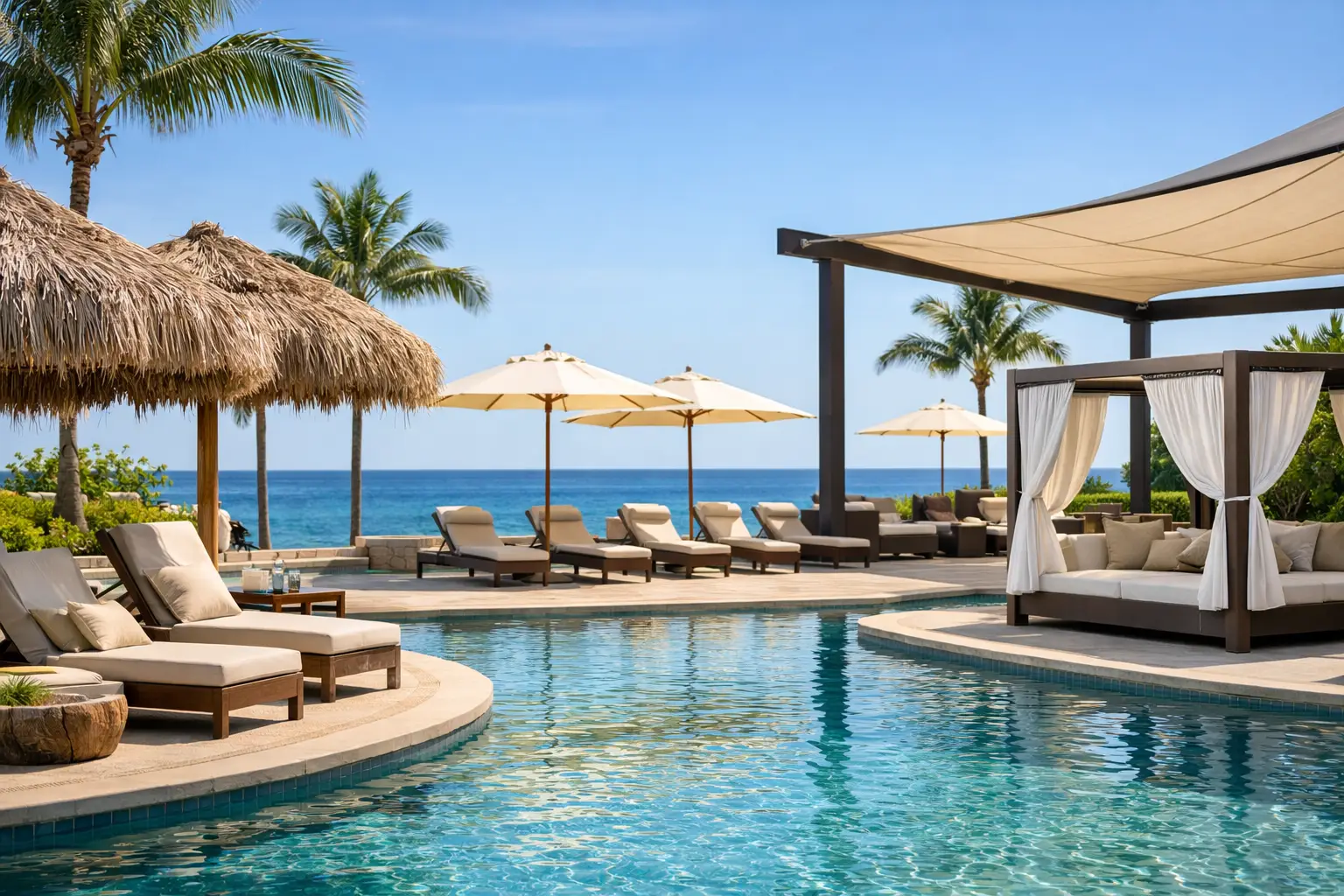
Best Poolside Shade Options for Resorts
A resort pool deck can look finished on paper and still fail by noon. The reason is usually simple: not enough shade, the wrong kind of shade, or a layout that ignores how guests actually move, sit, dine, and rest throughout the day. That is why choosing the best poolside shade options for resorts is not a styling exercise alone. It is an operational decision that affects guest comfort, dwell time, maintenance load, and the long-term performance of the entire outdoor environment.
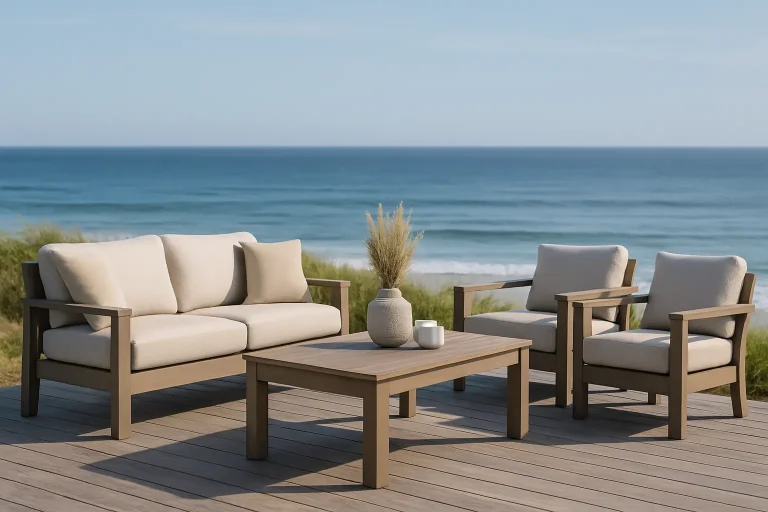
For hospitality teams, the right answer is rarely a single product category. Most resort projects need a shade mix that responds to zoning, wind exposure, service patterns, furniture layout, and visual identity. A family pool has different requirements than an adults-only deck. A beachfront resort faces different constraints than a city property with a rooftop pool. Shade selection works best when it is specified as part of the full poolside furniture plan, not added late as an accessory.
What makes poolside shade work in a resort setting
Shade at resort scale has to do more than block sun. It needs to support circulation, protect finishes, hold up to repeated guest use, and maintain a consistent look across a large footprint. Procurement teams also have to think beyond the first install. Replacement parts, fabric consistency, lead times, and installation coordination matter just as much as the silhouette.
There are a few practical filters that tend to separate a good specification from an expensive correction later. First is coverage behavior. A shade structure may look generous in elevation but cast a narrow or shifting shadow during peak use hours. Second is wind performance. Open pool decks, coastal sites, and tall buildings create conditions where light-duty shade will not last. Third is serviceability. If housekeeping and F&B teams cannot move around it efficiently, the product becomes friction.
A strong shade plan also considers the furniture beneath it. A lounger row needs different dimensions and clearance than a dining cluster, a daybed, or a VIP cabana setup. The more precisely the shade aligns with the furniture footprint, the more usable space you get without crowding the deck.
Best poolside shade options for resorts by use case
Market umbrellas for flexible coverage
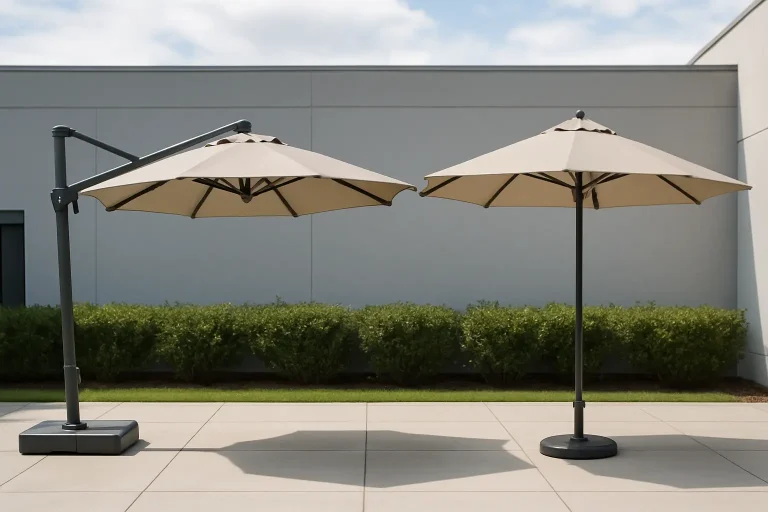
Market umbrellas remain one of the most practical poolside shade options for resorts because they are easy to reposition, straightforward to replace, and cost-efficient across large decks. They work especially well over paired loungers, small dining tables, and secondary seating areas where flexibility matters more than architectural permanence.
Their advantage is modularity. Resorts can scale coverage lane by lane, adjust spacing by season, and replace single units without disrupting the full deck. For operators managing high guest turnover, that flexibility has value.
The trade-off is that umbrellas are not ideal for every exposure level. On windy decks, lighter frames and weak base systems quickly become a problem. They also create a more fragmented visual field than larger-format shade structures. If the design intent calls for a cleaner, more built-in look, umbrellas may need to be limited to selected zones rather than used across the entire pool.
Cantilever umbrellas for cleaner furniture layouts
Cantilever umbrellas solve one of the biggest planning issues around loungers and daybeds: center poles get in the way. By moving support off to the side, they free the usable area below and create a more premium guest experience. This makes them a strong fit for luxury pools, private villa decks, and high-value relaxation zones.
They also help create larger, more continuous shade patches than standard center-post umbrellas. That can improve comfort for couples and families sharing adjacent seating.
The consideration here is engineering. Cantilever systems require stable bases and enough clearance to rotate or reposition safely. On compact decks, that swing radius can work against you. They also tend to demand a higher investment per unit, so they are best used where the guest experience justifies the spend.
Cabanas for premium zoning and revenue potential
Cabanas are less about scattered shade and more about creating destination space. In a resort setting, they perform well where privacy, exclusivity, and ancillary spend are priorities. They can anchor VIP areas, support food and beverage service, and turn underused perimeter zones into bookable assets.
From a design standpoint, cabanas help structure the pool deck. They introduce rhythm, define service lanes, and create visual hierarchy between general seating and premium seating. They also allow broader material expression through drapery, slatted panels, upholstered elements, and integrated side tables.
But cabanas are not efficient everywhere. They occupy a larger footprint, reduce flexibility, and can make smaller pool decks feel heavy if overused. They also require tighter coordination between furniture dimensions, housekeeping access, and circulation routes. When specified well, they add clear value. When dropped in without planning, they consume capacity.
Pergolas for architectural consistency
Pergolas are often the right answer when the shade strategy needs to feel permanent and integrated with the property architecture. They work especially well over outdoor lounges, dining terraces connected to the pool, transition spaces, and high-traffic common areas where portable shade is not enough.
For resorts looking for a clean, contemporary look, pergolas provide strong visual order. They can also be adapted with fixed slats, adjustable louvers, or layered soft elements depending on climate and operational goals.
Their limitation is mobility. Pergolas commit you to a layout. If the deck program changes often, or if the property expects frequent reconfiguration for events, a fully fixed system can reduce flexibility. Installation complexity is also higher, so these are best planned early in the project rather than added after furniture decisions are already locked.
Sail shades for broad, modern coverage
Shade sails offer a distinct visual profile and can cover larger areas with less visual bulk than some framed structures. They suit resorts that want a contemporary look or need to shade family zones, splash areas, and casual lounging sections with fewer vertical obstructions.
They are especially useful where the project needs wide-span coverage without placing posts in the middle of guest circulation. In some layouts, that can improve both safety and deck efficiency.
The caution is consistency. Tensioned fabric systems need proper engineering, quality hardware, and accurate installation. Poorly specified sails can sag, weather unevenly, or underperform in wind. They also create a stronger design statement, which may not suit every resort brand language.
How to choose the best poolside shade options for resorts
The right specification starts with zoning. Instead of asking which single shade product is best, ask what each poolside zone needs to do. Lounger rows usually benefit from modular coverage. Dining and lounge areas may need more stable, structural shade. Premium zones may need cabanas that support privacy and service.
Next, look at environmental exposure. Coastal resorts, rooftop decks, and open master-planned properties typically require stronger frames, better anchoring, and materials chosen for corrosion resistance and UV performance. A shade product that performs well in a sheltered courtyard may fail quickly at a beachfront property.
Material and finish selection also deserves more attention than it often gets. Contract-grade fabrics should hold color, resist mildew, and remain serviceable under frequent cleaning. Frame materials need to match the site’s humidity, heat, and maintenance capacity. A beautiful specification that requires constant intervention is rarely the right commercial choice.
Then there is replacement logic. On a large resort project, future consistency matters. Can the same finish, fabric, and dimensions be reordered later? Can parts be replaced without changing the whole deck? This is where vertically integrated supply and broad SKU availability start to matter, because they reduce long-term procurement friction.
Design and operations have to agree
One of the most common mistakes in shade planning is separating aesthetics from operations. The design team may prioritize silhouette and finish, while operations focuses on safety, cleaning, and uptime. Resort projects work better when both are considered at specification stage.
That means checking sightlines for attendants, ensuring umbrellas do not block service routes, confirming cabanas do not create dead circulation corners, and sizing every shade element to the furniture beneath it. It also means planning for installation, mock-up review, and approval workflows before the product is committed at scale.
For multi-area hospitality projects, this is where a supplier with project support can make a meaningful difference. If your team can review material options, layout fit, and 3D drawings before production, fewer issues reach the site. PNZ Space Global approaches poolside furnishing that way, as a full project package rather than a disconnected product order.
Where most resort shade plans go wrong
They often under-spec the windy areas, overbuild the quiet areas, and treat every pool zone as if guest behavior were the same. It never is. Families cluster differently than couples. Daybeds attract longer stays than side loungers. Dining needs stable shade at different hours than sunbathing zones.
Another common problem is mixing too many shade styles without a clear hierarchy. Variety can help, but only when it is controlled. A deck that combines umbrellas, sails, pergolas, and cabanas without a zoning logic tends to look inconsistent and operate poorly.
The better approach is disciplined variety. Use one or two primary shade systems for the main deck, then introduce premium or architectural elements where they serve a clear purpose. That keeps procurement cleaner, creates visual consistency, and simplifies maintenance over time.
Resort shade works best when it is treated as part of guest experience, not a last-minute add-on. The products matter, but the planning matters more. When coverage, layout, structure, and service all align, the pool deck feels calmer, performs better, and keeps working long after opening day.