Quick-Ship Outdoor Furniture That Holds a Spec
A pool deck is framed, the pavers are down, and the opening date is already on the calendar. Then the furniture lead time comes back at 10-14 weeks. That is the moment “quick ship” stops being a nice-to-have and becomes a project risk you need to actively manage.
For commercial and hospitality work, quick ship outdoor furniture is not about grabbing whatever is in stock. It is about protecting the spec – dimensions, finishes, performance, and quantity – while still landing inside a real construction schedule. The teams that execute consistently treat quick ship as a procurement strategy, not a product label.
What “quick ship” should mean on a project
On paper, quick ship sounds simple: items ship fast. In practice, speed only counts if four things are true.
First, the supplier has inventory depth, not just a few sample pieces. One hundred dining chairs is a different world than ten. Second, the product is contract-grade and documented – not a residential item being repurposed for a restaurant patio. Third, the packing method and freight plan are defined early so the goods arrive usable, not damaged or incomplete. Fourth, the supplier can keep the spec consistent if you need replenishment later.
Quick ship that ignores any of those usually turns into expensive “saves” – substitutions, rushed air freight, or last-minute re-selections that ripple through design approvals.
The real trade-offs: speed vs. control
If you are moving fast, something usually gives unless the supply chain is built for it. The trade-offs are manageable, but they should be explicit.
Color and finish are the first pressure point. The fastest options are typically the most standardized: a tight set of powder coat colors, core strap and rope tones, and widely used tabletop surfaces. If your concept depends on a niche finish, quick ship may still be possible, but you will need to decide whether the finish is a must-have or a phase-two upgrade.
The second pressure point is mix-and-match. A quick ship lounge program might include the sectional and lounge chairs, but not the exact side table you want in the same timeline. That does not mean you abandon the aesthetic – it means you select within an available family or approve a temporary table plan while the matching pieces follow.
The third is quantity. Many suppliers can move quickly on small lots, but large counts require operational scale. For multi-site rollouts, quick ship works best when the vendor can reserve inventory against your PO and maintain continuity across sites.
Quick ship outdoor furniture for projects: where it matters most
Not every zone has the same tolerance for delay. If you prioritize the spaces that drive revenue or guest experience, you can protect the opening date without compromising the entire design.
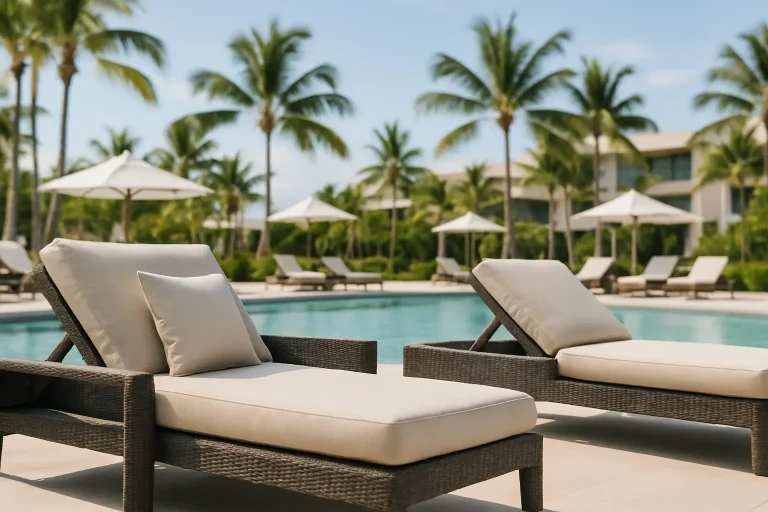
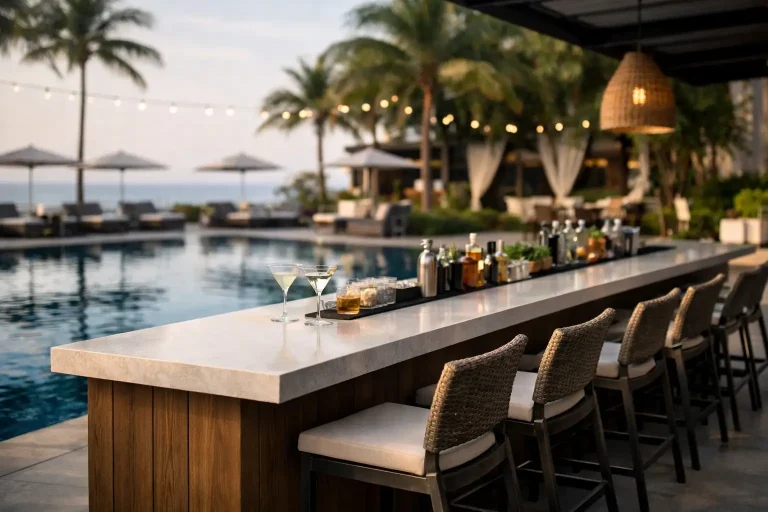
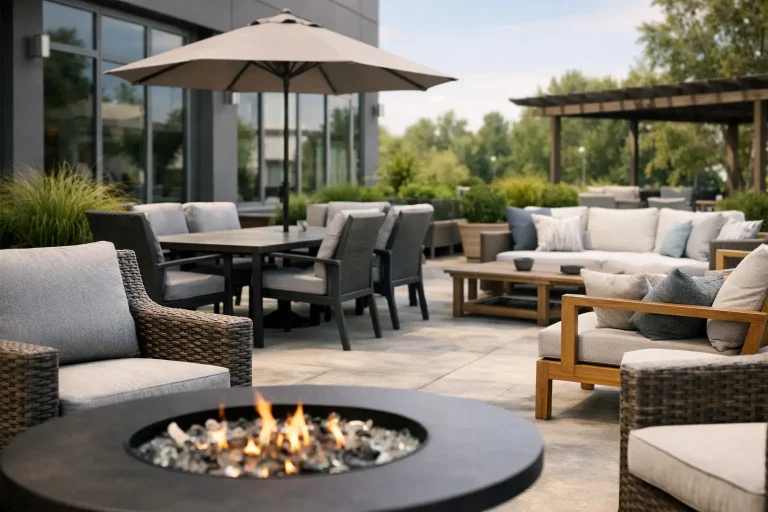
Poolside and rooftop areas usually sit on the critical path because they are marketing assets. If the pool deck is unfinished, the property looks unfinished. Dining terraces are similar – an F&B operator cannot earn without tables and chairs, and a soft opening without seating is rarely an option.
Secondary patios, overflow seating, or back-of-house outdoor break areas can often be phased. That is where you can afford a longer lead time or a more customized finish if it supports the broader design story.
Start with taxonomy, not a mood board
Quick ship selection goes faster when the team speaks in product categories the way procurement and logistics do. Instead of “modern coastal,” you want a controlled package across lounge, dining, pool, shade, and accessories.
Lounge: build the core seating first
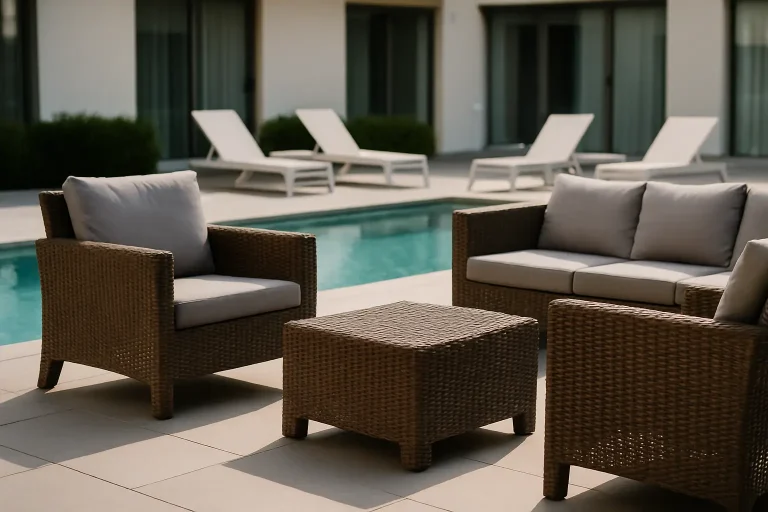
For lounge areas, lock the primary seating count before you chase accent pieces. Sectionals, sofas, club chairs, and chaises determine the footprint, and they drive the carton volume and freight plan.
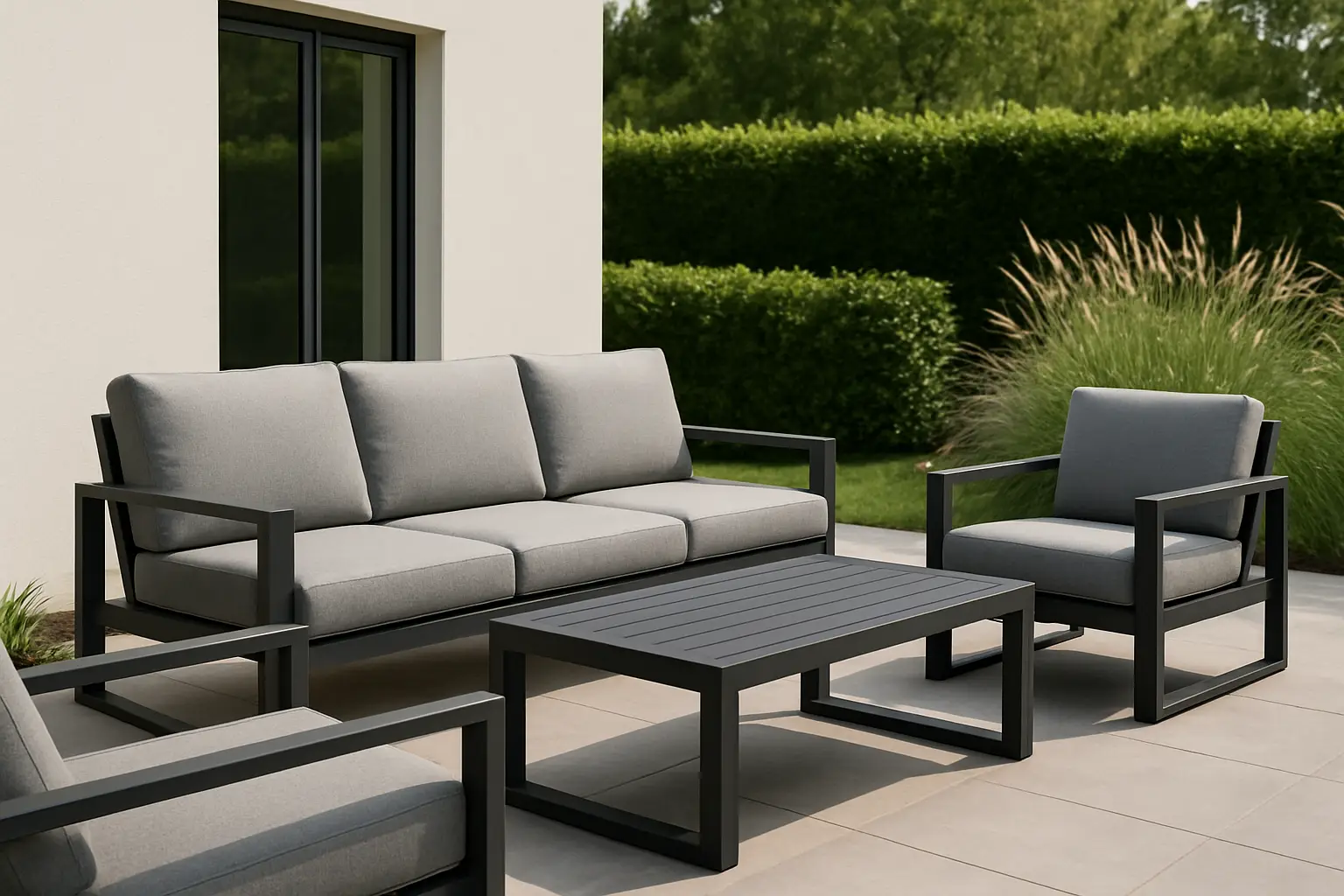
In quick ship programs, the most reliable lounge winners are modular frames with standardized cushions and a short menu of upholstery options. You get speed because cushion construction, foam specs, and fabric rolls are already planned for repeat production.
If you need a signature look, do it with a controlled variable: a specific rope weave color, a single contrast welt, or a table surface selection that is already in the quick ship library.
Dining: prioritize stackability and replacement planning
Outdoor dining is where projects often get burned later, not at opening. Chairs get moved, scratched, and replaced. A quick ship dining chair is valuable because it supports replenishment without introducing a different silhouette mid-season.
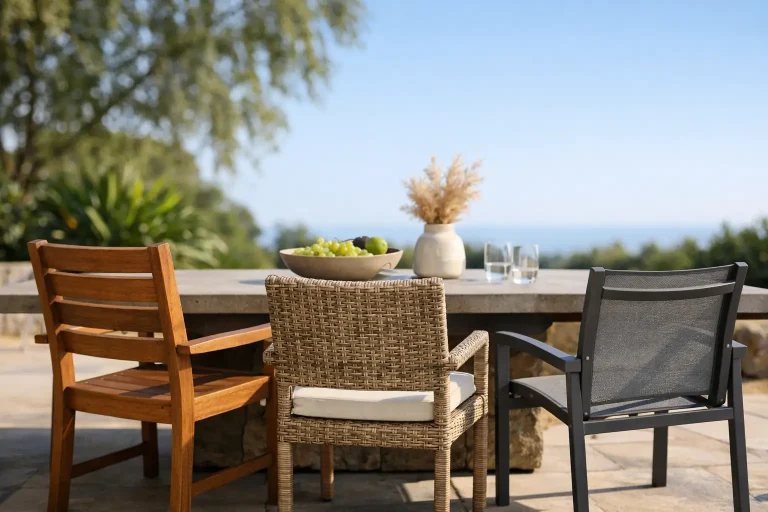
Stackable chairs can reduce storage pressure and simplify turn-of-space transitions for hospitality operators. For tabletops, pay attention to edge durability and heat resistance. The fastest surface is not always the best surface for a sun-exposed terrace.
Pool: performance specs are not optional
Poolside furniture has zero tolerance for “close enough.” Specify for UV exposure, corrosion resistance, and wet-use upholstery performance. Fast lead times are meaningless if the product fails in one season.
Look for clear material stories: aluminum with exterior-grade powder coat, hardware that resists corrosion, slings or straps that are rated for outdoor UV, and cushion constructions that can drain and dry. If a supplier cannot speak to those details, quick ship becomes a liability.
Shade: the hidden critical path
Umbrellas, cantilevers, and shade structures can become the longest pole in the tent. Bases, covers, and anchoring methods are often the real lead-time drivers.
If you need shade quickly, select systems with standardized canopies and readily available base solutions, then confirm wind ratings and site constraints early. A fast umbrella that cannot be safely installed is not actually fast.
Accessories: use them to protect the design intent
Accessories are where you can regain design character without delaying primary seating. Side tables, lanterns, planters, and outdoor rugs can be pulled from quick ship inventory to make a space feel finished, even if a small portion of hero pieces arrive later.
How to vet a quick ship claim without getting surprised
Most lead-time problems come from assumptions. A supplier says “in stock,” and the project team hears “arrives next week.” The gap is where delays happen.
Ask for the ship window in writing, tied to the exact finish and quantity. Confirm whether the inventory is in one location or split across warehouses. Clarify whether items ship complete or require assembly on site and whether the supplier provides install support.
Then look at packaging and inspection. Contract projects move through forklifts, loading docks, and jobsite staging. Carton quality, corner protection, and palletization are operational details, but they decide whether quick ship stays on schedule.
Finally, validate continuity. If you are furnishing a hotel with phased openings, you should know whether the same SKU and finish will be available for later floors or replacement orders.
Make approvals faster without lowering standards
Speed is not just shipping. It is decision velocity.
When time is tight, use a controlled approval sequence. Confirm dimensions and layout first, then lock finish families, then approve upholstery. If you reverse that order, you end up debating fabric before you have solved circulation and capacity.
Mock-ups can still happen on a fast track, but they need to be targeted. Approve one representative chair, one table edge, and one cushion construction instead of trying to sample every SKU. You are validating the system, not collecting trophies.
Logistics that keep quick ship truly quick
If your receiving plan is unclear, fast shipments become expensive chaos. Quick ship works best when freight, delivery appointments, and staging are planned before the goods leave the warehouse.
For large projects, split shipments can protect the schedule: ship the critical path zones first (pool and F&B), then send secondary zones and accessories as the site opens up. This approach also reduces on-site damage because you are not stacking everything in one congested area.
White-glove delivery matters most when you have tight access – elevators, rooftop routes, restricted loading docks – or when you need packaging removal and placement to keep the site clean. Those services are not add-ons; they are timeline insurance.
When quick ship is the wrong move
There are cases where speed is not the priority. If the property’s brand standard requires a proprietary finish, a specific weave, or a custom dimension to align with architectural details, forcing quick ship can create a mismatch that lasts for years.
Also, if the site is not ready – punch-list items, flooring cure times, or incomplete shade anchoring – shipping early can increase damage and storage costs. In those moments, a confirmed production slot with a controlled ship date beats “fast” inventory that arrives with nowhere to go.
A practical path to fast, spec-safe sourcing
The most reliable approach is a two-tier package: a quick ship core that opens the project, and a controlled set of upgrades that can follow without disrupting the visual language.
Start by locking the high-volume SKUs in standardized finishes, then add differentiation through a small number of elements that do not jeopardize lead time – a specific tabletop surface already in rotation, a coordinated cushion colorway, or a signature accessory set.
If you need a partner that can support that cadence with design assistance, drawings, and project coordination while maintaining manufacturing control, PNZ Space Global is built for that type of contract-grade execution at scale.
Closing thought: fast outdoor furniture is not the goal – a space that opens on time and still looks intentional is. Treat quick ship as a disciplined package of decisions, and you can protect both the schedule and the standard.