How to Clean Quick Dry Outdoor Foam Right
Outdoor seating rarely fails all at once. It starts with a faint waterline, sunscreen residue on the cushion surface, or a musty smell that shows up after a storm cycle. If you’re searching for how to clean quick dry outdoor foam, the goal is not just to make cushions look better for a week. It is to preserve performance, protect the specification, and keep seating guest-ready across high-use outdoor environments.
Quick dry outdoor foam is engineered to drain water fast and support airflow, which makes it a strong choice for pool decks, rooftops, hospitality lounges, and residential terraces. But “quick dry” does not mean “no maintenance.” Dirt, body oils, food spills, chlorine, salt, and airborne pollutants can still accumulate inside the foam and on the fabric wrap around it. Cleaning the material correctly matters because the wrong method can slow drainage, trap residue, or shorten the life of the cushion.
Why quick dry foam needs a different cleaning approach
Standard indoor foam holds moisture longer and is usually protected from the environmental stress that outdoor installations face every day. Quick dry foam is more porous by design. That open-cell structure is what allows water to pass through instead of sitting inside the cushion.
That same structure also means aggressive cleaning methods can create problems. Heavy detergent use, for example, may leave soap deep in the foam. Pressure washing at close range can distort the material or force contaminants farther in. Sealing the foam in plastic or drying it in a poorly ventilated space can work against the very drainage performance you paid for.
For procurement teams, operators, and designers specifying outdoor seating at scale, this is the trade-off to understand: quick dry foam offers faster recovery after rain and easier day-to-day use, but it performs best when maintenance supports airflow rather than blocking it.
How to clean quick dry outdoor foam without damaging it
Start by removing the cushion cover if the construction allows it. Some contract-grade cushions are designed with removable covers, while others are fully upholstered. If the cover is removable, separate it before cleaning so you can treat the foam and textile correctly. If not, clean the full cushion carefully and avoid oversaturating stitched seams more than necessary.
First, shake out loose debris and vacuum the surface. Sand, dust, leaves, and dried organic matter can grind into the material during washing. A vacuum with a soft brush attachment is usually enough for routine buildup.
Next, prepare a mild cleaning solution using lukewarm water and a small amount of gentle soap. A light dish soap or upholstery-safe cleaner typically works well. The solution should be low-foam and easy to rinse. This is not the place for bleach-heavy mixes, harsh degreasers, or solvent-based spot removers unless the foam manufacturer or fabric specification specifically allows them.
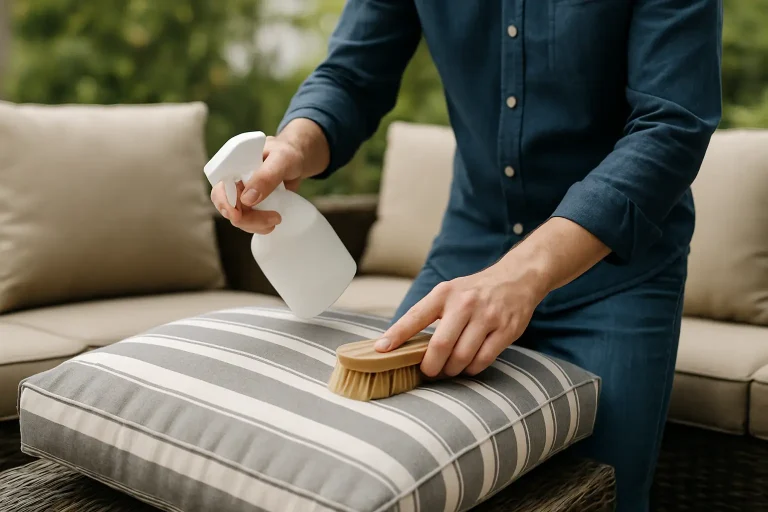
Using a soft sponge or cloth, work the solution into the foam with light pressure. If the foam is exposed, compress it gently to help the cleaner move through the open cells. If the foam is still inside the cover, clean the exterior thoroughly and allow the cleaning solution to penetrate without soaking the cushion to the point of runoff. The aim is to lift contaminants, not drown the insert.
For deeper cleaning, rinse with clean water until the runoff is clear and there is no slippery soap feel left behind. This step matters more than many people realize. Residual soap attracts dirt and can affect how quickly the foam drains in future use.
Then press out excess water by hand. Do not twist the foam hard or fold it sharply. Gentle compression is enough. Place it upright or on an elevated drying surface in a well-ventilated area. Air movement is critical. Direct sun can help in moderation, but airflow does more of the real work.
Handling mildew, odor, and stubborn staining
If a cushion smells stale even after basic washing, the issue is usually trapped organic residue rather than the foam itself being defective. Mildew can develop when debris, body oils, or moisture sit in shaded areas over time, especially in humid climates or tightly arranged furniture layouts.
In these cases, clean the foam again with a slightly stronger soap solution and give extra attention to full rinsing and complete drying. A diluted white vinegar rinse is sometimes used for odor control, but it depends on the fabric and surrounding materials. In commercial settings, especially where cushions are part of a coordinated finish schedule, test any odor treatment on a small hidden area first. Chemical compatibility matters.
Stains from sunscreen, food, beverages, or pool chemicals may not release fully with one pass. That is normal. The right approach is usually repeated mild cleaning rather than one aggressive treatment. If the cushion includes performance fabric, the textile may have different cleaning limits than the foam insert. Always let the most sensitive material in the assembly set the cleaning standard.
If staining is severe and appearance is critical, replacement can be more cost-effective than labor-heavy restoration. That is particularly true in hospitality and multi-unit projects where visual consistency matters across a full seating group.
What not to do when cleaning quick dry outdoor foam
A few common mistakes cause most avoidable damage. One is using too much detergent. More soap does not equal cleaner foam. It usually means longer rinsing, slower drying, and more residue left behind.
Another is using a pressure washer too closely. While it may seem efficient for large outdoor setups, high pressure can tear fabric, deform foam, and push dirt deeper into the cushion core. If pressure washing is part of a broader site cleaning process, keep it well away from cushions.
Avoid storing damp cushions in bins, under tarps without airflow, or stacked tightly after cleaning. Quick dry foam still needs oxygen circulation to finish the drying cycle properly. Covering it too early can recreate the same odor and mildew conditions you were trying to remove.
It is also worth being careful with bleach. In some cases it can help sanitize certain materials, but it can also weaken fabrics, alter color, and break down surrounding components such as thread, backing, or mesh barriers. For specified outdoor furniture, especially in commercial and hospitality settings, using bleach without confirming compatibility is a risk not a shortcut.
Maintenance routines that reduce cleaning frequency
The best answer to how to clean quick dry outdoor foam is often to avoid deep cleaning as long as possible through better routine care. In active outdoor settings, that means brushing off debris regularly, addressing spills quickly, and giving cushions enough spacing for drainage and air circulation after rain or washdown.
If your project includes poolside or coastal exposure, rinse cushions periodically with fresh water to reduce chlorine, salt, and airborne residue. Those contaminants do not always show up immediately, but they build over time and can affect both appearance and material life.
For operators managing large seating inventories, a simple maintenance schedule works better than reactive cleaning. Monthly inspection during peak season is usually enough to catch early staining, seam issues, or drainage problems before they become replacement issues. That is especially useful in rooftops, resorts, restaurants, and amenity decks where cushions cycle through constant guest use.
In specification and procurement terms, maintenance planning should be treated as part of performance planning. Cushion construction, drainage design, removable covers, fabric choice, and storage protocol all affect how much labor cleaning will require over the life of the installation.
When cleaning points to a bigger product issue
Sometimes the problem is not the cleaning process. If quick dry foam stays heavy, smells persist after full drying, or water no longer drains through as expected, the cushion assembly may have a design or material issue. A non-breathable cover backing, poor seam construction, low-quality wrap materials, or improper storage can all undermine the foam’s intended performance.
That is why material selection matters early. In high-volume projects, the right outdoor cushion specification is not just about comfort and appearance. It is about serviceability. A well-designed outdoor seating program should be easy to maintain, fast to recover after weather exposure, and consistent across repeated use cycles.
For buyers sourcing at scale, that is where a vertically integrated supplier can add value beyond product supply alone. Material coordination, mock-up review, and performance-driven manufacturing decisions reduce downstream maintenance friction in ways that are easy to overlook during selection and very expensive to ignore after installation.
Clean foam performs better, but well-specified foam makes cleaning easier from the start. That is the standard to aim for if your outdoor seating needs to look sharp, drain fast, and stay in service season after season.