How to Plan Outdoor Furniture Installation
A beautiful outdoor concept can still fail on install day. The usual problems are not design-related. Clearances are tight, freight arrives out of sequence, poolside materials are specified without heat exposure in mind, or the site is simply not ready for placement. That is why knowing how to plan outdoor furniture installation matters long before furniture ships.
For developers, designers, hospitality teams, and procurement leads, installation planning is where style decisions meet project reality. The strongest outdoor projects are coordinated from the start around layout intent, product performance, access conditions, and delivery sequencing. If even one of those pieces is missed, the result is delays, damage risk, or a space that looks right on paper but performs poorly in use.
How to plan outdoor furniture installation from the layout outward
The most reliable starting point is not the product list. It is the use case of the space. A rooftop lounge, a resort pool deck, a restaurant terrace, and a private villa courtyard all place different demands on furniture spacing, circulation, durability, and service access.
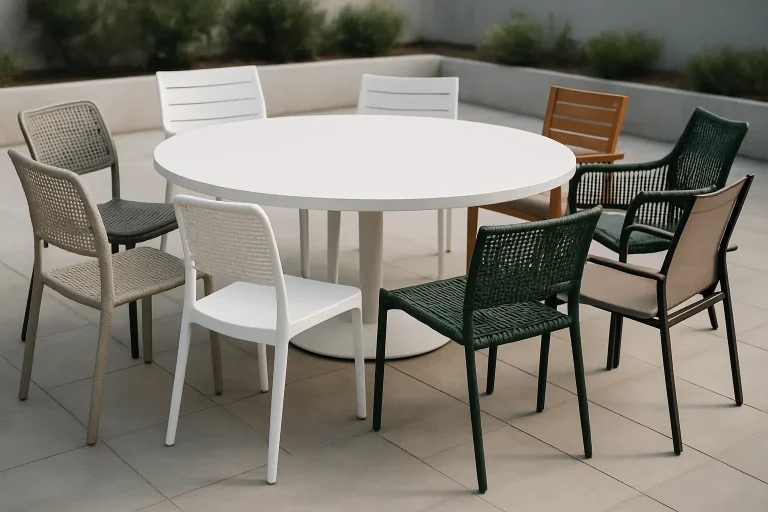
Begin by defining how the area will operate at peak use. In hospitality, that means understanding guest flow, service routes, and turnover. In residential or mixed-use projects, it means balancing comfort with maintenance access and visual order. Lounge seating may need more generous spacing for privacy, while dining layouts need disciplined clearances for chairs, servers, and ADA-conscious planning.
This is where drawings matter. A furniture plan should do more than show where items fit. It should confirm approach paths, door widths, elevator constraints, staging zones, and the relationship between furniture groupings and fixed architectural elements such as planters, pergolas, drains, and lighting. For larger projects, 3D drawings and mock-up reviews can catch proportion issues that are easy to miss in 2D.
Specify by zone, not as one outdoor package
One of the most common planning mistakes is treating the entire exterior as a single environment. Outdoor areas rarely behave the same way. A shaded dining terrace has different exposure conditions than an open pool deck. A beachfront lounge faces different corrosion risks than a city rooftop.
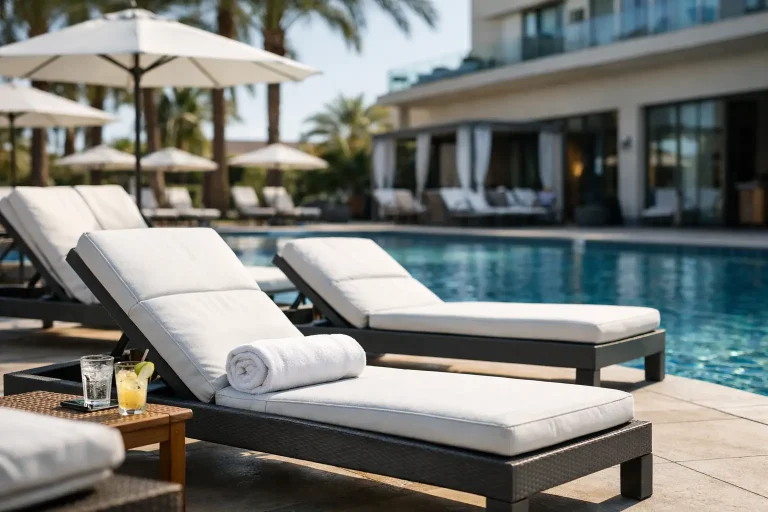
Divide the project into zones and specify accordingly. Lounge, dining, poolside, shade, and accessories should each be reviewed against actual site conditions. That includes direct sun hours, wind exposure, moisture, salt air, cleaning routines, and expected traffic level. Contract-grade planning is less about picking attractive pieces and more about matching materials and construction methods to the stress each zone will face.
There are trade-offs here. A lighter piece may make reconfiguration easier for staff, but it can become a liability in windy settings. Cushioned seating raises comfort and visual softness, but it also adds storage and maintenance demands. Teak, powder-coated aluminum, rope, resin, and upholstered components all perform differently depending on climate and usage. The right answer is rarely universal. It depends on how the property will actually be run.
Confirm site readiness before scheduling delivery
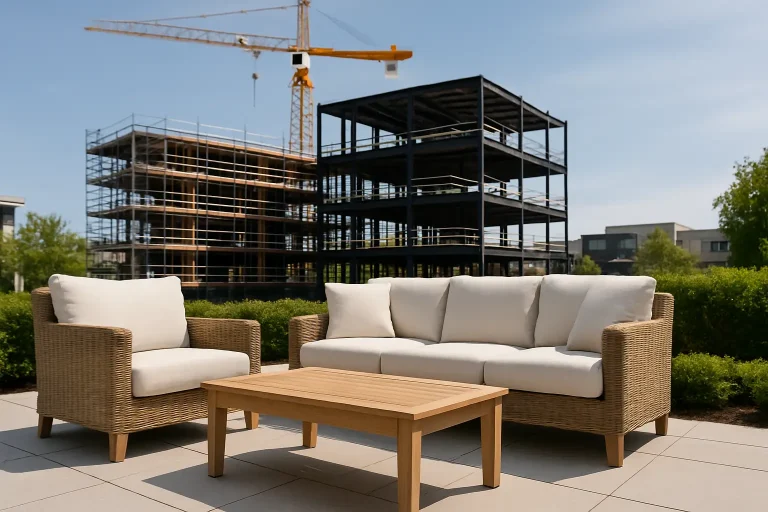
Installation timelines often slip because furniture is treated as the final step, when in practice it depends on several upstream conditions. Before confirming a delivery window, check that the site is truly ready to receive, stage, and place product.
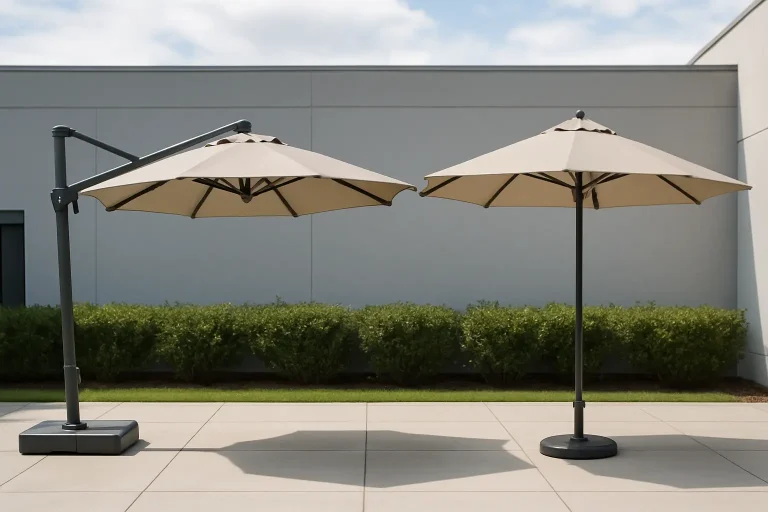
Surface finishes should be complete and cured. Access routes should be free of construction debris. Elevators, hoists, or crane windows should be booked if needed. Any integrated site elements that affect furniture placement, such as umbrellas bases, power access, outdoor kitchens, or built-in banquettes, should already be installed or verified.
This step is especially important for multi-building and hospitality projects. A furniture container can arrive on time and still create delays if a loading bay is unavailable or if rooms, terraces, or decks are handed over in phases. Sequencing matters. Some projects need a full installation in one push. Others are better handled in staged drops tied to opening priorities.
Build the installation plan around logistics, not just procurement
Buying the furniture is only part of the job. The installation plan should account for how goods move from factory to final placement, including packaging, protection, unloading, inspection, assembly, and debris removal.
For B2B buyers, this is where supplier capability becomes decisive. Large outdoor projects need more than a catalog. They need reliable production schedules, item-level coordination, and delivery support that aligns with the site program. A vertically integrated supplier can usually provide tighter control over lead times, customization, quality checks, and shipment sequencing because design, manufacturing, and fulfillment are managed within one system.
White-glove delivery is not just a premium add-on in this context. It can reduce damage claims, accelerate room or zone turnover, and limit the burden on the contractor or property team. If products require on-site assembly, confirm who handles it, what tools are needed, how packaging waste will be removed, and whether the team has access to protected staging space.
Plan for installation tolerances and real-world use
Outdoor furniture layouts often look perfect in specification sets because everything is drawn to ideal dimensions. Real sites are less forgiving. Pavers vary slightly. Columns shift usable width. Drainage slopes affect table leveling. Shade structures interrupt furniture symmetry.
That is why tolerances should be built into the plan from the beginning. Leave room for adjustment around dining chairs, chaise lounges, and modular seating. Verify umbrella swing radius and base placement. Check whether loungers interfere with towel stations, planters, or service paths once fully reclined. In commercial settings, also review how housekeeping, engineering, and food service teams will move through the space during operating hours.
The best installation plans respect both the guest experience and the operating team. A layout that photographs well but slows service or complicates cleaning will not hold up. Performance-driven planning means accounting for the everyday life of the space, not just opening day.
Align approvals early to avoid expensive changes
If custom finishes, fabric selections, or dimensional modifications are involved, approval timing becomes part of the installation strategy. Many delays happen because layout planning is completed, but material approvals remain open or mock-ups are reviewed too late.
A disciplined process moves from concept to specification to approval without disconnects. Material swatches should be reviewed against project lighting, architecture, and maintenance expectations. Mock-up sets should confirm comfort, scale, and finish quality before bulk production is released. For branded hospitality and high-visibility residential developments, this step protects both the design language and the procurement timeline.
When projects span multiple sites or phases, standardization becomes equally important. Confirm SKU consistency, approved alternates, and replenishment strategy in advance. That helps preserve design continuity and simplifies future replacement orders.
How to plan outdoor furniture installation for long-term performance
Installation planning should also include what happens after placement. Outdoor furniture is exposed to use, weather, staff handling, and seasonal adjustments. If the project team does not plan for maintenance from day one, even a well-installed space can lose impact quickly.
Think through cushion storage, stackability, cleaning access, and replacement components before finalizing the product mix. Pool environments may need faster-drying materials and easier daily reset. Restaurant terraces may prioritize wipeable surfaces and movable seating. Hotel rooftops may need anchoring strategies, weighted pieces, or seasonal reconfiguration plans.
This is where a complete supplier relationship has practical value. When design support, product breadth, and logistics are managed through one partner, specification decisions can be made with installation and maintenance in mind, not in isolation. For teams managing scale, that kind of coordination reduces friction at every stage. PNZ Space Global approaches outdoor projects this way because concept support, mock-up review, manufacturing control, and delivery execution all affect the final result.
Treat installation as part of the design scope
Outdoor furniture installation should not be left to the final week of a project. It deserves the same rigor as material selection, lighting coordination, and FF&E scheduling. The earlier the installation plan is built into the project, the more control you keep over costs, timelines, and visual quality.
A well-planned install creates more than a finished terrace or pool deck. It creates a space that operates correctly, wears well, and supports the standards your project is expected to meet. If the goal is a polished outdoor environment that performs from day one, the smartest decision is to plan installation while the design is still taking shape.