Outdoor Furniture Color Trends 2026
A rooftop lounge can look current on opening day and dated 18 months later if the color direction is off. That is why outdoor furniture color trends 2026 matter well beyond aesthetics. For developers, hospitality operators, designers, and procurement teams, color now affects project lifespan, replacement cycles, brand alignment, and how confidently a space photographs across marketing, leasing, and guest channels.
The shift for 2026 is clear. Outdoor palettes are moving away from high-contrast, overly stark schemes and toward grounded combinations that feel architectural, durable, and easier to scale across mixed-use and hospitality projects. The strongest directions are not loud. They are controlled, material-aware, and built to work across lounge seating, dining collections, poolside furniture, umbrellas, and accessories.
Outdoor furniture color trends 2026 are getting warmer
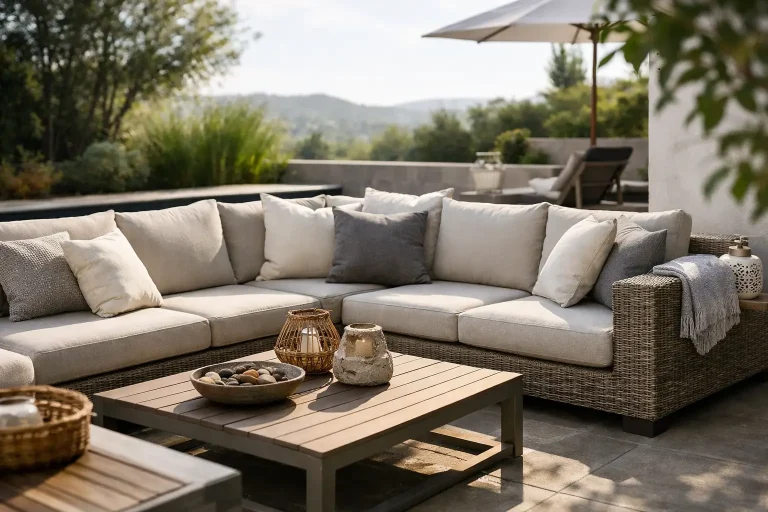
For several years, cool gray carried a large share of outdoor specifications. It was safe, broadly compatible, and easy to source. In 2026, that grip continues to loosen. Warm neutrals are taking over because they create a more relaxed visual temperature and pair more naturally with stone, wood-look finishes, textured concrete, travertine, and sandy paving that dominate many premium outdoor environments.
Expect to see more sand, mushroom, oat, taupe, camel, and soft putty across cushions, woven details, powder-coated frames, and accent pieces. These tones work especially well in large developments because they hold consistency across multiple zones without feeling repetitive. A beach club, shaded terrace, pool deck, and private balcony can all share the same neutral family while still allowing each zone to feel distinct through texture and silhouette.
There is a practical upside too. Warm neutrals tend to hide dust, pollen, and light environmental wear better than bright whites or very dark finishes. For hospitality and high-traffic residential settings, that matters. A palette that looks refined in renderings but shows every mark in service usually becomes an operations problem.
Why cool gray is not gone, but less dominant
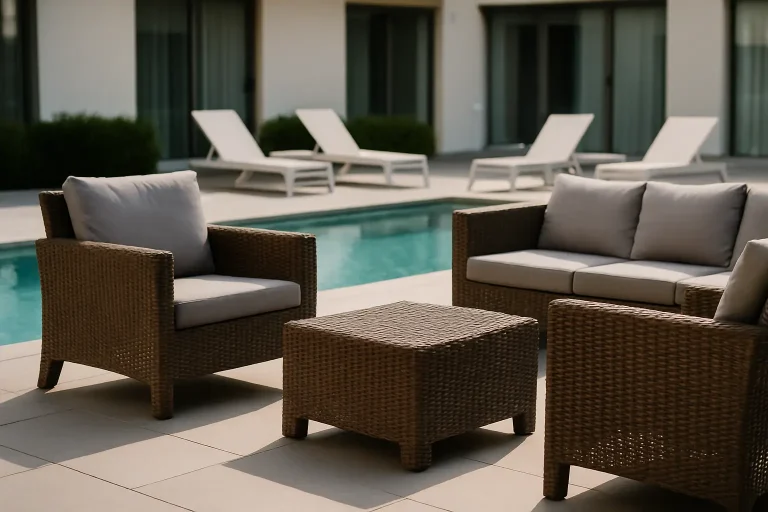
Cool gray still has a role, especially in urban rooftops, commercial terraces, and contemporary hospitality concepts that lean into glass, steel, and monochrome architecture. But it now works better as a support tone than the entire story. Pairing a gray frame with mushroom cushions or a charcoal dining base with clay-toned sling seating gives projects more depth and better visual longevity.
Greens are moving from accent to core palette
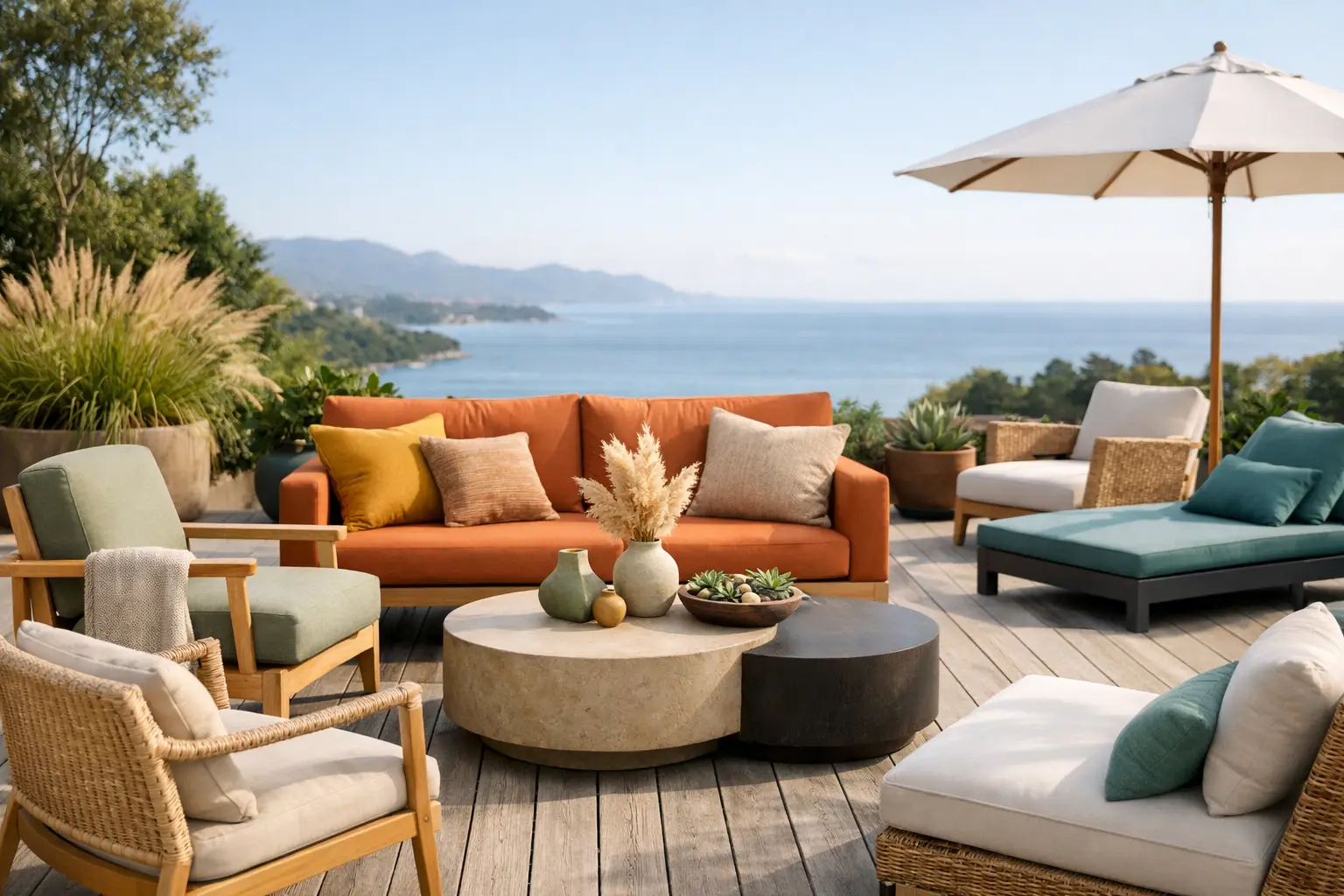
One of the strongest outdoor furniture color trends 2026 is the rise of green as a lead color. Not bright botanical green, and not the emerald tones that can feel formal or themed. The direction is deeper and more natural – olive, eucalyptus, moss, sage, cypress, and muted forest.
These greens perform well because they sit comfortably between architecture and landscape. In hotel courtyards, resort gardens, villa terraces, and restaurant patios, they connect furniture to planting schemes without disappearing into them. They also offer more personality than beige while staying easier to maintain as a long-term specification than trend-driven blues or bold fashion colors.
For B2B buyers, green has another advantage. It scales. A muted green aluminum frame can run across lounge, dining, and pool categories without fighting different materials. The same is true for green-accent cushions, umbrellas, and outdoor rugs. When procurement teams need to furnish multiple areas under one design language, green creates cohesion without forcing every piece into the same neutral formula.
Best use cases for green outdoor palettes
Muted green works particularly well in three settings. First, hospitality projects that want a premium, low-stress atmosphere. Second, residential developments aiming for a more natural luxury position. Third, mixed-use spaces where the furniture needs to soften hard architecture. In those cases, green often outperforms navy because it feels less expected and more integrated.
Earth tones are replacing bright statements
Color in 2026 is not disappearing. It is becoming more mineral-based. Clay, terracotta, rust, cinnamon, adobe, and dusty coral are replacing the saturated accent colors that once dominated cushions and accessories. These tones add warmth and identity, but they do it with restraint.
This matters for commercial projects because statement color now has to last through longer asset cycles. A vivid seasonal shade may look strong in a concept deck, yet it can limit future refreshes and reduce flexibility when operators update branding or surrounding finishes. Earth tones solve that problem. They feel current but not temporary.
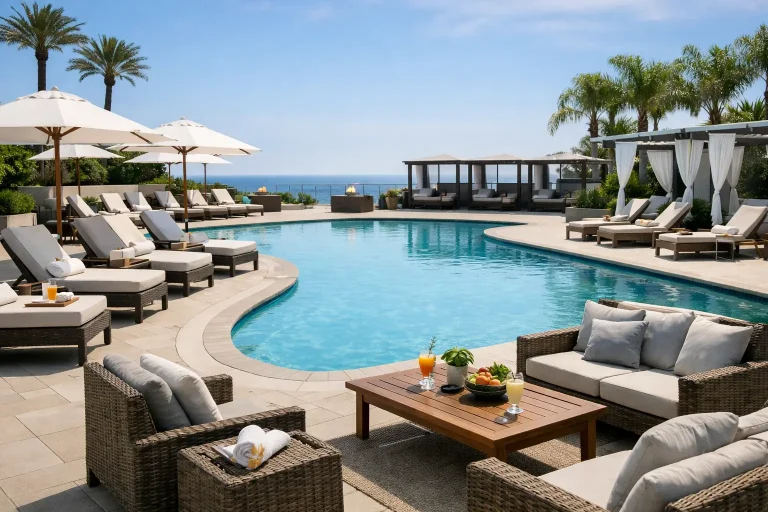
On pool decks and outdoor dining environments, terracotta and clay also balance the colder feel of metal frames and large-format stone flooring. In rooftop settings, they add visual warmth without introducing the visual noise that stronger reds or oranges can create. The result is a palette with presence that still photographs cleanly.
Black is staying, but in a softer supporting role
Black frames are not leaving the market. They remain a dependable specification for contract-grade furniture because they look sharp, define form, and fit a wide range of architectural styles. But in 2026, black works best when it is balanced by softer upholstery and more tactile materials.
A full black-and-white scheme can still look effective in a minimalist project, but it is no longer the automatic premium answer. Too much contrast can feel severe outdoors, especially under strong sun. The more successful applications pair black frames with taupe, sand, olive, or warm gray cushions. That mix keeps the structure of black while making the space more inviting.
Textured black and charcoal finishes are also gaining ground over flat, featureless powder coats. They add visual depth, reduce the appearance of fingerprints and dust, and support a more crafted look across large furniture packages.
Blue is becoming more selective
Blue remains relevant, particularly in coastal hospitality and residential projects, but it is being specified more carefully. Bright marine blues and crisp nautical combinations can quickly feel obvious. The 2026 direction favors desaturated blue-gray, storm blue, mineral blue, and deep ink.
These shades work best as secondary colors rather than dominant ones. A blue accent cushion, occasional chair, or umbrella trim can sharpen a neutral palette. An entire outdoor package in blue, on the other hand, can feel too theme-led unless the project has a very clear waterfront identity.
For designers and developers, that is the key trade-off. Blue has familiarity and broad appeal, but it carries stronger associations than green or earth tones. If the goal is flexibility across future phases or multiple property types, more neutral-led palettes usually offer better long-term value.
Materials are shaping color decisions more than trend boards
The smartest specifications for outdoor furniture color trends 2026 start with materials, not abstract palette ideas. The same tone reads differently on powder-coated aluminum, rope, teak-effect surfaces, woven resin, and performance fabric. A clay tone that feels rich on upholstery may look flat on a frame. A green that appears refined on a matte metal finish may become too casual in a glossy weave.
That is why mock-up approvals, material swatches, and 3D visual planning matter so much in larger projects. Color has to be tested in relation to sunlight, flooring, planting, façades, and maintenance expectations. What works in an indoor sample room may not hold up under outdoor glare or across a multi-site rollout.
This is where an integrated supplier model creates real value. When design support, materials, manufacturing, and delivery sit under one operational structure, teams can coordinate color decisions across categories instead of making isolated product choices. For complex specifications, that reduces mismatch risk and speeds approvals. At PNZ Space, that coordination is supported by in-house design services, 3D drawings, and a broad catalog built for project-level consistency.
How to specify color with fewer revisions
The most successful outdoor palettes for 2026 usually follow a simple balance. Start with a dependable base tone for frames and large upholstery volumes. Add one natural mid-tone such as olive, clay, or camel. Then decide whether the project needs a darker anchor like charcoal or textured black.
Problems usually start when every category tries to make its own statement. Dining, lounge, poolside, and shade products need to relate to each other, even if they are not identical. A controlled palette gives procurement teams more room to adapt by SKU availability, lead times, and site-specific needs without losing the design intent.
It also helps to think about replacement strategy. Cushions, slings, and umbrellas may be refreshed before frames or tabletops. Choosing a frame color that can support future fabric updates is often smarter than specifying the most trend-forward combination available today.
What clients will want to see in 2026
Clients are asking for outdoor spaces that feel polished but not overdesigned. They want furniture colors that support architecture, landscaping, and guest experience without turning the environment into a seasonal statement. That is why warm neutrals, muted greens, earth tones, and softened darks are leading the market. They deliver a premium look, hold up visually across larger installations, and give projects a better chance of staying relevant beyond the first round of photography.
The strongest color choice is rarely the one that shouts the loudest. It is the one that still looks intentional after heavy use, strong weather, and changing design priorities. When color is specified with operations, materials, and project scale in mind, it stops being decoration and starts working like an asset.