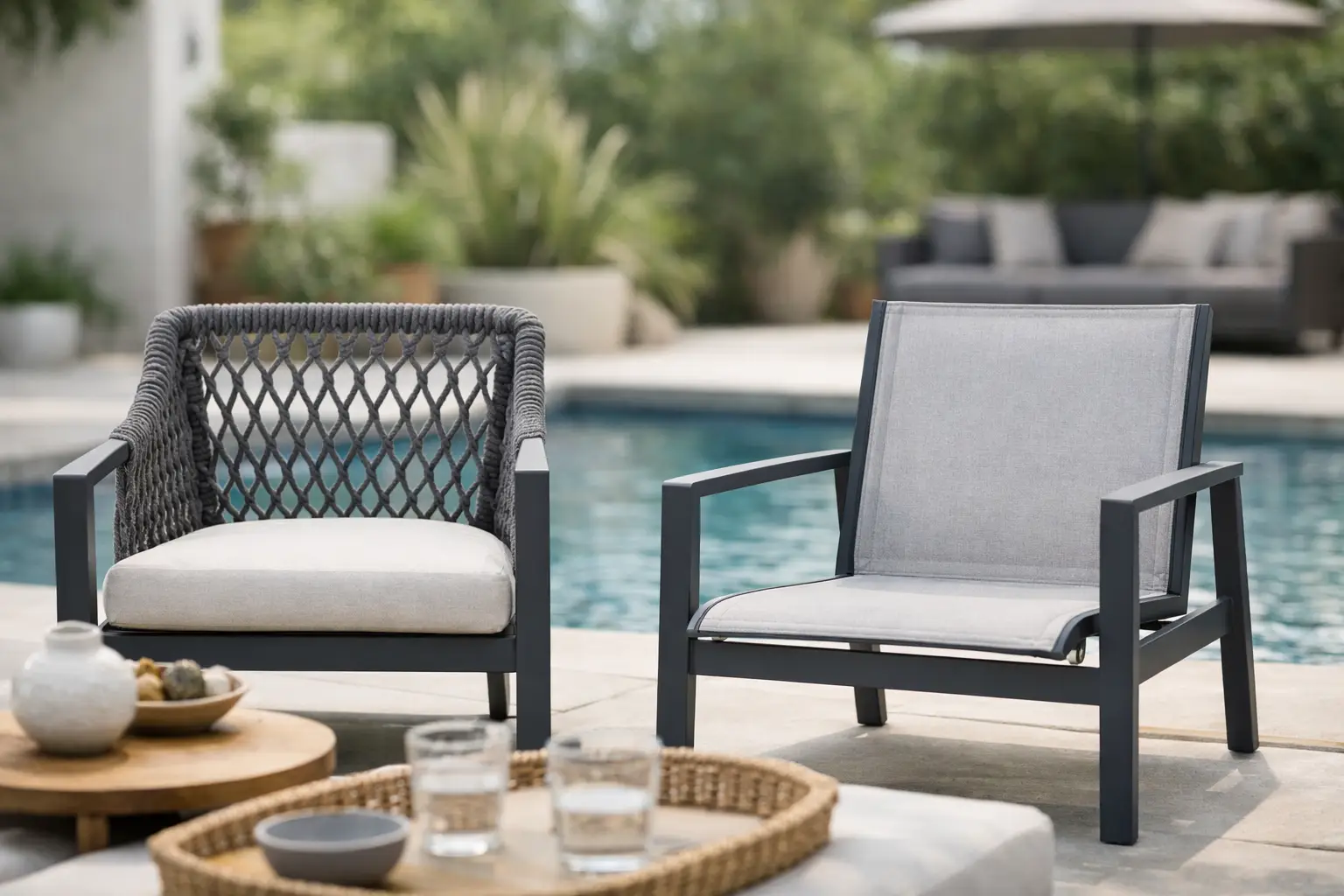
Rope Weave vs Sling Outdoor Seating
Specify the wrong outdoor chair material for a rooftop lounge or pool deck, and the problem shows up fast – sagging seats, longer maintenance cycles, guest complaints, or a look that falls flat against the rest of the project. When clients ask about rope weave vs sling outdoor seating, they are usually not asking for a style opinion alone. They are asking which option will perform better for the setting, the traffic level, the climate, and the maintenance team that has to live with the decision.
For designers, developers, and hospitality buyers, this is a material choice with operational consequences. Rope weave and sling seating can both work beautifully outdoors, but they solve different problems. The right answer depends on whether the priority is visual texture, quick dry performance, stackability, guest comfort, specification control, or lifecycle maintenance.
Rope Weave vs Sling Outdoor Seating: The Real Difference
At a glance, rope weave seating feels more architectural. It brings depth, softness, and a crafted appearance that works well in upscale lounges, dining terraces, and hospitality settings where the furniture is part of the visual story. Sling seating is more streamlined. It is typically cleaner in profile, lighter in look, and more closely associated with practical, high-use environments such as pool areas, casual dining spaces, and sun-exposed terraces.
The core construction is different, and that drives the performance. Rope weave typically uses synthetic outdoor rope hand-woven or machine-applied over an aluminum or metal frame. The result is a seat or back with tension, openness, and visible texture. Sling seating uses a stretched technical mesh or fabric panel secured to the frame, creating a taut support surface with very little visual bulk.
Neither is inherently better across every project. Rope weave usually wins on design character and perceived luxury. Sling often wins on low-maintenance operation and simplified cleaning. That distinction matters when furnishing one villa terrace versus a multi-site hospitality rollout.
Comfort and Ergonomics in Daily Use
Comfort is often the first discussion point, but it should be evaluated in the context of how the chair will actually be used.
Rope weave seating tends to feel more inviting in lounge and dining applications where users stay seated for longer stretches. The woven structure has a softer visual language, and depending on the rope diameter, pattern, and seat geometry, it can offer a more relaxed sit. It also pairs well with cushions when the design intent calls for layered comfort and a more residential or boutique-hospitality feel.
Sling seating delivers a different kind of comfort. A well-engineered sling seat conforms slightly to the body and creates even support without requiring a cushion. In hot climates, that can be an advantage. Breathability is high, heat retention is generally lower than with upholstered alternatives, and users coming from the pool or beach can sit down without much concern.
That said, comfort varies by frame angle and material tension. A poorly specified sling can feel too rigid. A rope weave chair with overly large gaps or insufficient support can feel decorative rather than practical. For commercial projects, mock-up review matters here. Comfort should be evaluated by seat height, back pitch, arm position, and how the material behaves after repeated use.
Where each material tends to perform best
Rope weave is often the stronger choice for outdoor dining sets, club chairs, conversation seating, and design-led terraces where atmosphere is part of the value proposition. Sling is often the stronger choice for chaise lounges, poolside dining, high-turn casual seating, and projects where drying time and maintenance speed are critical.
Durability in Sun, Moisture, and Heavy Traffic
Both materials can be engineered for contract use, but durability depends on the quality of the material system, not just the category name.
Outdoor rope used in commercial furniture is typically synthetic and designed for UV resistance, color stability, and moisture exposure. In a properly manufactured product, the rope should resist cracking, fraying, and excessive stretch. The frame underneath matters just as much. Powder-coated aluminum is a common pairing because it keeps the overall product corrosion-resistant and easier to handle at scale.
Sling fabrics are also built for exterior performance, often using PVC-coated polyester or similar technical textiles. These materials are valued for dimensional stability, fast drying, and resistance to mildew when properly maintained. In high-humidity or poolside environments, sling has a practical edge because the surface does not trap water the way cushions or denser materials can.
However, trade-offs are real. Rope weave can show wear at high-contact points over time, especially in environments with constant abrasion, rough handling, or sharp accessories. Sling can lose tension after extended use if the fabric quality or installation method is weak. In both cases, cheap specifications become visible quickly.
For procurement teams, the better question is not just rope or sling. It is what grade of rope, what UV rating, what frame construction, what joinery, and what testing standard supports the intended application.
Maintenance, Cleaning, and Operational Load
This is where many projects separate aesthetic preference from long-term practicality.
Sling seating is usually easier to clean on a day-to-day basis. Most spills can be wiped down quickly, and the open mesh surface dries fast after rain, cleaning, or pool use. For hospitality operators managing high turnover, that efficiency matters. Sling chairs are also often lighter and more stackable, which can simplify storage and floor resets.
Rope weave seating requires a more deliberate maintenance routine. Dust and debris can collect within the weave pattern, especially in sandy, windy, or landscaped environments. Cleaning is still straightforward, but it generally takes more time than wiping a sling panel. In premium settings, teams accept that trade-off because rope weave contributes more visual value.
This is one of the clearest it-depends decisions in outdoor furniture specification. If the site team needs fast cleaning cycles and minimal intervention, sling is often the safer operational choice. If the project is selling a more elevated guest experience and maintenance support is already built into operations, rope weave can justify the extra care.
Design Language and Project Positioning
Material choice affects more than performance. It signals where the project sits in the market.
Rope weave tends to align with contemporary hospitality, luxury residential, and design-forward commercial projects. It softens metal frames, adds visual warmth, and gives specifiers more room to shape a space with pattern, color, and texture. It works especially well when the outdoor zone is meant to feel like an extension of the interior design concept.
Sling supports a cleaner, more technical expression. It fits modern pool furniture, casual outdoor dining, wellness areas, and large-scale developments where a crisp, uniform look is important. Because the profile is often leaner, sling can also help smaller outdoor areas feel less crowded.
For architects and designers working across multiple zones, the strongest solution is not always one material across the whole property. Rope weave may be ideal for lounge and dining settings, while sling is better suited to pool and sunbed areas. A supplier with broad outdoor categories and material flexibility can help maintain visual consistency while matching each zone to its actual use.
Cost, Lifecycle, and Specification Strategy
Upfront cost matters, but for commercial buyers it is rarely the only number that counts.
Rope weave seating can carry a higher perceived and actual value because of its detailing, labor input, and stronger design presence. For premium projects, that investment may support better guest impression and stronger alignment with the brand standard of the property. But if replacement cycles are likely to be aggressive due to heavy public use, buyers should weigh whether the visual gain offsets the maintenance and wear profile.
Sling seating is often attractive from a lifecycle-efficiency standpoint. It can reduce cushion dependency, speed up maintenance, and perform well in wet-use areas. In the right applications, that translates into lower operational friction over time.
The best specifications are rarely made in isolation. Material swatches, finish reviews, and prototype approvals should sit alongside practical questions: Who is using the furniture? How often will it be moved? Is the site exposed to chlorine, salt air, or blowing sand? Will the chairs be stacked daily? Is the goal luxury expression, operational simplicity, or both?
For large outdoor programs, this is where a vertically integrated supplier becomes more valuable. Teams need more than product selection. They need coordination across design intent, manufacturing consistency, approval timelines, and delivery performance. PNZ Space Global approaches this as a project decision, not just a catalog choice, which is exactly how high-volume buyers reduce risk.
Which One Should You Specify?
Choose rope weave when the priority is elevated design, textural depth, and a more curated seating experience. It is especially effective for hospitality lounges, upscale dining terraces, branded residential developments, and outdoor spaces where furniture contributes directly to the atmosphere.
Choose sling when the priority is quick drying performance, simpler maintenance, lighter handling, and dependable use in poolside or high-turn environments. It is often the more efficient answer for chaise lounges, casual dining, and operationally demanding outdoor areas.
If the project includes multiple outdoor zones, the smartest answer may be both. Use rope weave where guests linger and where visual character carries weight. Use sling where water exposure, turnover, and maintenance speed shape the daily reality.
The strongest outdoor furniture specifications are not built around trends. They are built around how a space needs to perform six months after installation, when the weather has tested every decision and the operations team knows exactly what works.