Outdoor Furniture for Multi Site Projects
When a rollout covers five properties instead of one, outdoor furniture stops being a styling exercise and becomes an execution test. Outdoor furniture for multi site projects has to do more than look right in a presentation deck. It has to arrive on schedule, match approved specifications across locations, and hold up in very different operating conditions without creating procurement drag at every step.
That is where many projects lose time and margin. A chair that works for one rooftop may not suit a pool deck, a restaurant terrace, and a branded hospitality courtyard unless the supplier can manage product consistency, finish control, and volume planning from the start. For developers, procurement teams, architects, and operators, the real question is not simply which pieces to buy. It is how to furnish multiple sites without multiplying risk.
What outdoor furniture for multi site projects really requires
Single-site buying often allows for more improvisation. A buyer can swap finishes late, split vendors, or accept longer lead times on a few signature pieces. Multi-site work is less forgiving. Once several locations are tied to one opening schedule or phased handover plan, every decision affects production, approvals, freight, installation sequencing, and replacement planning.
That changes the criteria. Outdoor furniture for multi site projects should be evaluated against standardization, SKU depth, material durability, and supplier capacity as seriously as aesthetics. Design still matters, especially in hospitality, residential developments, and branded commercial environments. But design that cannot be repeated accurately at scale becomes a liability.
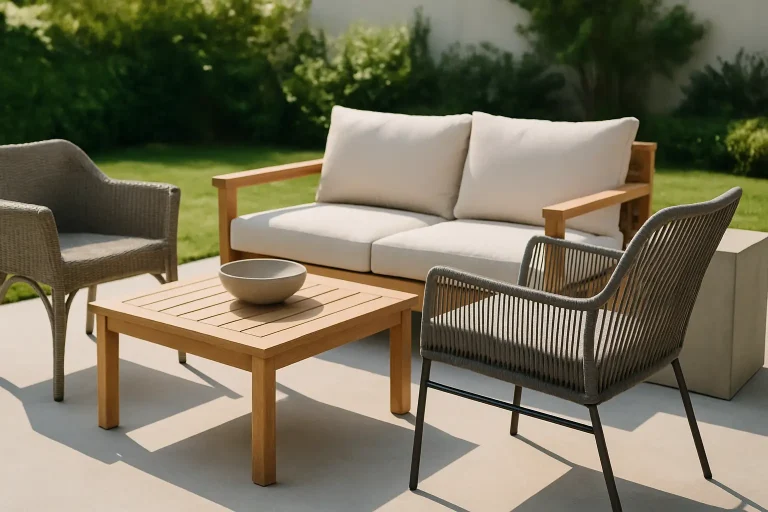
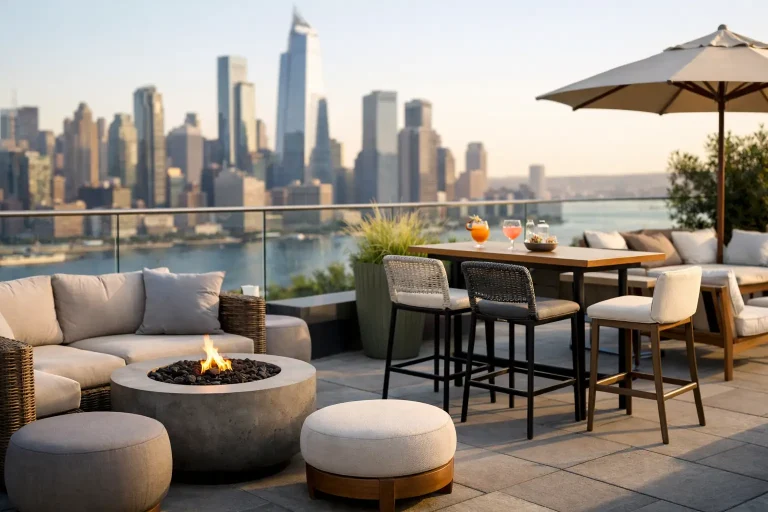
The strongest programs are built around repeatable product families. Lounge seating, dining sets, poolside furniture, shade solutions, and accessories should work together visually while allowing enough variation for each site type. A beachfront property may need different fabrics and frame finishes than a city rooftop, but both should still align with the broader project language.
Consistency is not the same as uniformity
Many buyers worry that standardization will flatten the character of each location. In practice, the opposite is often true. When core specifications are controlled properly, project teams gain room to tailor layouts, accents, and mix ratios by site without compromising procurement efficiency.
A consistent base palette helps. The same dining chair frame, for example, can appear across several sites with different table formats or upholstery selections. The same sun lounger profile can support a resort-wide identity while adapting to private pool villas, public deck zones, and spa areas. This approach reduces approval cycles because the project team is not requalifying every item from scratch.
It also improves operations after installation. Replacement orders are easier to manage when product lines are clearly documented and still supported. Maintenance teams can source matching components faster. Brand standards stay intact even when sites open in phases or refresh on different schedules.
Why supplier structure matters more than most buyers expect
A multi-site project is only as reliable as the system behind the furniture. This is where supplier structure becomes a commercial advantage. A vertically integrated model gives buyers more control over specification accuracy, mock-up revisions, production timing, and quality assurance than a fragmented sourcing chain.
When design, manufacturing, and fulfillment are separated across multiple parties, small issues tend to grow. Finish interpretation can shift between factory and distributor. Lead times become harder to confirm. Approval comments take longer to implement. Freight coordination gets reactive instead of planned. None of that is ideal when a procurement team is furnishing several villas, clubhouses, terraces, or hotel outdoor zones at once.
An integrated supplier can support the process earlier and more precisely. That includes 3D drawings during planning, material and finish options during specification, mock-up approvals before production, and coordinated logistics through delivery and installation. For buyers working across multiple assets, that kind of control is not a luxury. It is what keeps timelines credible.
Product categories should be planned as a system
Outdoor environments are rarely furnished with one category alone. A serious multi-site rollout usually includes several outdoor use cases, each with different traffic patterns, exposure levels, and commercial expectations. That is why the specification process should treat the full outdoor assortment as one coordinated system rather than a series of isolated purchases.
Lounge seating sets the tone in social and hospitality spaces, but it must also account for cushion performance, cleaning demands, and frame durability. Dining collections need stronger attention to stacking potential, footprint efficiency, and table surface resilience, especially in restaurants and high-turn venues. Poolside furniture introduces another layer with sun exposure, moisture, and guest turnover. Shade solutions and accessories then complete the environment while affecting both usability and visual coherence.
When these categories come from disconnected vendors, the burden of coordination shifts back to the buyer. Finish matching becomes harder. Lead times conflict. Installation sequencing gets messy. A supplier with broad category coverage can simplify this by giving project teams one specification path across lounge, dining, pool, and supporting pieces.
The materials question depends on the site, not the brochure
Material selection is where good planning protects the project from future headaches. There is no single best material for all outdoor furniture for multi site projects. The right choice depends on climate, maintenance resources, expected wear, and the visual standard the client wants to maintain.
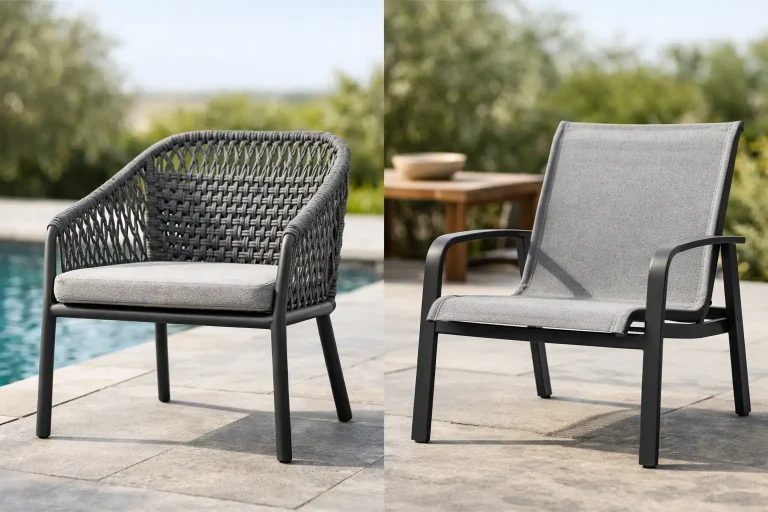
Powder-coated aluminum is often a strong choice for projects that need a clean modern profile, lower maintenance, and good corrosion resistance. Teak may be preferred where natural texture is central to the design intent, but teams should be realistic about weathering and upkeep expectations. Synthetic wicker can work well in some hospitality and residential applications, especially where the style direction calls for it, though quality varies significantly and should be reviewed carefully at sample stage.
Fabrics deserve equal scrutiny. A fabric that performs well in one dry climate may behave differently in a high-humidity coastal setting. Fast dry foam, UV-resistant textiles, and removable covers can all improve lifecycle performance, but only if they match the operational realities of the property. Procurement teams should ask not just how a material looks at handover, but how it will perform after a full season of sun, cleaning, and guest use.
Approvals should reduce risk, not delay the schedule
Multi-site buyers often face a familiar tension. They need more approvals because the project value is larger and the stakeholder group is broader, but every approval round threatens the timeline. The answer is not to skip approvals. It is to structure them properly.
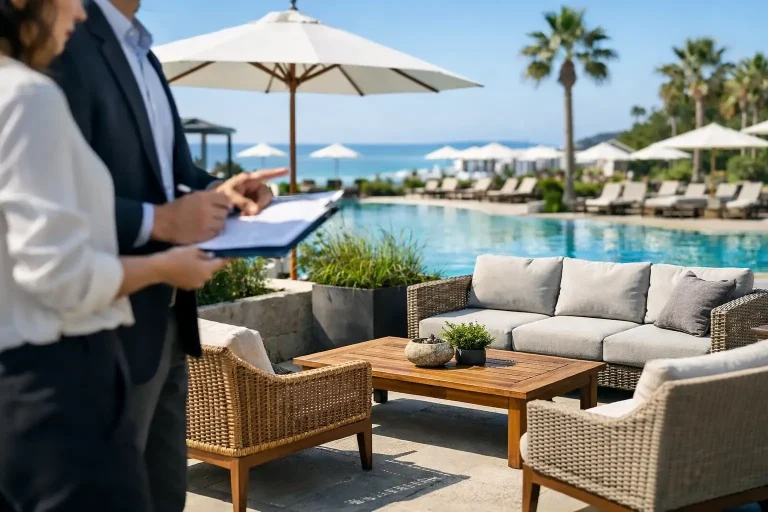
3D drawings help align layout intent and product fit before orders are locked. Material swatches allow stakeholders to compare finish options under real project lighting. Mock-up sets are especially valuable because they expose comfort, scale, and construction questions early, when corrections are still manageable. This is far more efficient than discovering a mismatch after containers are booked or site teams are ready for installation.
The key is having a supplier that can move from concept review to approved sample to production without losing momentum. Buyers do not need more paperwork. They need approvals that lead directly to action.
Logistics is where execution becomes visible
A well-specified collection can still fail if logistics are not managed with the same discipline as design and production. Multi-site delivery introduces sequencing issues that single-site orders rarely face. Some locations may be ready early while others are waiting on landscaping, pool completion, or fit-out access. Overseas shipments may need staggered dispatch. White-glove delivery may be essential for premium residential or hospitality sites where on-site handling standards matter.
This is why delivery planning should start early. Buyers should confirm packaging strategy, phased shipment options, site-by-site allocation, and installation coordination before production is complete. That prevents stock from arriving out of order or sitting exposed at locations that are not ready to receive it.
A supplier with manufacturing scale and project fulfillment experience can make this process far more predictable. PNZ Space Global, for example, supports contract-grade outdoor programs with in-house design services, mock-up approvals, and high-volume production capacity backed by a 20,000-square-meter factory. For buyers managing multiple locations, that operational control matters as much as the catalog itself.
What strong procurement looks like from the start
The best multi-site outdoor furniture programs usually start with a simple discipline: define what must stay consistent and what can flex. Core product lines, structural materials, and brand-defining finishes often belong in the fixed category. Site-specific layouts, fabric accents, and accessory mixes can remain flexible.
That structure helps every team involved. Designers keep the visual standard intact. Procurement teams streamline ordering. Project managers get clearer delivery schedules. Operators receive furniture that is easier to maintain and replenish. The project feels more controlled because it is more controlled.
For complex outdoor rollouts, buyers do not need more vendors, more revisions, or more workarounds. They need a supplier that can support specification, absorb volume, and deliver consistency across every site without losing speed. That is what turns outdoor furniture from a purchasing task into a reliable project asset.
The smartest time to solve multi-site complexity is before the first PO is issued, while the project is still flexible enough to get the system right.