Hospitality Outdoor Furniture Sourcing Guide
A pool deck can look exceptional in a rendering and still fail six months after opening. Cushions fade. Frames corrode. Lead times slip. Replacement pieces arrive in the wrong finish. That is why a hospitality outdoor furniture sourcing guide matters most before the first PO is issued, not after the first guest complaint.
For hospitality teams, outdoor furniture is rarely a simple product purchase. It is a specification, operations, and logistics decision that affects guest experience, maintenance costs, brand standards, and opening schedules. Whether you are furnishing a boutique hotel terrace, a large resort poolscape, or a multi-site restaurant rollout, the sourcing process needs to work backward from performance in the field.
What a hospitality outdoor furniture sourcing guide should solve
The real sourcing challenge is not finding attractive furniture. The market is full of attractive options. The challenge is finding contract-grade products that hold up in commercial use, align with the design concept, meet budget, and arrive on time with consistent quality.
That requires more than a catalog review. Buyers need clarity on material suitability, finish consistency, stackability, maintenance burden, and production control. In hospitality, a chair is not just a chair. It may need to survive chlorine exposure, high turnover, daily cleaning, and year-round UV stress while still matching the architect’s palette and the operator’s service model.
A good sourcing process also reduces fragmentation. When lounge, dining, poolside, shade, and accessories come from multiple vendors, coordination becomes harder. Approvals slow down. Freight gets split. Installation sequencing becomes less predictable. A one-source approach is not always necessary, but for many projects it lowers procurement friction in a measurable way.
Start with use case, not product category
Outdoor areas in hospitality settings often get grouped together too early. That is where specification problems begin. A rooftop bar, beachfront dining terrace, and family pool deck may all sit outdoors, but they demand different furniture performance.
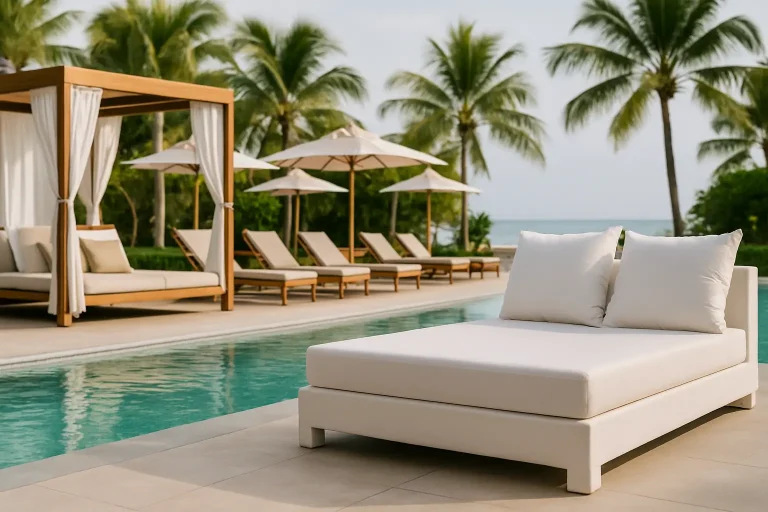
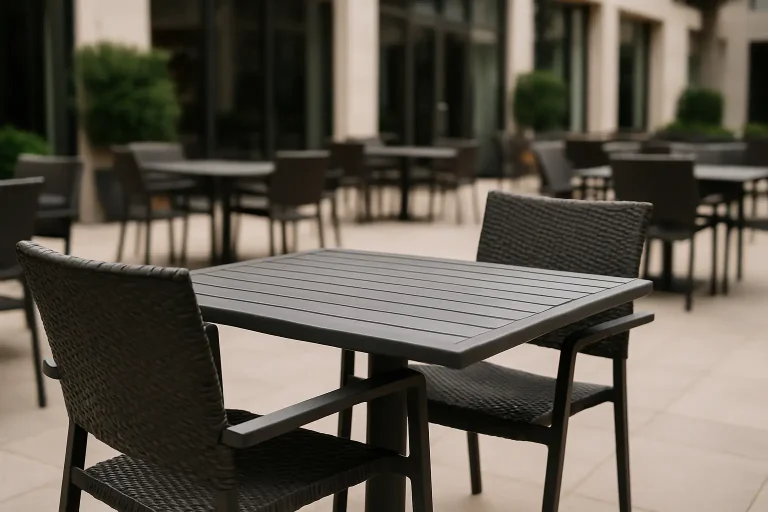
A rooftop venue might prioritize weight, wind stability, and a sharper visual identity. A resort dining area may need high seating density, easy-clean surfaces, and chairs that can handle constant movement. Poolside environments call for materials that perform around water, sunscreen, and towel service, with cushions and slings that can dry quickly and resist staining.
The practical move is to define each zone by traffic level, environmental exposure, guest behavior, and service demands before reviewing product options. This keeps specification decisions grounded in reality. It also helps procurement teams avoid overbuying premium features where they are not needed, while preventing under-specification in the highest-wear areas.
Materials matter more than trends
Design direction gets attention early, but material selection decides long-term performance. In hospitality outdoor furniture sourcing, the right finish and substrate can protect margins just as much as they protect appearance.
Powder-coated aluminum remains a strong choice for many projects because it offers a good balance of corrosion resistance, weight, and form flexibility. That said, not all aluminum builds are equal. Wall thickness, weld quality, and pretreatment standards affect durability. The same applies to coating systems. Two products can look similar on day one and perform very differently after one summer season.
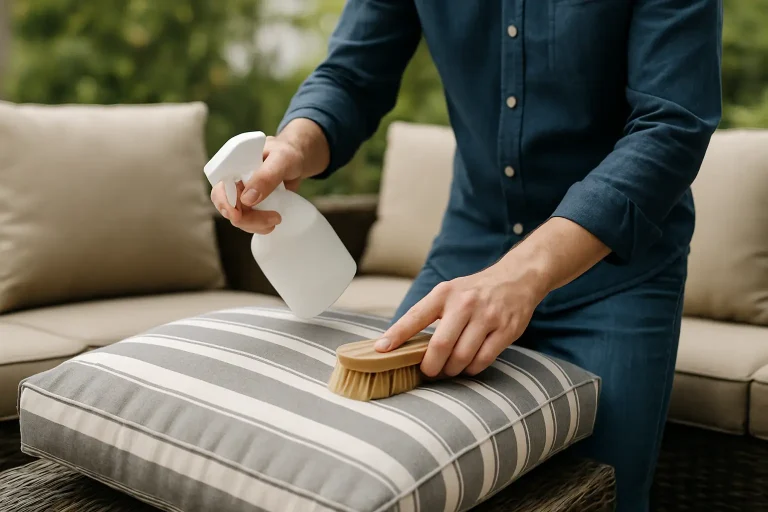
Teak and other wood options can bring warmth and premium character, especially in resorts and upscale dining. But buyers should be realistic about maintenance expectations and weathering. If the operator wants the original tone preserved, that means an active upkeep program. If silvering is acceptable, the specification can be more forgiving.
Synthetic wicker, rope, sling, HPL, sintered stone, and outdoor upholstery each have their place. The right choice depends on climate, cleaning protocols, and guest turnover. Rope can create a strong hospitality look, but some constructions are harder to clean in high-volume settings. Upholstered pieces add comfort and visual depth, yet cushion storage, drainage, and replacement planning need to be addressed early.
The supplier model affects project risk
Many buyers focus on the product and overlook the structure behind it. That is a mistake. A supplier’s operational model often matters as much as the design itself.
A vertically integrated supplier has stronger control over production schedules, material standards, customization, and quality checks. That control becomes especially valuable for hospitality projects with multiple approval points, large volumes, or phased deliveries. When design, manufacturing, and logistics are managed in a coordinated way, there is less room for handoff errors.
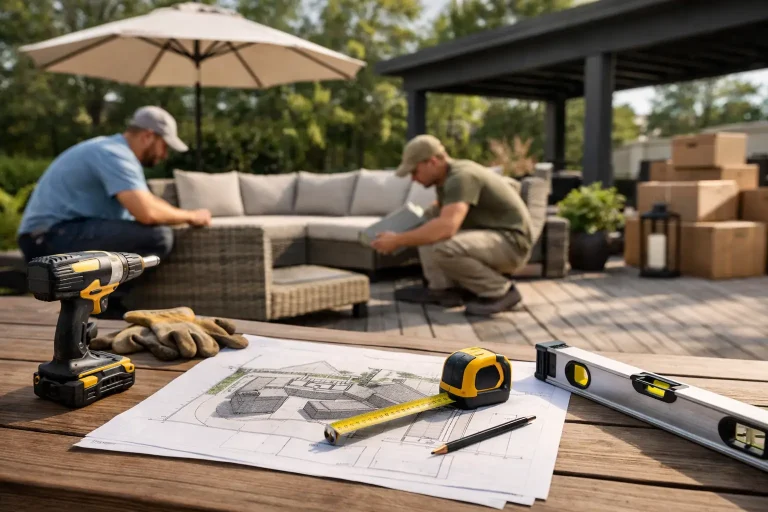
This is also where mock-ups, shop drawings, 3D support, and material swatches become commercially useful rather than cosmetic. They help align design intent with factory output before full production begins. For architects and project managers, that can shorten approval cycles and reduce expensive revisions later.
Capacity matters too. A supplier that can produce beautifully for small residential orders may not be built for a resort opening or a multi-property rollout. Buyers should be asking about factory scale, production planning, lead-time control, and past high-volume delivery. Those are not background details. They are indicators of whether the supplier can absorb complexity without slipping.
How to compare quotes without missing the real cost
Price comparison in hospitality procurement is rarely straightforward. The lower quote can easily become the higher total cost once replacements, delays, and maintenance are factored in.
A useful comparison looks beyond unit price. Buyers should evaluate specification equivalency, packaging standards, freight terms, warranty support, spare part availability, and tolerance for finish variation across batches. If one supplier is quoting lower-grade foam, lighter frame construction, or inconsistent fabric availability, the number on the front page does not tell the full story.
Lead time should be weighed the same way. Fast availability is valuable, but only if it is credible. It is better to work with a supplier that provides realistic production timing and clear milestone communication than one that promises an aggressive date and misses it. Opening schedules, FF&E coordination, and site readiness all depend on disciplined delivery planning.
Why customization can help or hurt
Customization is often necessary in hospitality. Brand standards, design language, and site-specific dimensions rarely fit an off-the-shelf answer perfectly. Custom finishes, fabrics, dimensions, and cushion specifications can create a stronger guest environment and better project alignment.
But customization should be used intentionally. Every change can affect sampling, approvals, production complexity, and lead time. A custom frame color across a full project may be worth it. A heavily modified product for one small zone may not be. The best sourcing strategy usually standardizes where possible and customizes where it creates visible or operational value.
This is where a supplier with in-house design support can add real efficiency. When drawings, mock-up reviews, and material coordination are handled within the same system, custom work becomes easier to manage and less prone to misinterpretation.
A hospitality outdoor furniture sourcing guide for GCC-style conditions
For buyers working in high-heat, high-UV, or coastal conditions, outdoor performance needs to be treated as a frontline concern. Materials that behave well in mild climates may not hold up the same way under intense sun, salt exposure, or prolonged outdoor use.
That changes the sourcing conversation. Fabric performance, coating durability, drainage, and heat retention all need closer scrutiny. Dark finishes may create design contrast but can become less comfortable in direct sun. Natural textures may look premium but require more frequent maintenance in sandy or salty environments. There is no universal best material. There is only the right specification for the site and service model.
Experienced buyers know that climate testing on paper is only part of the answer. They also want a supplier that understands installation realities, replacement planning, and the pace of commercial operations. That is where operational depth becomes a competitive advantage.
The best sourcing outcomes are built before production starts
The strongest outdoor furniture projects are rarely the ones with the most dramatic concepts. They are the ones where procurement, design, and execution were aligned early. Clear zone planning, disciplined approvals, realistic lead times, and factory-backed quality control usually outperform reactive buying every time.
For hospitality operators, developers, and design teams, the sourcing decision should answer one question above all: can this partner deliver the look, the volume, and the reliability the project actually requires? Companies such as PNZ Space Global are built around that expectation, combining design support, manufacturing control, and project-scale fulfillment under one roof.
The furniture guests notice is the visible part. The sourcing discipline behind it is what keeps the space working long after opening night.