Outdoor Furniture Installation Coordination Services
A rooftop lounge can be fully specified, approved, and shipped on time – then lose days on-site because freight arrives before access is cleared, installers are missing placement drawings, or the pool deck is still wet from finishing work. That is exactly where outdoor furniture installation coordination services prove their value. For developers, hospitality operators, designers, and procurement teams, installation is not the last simple step. It is the point where scheduling, specification control, delivery timing, site readiness, and presentation all meet.
What outdoor furniture installation coordination services actually cover
At a project level, installation coordination is the operational layer between purchase order and final handover. It aligns production status, shipping schedules, site conditions, access windows, receiving procedures, floor-by-floor sequencing, and installation crews so furniture is placed correctly the first time.
That scope is wider than many buyers expect. It can start with pre-install planning, including item counts by zone, carton labeling logic, and room or area allocation. It usually extends into delivery appointment management, white-glove handling, assembly oversight, on-site placement, punch-list review, and issue escalation if anything arrives damaged or incomplete.
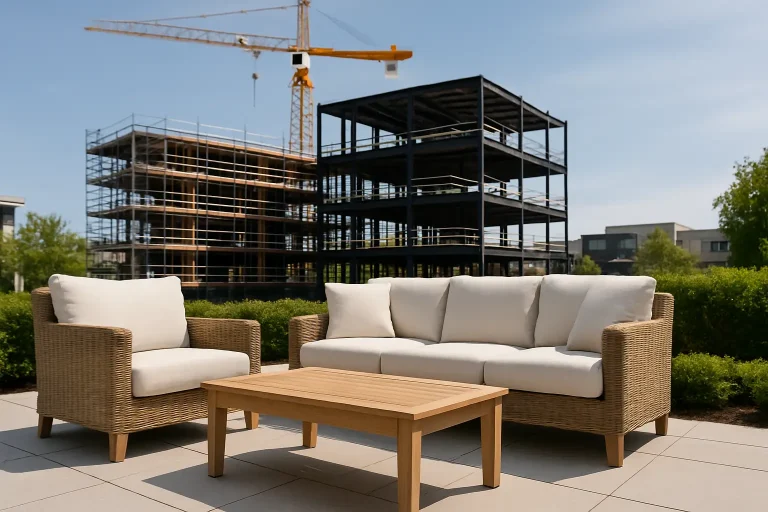
For outdoor environments, the coordination burden is often heavier than indoor projects. Pool decks have moisture exposure. Rooftops may have freight elevator restrictions. Restaurants and hotels may allow installation only during off-hours. Villas and multi-building developments may require phased deployment based on construction progress. If no one owns those moving parts, small delays compound quickly.
Why installation coordination matters on outdoor projects
Outdoor furniture is rarely installed into a neutral environment. It lands in active, highly specific spaces such as terraces, resort walkways, beach clubs, courtyards, rooftop bars, and shaded dining zones. Each environment has different access, material handling, and placement requirements.
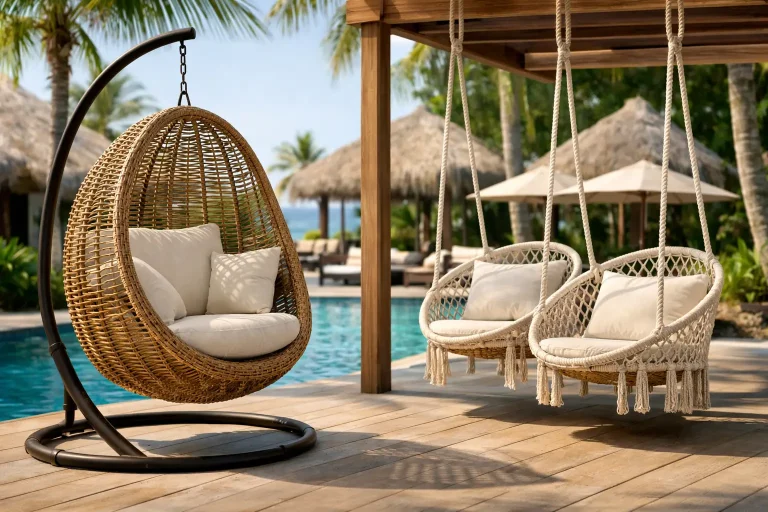
A simple example is a hospitality pool area. Chaise lounges, side tables, umbrellas, towel stations, and accessories may all arrive from one supplier, but they do not necessarily move to site in the same sequence they were ordered. If the shade structures need to be positioned before lounge groupings are finalized, or if tile protection is required before heavy pieces are rolled into place, the install must be choreographed. Otherwise, crews waste time, surfaces get damaged, and opening dates come under pressure.
There is also a brand and guest-experience dimension. In hospitality and premium residential settings, the install is not just about putting furniture on the floor. It is about matching the approved layout, preserving spacing for circulation, aligning finishes with the design intent, and presenting the space in a ready-to-use condition. A coordination-led approach protects that outcome.
The real cost of treating installation as an afterthought
Most project teams focus heavily on sourcing, pricing, lead times, and approvals. Those are valid priorities. But when installation is treated as a handoff rather than a managed phase, avoidable costs show up fast.
The first cost is labor inefficiency. Crews waiting on site access, missing hardware, or revised placement instructions are still billable. The second is damage risk. Outdoor products often include powder-coated aluminum, teak, rope, sling, stone tops, and upholstered components that can be marked or mishandled during rushed unloading. The third is schedule disruption. If a resort soft opening or restaurant launch is tied to furniture completion, one missed install window can affect multiple trades and operating teams.
There is also a softer but equally serious cost: loss of confidence. Designers and procurement teams are measured on execution, not just selection. When furniture arrives but the final setup feels disorganized, stakeholders remember that. Strong coordination protects both the project and the people responsible for delivering it.
What strong coordination looks like in practice
The best outdoor furniture installation coordination services are built around visibility and control. They do not start when the truck arrives. They start earlier, when the supplier and project team confirm what is being installed, where it goes, and what the site can realistically receive.
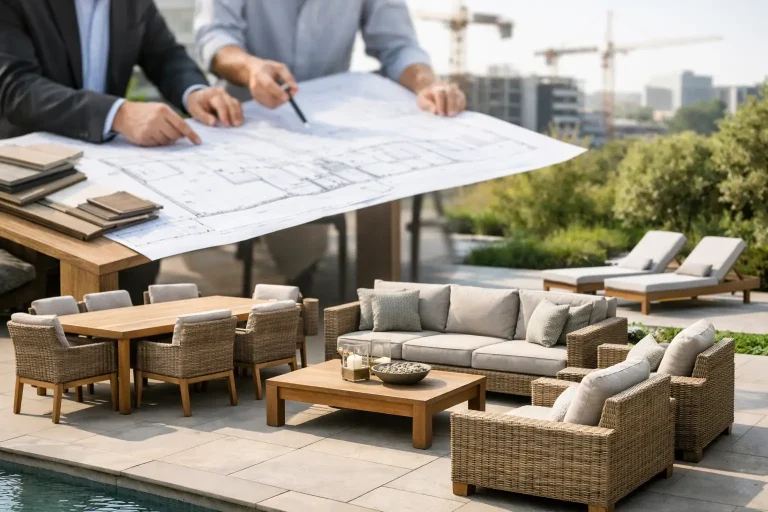
A well-run process usually includes validated quantities by area, installation-ready documentation, and a delivery plan tied to the construction schedule. It also accounts for practical constraints such as crane access, service elevator dimensions, loading bay restrictions, local permit requirements, and working-hour limitations.
On-site, coordination should cover more than assembly. It should include receiving checks, carton and item verification, staging strategy, debris removal, placement by approved plan, and escalation procedures for shortages or visible transit damage. That is especially important on large hospitality and multi-unit residential projects where one issue in one zone can delay turnover for others.
For buyers managing scale, reporting matters too. Clear updates on shipment status, completed installation zones, pending punch items, and replacement timelines make it easier to keep internal teams informed and owners confident.
Why vertical integration changes the installation outcome
This is where supplier structure matters. A vertically integrated outdoor furniture partner has more control over manufacturing timelines, quality checks, packing methods, replacement parts, and finish consistency than a company piecing together products from multiple disconnected sources.
That control has direct installation benefits. If a site requires phased delivery, vertically integrated production makes sequencing easier to manage. If a punch item needs replacement, the path from issue to corrective action is shorter. If custom dimensions or finish approvals were part of the order, the supplier can trace those decisions back to production records instead of sorting through third-party gaps.
For B2B buyers, this is not just a manufacturing story. It is a risk-management story. Installation coordination becomes more reliable when the same partner understands the approved design package, controls product output, and can support delivery through final placement. That is one reason firms handling contract-grade outdoor projects often prefer a single supplier that can support specification, production, logistics, and installation alignment under one operating model.
Where coordination matters most by outdoor category
Lounge and terrace installations
Lounge environments often look relaxed, but they are installation-sensitive. Modular seating, club chairs, fire table layouts, and occasional tables all depend on proportion and spacing. A few inches can change circulation or sightlines. On rooftops and terraces, wind exposure, access limits, and edge protection requirements add another layer of planning.
Dining and restaurant setups
Outdoor dining projects rely on density, consistency, and operational flow. Table alignment, chair spacing, host circulation, and umbrella placement all affect service. If the install team does not understand the approved layout, the result may be visually inconsistent and operationally inefficient.
Poolside and resort environments
Pool furniture must often be installed around finished surfaces that are vulnerable to scratches, moisture, and impact. Coordination needs to account for deck protection, staging away from guest routes, and correct placement of loungers, cabanas, side tables, and towel accessories so the area is functional from day one.
Accessories and shade elements
Accessories are often underestimated because they are smaller. In reality, planters, screens, cushions, umbrellas, and side units are what complete the space. They also create the most frequent punch-list issues when they are delivered separately or staged without zone labeling. Tight coordination keeps the finishing layer from becoming the delay point.
How buyers should evaluate outdoor furniture installation coordination services
The right question is not whether a supplier can deliver furniture. The right question is whether they can manage the final 10 percent of the project with the same discipline they bring to sourcing and production.
Ask how installation sequencing is built into the project timeline. Ask whether delivery and placement are coordinated to approved layouts, not just shipment availability. Ask what happens when site conditions shift, an item is damaged, or access is restricted at the last minute. Strong partners will have clear answers because they have planned for those scenarios before.
It also helps to assess whether the supplier can support upstream decisions that make installation easier. 3D drawings, mock-up approvals, finish validation, and material swatches reduce ambiguity long before the trucks arrive. When those services sit inside the same organization that manufactures and fulfills the furniture, coordination tends to be faster and more accurate. That operating model is central to how PNZ Space supports complex outdoor projects across residential, commercial, and hospitality settings.
Outdoor spaces are judged in person, not on a specification sheet. The install phase is where procurement discipline becomes a finished environment people can actually use. When coordination is handled with the same rigor as design, manufacturing, and logistics, the result is not just a cleaner handover. It is a project that opens on time, looks right, and performs the way it was intended to.