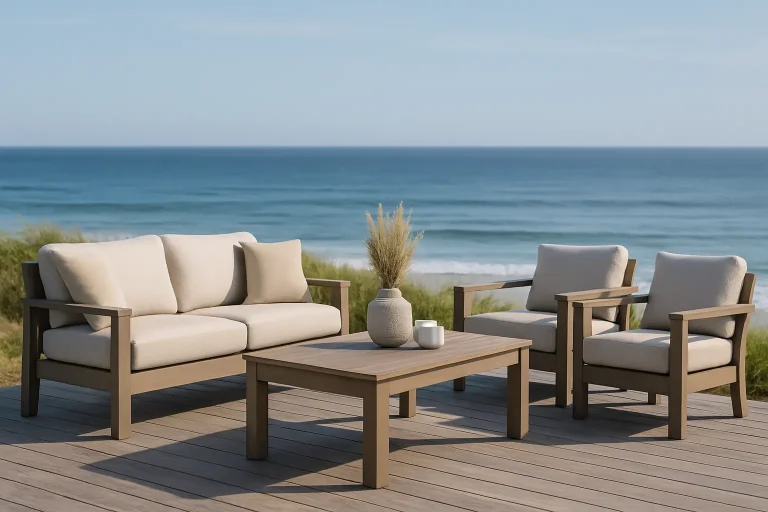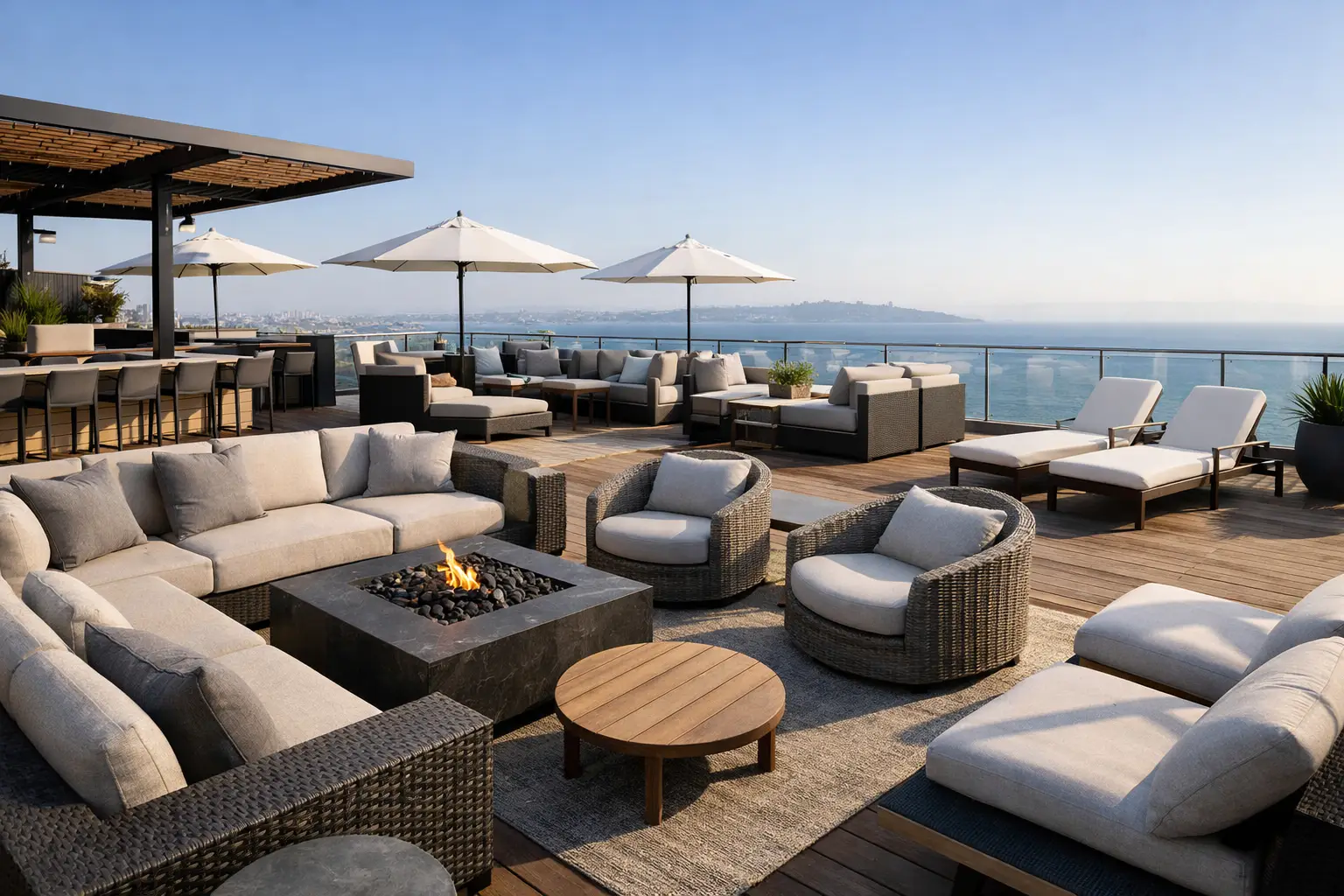
How to Plan Rooftop Lounge Furniture Layout
A rooftop lounge can look impressive in a rendering and still fail on opening day. The usual problem is not the furniture itself. It is the layout. When circulation is tight, sightlines are blocked, or seating groups feel exposed to wind and sun, the space underperforms fast. That is why knowing how to plan rooftop lounge furniture layout matters early – before product selection is finalized, procurement begins, or installation crews are onsite.
For developers, designers, hospitality operators, and procurement teams, rooftop planning is a specification exercise as much as a styling one. The right layout has to support guest flow, service access, structural realities, climate exposure, and long-term maintenance. Good rooftop lounges feel relaxed to the user, but they are built on disciplined planning.
Start with the rooftop’s fixed conditions
Before arranging a single sofa or lounge chair, identify what cannot move. This includes parapet walls, elevator exits, stair access, mechanical zones, drain locations, lighting runs, fire-safety clearances, and any structural load limitations. These elements define the usable footprint and often determine where the most valuable seating can actually go.
This is where many projects lose efficiency. Teams sometimes begin with a mood board and only later discover that service corridors are too narrow or that a large sectional conflicts with access panels. On a rooftop, every square foot works harder than it does at ground level, so fixed constraints need to be documented first.
If the site serves hospitality or mixed-use environments, also map operational patterns. Where will guests enter? Where will staff move with trays, cleaning carts, or replacement cushions? Which areas need direct access for event turnover? A layout that looks balanced on paper can break down quickly if operations are treated as an afterthought.
How to plan rooftop lounge furniture layout by zone
The strongest rooftop layouts are zoned. Instead of treating the terrace as one open seating field, divide it into distinct use areas based on behavior and dwell time. This improves flow, simplifies specification, and makes the space easier to furnish in phases if procurement timing shifts.
A primary social zone usually sits in the best-view location and carries the visual weight of the rooftop. This is where larger lounge seating groups belong – modular sofas, club chairs, fire table arrangements, or statement coffee-table compositions. That zone should feel intentional from the main approach, not scattered.
A secondary zone can absorb quieter seating, smaller conversation sets, or flexible pieces that support overflow. In hospitality settings, this area often handles different guest needs throughout the day, from daytime casual use to evening cocktails. The furniture should support that shift without requiring constant reconfiguration.
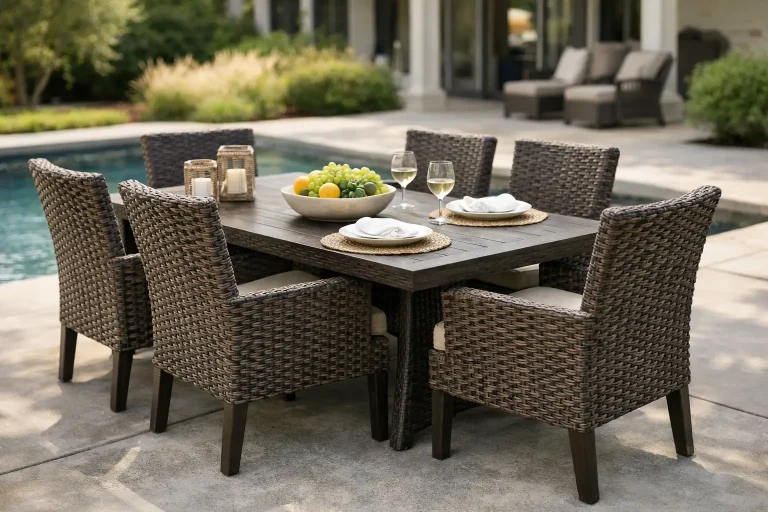
If the rooftop includes food and beverage service, keep dining and lounging visually connected but functionally separate. Guests do not want servers cutting through low lounge groupings, and operators do not want dining chairs creeping into premium lounge areas. Even a subtle change in furniture scale, rug placement, planter line, or table height helps define boundaries.
Build the layout around circulation first
The most common layout mistake is filling the roof from the inside out. The better approach is the reverse. Establish circulation paths first, then place furniture within those edges.
Main pathways should feel obvious the moment someone steps onto the rooftop. People should not have to weave around ottomans or squeeze between chair backs to reach a prime seating zone. In commercial settings, clear circulation is also part of service speed, guest comfort, and risk reduction.
Secondary movement matters too. Guests need enough room to pull out chairs, cross between seating groups, and stand without colliding with adjacent tables. Tight spacing may increase seat count on paper, but it lowers the actual usability of the lounge. High-performing layouts balance density with comfort.
This is one of those areas where trade-offs are real. A rooftop designed for maximum capacity will not feel the same as one designed for premium dwell time. For hotels, luxury residential towers, and private club environments, fewer better-placed seating groups often outperform a crowded plan.
Match furniture scale to rooftop proportion
Oversized furniture can make a rooftop feel cramped, while underscaled pieces can leave it looking temporary or underdeveloped. Scale should respond to both the dimensions of the terrace and the intended commercial positioning of the space.
Large rooftops can handle broader modular systems, deeper seating, and layered accessories because there is enough visual and physical room for them to breathe. On smaller terraces, tighter lounge profiles, slimmer arms, and more adaptable tables usually produce a cleaner result. This does not mean compromising the look. It means specifying pieces that fit the architecture rather than fighting it.
Height also matters. Low lounge seating preserves views and creates a resort-style profile, but it may not be ideal everywhere. If a rooftop has strong wind exposure, very low lightweight pieces can feel vulnerable. If the lounge serves older residents or corporate guests, seat height and ease of entry become more important than a purely low-slung aesthetic.
Use focal points carefully
A rooftop lounge needs visual anchors, but not every layout needs one dramatic centerpiece. In some projects, the skyline is the focal point. In others, it may be a fire feature, a sculptural planter grouping, a shaded pavilion, or a signature furniture arrangement.
The key is not to compete with the rooftop’s strongest asset. If the view is exceptional, orient seating to frame it. Do not block it with tall partitions or place backs of sofas toward the edge unless privacy requires it. If privacy does matter, create layered orientation so some seats face outward while others turn inward for conversation.
This is where customized layouts often outperform standard furniture packages. Rooftops rarely behave like flat, neutral rectangles. They have corners, wind tunnels, setbacks, and uneven visual priorities. A tailored furniture plan responds to those conditions instead of forcing symmetry where it does not belong.
Account for climate, exposure, and maintenance
Learning how to plan rooftop lounge furniture layout also means planning for what the weather will do to that layout. Sun path, prevailing wind, heat retention, salt exposure in coastal markets, and drainage all affect where furniture should sit and what materials make sense.
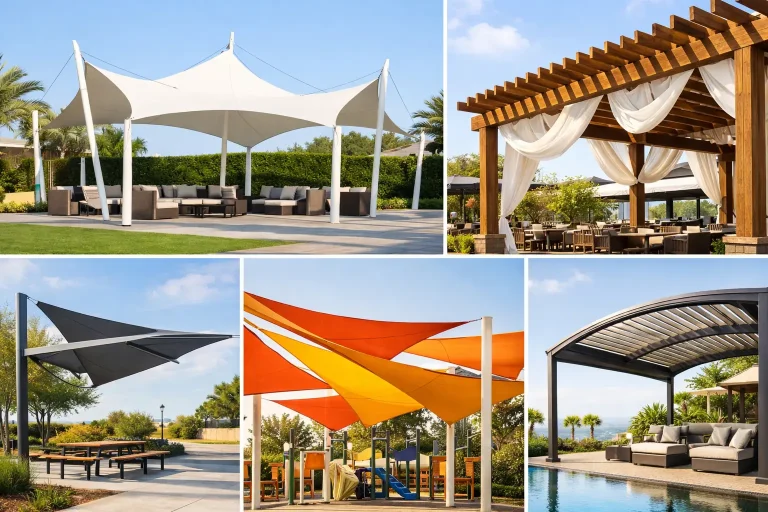
For example, premium seating placed in a full-sun zone without shade support may look good for a photo and perform poorly in service. Guests will avoid it during peak hours, cushions will age faster, and staff will spend more time repositioning loose accessories. Likewise, pieces placed too close to drainage channels can create maintenance problems after rain or cleaning.
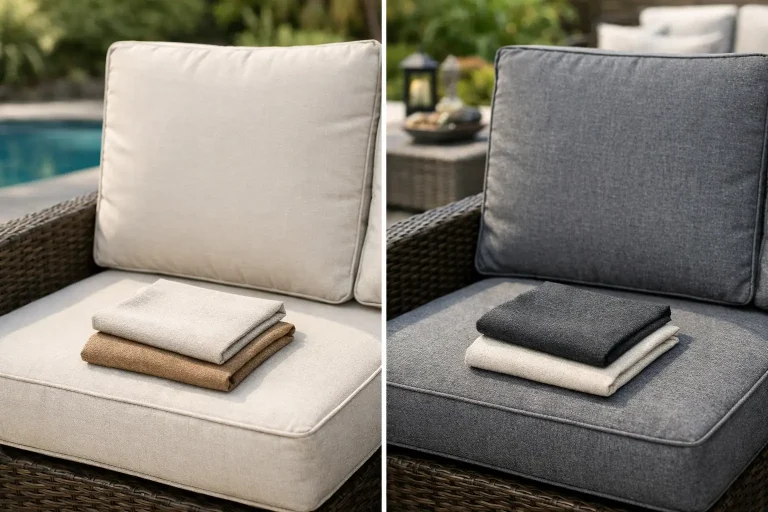
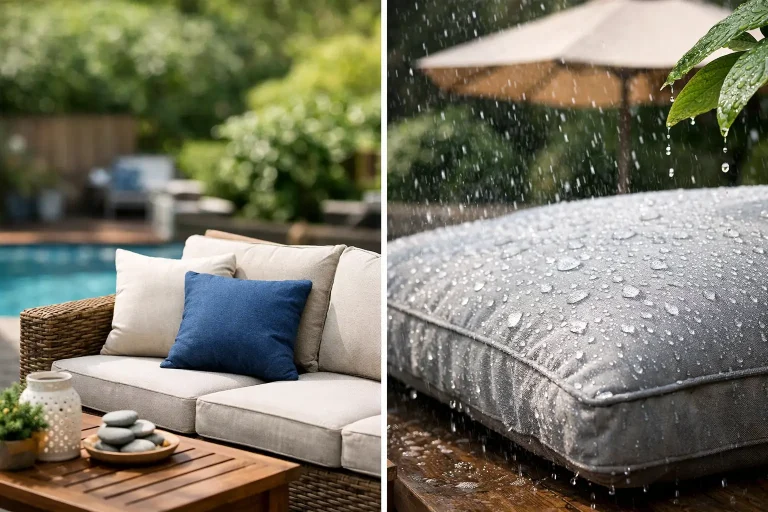
Material strategy should follow layout logic. Heavier commercial-grade frames are often the right choice for exposed rooftops because they hold position better and stand up to frequent use. Fast-dry cushions, performance fabrics, and durable finishes matter more when replacement access is difficult or the site operates at high occupancy.
For large projects, this is also where supplier capability matters. Rooftop lounges typically require more than attractive seating. They require coordinated categories – lounge, dining, shade, and accessories – along with finish consistency, material swatches, approval support, and delivery control. A vertically integrated supplier can reduce friction when specification changes need to happen quickly.
Plan for flexibility without making the space feel loose
Not every rooftop needs movable furniture everywhere. In fact, too much flexibility can make the layout feel unmanaged. The goal is controlled adaptability.
Anchor the main zones with stable furniture groups that define the identity of the space. Then introduce a measured number of flexible elements – occasional chairs, side tables, ottomans, or modular components – where operations benefit from adjustment. Event-driven rooftops may need more mobility. Private residential rooftops may need less.
Think through how the space changes from weekday to weekend, day to night, and regular use to private event mode. If furniture must be reconfigured often, the layout should make that easy without requiring extra labor or exposing wear points. Storage planning also enters the conversation here, especially for cushions, accessories, and lightweight pieces.
Validate the plan before procurement
A rooftop layout should be tested, not assumed. This is where 2D plans, 3D drawings, and mock-up approvals create real value. They help teams verify spacing, view orientation, and visual balance before capital is committed.
For procurement teams, validation reduces expensive surprises. For designers and architects, it protects the concept through execution. For owners and operators, it improves confidence that the final environment will work under real conditions, not just in a specification sheet.
A strong review process asks practical questions. Can staff serve every zone efficiently? Are premium seats truly premium once shade and wind are considered? Is there enough room for guests to move naturally when the lounge is full? Can finishes and materials hold up to the maintenance cycle the operator can realistically support?
That level of planning is where rooftop projects separate into two categories: spaces that look finished and spaces that actually perform. PNZ Space Global approaches outdoor furnishing with that performance standard in mind, pairing product depth with design support, customization, and project execution discipline.
The best rooftop lounge layouts do not happen when furniture is simply arranged to fill a deck. They happen when every seat, table, and pathway is placed with purpose – so the space works on opening day, during peak service, and years after installation.