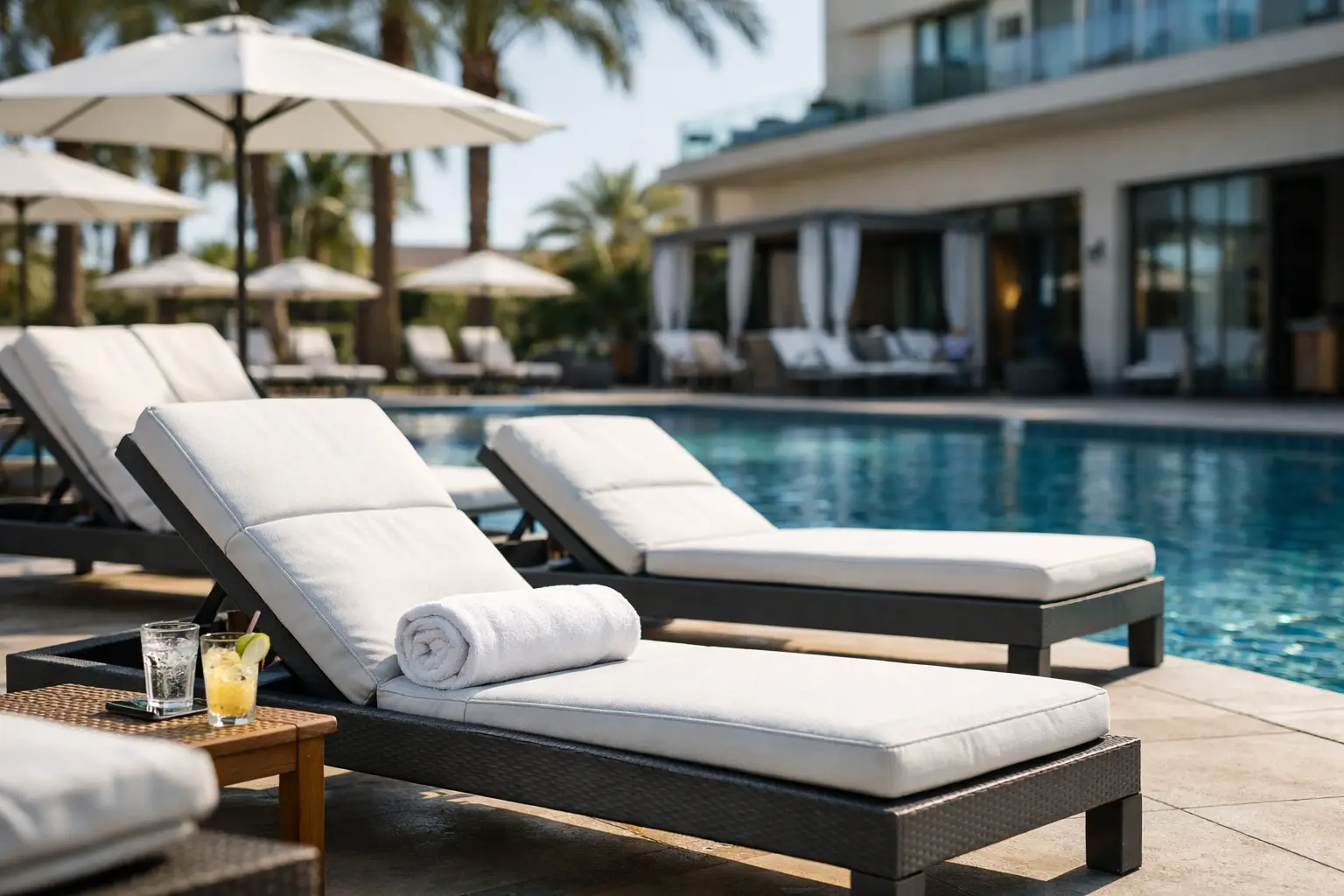
Sun Lounger Weight Capacity for Hotels
A sun lounger fails long before it fully breaks. First it starts flexing more than it should. Then hardware loosens, frames rack slightly out of square, sling tension drops, and guests notice that the chair no longer feels stable. That is why sun lounger weight capacity for hotels is not a minor line item in a spec sheet. It is a purchasing decision that affects safety, guest confidence, maintenance workload, and replacement cycles.
For hospitality operators, the real question is not simply, “What is the maximum load?” It is whether the lounger can hold up under repeated commercial use, varying guest profiles, harsh weather, pool chemicals, and frequent staff handling. A stated weight rating matters, but so do frame design, material quality, testing standards, and how the product performs after months of service.
Why sun lounger weight capacity for hotels matters in real operations
In hotel settings, a lounger is rarely used gently. Guests sit down abruptly, shift their weight unevenly, perch on the edge, place bags on the backrest, and move loungers across wet decks. Housekeeping teams stack, drag, align, and reset them every day. At resort scale, that repeated stress is what exposes weak construction.
A lounger with an inadequate load rating creates more than warranty issues. It can increase guest complaints, create injury risk, and force properties into early replacement. For procurement teams and project managers, that means a lower-cost purchase can become a higher-cost asset over time.
There is also a brand standard issue. Pool decks and beach clubs are highly visible spaces. When loungers sag, wobble, or show structural fatigue, guests read that as poor upkeep. The product is doing a job beyond seating – it is signaling quality.
What weight capacity actually tells you
Weight capacity is often treated as a single number, but that number only has value when you understand how it was reached. Some suppliers state a static load, meaning the chair can hold a certain weight when pressure is applied evenly and without movement. Commercial use is different. Hotel loungers experience dynamic load – people dropping into them, turning, pushing off the arm area, or loading one side more heavily than the other.
That distinction matters. A lounger rated for 300 pounds in ideal conditions may not perform the same way under high-turnover hospitality use. By contrast, a contract-grade lounger designed for repeated dynamic loading usually includes stronger joints, more stable geometry, and materials selected to resist fatigue rather than just pass a basic test.
Procurement teams should also look at the safety margin behind the published figure. A responsible commercial manufacturer does not design right to the edge of the stated limit. The best products are engineered with real-world tolerance built in.
The frame matters more than the number
When evaluating capacity, the frame is the first place to look. Aluminum is common in hospitality because it resists corrosion, keeps weight manageable for staff, and can deliver strong structural performance when properly engineered. But not all aluminum loungers are equal. Tube thickness, wall gauge, weld quality, reinforcement points, and the geometry of the recline system all affect how the lounger behaves under load.
Steel can carry weight well, but in outdoor hospitality settings it requires more scrutiny around corrosion protection and maintenance. Resin and polymer designs can perform well for certain properties, especially where stackability and low maintenance are priorities, but the grade of material and UV stabilization become critical.
The weak point is not always the frame itself. It may be the joint where the backrest adjusts, the hardware connecting legs to the body, or the support under the seat panel. A supplier that understands hotel use will be able to explain where the product is reinforced and why.
Sling, slat, and cushion constructions change performance
Sun loungers with sling seating distribute weight differently than slatted or padded designs. A well-tensioned commercial sling can be comfortable and supportive, but if the fabric stretches excessively over time, the usable support declines even if the frame remains intact. That can make a lounger feel weaker than its rating suggests.
Slatted loungers often feel more rigid and can perform well in high-traffic settings, particularly around pools where drainage matters. Their comfort depends on spacing, contour, and overall ergonomics. Cushioned loungers add a luxury layer, but for hotels they need a stable underlying platform. If the support deck beneath the cushion lacks rigidity, guest comfort and perceived durability both suffer.
This is where specification discipline matters. Capacity is not only about whether the product can carry weight. It is about whether it can do so while preserving guest comfort and appearance over hundreds or thousands of use cycles.
What hotels should ask suppliers before approving a model
A spec sheet alone is not enough for hospitality projects. Buyers should ask how the weight capacity was tested, whether the product is intended for commercial outdoor use, and which components bear the highest stress. It is also worth asking how the lounger performs after extended UV exposure, cleaning cycles, and frequent repositioning.
For larger projects, mock-up review is especially valuable. A lounger can look correct in a catalog but reveal issues during hands-on evaluation – too much frame flex, difficult repositioning, weak recline mechanisms, or surfaces that show wear too quickly. This is one reason vertically integrated suppliers with design and approval support bring real value. They can provide clearer answers on construction, material options, and fit-for-use adjustments before bulk production begins.
If a hotel is furnishing a family resort, all-inclusive property, or public pool deck with heavy daily turnover, the acceptable threshold may be higher than for a private villa or low-density wellness retreat. There is no universal number that fits every property. Usage pattern should set the target.
Choosing the right capacity range for your property
Many hotels make the mistake of specifying to average guest use rather than peak real-world use. Commercial outdoor furniture should accommodate a broad guest profile comfortably and confidently. In practice, that means avoiding the lowest acceptable rating in favor of a capacity range aligned with hospitality traffic, not residential assumptions.
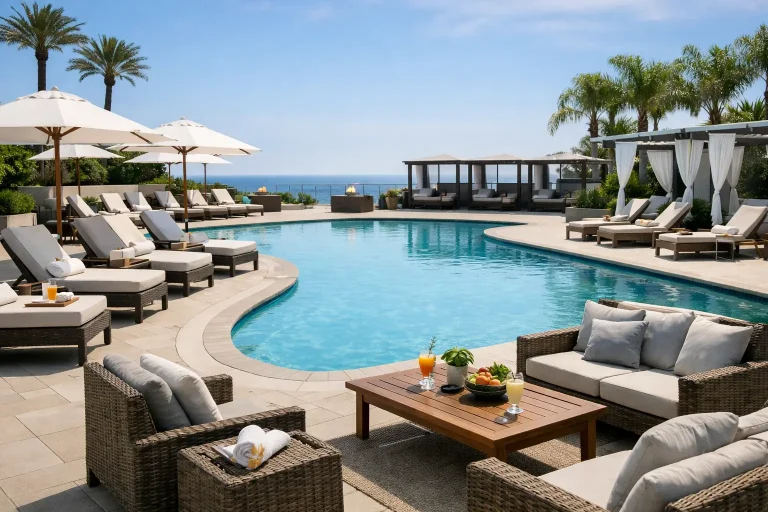
For standard hotel pool decks, a higher-rated contract-grade lounger generally provides better long-term value even if the upfront cost is higher. For beach clubs, rooftop pools, and resort environments where loungers are used intensively and moved constantly, stronger frames and reinforced mechanisms are usually worth the investment.
There is a trade-off, of course. Heavier-duty loungers may weigh more, which affects staff handling and storage. Premium frame engineering may increase unit cost. But those trade-offs often compare favorably against the cost of breakage, replacements, negative guest feedback, and operational disruption.
Capacity should be specified alongside the full commercial package
Weight capacity should never be reviewed in isolation. The right procurement decision combines load rating with corrosion resistance, UV stability, cleanability, stackability, replacement-part availability, and visual consistency across the project. Hotels do not buy loungers as standalone products. They buy them as part of an operating environment.
That is why end-to-end project support matters. A supplier that can align design intent, technical specification, mock-up approval, and delivery timing helps reduce risk across the entire furnishing package. For hospitality buyers managing openings, renovations, or multi-site rollouts, that control is often more valuable than chasing the lowest unit price.
At PNZ Space Global, this is exactly how outdoor hospitality procurement should be handled – with specification clarity, manufacturing control, and commercial-grade execution from concept to installation. In a category as exposed and heavily used as poolside furniture, that level of control protects both design standards and operating budgets.
Red flags that signal a lounger is underbuilt
If a supplier cannot clearly state whether the lounger is contract-grade, that is a warning sign. The same applies when weight ratings are vague, testing language is missing, or the frame construction is described only in general marketing terms. Hotels should also be cautious of products that prioritize a sleek appearance but provide little detail on welds, hardware, reinforcement, or replacement support.
Another red flag is a product that feels light in the wrong way. Ease of movement is useful, but excessive lightness can indicate a compromise in wall thickness, stability, or structural support. A good hospitality lounger balances manageability with strength.
Making the final call
The best sun lounger specification is not the one with the biggest number on paper. It is the one engineered for the way your property actually operates. Hotels need loungers that remain stable, comfortable, and visually sharp after repeated commercial use, not just on delivery day.
When buyers evaluate weight capacity through that wider lens – testing method, frame design, material quality, usage intensity, and supplier accountability – they make better decisions and protect the guest experience. Poolside furniture should not be a recurring problem to solve. It should be one of the most dependable assets on the deck.
The strongest procurement moves are usually the least flashy: ask harder questions, specify for real conditions, and choose products built to perform long after the opening photos are taken.