Best Materials for Outdoor Dining Chairs
A restaurant terrace can look finished on install day and worn out by the end of its first hot season if the chair material is wrong. In commercial settings, outdoor dining chairs are not judged by showroom appearance alone. They are judged by stackability, UV stability, corrosion resistance, cleaning speed, replacement planning, and how well they hold up under constant guest turnover.
That is why the best commercial outdoor dining chair materials are rarely about one perfect option. They are about fit. A poolside cafe, a hotel breakfast terrace, a rooftop lounge, and a beachfront restaurant may all need dining chairs, but not the same material specification.
What matters most when choosing the best commercial outdoor dining chair materials
For commercial buyers, the material decision starts with performance under real operating conditions. Sun exposure, salt air, chlorinated water, wind, food service traffic, and storage requirements all change the right answer. So do brand standards. A fine dining venue may accept higher maintenance for a more elevated look, while a high-volume casual concept usually needs low-touch durability first.
Procurement teams also need to think beyond unit cost. A chair that costs less upfront but fades quickly, loosens at the joints, or requires early replacement usually becomes the more expensive choice across a multi-site rollout. Material consistency matters too. When projects involve mock-up approvals, repeat orders, and phased installations, finish control becomes just as important as visual appeal.
Aluminum is often the safest commercial baseline
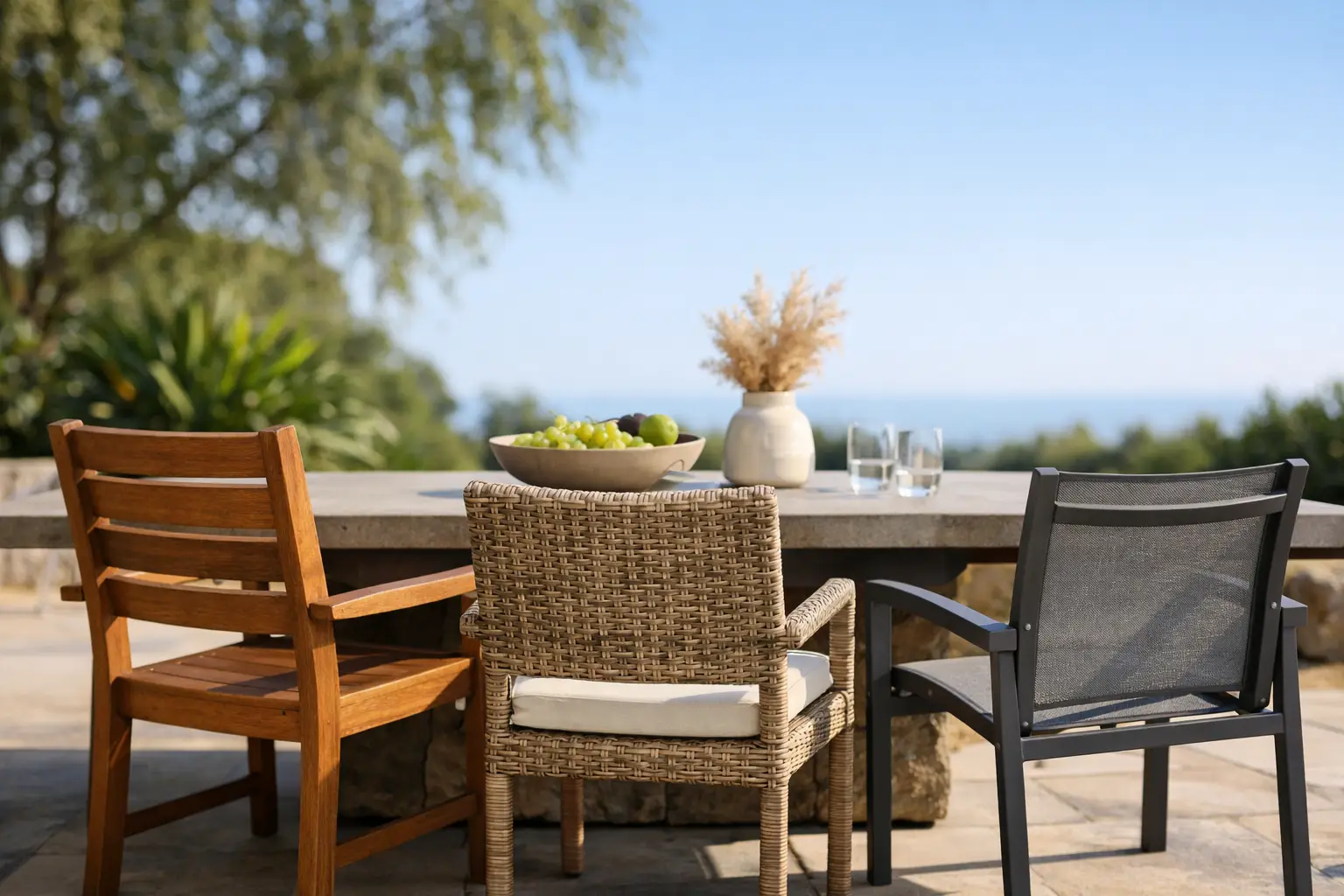
If a buyer asks for the most broadly reliable option for outdoor dining, aluminum usually leads the conversation. It is lightweight, rust-resistant, and practical for restaurants, hotels, and residential developments that need frequent layout changes. Staff can move it quickly, which matters during cleaning, event resets, and weather response.
Powder-coated aluminum performs especially well in commercial environments because the finish adds another layer of protection and allows broad design flexibility. It can support modern, minimal profiles or more substantial hospitality frames without the maintenance burden of heavier metals.
The trade-off is that not all aluminum chairs are built the same. Gauge, weld quality, finish preparation, and hardware spec make a major difference. In windy rooftops or premium dining spaces, low-grade aluminum can feel too light or insubstantial. That is why contract buyers should look at frame engineering, finish testing, and long-term replacement planning, not just material labels.
Where aluminum works best
Aluminum is a strong fit for rooftop dining, hotel terraces, poolside food service, mixed-use residential amenities, and large-volume restaurant programs. It also works well when stackability and efficient storage are part of the brief.
Synthetic wicker delivers warmth, but quality level is everything
For hospitality groups that want a softer, more residential look, synthetic wicker remains a strong option. It brings texture and visual warmth that many dining terraces need, especially in resort, villa, and leisure settings. On the right frame, it can make a commercial space feel less transactional and more inviting.
The key point is that synthetic wicker is only as good as its core construction. Commercial-grade wicker should be UV-stabilized and woven over an aluminum frame or another corrosion-resistant base. Inferior wicker can crack, become brittle, or lose tension far too early, particularly in regions with intense heat and sun.
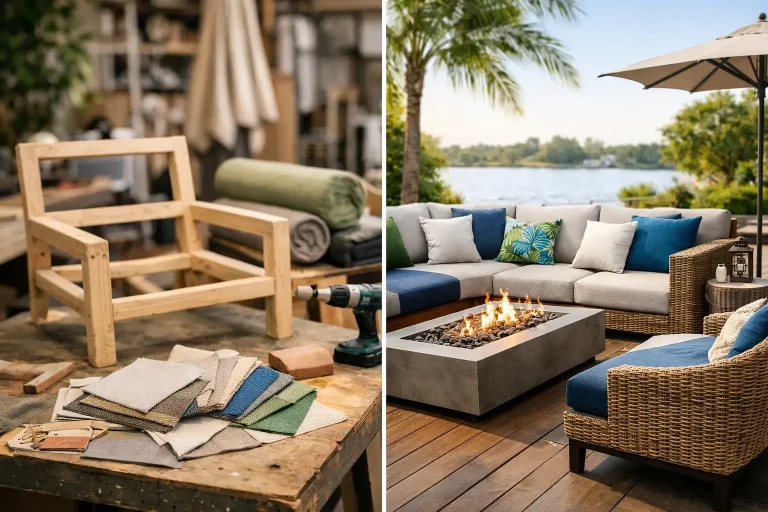
This is one of the clearest cases where samples matter. Two chairs may look nearly identical in a catalog, but perform very differently after a season of exposure. For procurement teams managing large orders, material swatches, mock-up chairs, and manufacturing visibility help reduce risk before rollout.
When synthetic wicker is the right call
It is especially effective for resorts, outdoor dining zones in residential developments, beach clubs, and hospitality venues that want a more relaxed or upscale leisure aesthetic. It is less ideal where chairs take frequent impact damage or where the operation prioritizes the fastest possible cleaning and turnover.
Teak and hardwoods offer premium appeal with maintenance expectations
Wood remains one of the most attractive materials for outdoor dining chairs. Teak in particular has strong commercial appeal because it feels high-end, works across design styles, and ages with character. In luxury hospitality, that visual value can be worth the additional care.
But wood is never a zero-maintenance material. Even premium teak will weather over time, shifting to a silver-gray patina if left untreated. Some operators like that look. Others want the original tone maintained, which requires scheduled care. In food and beverage settings, this becomes an operational question, not just a design preference.
Hardwoods also tend to be heavier than aluminum and may require more attention in coastal or high-moisture applications. The chair can still perform well, but expectations should be clear from the beginning. If the client wants a natural wood appearance without a maintenance plan, the specification may need to change.
Steel can work, but it needs the right environment
Steel dining chairs are often selected for strength, weight, and a more architectural or industrial appearance. In protected outdoor environments, e-coated and powder-coated steel can be a practical commercial option, especially when the design calls for a sharper visual language than wicker or wood can provide.
Its limitation is corrosion risk. Even with protective finishes, steel generally demands more caution than aluminum in wet, coastal, or poolside settings. Once the finish is compromised, rust can become a maintenance issue quickly. For this reason, steel tends to be better suited to covered patios, urban terraces, and lower-exposure applications rather than open beachfront or heavy splash zones.
For developers and operators, this is where honest specification saves money. Steel is not a bad material. It is simply more environment-dependent.
Resin and molded polypropylene are practical for high-turnover use
In high-volume commercial dining, molded resin and polypropylene chairs deserve serious consideration. They are easy to clean, often stackable, and generally efficient to deploy across cafes, quick-service terraces, and amenity spaces where functionality leads the brief.
Well-made commercial resin chairs have improved significantly in both appearance and structural performance. They can now support cleaner silhouettes and more design-forward forms than many buyers expect. They also handle moisture well and reduce many of the finish-maintenance issues associated with metal or wood.
The trade-off is perceived value. In premium hospitality environments, low-cost plastic aesthetics can weaken the overall guest experience if the spec is not carefully selected. The answer is not to avoid resin entirely, but to source contract-grade models with better UV resistance, stronger wall thickness, and a more refined finish.
Textilene and mesh are useful, but not always ideal for dining
Mesh-backed and sling-style chairs can be a smart choice when breathability matters, especially in hot climates. Textilene and similar performance fabrics dry quickly, stay comfortable in direct sun, and reduce the need for loose cushions.
For casual dining and pool-adjacent service, they often perform well. But for more formal dining environments, they may feel too relaxed unless the frame and detailing elevate the overall design. Fabric tension and replacement planning also matter. Over time, lower-quality sling materials can stretch or lose their original appearance.
Matching material to project type
The best commercial outdoor dining chair materials depend on how the space operates. Rooftop venues usually benefit from lightweight, corrosion-resistant frames such as aluminum, especially when teams need to reconfigure often. Beachfront and coastal projects should favor materials with strong resistance to salt exposure, which generally pushes aluminum and high-grade synthetic wicker ahead of steel.
Hotels and resorts often need a mix of visual warmth and commercial durability, making teak, aluminum, or premium wicker strong candidates depending on the concept. Fast-paced restaurants, staff dining areas, and large residential amenities often gain the most from stackable aluminum or contract-grade resin, where cleaning speed and replacement efficiency directly affect operations.
Specification details matter as much as the material itself
A chair material can be right on paper and still fail in the field if the build quality is weak. Commercial buyers should review welds, joinery, finish process, fasteners, floor glides, and whether the chair is engineered for stackability without damage. Weight capacity and stability also matter, especially across hospitality and public-facing environments.
This is where vertically integrated manufacturing and project support create real value. When the supplier can provide material options, finish control, 3D drawings, mock-up approvals, and production oversight, buyers gain much better control over outcomes. For large projects, that control is often more valuable than chasing the lowest quote.
PNZ Space supports this process with contract-grade outdoor collections, material flexibility, and project services designed for buyers who need specification confidence at scale.
The right chair material should make the operation easier six months after install, not just look good on handover day. When material choice aligns with climate, service model, and maintenance reality, the furniture keeps doing its job while the venue focuses on guests.