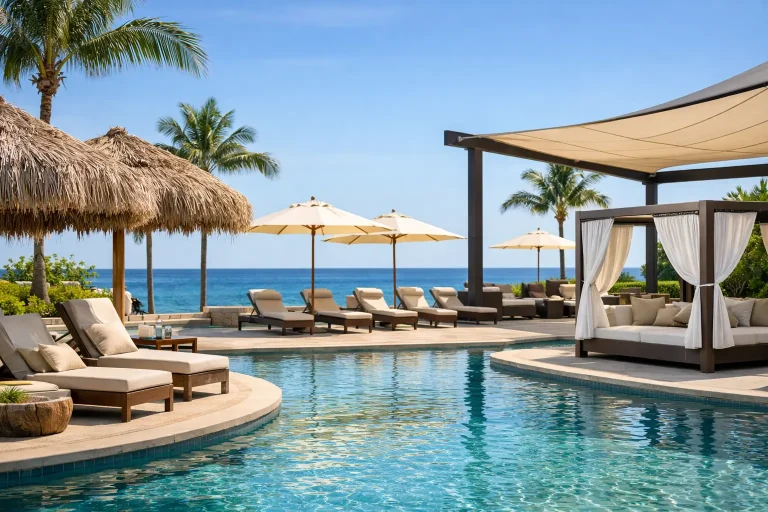
Hotel Pool Deck Furniture Layout Example
A strong hotel pool deck furniture layout example does more than show where to place loungers. It shows how a hospitality operator protects revenue, controls circulation, supports service, and keeps the deck visually ordered during peak occupancy. On a busy property, layout is operations. If the furniture plan looks good in a rendering but fails under real guest traffic, towel service, food delivery, and maintenance, the deck underperforms.
That is why the best layouts are built backward from use case, not from product count. A resort pool serving families all day needs a different furniture mix than a rooftop hotel pool designed for short stays, beverage service, and social visibility. Both can be attractive. Only one will be right for the property.
What a hotel pool deck furniture layout example should solve
Procurement teams and designers usually start with dimensions, but square footage alone is not enough. The layout has to answer five practical questions at once: how many guests the deck must support, how staff will move through it, where shade is needed most, what furniture categories belong near water versus away from splash zones, and how quickly the deck can be reset after heavy use.
A good layout also protects specification decisions. If chaise lounges are packed too tightly, even premium products feel cramped. If daybeds are oversized for the perimeter, circulation suffers and service labor increases. If dining is placed too close to the primary sunbathing zone, operators create conflict between quiet relaxation and active table turnover. The plan should reduce those collisions before furniture is ordered.
A practical hotel pool deck furniture layout example
Consider a rectangular hotel pool deck measuring roughly 80 feet by 40 feet, with the pool centered and guest room access on one long side. The short side nearest the building connects to food and beverage service, while the opposite end is intended to feel quieter and more private.
In this layout, the highest-demand zone sits along the two long sides of the pool. That is where double rows of chaise lounges perform best, but only if spacing is disciplined. Place a primary row facing the pool and a secondary row behind it, with enough room for side tables and backrest adjustment without creating overlap. Between every six to eight loungers, insert a wider service break so attendants can move towels, clear glassware, and reset the zone without forcing guests to stand.
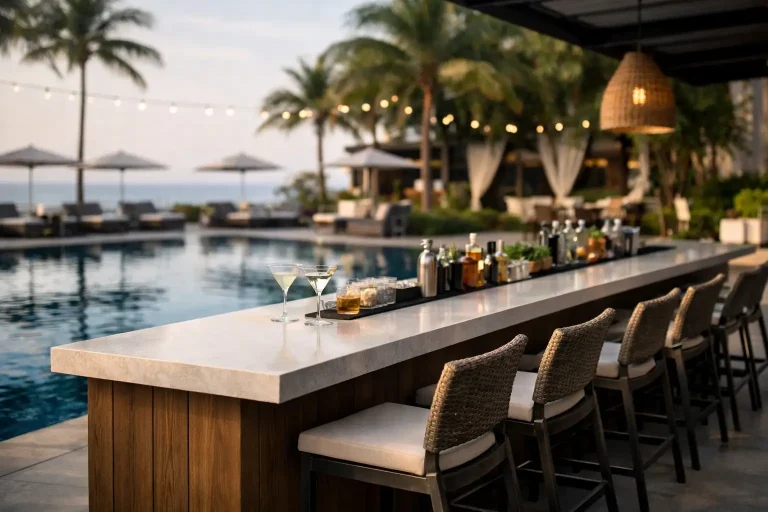
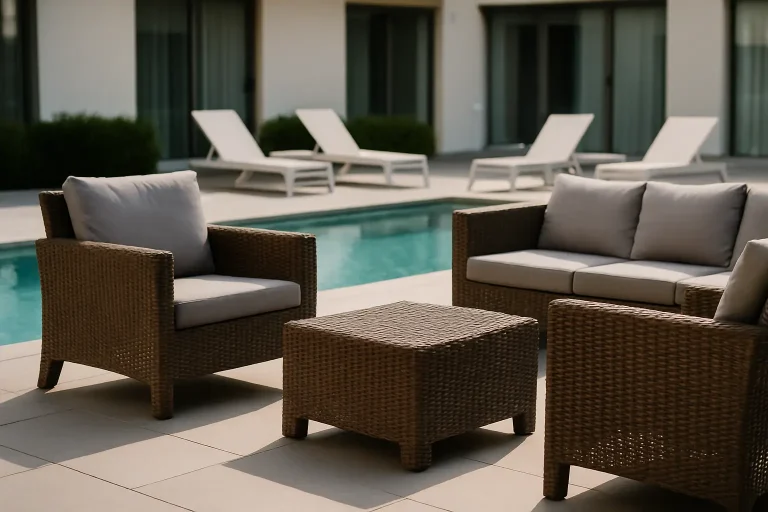
At the active end near food and beverage, replace some loungers with grouped seating that encourages shorter dwell time and higher ancillary spend. This might include compact lounge chairs with low tables, cabanas, or modular seating clusters under shade structures. These pieces create a clear social zone and keep dining-adjacent traffic from cutting through the core sunbathing area.
At the quieter end, shift to fewer, larger footprints. Daybeds or paired loungers with side tables work well here because the expectation is longer stays and lower traffic. This zone should feel intentional, not like leftover space. The easiest mistake is crowding the quiet side with too many premium units, which raises density and weakens the exclusivity those pieces are meant to signal.
Along the building edge, create a secondary layer of functions rather than pushing all furniture to the pool. This is the right place for dining sets, bar-height seating, towel stations, and planters that define circulation. Keeping these elements off the wet perimeter reduces slip risk and separates diners from heavy pool traffic.
Circulation is the part guests notice when it fails
The most successful hotel pool deck furniture layout example usually looks simple because circulation has been resolved early. Guests should be able to move from entry to towel station, from lounge zone to pool, and from pool to food and beverage without awkward turns or dead ends.
For that reason, the deck should have one obvious main path and several shorter cross paths. The main path needs to handle two-way traffic, service carts, and wet guests carrying towels or bags. Cross paths should connect furniture blocks to the pool without cutting through private seating pockets. If guests must weave around chaise legs or squeeze between umbrellas, the plan is overfilled.
It also helps to think about visual circulation. Staff need clear sightlines across the deck for service response and safety monitoring. Tall cabanas, screens, and oversized planters can improve zoning, but too many vertical elements make the deck harder to supervise. Privacy matters, but not at the expense of operational control.
The right furniture mix depends on the property model
There is no single ideal ratio of loungers to dining to soft seating. It depends on whether the pool is primarily a guest amenity, a destination venue, or a mixed-use hospitality space. Still, there are common patterns.
Business hotels often need efficient, clean-lined lounge layouts with a modest social zone and a smaller dining footprint. Resort properties typically need more shade, more varied seating types, and stronger zoning between family, couple, and premium-use areas. Lifestyle and rooftop hotels often allocate more area to statement seating, conversation sets, and VIP daybeds because social visibility drives the guest experience.
That is why copying another property’s pool deck rarely works. The furniture count may look impressive on paper, but if the guest stay pattern, service style, and revenue model differ, the layout will miss. The better approach is to define the deck by behavior first, then select products that support it.
Shade planning changes the layout, not just the accessory list
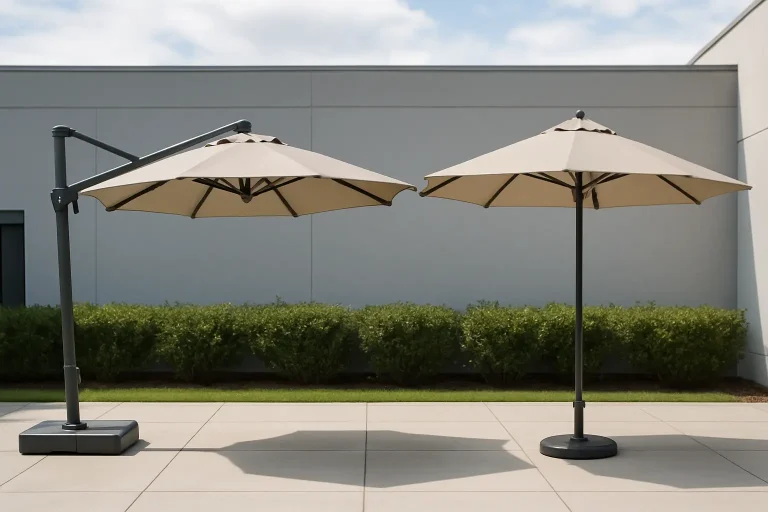
Shade should never be treated as a final add-on. On hotel pool decks, umbrellas, cabanas, pergolas, and covered lounge zones reshape where guests choose to sit and how long they stay. That means shade belongs in the layout phase.
If all shaded seating is placed at the perimeter, guests seeking sun protection will occupy secondary areas while prime poolside loungers sit underused in hotter hours. A balanced deck distributes shade across premium and standard seating categories. Some loungers should remain in full sun, some under movable umbrellas, and some near larger fixed structures. This gives operators flexibility across seasons and guest preferences.
Shade also affects product specification. Umbrella bases, cabana frames, and sectional footprints require stable clearances and coordinated anchoring decisions. Planning these late creates expensive revisions. For procurement teams managing multiple stakeholders, early coordination is faster and safer than field adjustments after delivery.
Material decisions should support layout performance
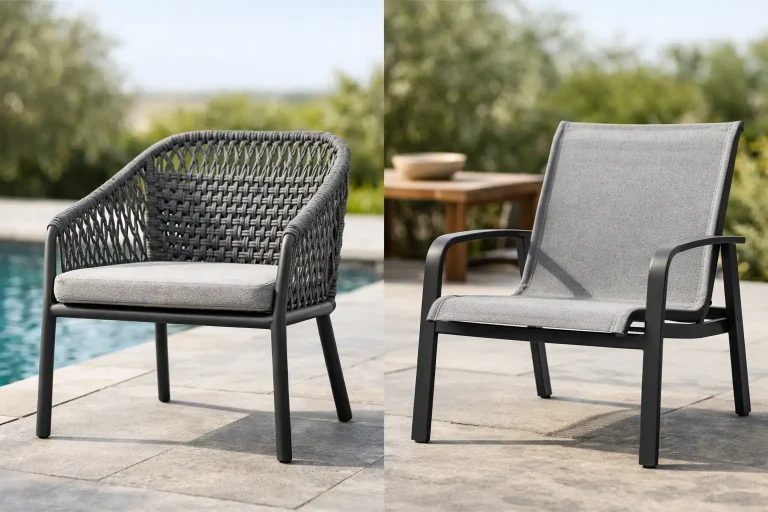
A layout can fail because the wrong materials were selected for the zone. Pool perimeter furniture takes more splash, more cleaning, and more guest turnover than sheltered terrace seating. That means finish selection, cushion construction, sling performance, and frame durability all need to align with placement.
For example, chaise lounges near the water should prioritize easy movement, fast drainage, and simple reset. Dining furniture near service routes should resist staining and handle frequent wipe-downs. Premium soft seating in quieter zones can carry deeper cushions and more residential comfort, but only if the operations team can maintain them efficiently.
This is where vertically integrated sourcing brings a real advantage. When design, manufacturing, and project support sit under one system, teams can match layout intent with actual product performance instead of forcing a generic catalog solution onto a demanding hospitality environment.
Why mock-ups and 3D planning matter on pool projects
A pool deck is one of the easiest spaces to misjudge from a flat plan. Clearances that look comfortable in CAD can tighten quickly once chaise recline angles, umbrella spread, side tables, and live service paths are considered. That is why serious hotel projects benefit from 3D drawings, mock-up approvals, and category-level coordination before final procurement.
For developers and operators managing opening dates, those tools reduce risk. They help confirm whether a VIP zone feels premium enough, whether dining is too exposed to splash, and whether furniture density aligns with the guest experience the property intends to sell. They also make it easier to standardize across multiple sites without repeating layout mistakes.
For large-scale hospitality programs, a supplier with in-house design support and manufacturing control can move faster from concept to specification. That includes material swatches, layout refinements, custom sizing where needed, and delivery planning that matches the installation sequence. PNZ Space Global approaches pool deck projects this way because the furniture plan is only successful when design intent and execution stay aligned.
The best layout is the one operations can keep beautiful
A pool deck should look composed at 9 a.m., 2 p.m., and after a full reset before dinner service. That only happens when the layout accounts for labor, cleaning, replacement cycles, and guest behavior from the start. A visually ambitious plan that cannot be maintained will look tired too quickly.
The better standard is simpler and stronger: clear zoning, durable specification, enough space to serve properly, and a furniture mix that fits the property’s commercial model. When those pieces are working together, the deck feels effortless to the guest and manageable to the operator. That is the layout worth building.