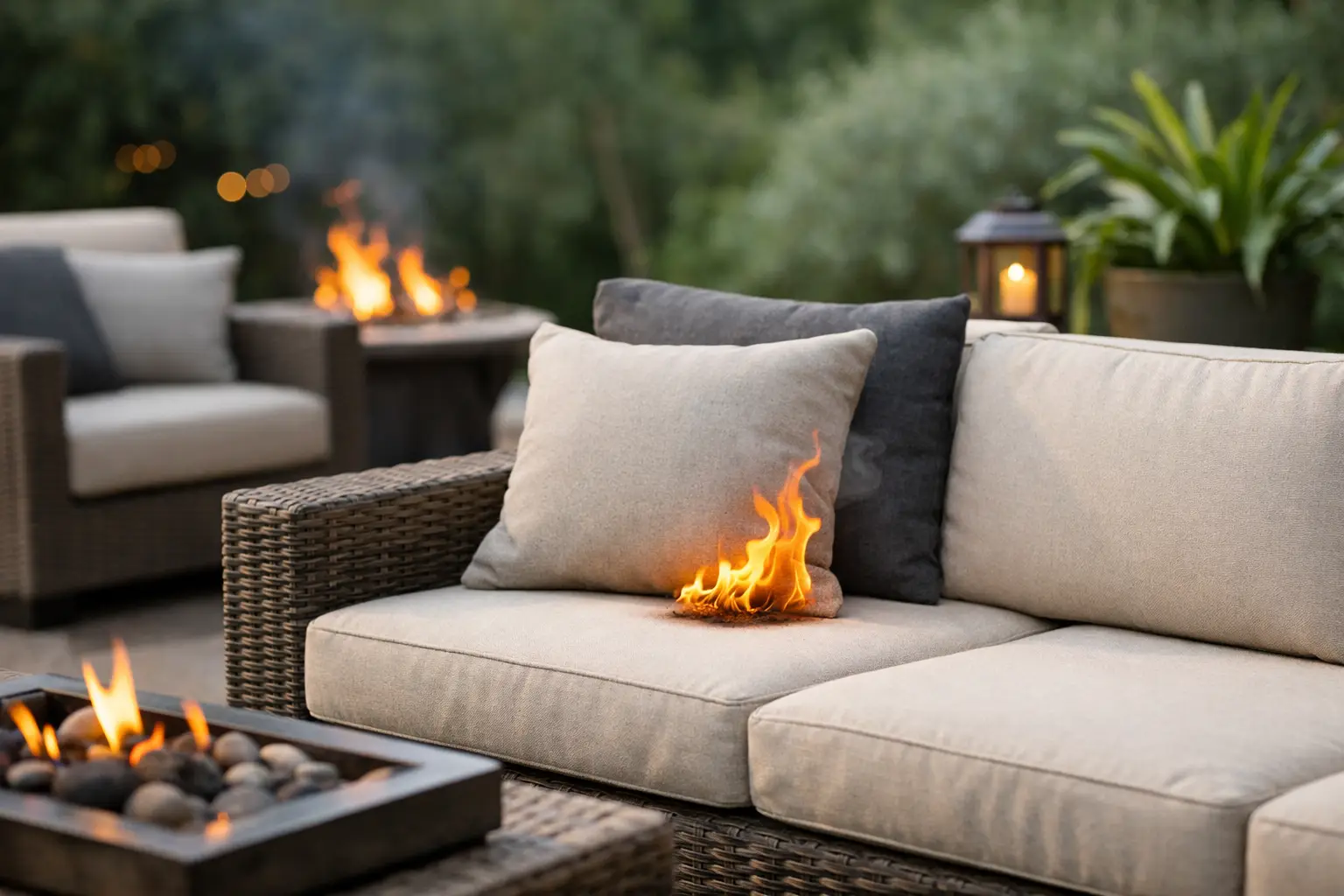
Outdoor Furniture Fire Retardant Cushions
A rooftop lounge can clear design review, pass procurement, and still fail at the cushion spec. That usually happens when the seating looks right on paper but the soft goods were chosen like a residential afterthought. For hospitality, multifamily, and commercial settings, outdoor furniture fire retardant cushions are not a decorative upgrade. They are a performance specification tied to safety, compliance, maintenance, and long-term asset value.
For buyers managing terraces, pool decks, restaurant patios, shisha lounges, and resort seating zones, the cushion package deserves the same scrutiny as the frame material, finish warranty, and logistics schedule. Foam construction, fabric behavior, seam detailing, and local code requirements all affect whether a project performs in real use or becomes a replacement cycle within months.
Why fire retardant cushions matter in outdoor projects
In high-traffic environments, ignition risk is not theoretical. Open flames, heat lamps, smoking areas, outdoor kitchens, candles, and event setups all increase exposure. Even where fire code does not explicitly mandate a certain cushion build, specifiers often require added protection because liability sits with the operator, developer, or property owner.
That is why fire retardancy should be treated as one part of a broader contract-grade standard. A cushion may resist ignition better than a basic residential insert, but that does not automatically make it suitable for a rooftop bar or hotel pool deck. Performance depends on the full assembly, including foam, batting, interliner where applicable, and cover fabric.
For procurement teams, this matters because a visual match across a project is easy to source. Consistent technical performance across dozens or hundreds of seats is harder. The difference shows up later in inspections, operations, and replacement budgets.
What outdoor furniture fire retardant cushions actually include
The term gets used loosely in the market, which creates avoidable confusion. Some suppliers apply it to the foam only. Others use it to describe the finished cushion. Those are not the same thing.
A properly specified outdoor cushion for commercial use often starts with outdoor-rated foam engineered for moisture management and shape retention. If fire performance is required, the foam must align with the target standard, but the fabric and construction still matter. Certain fabrics can improve the overall behavior of the cushion assembly, while poor seam construction or incompatible inner materials can undermine it.
Buyers should also separate fire retardant from fireproof. No outdoor cushion is immune to fire. The practical goal is resistance to ignition and slower flame spread under defined test conditions. That distinction matters when reviewing supplier claims.
Where the spec matters most
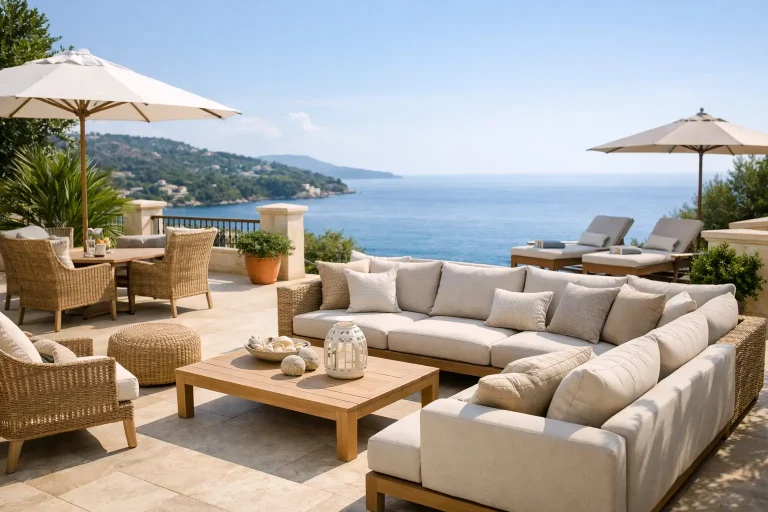
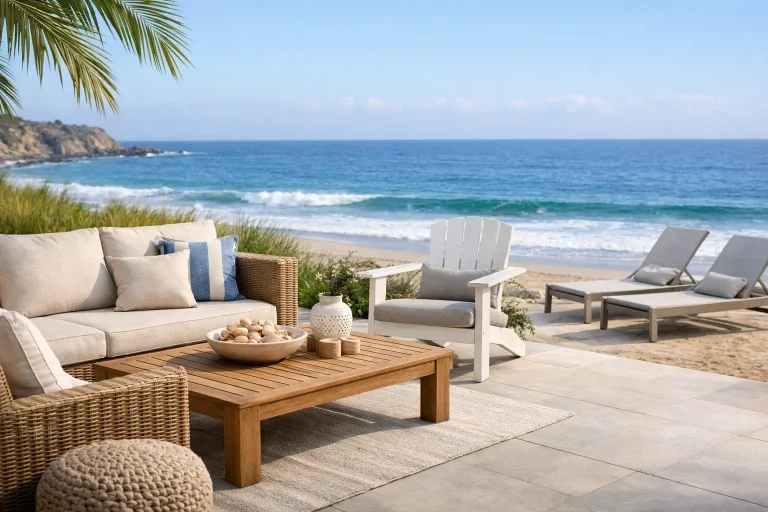
The strongest case for upgraded cushion performance usually appears in hospitality and mixed-use commercial settings. Hotels, serviced residences, rooftop dining venues, beach clubs, and pool lounges all combine public access with repeated use. In these projects, cushions are exposed to UV, humidity, cleaning chemicals, food service, and guest turnover. Fire performance is one requirement inside a much larger durability equation.
Multifamily developers and property managers face a slightly different challenge. They need materials that satisfy shared-space risk management without pushing maintenance costs too high. In these environments, a highly technical cushion spec makes sense in amenity zones with grills, fire features, or frequent events, while quieter residential-style terraces may call for a more balanced approach.
For designers and architects, the issue is often integration. The cushion cannot look overly institutional if the project is positioned as luxury. This is where supplier capability matters. You need access to multiple fabric hands, colors, and silhouettes without sacrificing the technical brief.
How to evaluate the right cushion build
Start with the use case, not the swatch. A pool deck in a resort has different demands than a covered restaurant terrace. Ask how the space will be used, who will maintain it, whether open flame or high heat sources are nearby, and what local or brand-standard requirements apply.
Next, review the full cushion construction. Foam density affects comfort and recovery. Drainage design affects dry time and mold risk. Cover fabric affects abrasion resistance, fade performance, and cleanability. Fire retardant performance should be reviewed alongside all of these, not as a standalone checkbox.
It also helps to confirm whether the cushion is intended for permanent outdoor exposure or intermittent use under cover. Some products are marketed as outdoor-friendly but perform best when brought in during off-hours or bad weather. That may be realistic for a private villa, but it is rarely practical for a large hospitality site.
Trade-offs buyers should expect
There is no perfect cushion for every project. Higher-spec fills and technical fabrics can add cost, and they may slightly affect hand feel compared with purely residential cushions. In some cases, the softest seat is not the best commercial seat. A cushion that feels plush in a showroom may lose shape faster under constant use.
Fire retardant outdoor cushions can also require tighter coordination on lead times if custom fabrics, bespoke dimensions, or large-volume production are involved. That is not a reason to avoid them. It is a reason to engage the cushion specification early, before final approvals and production locking.
Another trade-off is aesthetic range. Some projects assume that a stronger technical spec will limit design flexibility. That used to be more common. Today, experienced manufacturers can usually offer broad material and color pathways, but not every option will meet every performance target. Early sampling avoids late redesigns.
Why manufacturing control changes the outcome
This category is where vertical integration has real value. When frame production, cushion development, material sourcing, and project coordination are handled in one supply chain, the chance of mismatched specifications drops. That is especially important for large orders where one inconsistency can affect an entire site rollout.
For B2B buyers, the practical advantage is control. You can align seat dimensions, cushion profiles, fabric selections, and fire performance requirements across lounge seating, dining chairs, daybeds, and pool furniture without handing responsibility to multiple vendors. That makes mock-up approvals faster and reduces surprises during installation.
It also improves accountability. If a supplier manages both the furniture and the cushions, there is less room for finger-pointing when fit, drainage, or performance issues appear. For complex hospitality and developer-led projects, that single-source responsibility is often worth more than a small unit-price saving elsewhere.
Questions procurement teams should ask before approval
Before signing off, ask for clarity on which component carries the fire retardant claim and what standard is being referenced. Ask whether the cushion is optimized for direct outdoor exposure, how quickly it drains, and what cleaning protocol is recommended for commercial use. Confirm dimensional tolerances, replacement programs, and whether custom shapes can be reproduced consistently across phases.
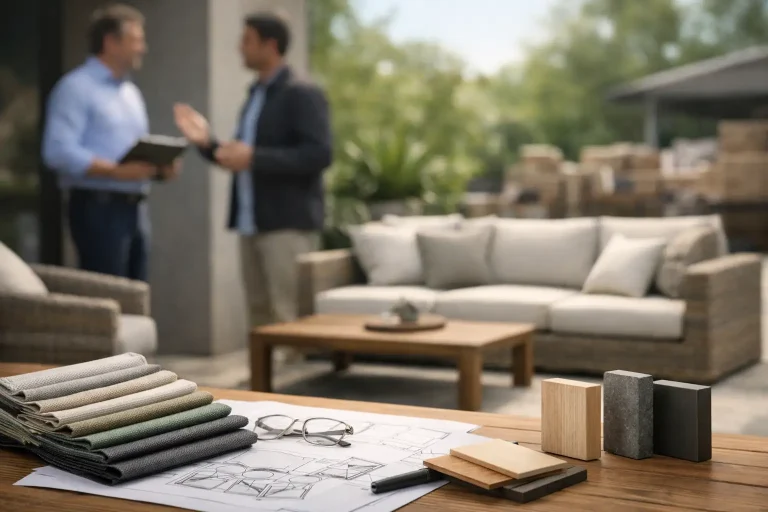
It is also smart to request physical review, especially for large projects. Swatches are useful, but mock-ups show how a cushion sits on the frame, how crisp the tailoring looks, and whether comfort matches the intended guest experience. A supplier with in-house design support and approval workflows can make that process faster and more reliable.
For multi-site developments, consistency matters as much as initial performance. The approved cushion for phase one should still be reproducible for phase two without visible drift in foam feel, fabric shade, or profile.
A smarter way to specify outdoor cushions
The best specifications do not isolate safety from design, or comfort from operations. They treat the cushion as a contract-grade component that has to earn its place across aesthetics, code alignment, durability, maintenance, and delivery timing. That is the standard serious projects should work to.
For buyers furnishing outdoor spaces at scale, outdoor furniture fire retardant cushions are less about adding one more feature and more about reducing risk across the life of the installation. When the supplier can support material selection, mock-up review, customization, and timely project delivery under one roof, the cushion stops being a weak link and becomes part of a system that performs.
If you are specifying for a public-facing outdoor environment, the right question is not whether fire retardant cushions sound like a premium option. It is whether the space can afford a cushion package that was never built for the way the project will actually be used.