Choosing Contract Grade Lounge Seating
A lounge chair that looks right on a mood board can fail fast on a rooftop, pool deck, or hotel terrace. Sun exposure, salt air, constant turnover, aggressive cleaning, and daily repositioning expose every weak point. That is why contract grade lounge seating is not a styling upgrade. It is a project requirement when the space needs to perform under real commercial use.
For designers, developers, procurement teams, and hospitality operators, the question is rarely whether lounge seating should look good. It should. The harder question is whether it will still look and function as intended after a season of guest traffic, service cycles, and weather exposure. The answer depends on specification discipline, manufacturing quality, and supplier control across the full project timeline.
What contract grade lounge seating really means
In commercial and hospitality settings, contract grade lounge seating refers to seating built for higher traffic, longer duty cycles, and more demanding environments than typical residential furniture. That usually means stronger frames, better weld integrity, more stable finishes, higher-performing upholstery options, and tighter consistency across production.
But the term can be used loosely in the market, so buyers should look past the label. A product may be presented as suitable for hospitality while still relying on residential-grade construction details. For procurement teams, the safer approach is to review the product through a performance lens. What is the frame material? How is it finished? What fabrics are available? Can cushions be specified for heavy-use outdoor conditions? Can the same item be reproduced consistently for phase two or a second property?
Those questions matter because contract furnishing is not just about placing furniture. It is about controlling risk. The right seating reduces replacements, protects the visual standard of the property, and keeps project schedules from slipping due to product failures or inconsistent supply.
Why specification matters more outdoors
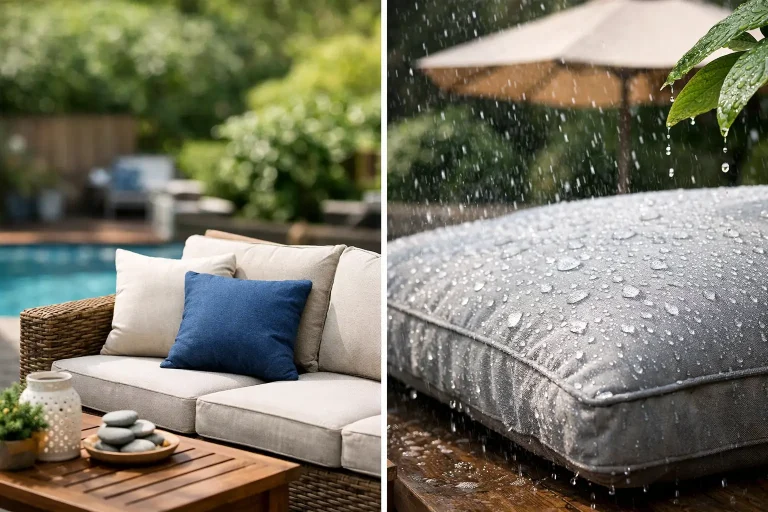
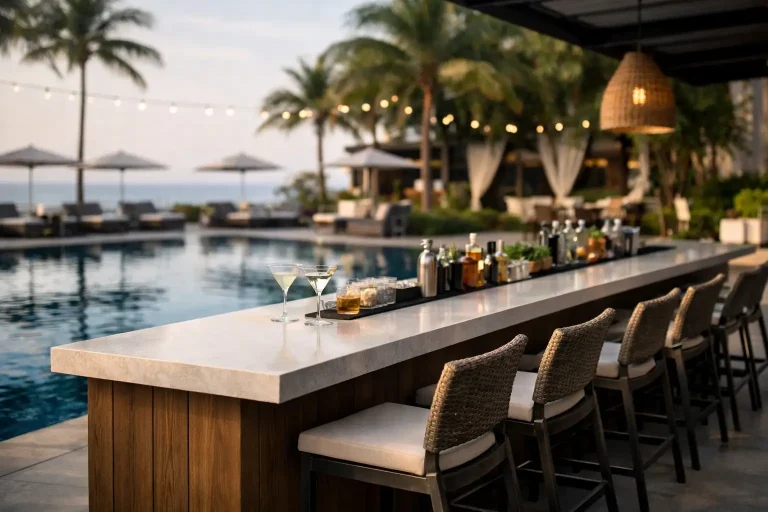
Outdoor lounge settings create a harsher operating environment than many interiors. UV exposure fades poor-quality finishes and textiles. Moisture finds its way into cushions and joints. Wind shifts lightweight pieces. Chlorine and salt can accelerate corrosion. In food and beverage venues, furniture also has to withstand spills, frequent cleaning, and constant movement by guests and staff.
That is why contract grade lounge seating for outdoor use should be evaluated as a system rather than a standalone product. The frame, finish, weave, sling, foam, fabric, and glides all affect long-term performance. A powder-coated aluminum frame may be the right choice for one beachfront project because of corrosion resistance and manageable weight. In another setting, teak or a heavier construction may better suit the design intent and traffic pattern. There is no single best material in every case. There is only the right fit for the site, use level, and maintenance plan.
Design teams often balance competing priorities here. A lighter chair may support easier daily operations, but a heavier profile may feel more substantial in a windy rooftop environment. Deep upholstered seating may create a more luxurious guest experience, but cushion management becomes more important in wet conditions. Trade-offs are normal. The goal is to make them early, with full awareness of how the product will live on site.
How to evaluate commercial lounge seating for a project
The fastest way to make a bad buying decision is to judge lounge seating by silhouette alone. Visual appeal gets attention, but project value comes from a broader set of criteria.
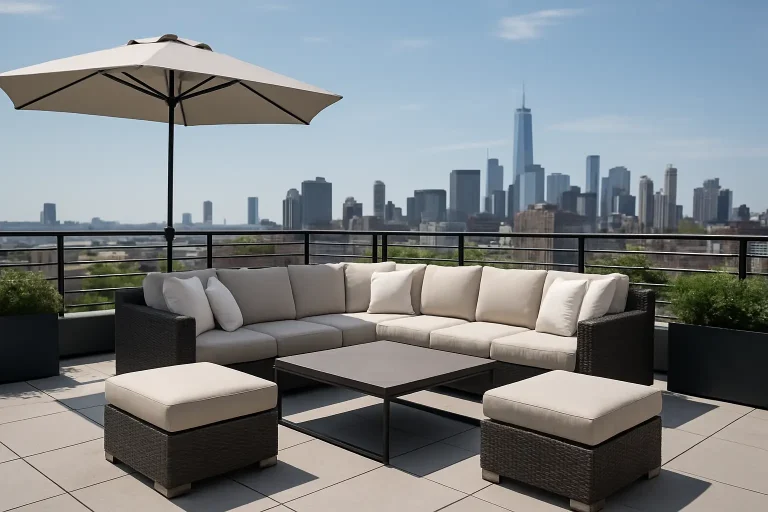
Start with the application. A private villa terrace, resort pool deck, restaurant patio, and high-rise common area all ask different things from the same category. Guest dwell time, cleaning frequency, local climate, and operator expectations should all shape the specification.
Then assess construction quality. Frames should feel stable and engineered for repeated use, not occasional use. Finish quality should be consistent across pieces. Cushions should be built for outdoor conditions with appropriate foam and fabric options. If the seating includes woven components or wood elements, those details should be selected with maintenance realities in mind, not just appearance at handover.
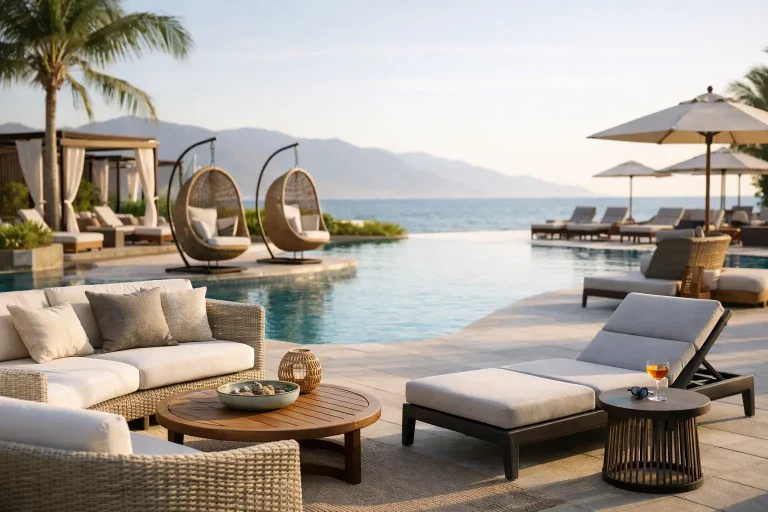
Scale is the next filter. Lounge seating rarely sits alone. It works in groups, often alongside coffee tables, side tables, dining sets, pool furniture, or shade solutions. A strong supplier should be able to support visual consistency across categories so the project reads as one environment rather than a patchwork of disconnected buys.
Finally, evaluate supply confidence. Can the vendor support quantity? Can finish and fabric approvals be managed efficiently? Can mock-ups or sample reviews happen before final sign-off? On larger projects, operational control matters as much as product aesthetics.
Contract grade lounge seating and procurement efficiency
Procurement teams are often tasked with more than buying furniture. They are managing approvals, timelines, coordination, freight, installation sequencing, and budget exposure. In that context, contract grade lounge seating should simplify execution, not create more touchpoints and exceptions.
That is where vertically integrated supply becomes a real advantage. When design support, manufacturing oversight, material options, and logistics are aligned, decisions move faster and fewer variables fall through the cracks. It becomes easier to confirm dimensions, review finish options, match fabrics across collections, and keep lead times realistic.
For multi-zone or multi-site projects, consistency becomes even more valuable. If a hospitality operator is furnishing several terraces, cabanas, and lounge areas at once, they need products that can be repeated with confidence. They also need a partner that can hold quality across volume, not just deliver one attractive sample set.
PNZ Space Global approaches this with a vertically integrated model built for contract and hospitality execution, combining in-house design support, large-scale manufacturing capacity, and white-glove delivery coordination. For buyers managing complexity, that kind of structure reduces friction at every project stage.
Design flexibility without losing control
Customization is often necessary in contract environments, but unmanaged customization can slow a project down. The right supplier offers flexibility inside a controlled process.
That may mean adapting dimensions for a rooftop lounge, selecting fabrics suited to the local climate, adjusting finishes to align with brand standards, or building coordinated seating groups for villas, resorts, and mixed-use developments. The point is not to customize for its own sake. The point is to make sure the final specification supports the use case while still staying manufacturable, repeatable, and on schedule.
This is where services like 3D drawings, mock-up approvals, and material reviews become highly practical. They help design teams validate proportions, procurement teams lock decisions earlier, and stakeholders approve with fewer surprises. For outdoor projects in particular, seeing the full composition before production can prevent costly revisions later.
What buyers should ask before approving a lounge collection
A smart approval process usually comes down to a few direct questions. Will this product maintain its appearance under our actual operating conditions? Can we get the quantities we need within the required timeline? Can the same product family support other zones in the project? If we need a custom finish, fabric, or dimension, can that be delivered without compromising consistency?
It is also worth asking how the supplier handles project support beyond the quote stage. Large orders do not just need inventory. They need communication, document control, revision handling, and delivery planning. White-glove logistics and coordinated fulfillment are not extras on major hospitality or commercial work. They are part of how the project gets completed without avoidable disruption.
The cost question buyers often frame too narrowly
Budget matters, but lowest unit price is rarely the smartest metric for lounge seating in commercial use. A cheaper product that weathers poorly, requires earlier replacement, or creates maintenance complaints can become the more expensive option quickly.
A better way to think about value is total project performance. That includes product life, design fit, approval speed, supplier responsiveness, replacement risk, and the ability to support future phases. Sometimes the right answer is a more premium specification. Sometimes it is a simpler construction with proven outdoor durability and easier upkeep. It depends on the business model of the property and the expectations of the end user.
What does not change is this: contract grade lounge seating should earn its place by doing more than filling space. It should support operations, uphold the design standard, and arrive with the level of control serious projects require.
When lounge seating is specified well, it does its job quietly. Guests settle in, teams stop worrying about replacements, and the space keeps working as intended long after opening day. That is usually the difference between furniture that was merely purchased and furniture that was properly planned.