Villa Patio Furniture Project Example
A villa patio furniture project example becomes real the moment the site plan exposes the actual challenge: one property, multiple outdoor zones, different user behaviors, and no tolerance for delays. For developers, designers, and procurement teams, the question is not simply which chair or table looks right. It is how to furnish an entire patio environment with consistent design language, contract-grade durability, approval-ready documentation, and a delivery plan that protects the project schedule.
This is where villa outfitting separates into two very different paths. One path is fragmented sourcing, where lounge seating comes from one vendor, dining from another, umbrellas from a third, and the schedule starts slipping as soon as finish approvals begin. The better path is a coordinated project model built around specification control, category planning, and manufacturing visibility from the start.
What this villa patio furniture project example needs to solve
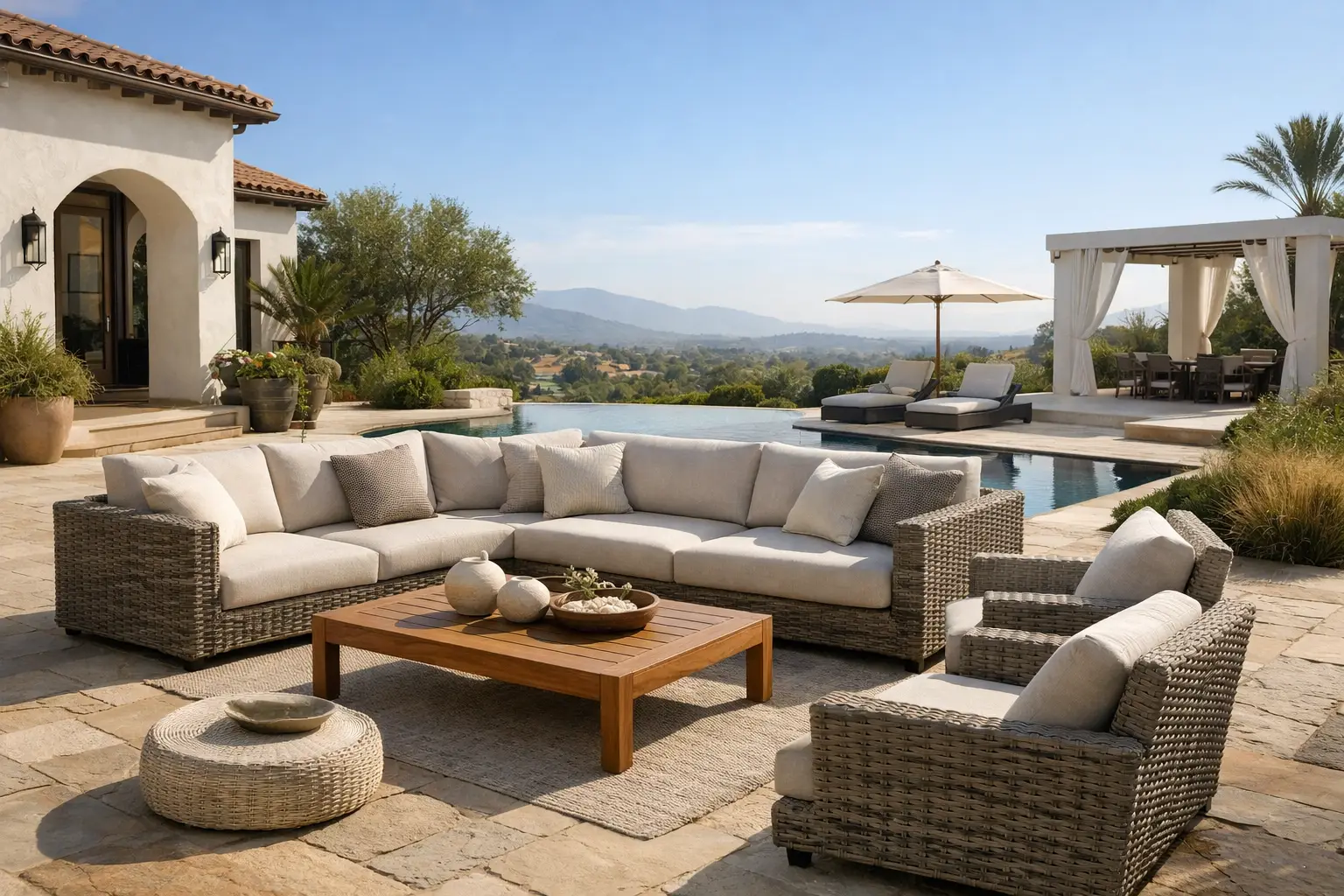
Consider a high-end private villa with four key exterior zones: a main terrace for entertaining, a pool deck for sun exposure and wet use, a smaller side patio for quiet seating, and a covered dining area connected to the interior living space. On paper, the layout looks straightforward. In practice, every zone asks for a different performance profile.
The main terrace needs lounge seating that feels residential in style but performs like hospitality furniture. Cushions must hold shape, frames must resist corrosion, and proportions need to support both visual impact and actual comfort. The pool deck requires materials that can tolerate water, sunscreen, heat, and frequent movement. The side patio calls for a lighter footprint, often with accent chairs or a compact coffee set that does not overcrowd circulation. The dining area needs proper table sizing, chair count planning, and enough material continuity to make the whole patio read as one project rather than four unrelated purchases.
That is why a useful villa patio furniture project example starts with zoning before product selection. The product catalog matters, but the order of decisions matters more.
How the specification process should work
A strong outdoor furniture project begins with three inputs: layout dimensions, intended use, and finish direction. If any of those are vague, procurement becomes guesswork.
For the main terrace, the specification team would typically define the anchor arrangement first. That could be a modular sofa set, two lounge chairs, and one or two coffee tables sized to maintain easy circulation. The goal is to create a conversation area that feels generous without blocking views or access points. In larger villas, this zone often benefits from layered seating rather than a single oversized set. It gives the space more flexibility for family use and guest entertaining.
For the dining zone, chair count and table format come next. Round tables support conversation in tighter footprints, while rectangular tables work better for longer covered patios and larger groups. Armchair dimensions matter more than many buyers expect. A chair that looks elegant in a drawing can become a problem if it reduces seating capacity or creates an awkward push-back clearance.
For the pool area, the spec should shift toward quick-dry practicality. Sun loungers, side tables, and shade elements must be chosen as a system. If loungers are specified without considering towel storage, drink placement, and sun orientation, the end result may still look complete in photos but perform poorly in daily use.
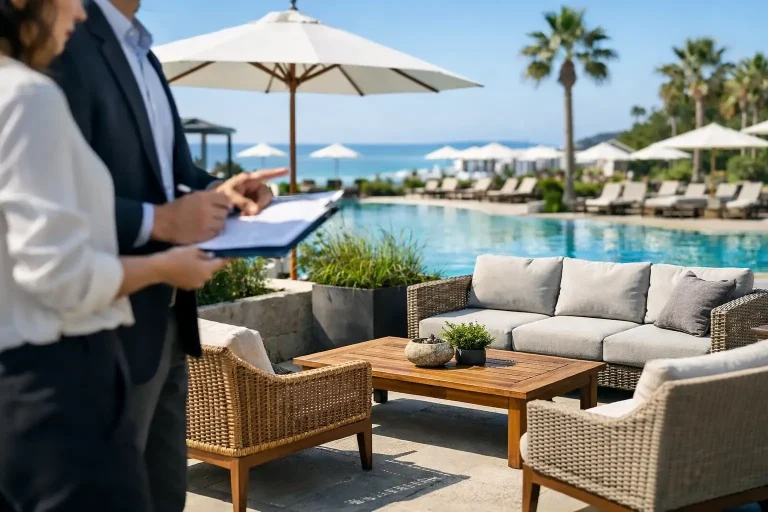
This is where in-house design support adds measurable value. 3D drawings, mock-up approvals, and finish reviews reduce revision cycles before production begins. For B2B buyers, that is not a design extra. It is risk control.
A practical villa patio furniture project example by zone
In this project model, the main entertaining terrace is furnished with a deep-seating lounge collection in powder-coated aluminum with weather-resistant cushions and ceramic-top coffee tables. Aluminum keeps weight manageable for installation and rearrangement, while ceramic adds a premium surface that handles outdoor exposure well. The styling stays clean and modern, with neutral upholstery and restrained frame lines so the furniture complements the architecture instead of competing with it.
The covered dining area uses a large rectangular dining table with matching dining armchairs in a coordinated finish family. This is a critical move in villa projects. Lounge and dining pieces do not need to be identical, but they should speak the same visual language through frame tone, weave detail, teak accent, or cushion color. Consistency is what makes the project feel specified rather than assembled.
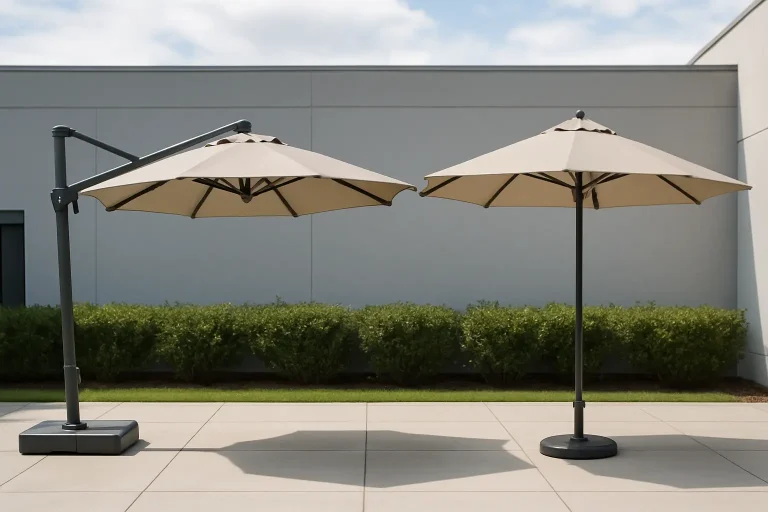
At the pool deck, the best fit is usually a set of sun loungers with small side tables and one or two umbrellas or cantilever shade units depending on site conditions. Here, low-maintenance materials carry more value than decorative complexity. Exposure is higher, cleaning is frequent, and any weakness in finish quality shows up quickly.
The side patio becomes the softer zone – perhaps a pair of woven lounge chairs with a compact table, or a two-seat set that supports morning coffee or private conversation. This zone often benefits from visual warmth. A teak-look accent or rope detail can add texture without disrupting the broader scheme.
Accessories should not be treated as an afterthought. Planters, poufs, outdoor rugs, and occasional tables help complete a villa setting, but only when they are scaled correctly. Too many accessories can make the space look crowded and create maintenance issues. Too few, and the project can feel under-designed.
Why one-source supply changes the outcome
The procurement advantage in a project like this is not only product range. It is control over coordination. When lounge, dining, poolside furniture, shade solutions, and accessories are sourced through a single operational platform, teams gain consistency in finish approvals, packaging standards, lead times, and communication.
For architects and developers, this matters because outdoor packages are rarely isolated. They sit within larger handover schedules, client approval timelines, and installation windows. A delay in one category can hold up the final presentation of the whole villa. A mismatch in material tone can trigger rework. Separate vendors increase those risks.
A vertically integrated supplier has a stronger position because design, manufacturing, and fulfillment are aligned. That means material flexibility is easier to manage, mock-ups are faster to review, and production status is less dependent on third-party handoffs. In larger orders, especially across multiple villas or phased developments, that operational structure becomes a real commercial advantage.
What buyers should evaluate in a villa patio furniture project example
The visuals always get attention first, but specification quality should be judged on harder criteria. Frame construction, outdoor fabric performance, foam density, finish consistency, carton protection, and replacement planning all affect project value. A patio package that looks good at installation but becomes difficult to service six months later was not specified well.
Buyers should also look at SKU breadth and project support capacity. Can the supplier furnish the entire exterior scope, or only part of it? Can they provide swatches, drawings, and mock-up approvals early enough to keep the project moving? Can they handle white-glove delivery and installation requirements without creating coordination gaps on site?
Trade-offs are unavoidable. A highly customized package may achieve stronger brand or architectural alignment, but it can extend approval timelines. A fast-ship approach may protect schedule, but it could reduce finish flexibility. The right decision depends on the project’s priority: speed, uniqueness, budget efficiency, or portfolio consistency across multiple properties.
Where this model works best
This villa patio furniture project example is especially relevant for high-spec private residences, branded residential developments, hospitality villas, and show units where the outdoor area carries real commercial weight. In these settings, the patio is not leftover space. It is part of the selling experience, the guest experience, or the daily-use value of the property.
For GCC buyers and international project teams, the pressure is usually the same: reduce procurement friction, keep design standards high, and avoid delivery surprises. That is why the strongest project outcomes tend to come from suppliers that can support concept development, technical approvals, production scale, and logistics under one roof. PNZ Space Global is built for that kind of requirement, where catalog depth and factory control need to translate into reliable project execution.
The best outdoor projects are rarely the ones with the most furniture. They are the ones where every zone has been planned with purpose, every material choice reflects the environment, and every delivery milestone supports the broader handover. If a villa patio has to perform beautifully from day one, the process behind it needs to be as disciplined as the design.