Can Outdoor Cushions Stay Outside?
A rooftop lounge can look fully specified on paper and still fail in the field because of one overlooked detail – the cushions. Buyers often ask, can outdoor cushions stay outside? The short answer is yes, but only when the cushion is engineered for exterior use and the site conditions are taken seriously.
That distinction matters in residential projects, hospitality settings, and high-traffic commercial spaces alike. Sun exposure, humidity, pool chemicals, sand, dust, and cleaning frequency all affect cushion performance. If the goal is a polished outdoor environment that holds its appearance and service life, the real question is not whether cushions can stay outside, but which ones can, for how long, and under what conditions.
Can outdoor cushions stay outside in every climate?
Not in the same way, and not with the same expected lifespan. A covered terrace in a dry climate places very different demands on a cushion than an open pool deck in a coastal property. Outdoor-rated cushions are built to handle exposure, but exposure is not a single condition. It is a combination of UV intensity, rainfall, airborne moisture, temperature swings, and daily wear.
In hot, high-UV environments, fabric fading and surface degradation tend to show up first. In humid or rainy locations, the bigger concern is trapped moisture inside the cushion core. In hospitality applications, there is also the issue of turnaround speed. If a cushion gets wet in the morning, it needs to dry fast enough to be guest-ready again without holding odor or losing shape.
So yes, outdoor cushions can stay outside, but climate always changes the specification. For open-air installations, the safest approach is to treat the cushion as a performance component, not an accessory.
What makes an outdoor cushion truly outdoor rated?
This is where many projects go wrong. A cushion may look suitable for exterior use because the fabric has a textured weave or water-resistant finish, while the internal construction tells a different story. For a cushion to perform outdoors, the fabric, fill, stitching, and ventilation all need to work together.
Solution-dyed acrylic and other high-performance outdoor textiles are common because the color is engineered for better fade resistance and the fabric stands up well to repeated sun exposure. That said, fabric alone does not solve water retention. The interior matters just as much. Quick-dry foam, reticulated foam, and drainage-friendly construction help move water through rather than trapping it.
Seams and zippers also deserve attention, especially on large-volume procurement. Poor seam construction can allow premature wear, while low-quality closures can fail under repeated cleaning and use. In commercial settings, removable covers often make more operational sense because they support maintenance cycles without replacing the full cushion.
The strongest specifications balance appearance and serviceability. A cushion that looks refined on day one but requires constant intervention is not a strong product choice.
Fabric is only part of the story
A common mistake is to judge outdoor suitability by the cover alone. Water-resistant fabric can still sit over a fill material that absorbs moisture and dries slowly. That creates the familiar problems of mildew risk, odor, and sagging.
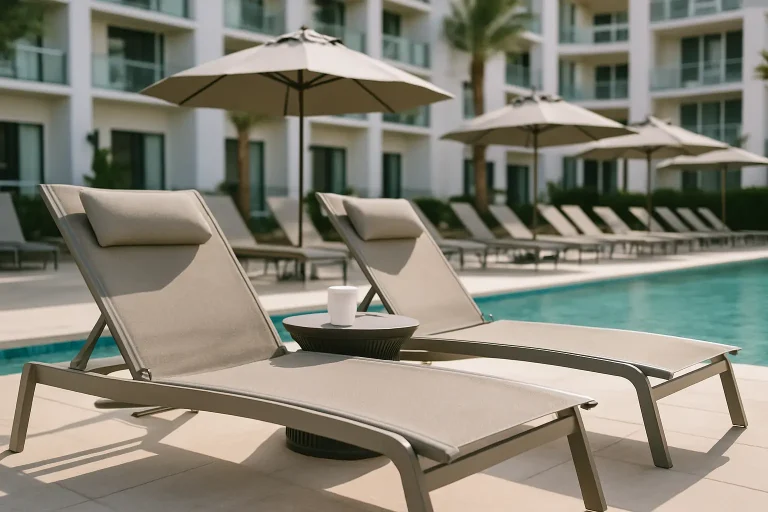
For poolside, beachfront, or uncovered installations, buyers should prioritize breathable construction and moisture release. In practical terms, that means asking how the cushion drains, how fast it dries, and how it performs after repeated wet-dry cycles.
Cushion fill determines recovery and drying time
The best-looking cushion is not always the best-performing one. Dense interior fills may feel luxurious at first but can hold water longer if not engineered for outdoor use. On the other hand, fully quick-dry constructions may trade some plushness for speed and resilience.
This is why project use matters. A private villa may accept a more comfort-led cushion with occasional storage. A resort, restaurant terrace, or shared amenity space usually benefits from a more durable, faster-drying build that reduces downtime.
When it is fine to leave cushions outside
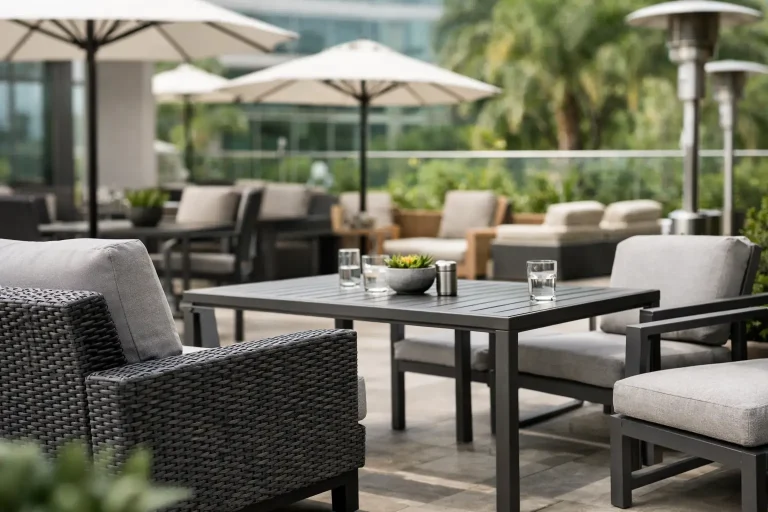
If the cushions are purpose-built for outdoor use and the environment is reasonably controlled, leaving them outside is often the right operational choice. Covered patios, shaded balconies, screened porches, and landscaped terraces with moderate exposure are typical examples. In these spaces, high-quality outdoor cushions can remain in place for daily use with routine cleaning and periodic inspection.
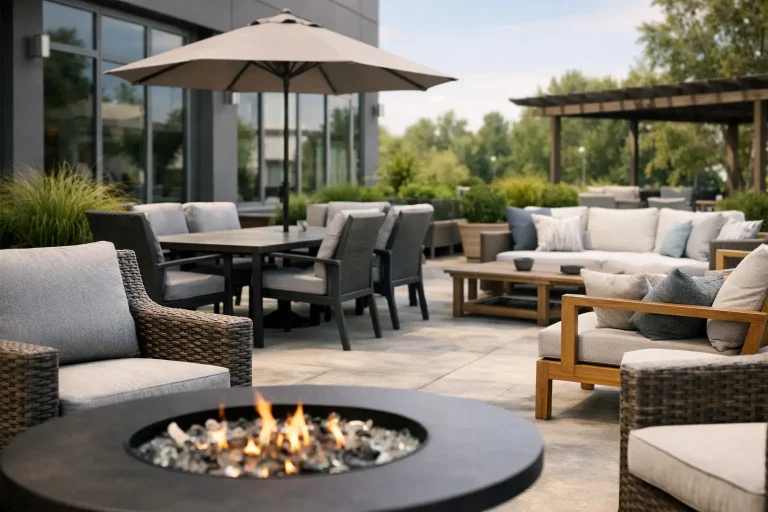
Commercial buyers also leave cushions outside when service efficiency matters. Constant daily removal may not be realistic across a hotel terrace, rooftop dining area, or multi-unit development. In those cases, the better answer is not labor-heavy handling but stronger specification: UV-stable fabrics, quick-dry cores, mold-resistant materials, and covers or storage plans for extreme weather events.
For many projects, the decision comes down to operational fit. If the site team can manage weather response and maintenance, cushions can stay outside successfully. If there is no maintenance protocol at all, even a premium cushion will age faster than expected.
When cushions should come in
There are clear situations where outdoor cushions should not remain outside continuously. Heavy storm seasons, prolonged rain, snow, and freezing conditions all put pressure on both fabric and fill. Even a well-made cushion will last longer when protected from extended saturation or off-season weather.
Storage also makes sense in dusty construction-adjacent zones, coastal areas with constant salt exposure, or properties with low occupancy where furniture sits unused for long stretches. During those periods, cushions are simply better off in a dry, ventilated storage area.
This is not a sign of poor quality. It is good asset management. In larger projects, replacing cushions early due to avoidable weather exposure is a preventable cost.
How long will outdoor cushions last outside?
There is no single number because usage intensity changes everything. A residential patio used on weekends will not age at the same rate as a hotel pool deck with daily guest turnover. The baseline expectation for quality outdoor cushions is several seasons of strong performance, but that depends heavily on exposure, cleaning discipline, and whether the cushion was correctly specified in the first place.
Direct sun shortens visual life. Standing water shortens material life. Improper storage can damage cushions just as easily as weather can. Cushions sealed into damp storage bins may develop mildew faster than cushions left outside in moving air.
For procurement teams and designers, the smarter metric is total cost over service life. A lower-cost cushion that fades quickly, dries slowly, or compresses under traffic is usually more expensive over time than a contract-grade alternative with stronger materials and fewer replacement cycles.
How to reduce maintenance without sacrificing design
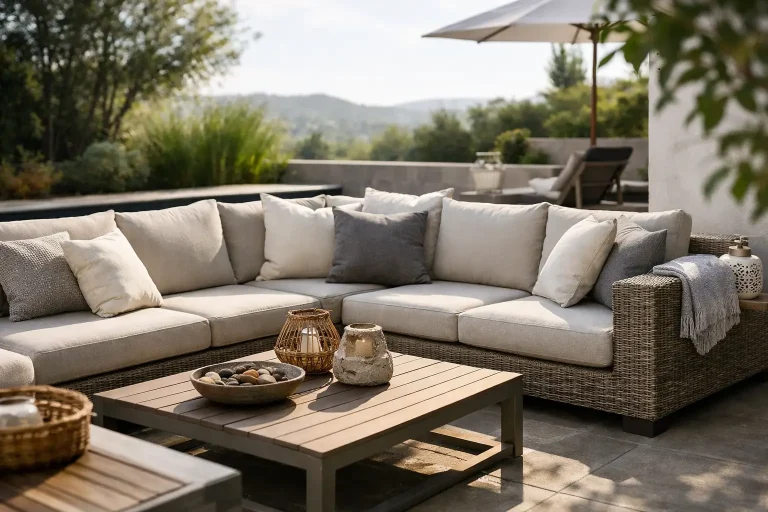
The most successful outdoor environments are designed around realistic upkeep. That means choosing cushion colors and textures that hide minor soil between cleanings, specifying removable covers where possible, and aligning fabric selection with the property type. Light neutrals can look exceptional, but on food-and-beverage terraces or family-heavy pool zones, they may require more frequent care than darker or heathered finishes.
It also helps to define who owns maintenance. In hospitality or multifamily projects, cushions perform better when housekeeping, operations, or facilities teams have a simple protocol for brushing off debris, standing cushions on edge after rain, and storing them ahead of major weather events.
This is where vertically integrated suppliers add value. The right partner can help align design intent with material performance, mock-up review, and practical use conditions instead of treating the cushion as an afterthought. For buyers managing multiple outdoor categories across lounge, dining, and pool environments, that coordination reduces specification gaps and replacement risk.
The better question to ask before buying
Instead of asking only can outdoor cushions stay outside, ask what level of outdoor exposure the cushion is built to handle. That is the question that protects appearance, budget, and project timelines.
A cushion designed for covered use may perform beautifully in a shaded terrace and struggle on an open deck. A fully outdoor, quick-dry cushion may be the right answer for hospitality operations but more than a homeowner needs for a seasonal patio. Matching the product to the site is what determines whether leaving cushions outside is practical or costly.
For B2B buyers, that decision should be made early, alongside frame materials, layouts, and finish approvals. It is far easier to specify correctly at the beginning than to solve comfort, drainage, and durability issues after installation.
Outdoor cushions can stay outside when the materials are right, the exposure is understood, and the maintenance plan matches the space. Treat them like a core specification, not a finishing touch, and they will perform like one.