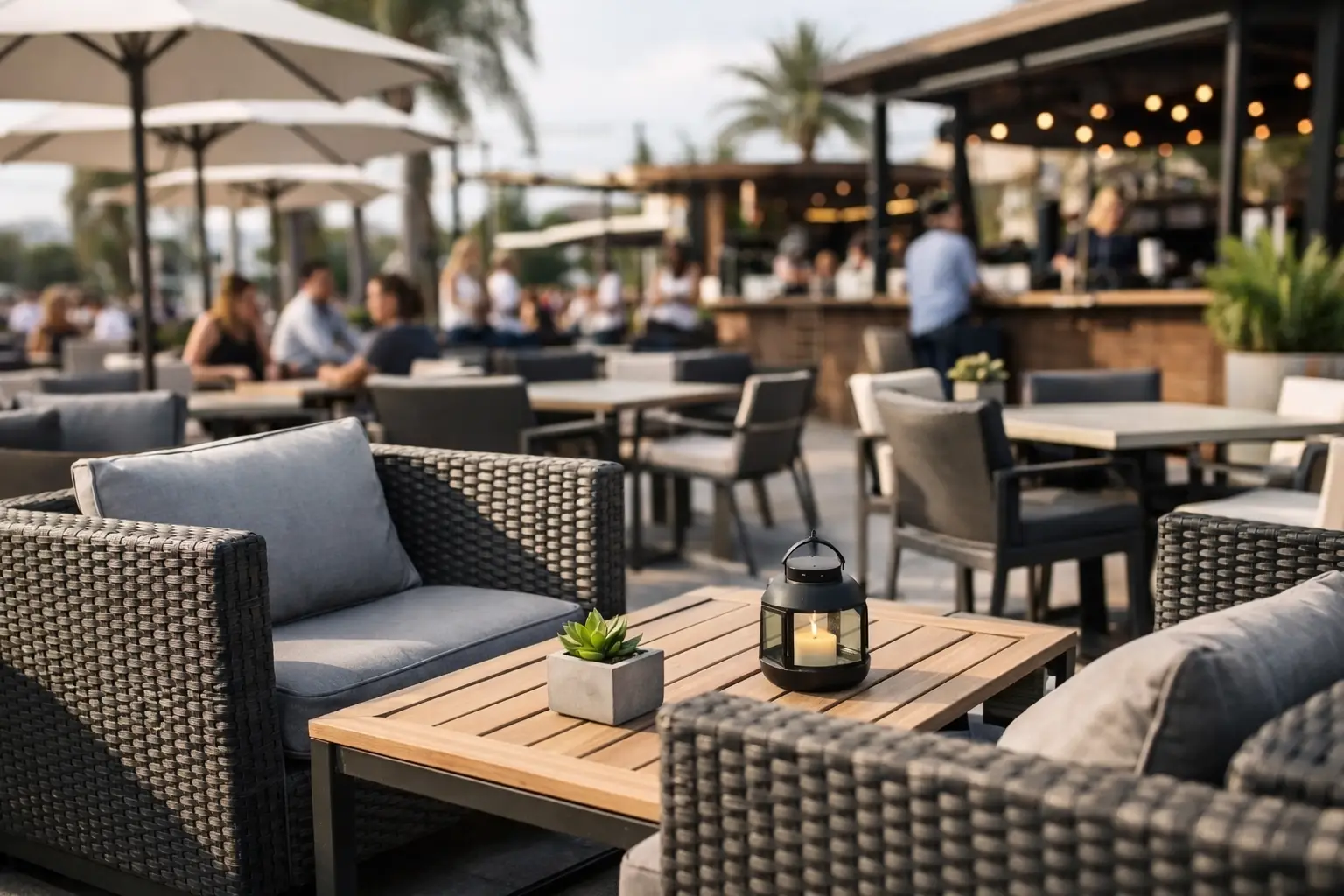
Outdoor Furniture for High Traffic Venues
A pool deck that looks sharp on opening day can start showing stress within weeks if the specification is wrong. In hospitality, mixed-use, and commercial projects, outdoor furniture for high traffic venues has to do more than match a design board. It has to absorb daily wear, frequent cleaning, UV exposure, moisture, and constant movement without turning into a maintenance problem.
That is where procurement decisions get expensive or efficient. The right outdoor package supports operations, preserves the guest experience, and reduces replacement pressure across the life of the property. The wrong one usually reveals itself fast – loose joints, fading finishes, unstable tables, cushions that hold moisture, or materials that look good in a catalog but underperform on site.
What high-traffic performance really means
High traffic is not just about volume. A hotel breakfast terrace, a beachfront restaurant, a rooftop lounge, and a residential amenity deck may all see heavy use, but they do not fail in the same way. A dining chair in a busy restaurant deals with constant pull-back friction, stacking, impact, and repetitive cleaning. A chaise on a pool deck deals with sun, chlorine, wet users, and repositioning throughout the day.
For that reason, specifying for high traffic starts with behavior, not just style. Buyers need to define who is using the furniture, how often it is moved, how it is cleaned, and what environmental conditions are constant. Heat, humidity, coastal air, dust, and direct sun all change what counts as a durable material.
This is also why contract-grade matters. Residential-grade pieces may look comparable at first glance, but the construction standard, joinery, finish system, and replacement planning are usually not built for commercial cycles. In a high-use venue, that gap becomes obvious.
How to specify outdoor furniture for high traffic venues
The strongest specifications begin with product category planning. Lounge, dining, poolside, and accessory pieces all require a different performance threshold, even when they sit in the same project. Treating the entire outdoor scope as one material decision often creates avoidable problems.
Lounge seating
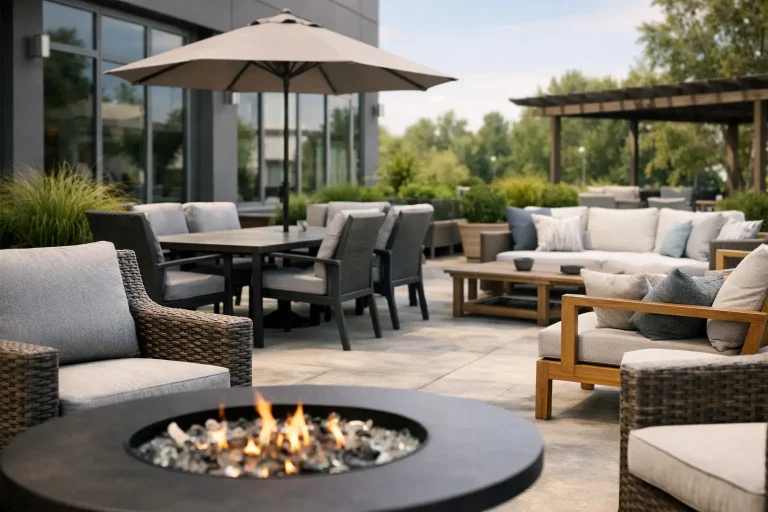
Outdoor lounge seating in high-traffic settings has to balance comfort with structural stability. Deep seating can create a premium feel, but oversized frames and soft cushions are not always practical for venues where pieces are repositioned often or cleaned between heavy guest turnover.
Aluminum frames are a common choice because they are relatively lightweight, corrosion-resistant, and well suited for modern hospitality styling. The trade-off is that not all aluminum performs equally. Gauge, weld quality, coating system, and foot design all affect long-term performance. A thin frame may reduce cost, but it can feel unstable under commercial use.
Rope and woven details can work well when they are engineered for UV stability and tension retention. They add texture and soften larger layouts, but buyers should consider cleaning access and replacement planning. Dense weave patterns can trap debris in dusty or food-service environments.
Dining furniture
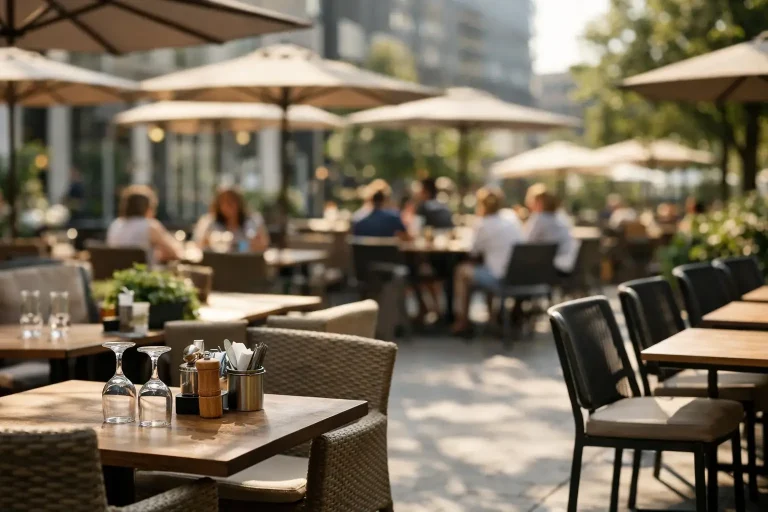
Dining is usually the hardest-working category in any outdoor project. Chairs are dragged, tables are turned quickly, and staff need furniture that can be cleaned fast without special treatment. This is one area where aesthetics should never outrank operational efficiency.
Stackability matters if the venue resets often or stores furniture for events. Table bases should be stable on the actual site surface, not just in a showroom. Compact footprints help with circulation, but going too small can create instability or reduce guest comfort. In restaurant and hotel settings, the better choice is often a table-and-chair program designed around service flow rather than maximum seat count.
Compact laminate, sintered stone, and properly finished metal surfaces are often stronger options than decorative tops that chip or stain under repeated service. If a venue expects frequent turnover, edges and corners deserve extra attention. They take more impact than spec sheets suggest.
Poolside furniture
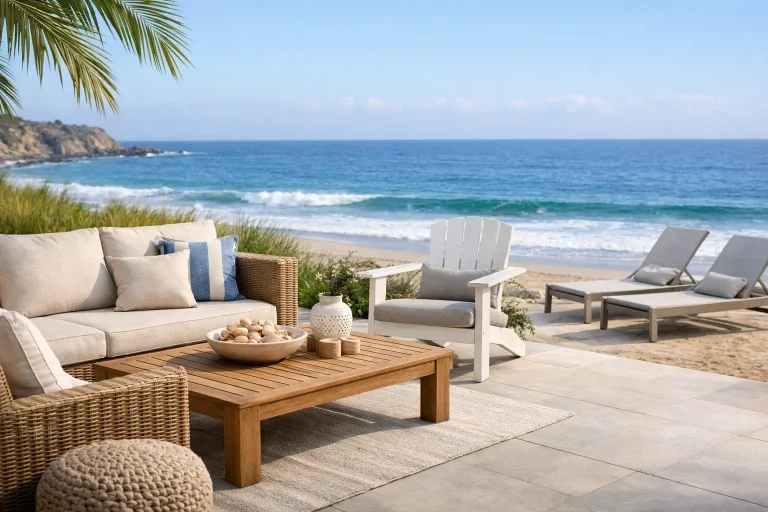
Pool furniture has a harsher life cycle than many buyers expect. Chlorine, sunscreen, standing water, and direct UV exposure create a constant stress test. Chaises need smooth mobility without weak wheels, and sling or cushion systems need to dry quickly and hold shape.
Quick-dry foam and performance fabrics can improve turnaround and guest experience, but the specification should also account for serviceability. If a cushion cover fails, can it be replaced without changing the full unit? If a sling stretches, is there a repair path? These questions matter more on a 100-unit pool deck than on a small private terrace.
Shade and accessories
Shade structures, side tables, planters, and accessory items are often treated as secondary, but they shape how the entire outdoor environment performs. Umbrellas in windy or heavily used settings need proper base weight, durable opening mechanisms, and fabric that resists fading. Side tables need enough weight and stability to avoid frequent tipping or movement.
Accessories also affect maintenance. A beautiful layout with too many fragile or inconsistent pieces becomes harder to operate at scale. High-traffic environments benefit from accessory programs that match the main furniture in finish, durability, and replacement availability.
Material selection is where lifecycle cost is decided
For outdoor furniture for high traffic venues, the purchase price rarely tells the full story. Lifecycle cost is driven by durability, maintenance burden, replaceable components, and finish retention over time.
Powder-coated aluminum remains one of the most dependable commercial materials because it combines corrosion resistance with design flexibility. Teak can be a strong choice in the right setting, especially where a natural weathered look is acceptable, but it requires a clear maintenance position. If ownership expects it to stay golden with little upkeep, there is already a mismatch between expectation and material reality.
Synthetic wicker still has a place in some hospitality environments, though performance depends heavily on fiber quality, frame construction, and UV resistance. Lower-grade woven products can become brittle or lose shape quickly in intense sun. For projects that demand a cleaner, more contemporary look with lower upkeep, metal and performance-fabric combinations often outperform decorative woven options.
Textiles deserve the same scrutiny as frames. Fade resistance, cleanability, water drainage, and mildew resistance all matter. Fabric that looks premium but holds moisture can turn into an operations issue very quickly, especially in humid climates or pool environments.
Design consistency matters, but so does replacement strategy
Large venues and multi-site projects need more than a good-looking assortment. They need continuity. If one damaged chair cannot be matched six months later, the visual standard starts to erode and procurement gets more complicated than it should be.
That is why SKU depth, finish control, and manufacturing oversight are not back-office details. They directly affect specification confidence. For developers, operators, and procurement teams, a supplier with broad category coverage can simplify outdoor packages across lounge, dining, pool, and accessory needs while keeping the design language consistent.
This is also where vertical integration creates an operational advantage. When design support, production control, mock-up approval, and logistics sit closer together, there is less room for delay or mismatch. PNZ Space Global approaches outdoor sourcing with that full-project view, supporting buyers with 3D drawings, material flexibility, and production capacity built for contract-scale delivery.
The supplier decision affects the project as much as the product
Even strong products can fail inside a weak supply process. For high-traffic venues, timelines are usually fixed by opening schedules, phased handovers, or seasonal demand. Delays in approvals, inconsistent finishes, or missing components can create costly site issues.
A dependable supplier should be able to speak clearly about lead times, factory control, packaging standards, mock-up procedures, and installation support. White-glove delivery is not just a premium add-on in this context. It can protect the condition of goods, reduce on-site confusion, and keep punch-list issues under control.
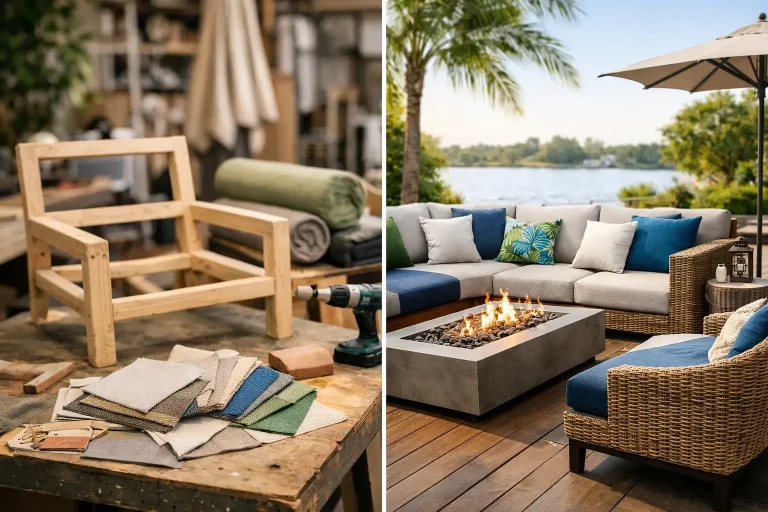
Buyers should also look for consultative support early in the process. Material swatches, layout input, and specification guidance can prevent mismatches before procurement is locked. That matters when one outdoor project may include rooftop dining, pool lounges, villa terraces, and public amenity spaces with different traffic patterns but one overall brand standard.
A better question than what looks best
The better question is what will still perform after a full season of real use. Outdoor furniture in busy venues has to justify itself every day through durability, comfort, and ease of operation. When the specification is right, the furniture supports the property quietly and consistently. That is usually the clearest sign the buying decision was made well.