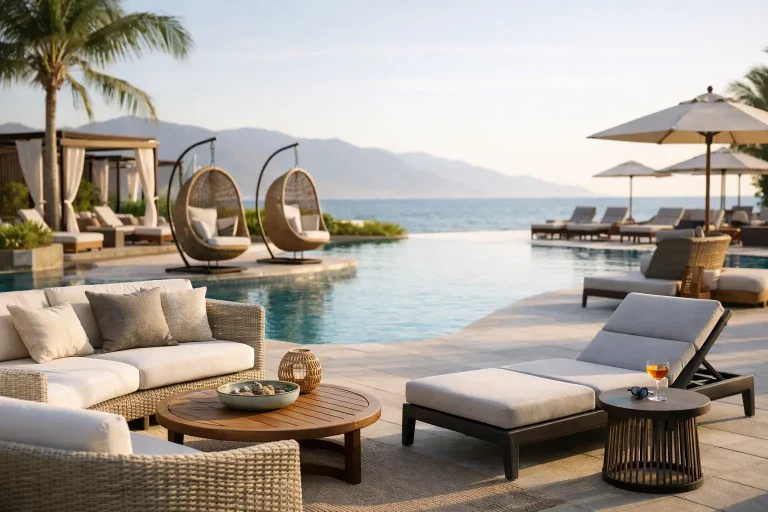
How to Choose a Hospitality Furniture Supplier
A hotel terrace rarely fails because of the concept. It fails when the wrong chair fades in one season, replacement units arrive in a different finish, or delivery slips past opening day. That is why choosing a hospitality furniture supplier is not a styling exercise alone. It is a procurement decision that affects timelines, operating costs, brand consistency, and guest experience.
For hospitality teams, the pressure is rarely limited to picking attractive products. You are balancing design intent with budget control, outdoor performance, installation schedules, and the practical reality of maintaining a property after handover. A supplier that can sell furniture is easy to find. A supplier that can support specification, approvals, manufacturing, logistics, and repeatability across multiple sites is much harder to replace once a project is underway.
What a hospitality furniture supplier should actually deliver
At the contract level, furniture is part product and part operational system. A capable supplier should help you move from concept to installed environment with fewer decision bottlenecks and fewer avoidable risks. That means translating design direction into collections that fit the property, the climate, and the usage profile of each zone.
In practice, the scope is broader than a catalog. Hotels, resorts, beach clubs, restaurants, and serviced residences often need coordinated lounge seating, dining sets, poolside furniture, umbrellas or shade solutions, and accessories that work together visually and functionally. If those categories are split across too many vendors, the procurement burden grows fast. Lead times become harder to manage, finish consistency can slip, and accountability gets blurred when something goes wrong.
A strong supplier reduces that friction by offering a complete outdoor assortment under one roof while still giving specifiers room to customize. That balance matters. Standardized product lines can improve speed and consistency, but hospitality projects often need adjustments in size, finish, fabric, or detailing to match a brand standard or site condition.
How to evaluate a hospitality furniture supplier beyond the catalog
A polished product presentation tells you very little about execution capacity. What matters more is whether the supplier controls the variables that usually cause project delays or quality issues.
Manufacturing control matters more than promises
If a supplier is vertically integrated, it has more control over production quality, scheduling, customization, and problem solving. That does not guarantee perfection, but it usually creates faster feedback loops and better accountability. When design, manufacturing, and project coordination sit too far apart, simple adjustments can turn into long approval chains.
For hospitality buyers, this becomes critical on large orders and phased openings. A factory-backed supplier can often manage volume with more predictability than a trading-only business that relies entirely on outside production partners. It also tends to be better positioned to match future reorders, which is essential when a property expands or needs replacement stock later.
Design support should reduce revisions
Good hospitality procurement starts before production. Designers and project managers benefit from suppliers that can provide 3D drawings, mock-up approvals, material swatches, and design consultation early in the process. These tools are not extras. They help teams catch sizing conflicts, finish mismatches, and layout issues before purchase orders become expensive mistakes.
This is especially useful in outdoor hospitality environments where circulation, stacking, storage, wind exposure, and poolside placement all affect product selection. A chair can look right on paper and still be wrong for the way staff moves through a restaurant deck or the way guests use a rooftop lounge.
Logistics capability is part of product quality
Furniture quality is not just what leaves the factory. It is also what arrives on site, when it arrives, and in what condition. Hospitality projects often run on tight opening schedules with multiple contractors working at once. A missed delivery window can disrupt installation sequencing and create costly hold-ups.
That is why white-glove delivery, clear communication, and realistic lead time planning matter. The best suppliers do not overpromise to win the order. They map production, packing, shipping, and delivery with enough discipline to support the broader project schedule.
The trade-offs every buyer should weigh
There is no single right sourcing model for every hospitality project. The right supplier depends on the property type, order volume, design complexity, and timeline.
If speed is the priority, a supplier with broad in-stock or fast-turn SKUs may be the better fit than one focused on highly customized production. If the project is a flagship resort or branded destination, deeper customization may justify longer lead times. If you are furnishing multiple properties, standardization may create better lifecycle value than chasing unique pieces for each site.
Budget also needs nuance. The lowest unit cost is not always the lowest project cost. Cheaper products can create higher replacement frequency, warranty claims, guest-facing wear, and inconsistent reorders. On the other hand, over-specifying premium materials where they are not needed can strain capital budgets without improving performance.
The smartest buyers usually align furniture grades with actual use. Poolside loungers, high-turn restaurant chairs, and exposed rooftop seating should be specified differently than lower-traffic terrace zones. A credible supplier will guide that conversation instead of pushing the same answer everywhere.
What strong hospitality furniture procurement looks like
The most efficient projects tend to follow a simple pattern. First, the buyer defines the functional zones clearly: lounge, dining, pool, shade, and accessories. Then the supplier helps map suitable collections and material options to each zone based on traffic, exposure, and design intent.
From there, approvals should move in a controlled sequence. Drawings confirm fit. Swatches confirm finish direction. Mock-ups confirm comfort, scale, and construction expectations. Only after those checkpoints should final quantities and logistics be locked. This approach may feel slower at the front end, but it usually saves time where delays hurt most – during manufacturing, shipping, and site installation.
A capable supplier should also think beyond initial handover. Hospitality furniture lives in demanding conditions. UV exposure, moisture, cleaning chemicals, and constant use all test the product. Buyers should ask practical questions about care requirements, replacement planning, and how future additions will be matched. Long-term consistency is often overlooked until the first few pieces need to be replaced.
Why one-stop capability matters for hotels and resorts
Hospitality environments are rarely furnished one category at a time. A resort may need dining chairs for all-day restaurants, sectional seating for outdoor lounges, bar furniture for rooftop venues, loungers for the pool deck, umbrellas for shade, and accent tables or accessories to complete the guest setting. When these are sourced separately, each package brings its own lead time, finish tolerance, and coordination burden.
A one-stop supplier can simplify specification and reduce risk, especially for projects spanning multiple zones or multiple sites. It can also help procurement teams maintain a coherent visual language across the property while still adjusting product types to suit each use case.
This is where operational depth becomes a commercial advantage. A supplier with broad category coverage, in-house design support, factory capacity, and project fulfillment discipline is better positioned to carry complex orders from concept through delivery. That matters to architects and developers who need reliable execution as much as strong product design.
For buyers managing hospitality projects at scale, PNZ Space Global reflects this model well: vertically integrated manufacturing, a wide outdoor assortment, design studio support, and project-ready logistics built around contract and hospitality needs.
Questions worth asking before you commit
Before issuing a final purchase order, ask how the supplier handles customization, what approval process is used before production, how finish consistency is controlled across large volumes, and what delivery support is available at the destination. Ask whether reorders can be matched later and how the supplier plans around phased openings or multi-site rollout.
The answers will tell you more than a price sheet ever will. Reliable suppliers are usually specific. They can explain factory capability, lead time logic, material options, packaging standards, and where risk points tend to appear. Vague answers are often a warning sign that execution depends on too many external variables.
Hospitality furniture does more than fill space. It shapes how guests sit, gather, dine, and remember a property. The right supplier helps you protect that experience with better control, better timing, and fewer surprises when the project moves from presentation to real-world use. Choose the partner that can carry the full load, not just the sample set.