Best Resort Pool Umbrellas for Projects
A resort pool deck can look fully specified on paper and still fail in operation the first windy afternoon. Umbrellas are often where that gap shows up first. The best resort pool umbrellas are not simply the ones that photograph well at opening. They are the ones that keep their shape, open smoothly, hold color, and fit circulation, service, and storage plans across a full season of heavy use.
For hospitality buyers, that changes the selection process. Shade is not a decorative afterthought. It is a contract-grade category with direct impact on guest comfort, deck capacity, maintenance labor, and replacement cost. When umbrellas are chosen well, they support the furniture plan, improve dwell time, and reduce operational friction. When they are chosen poorly, they become one of the fastest ways to create avoidable downtime on a high-visibility amenity deck.
What defines the best resort pool umbrellas
The short answer is performance under repeated use. In resort settings, umbrellas open and close far more often than residential units, face stronger UV exposure, and must coordinate with loungers, side tables, dining areas, and circulation routes. That means the right specification starts with use case, not just silhouette.
A pool lounger zone typically needs broad personal shade with a profile that does not interrupt sightlines. A VIP cabana edge may need larger-format coverage and stronger visual presence. Dining terraces near the pool often require a different clearance strategy so servers can move efficiently. One umbrella type rarely solves all three conditions well.
This is why commercial buyers should think in systems. Canopy size, pole diameter, rib construction, fabric grade, base weight, and opening mechanism all affect long-term performance. The best result usually comes from matching multiple umbrella formats to distinct activity zones while keeping the material palette consistent.
Size, scale, and spacing on a resort deck
Oversizing sounds attractive until circulation gets tight and canopies collide. Undersizing looks equally wrong because the deck feels exposed, especially in peak sun hours when guests expect usable shade over every premium seat.
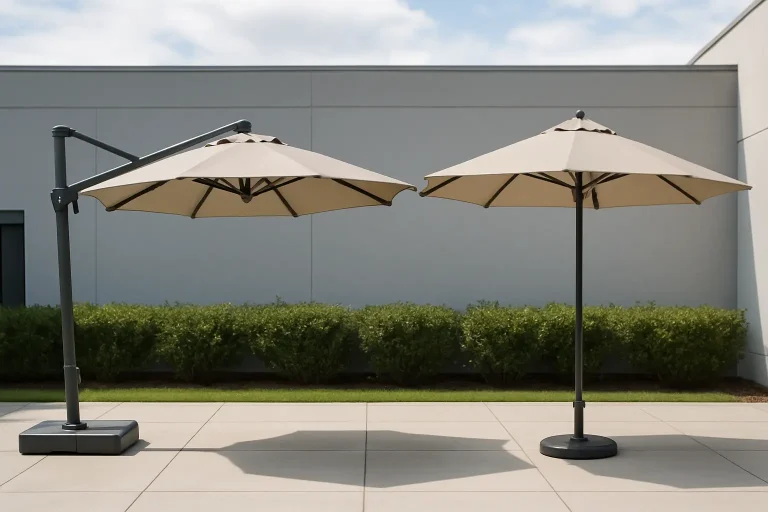
For standard chaise layouts, the canopy needs to cover the occupied zone without overreaching into adjacent furniture groupings. That usually means planning with the lounger footprint, side table placement, and pole offset in mind. Center-pole umbrellas can work well in symmetrical arrangements, but cantilever models often solve layout conflicts where bases would otherwise interrupt foot traffic.
Spacing matters just as much as diameter. Buyers should account for the open canopy width, the swing radius for tilt or rotation if applicable, and the operational clearance required for staff. A deck that looks efficient in a rendering can become cumbersome if umbrellas cannot be opened without shifting furniture.
Why canopy shape affects more than aesthetics
Square canopies often fit the geometry of pool decks more efficiently than round models because they align better with modular furniture plans and create cleaner shaded blocks. Round umbrellas can soften a more organic layout and work well in mixed dining and lounge environments, but they may leave awkward uncovered corners in tightly planned rows.
Rectangular canopies are especially useful where designers need directional coverage over paired loungers or narrow seating zones. They can reduce the total number of units required, although they also demand more careful orientation to wind and walkway patterns.
Materials that hold up in hospitality use
Frame and canopy materials separate resort-grade umbrellas from products that belong on a private patio. Aluminum remains the most practical choice for many commercial installations because it balances corrosion resistance, manageable weight, and finish flexibility. Powder-coated finishes help maintain a clean appearance, but only if the coating quality is high enough to resist chipping in transport and day-to-day handling.
Wood-look finishes can add warmth, especially at luxury properties, but appearance should not come at the expense of maintenance. In high-humidity or salt-exposed locations, buyers usually benefit from engineered durability over purely decorative appeal.
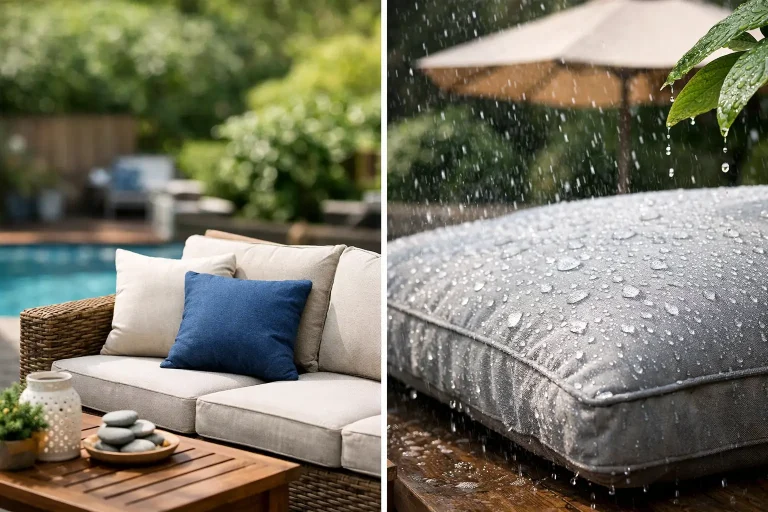
Fabric quality is equally non-negotiable. Solution-dyed performance textiles are typically the right benchmark for colorfastness, mildew resistance, and UV stability. A lower-grade canopy might look acceptable on delivery and fade unevenly after one hot season. That creates replacement cycles that erode the original price advantage quickly.
The frame details buyers should inspect
Ribs, hubs, joints, fasteners, and lift systems deserve close attention because these are the areas that fail first under commercial use. Reinforced rib construction and marine-grade or corrosion-resistant hardware are strong indicators of longer service life. Buyers should also look for mechanisms that operate smoothly without excessive force. If staff struggle to open and close umbrellas from day one, labor inefficiency and breakage typically follow.
Wind resistance is a specification issue, not a marketing claim
Few categories are sold with more vague language than umbrellas. Terms like heavy-duty or commercial-grade are common, but project teams need clearer answers. What wind conditions is the umbrella designed to handle while open? What is the closure protocol? What base weight is required for each canopy size? Is the unit intended for permanent placement or daily repositioning?
The best resort pool umbrellas are selected with local climate in mind. A sheltered courtyard pool has very different demands than an exposed beachfront deck or elevated rooftop. In windy environments, vented canopies, stronger rib assemblies, and appropriately engineered bases are not optional upgrades. They are part of the core specification.
That said, no umbrella should be treated as stormproof. Good procurement planning includes operational discipline. Staff need clear guidance on when to close units, how to secure them, and where to store or strap them during weather events. Product quality matters, but so does the operating plan behind it.
Base selection can make or break the installation
An excellent canopy on the wrong base is still the wrong purchase. Base choice should reflect safety, mobility needs, surface conditions, and visual integration with the rest of the deck.
Freestanding bases work well when layouts may change seasonally, but they must be properly weighted for the canopy size and exposure level. In-deck sleeves create a cleaner look and reduce trip hazards, which is attractive in luxury hospitality environments, though they require earlier coordination with site works. Wheeled bases can help teams reset layouts faster, but mobility should never compromise stability.
Procurement teams should also think about housekeeping. Bases collect debris, are frequently bumped by carts and loungers, and can quickly look worn if the finish is not specified correctly. On busy resort decks, easy-clean surfaces and durable coatings save time every day.
Style still matters – but it has to work hard
Guests notice umbrella design immediately because it sits at eye level and anchors the rhythm of the pool deck. Shape, valance detail, edge profile, and frame finish all contribute to the property’s visual language. A contemporary hotel may want crisp, minimal canopies in neutral tones. A resort with a more classic identity may lean into softer forms and tailored detailing.
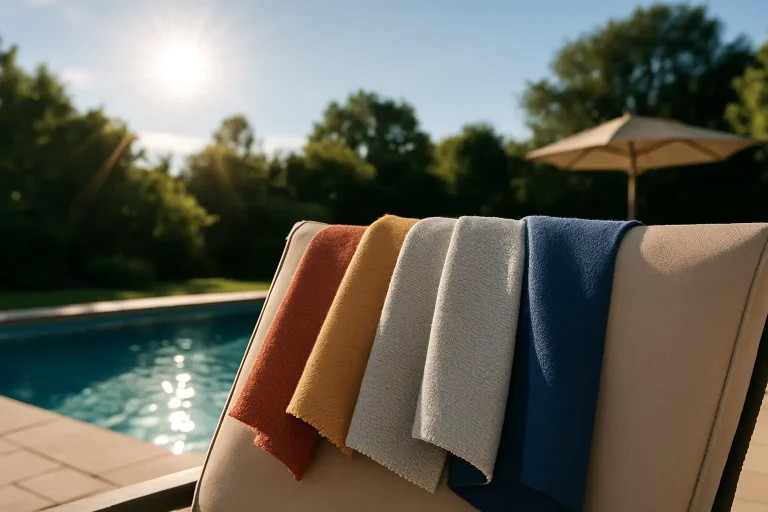
Still, appearance should support the broader furniture package, not compete with it. Umbrellas need to coordinate with loungers, dining sets, planters, and towels while staying serviceable across multiple seasons. Custom fabric colors and branded trims can be worthwhile for signature areas, especially where photography and brand recognition are priorities, but standardization across the majority of the deck often makes better operational sense.
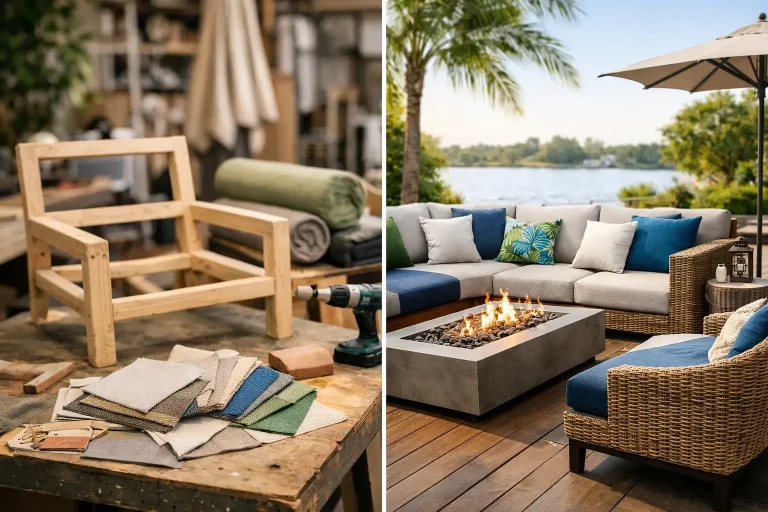
For larger projects, this is where a vertically integrated supplier adds real value. Finish consistency, material options, mock-up approvals, and coordinated delivery across multiple outdoor categories reduce the mismatch that often happens when shade is sourced separately from the rest of the pool furniture package.
Procurement questions that matter before approval
Experienced buyers know the product sheet is only part of the decision. Lead time, packaging, spare parts availability, and after-delivery support all affect the true cost of ownership. An umbrella program for a resort should be evaluated the same way any contract furnishing package is evaluated – by how reliably it can be specified, delivered, installed, and maintained.
Ask whether replacement canopies can be ordered without replacing the full frame. Confirm whether finish and fabric batches can be matched for future expansion. Review how units ship, how much assembly is required on site, and whether there is project support for layout planning or mock-up review. These details are not secondary. They are often what separate a smooth opening from a last-minute scramble.
At PNZ Space Global, this is where project support becomes practical rather than promotional. For hospitality and large-scale outdoor environments, coordinated design input, material flexibility, and factory-backed production control help buyers reduce risk before the first umbrella reaches the deck.
Choosing the right umbrella mix for different resort zones
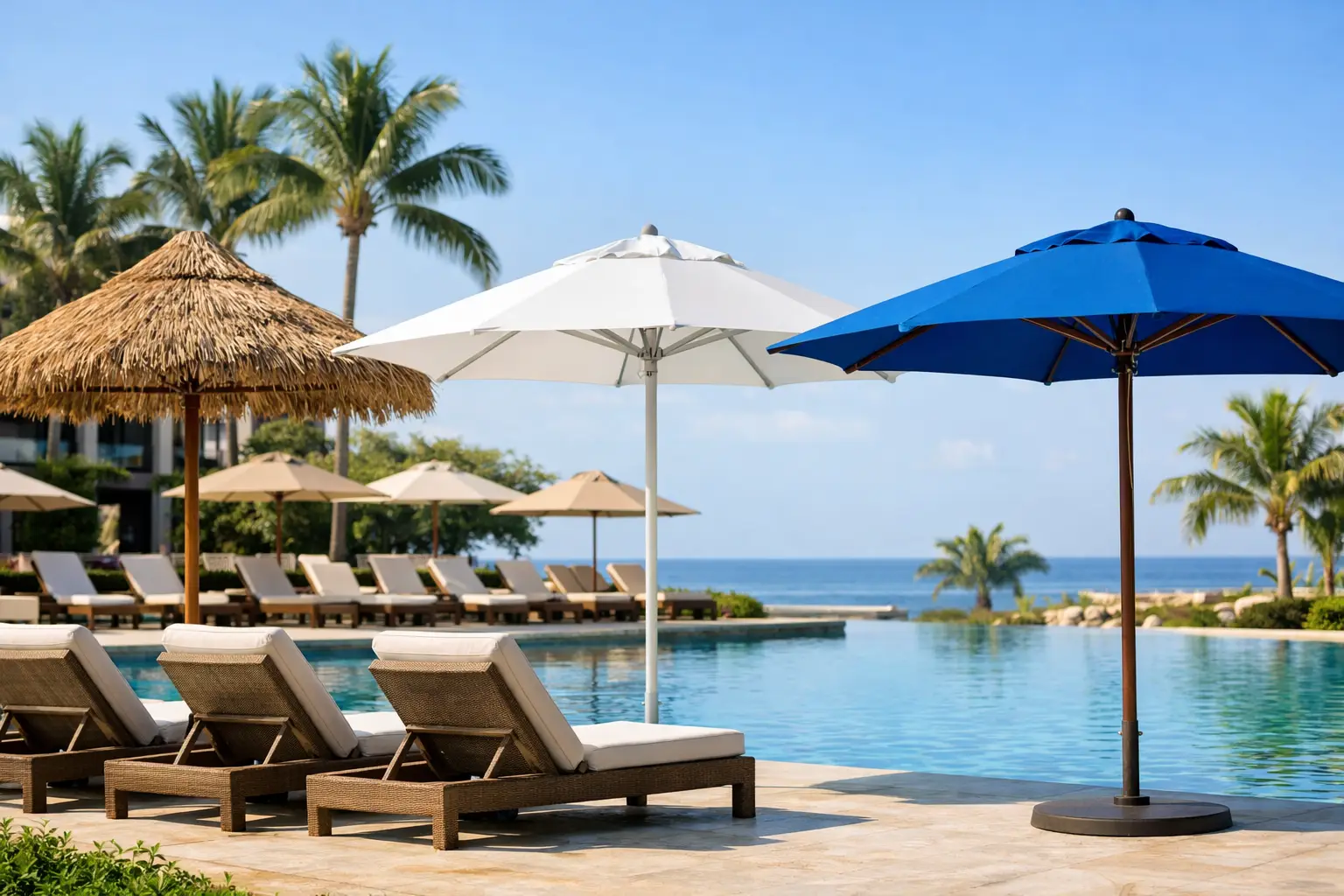
Most resort projects benefit from a layered approach rather than one umbrella model everywhere. Main pool lounger rows may need efficient, repeatable center-pole units. Premium daybed or VIP sections often justify larger cantilever formats that keep the base out of the guest zone. Poolside dining may call for a separate shade profile with different height and clearance logic.
This mix creates better performance and a more intentional guest experience, but only if it is controlled through a unified specification strategy. Consistent finishes, coordinated fabric direction, and clear spacing rules keep the result cohesive.
The smartest umbrella choice is rarely the most expensive or the most visually dramatic. It is the one that fits the site, supports operations, and stands up to repeated commercial use without constant attention. On a resort deck, shade should feel effortless to the guest and highly predictable to the team managing the property. That is usually the clearest sign you chose well.