Sustainable Materials in Outdoor Furniture Trends
A rooftop lounge in full sun, a pool deck exposed to chlorine, and a beachfront dining terrace do not forgive weak material decisions. That is why sustainable materials in outdoor furniture trends are no longer a styling angle alone. For developers, designers, hospitality operators, and procurement teams, they have become a specification issue tied directly to lifespan, maintenance load, replacement cycles, and brand positioning.
The market has moved beyond vague eco claims. Buyers sourcing at scale now want to know what a material is made from, how it performs in heat and moisture, how consistent the finish will be across a project, and whether the supplier can deliver it on schedule in commercial quantities. Sustainability matters, but in contract environments it only earns its place when it also supports durability, operational efficiency, and design control.
Why sustainable materials are changing outdoor specifications
Outdoor furniture has always lived at the intersection of aesthetics and punishment. In residential settings, that means UV exposure, rain, dust, and temperature swings. In commercial and hospitality settings, the pressure is higher – heavier usage, stricter maintenance standards, and less tolerance for visible wear.
That is why the conversation around sustainable materials has matured. Specifiers are looking less at marketing language and more at total project value. A recycled or responsibly sourced material may lower environmental impact, but if it fades too quickly, warps in high heat, or creates inconsistent lead times, it becomes a liability. The stronger trend is toward materials that reduce waste and extend service life at the same time.
For B2B buyers, this creates a more practical framework. The best sustainable option is rarely the one with the boldest label. It is the one that meets the design brief, withstands the site conditions, and supports predictable procurement.
Sustainable materials in outdoor furniture trends by category
The most important shift in sustainable materials in outdoor furniture trends is that no single material is winning every application. Performance depends on where the product will live and how it will be used.
Recycled plastics and engineered polymers
Recycled plastics have become a serious contender for poolside furniture, casual dining, and high-traffic hospitality zones. They resist moisture well, handle frequent cleaning, and can be produced in consistent colors and profiles. In the right formulation, they also reduce dependence on virgin resin.
The trade-off is temperature response and visual character. Lower-grade recycled content can feel less refined, and some polymer products may retain heat in direct sun or show surface wear differently than metal or teak. For projects where uniformity, easy maintenance, and moisture resistance matter most, this category performs well. For luxury environments that call for a warmer tactile finish, it often works better as part of a mixed-material design.
FSC-certified teak and responsibly sourced wood
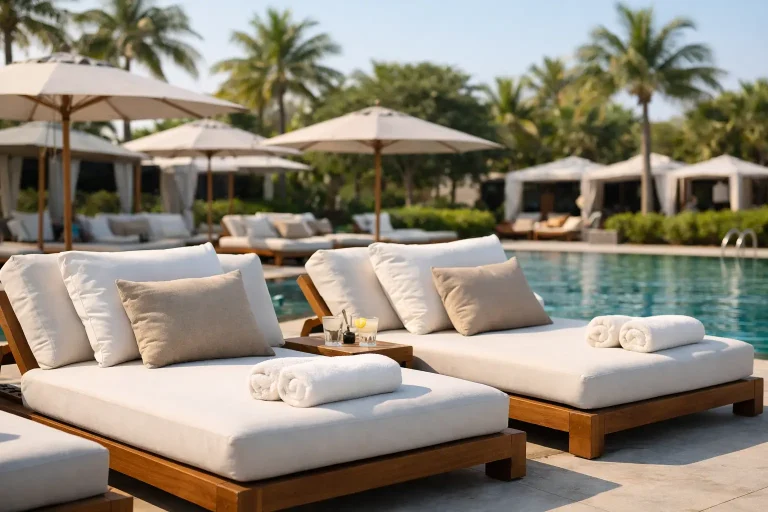
Wood remains one of the most requested outdoor furniture materials because it brings warmth, architectural depth, and a premium look that works across villas, resorts, restaurants, and garden settings. Responsibly sourced teak is especially relevant because of its natural oils, dimensional stability, and outdoor track record.
But wood is not a low-maintenance choice, even when it is sustainable. It will weather, shift in tone, and require a clear maintenance plan if the original finish must be preserved. For some clients, that silvered patina is acceptable or even desirable. For others, especially branded hospitality environments, finish consistency is part of the experience and must be managed. Sustainable sourcing strengthens the specification, but operational expectations still need to be clear from the start.
Powder-coated aluminum with recycled content
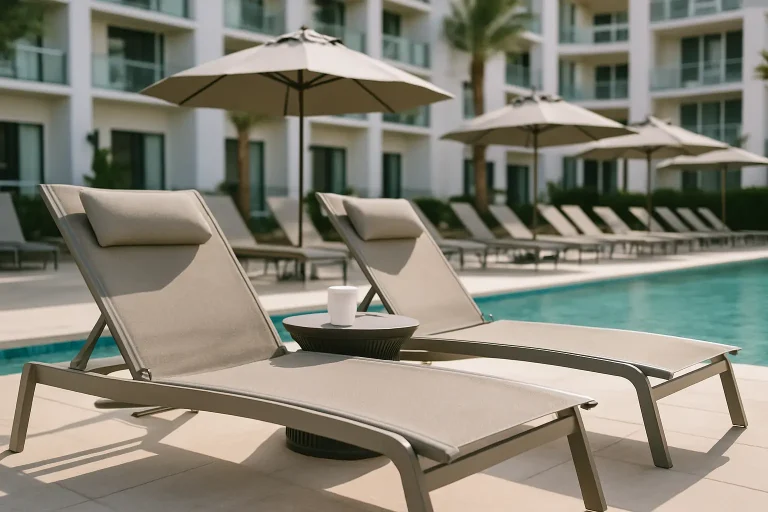
Aluminum continues to lead in contract-grade outdoor furniture because it is lightweight, corrosion-resistant, and efficient to manufacture across lounge, dining, and accessory categories. When recycled content is introduced into the production stream, it becomes an even stronger fit for projects seeking a better environmental profile without sacrificing scale.
This is one of the more practical sustainability stories in the market because the performance profile is already proven. Still, not all aluminum furniture is equal. Wall thickness, weld quality, pretreatment, and powder-coating standards determine whether the product performs for years or degrades early in coastal or high-use settings. The sustainability claim only holds value when the manufacturing quality is there to support long-term use.
Olefin, recycled textiles, and performance fabrics
Outdoor upholstery has improved significantly, and that has changed how buyers approach sustainability in soft seating. Olefin and other performance fabrics can offer strong UV resistance, fast drying, and stain performance, while some suppliers now provide recycled textile options for cushions and sling seating.
The key issue is not just fiber origin. It is whether the textile system works in real operating conditions. Cushion fill, seam construction, drainage design, and fabric tension all affect how long the product remains serviceable. A sustainable fabric on a poorly built cushion does not solve anything. In hospitality and multi-unit projects, replacement planning and fabric continuity matter just as much as the material story.
Synthetic wicker and woven alternatives
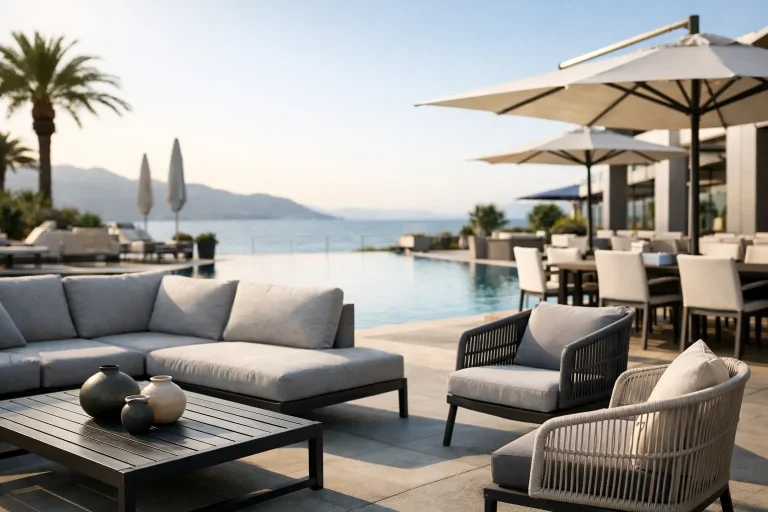
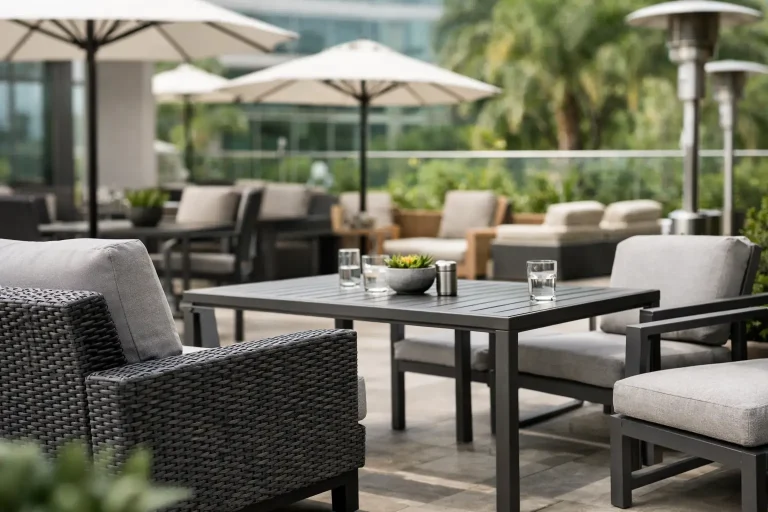
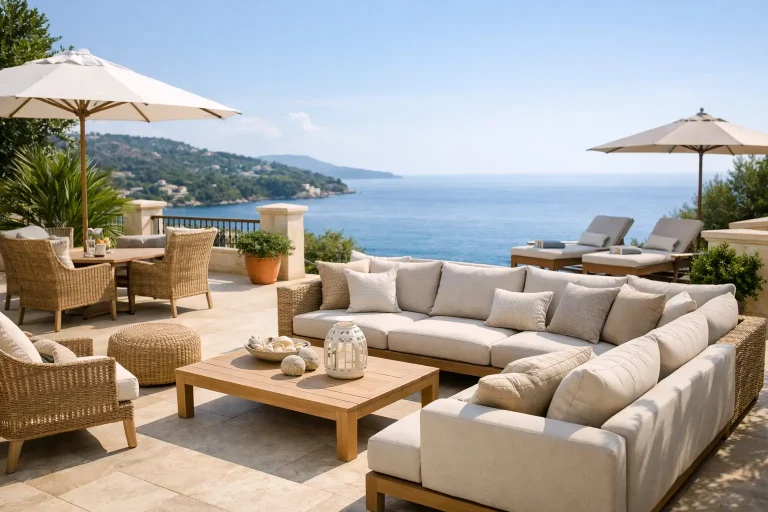
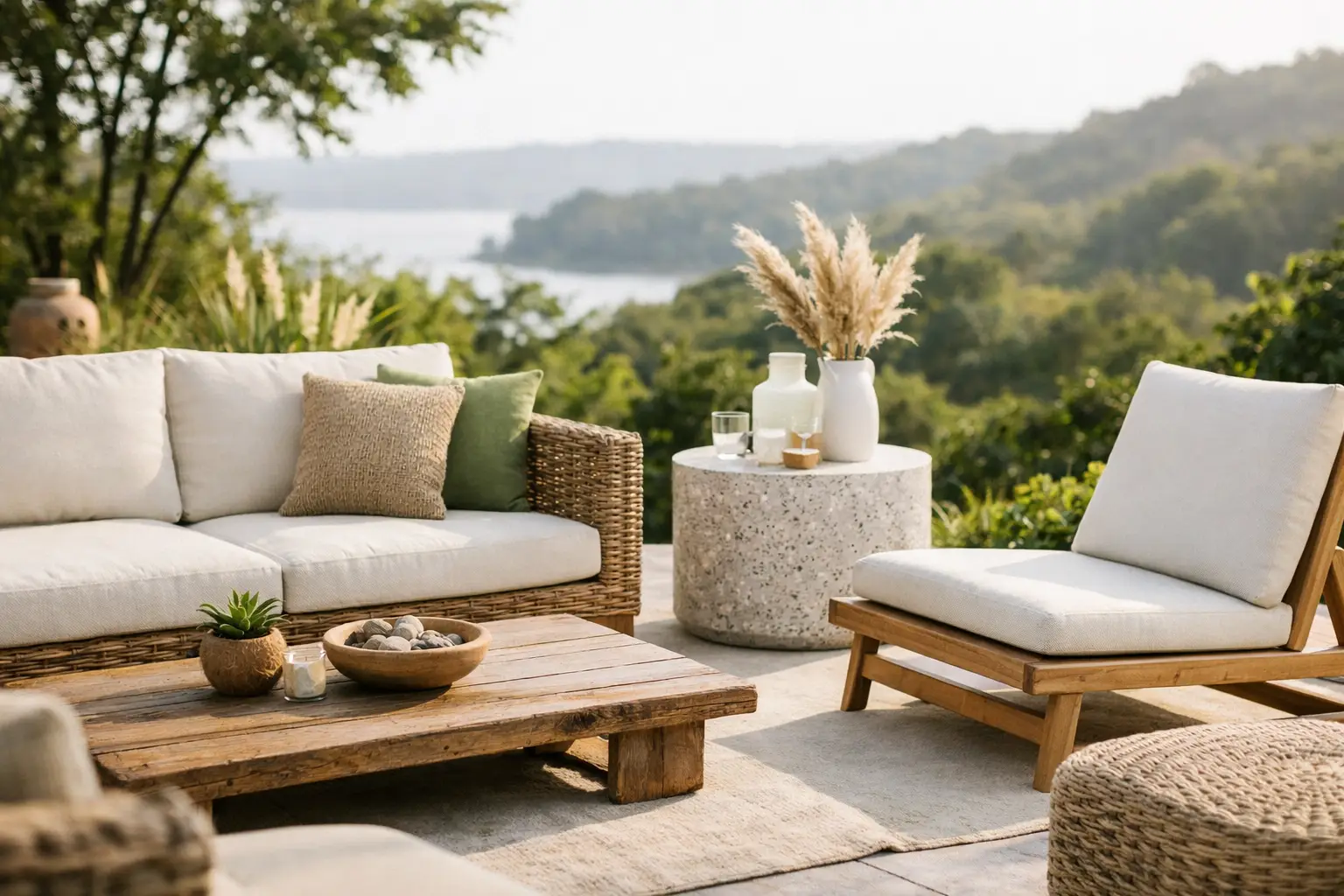
Woven outdoor furniture remains popular because it softens hardscape-heavy environments and works well in residential and resort applications. More manufacturers are incorporating recyclable or lower-impact synthetic fibers, which helps answer sustainability requirements without giving up the familiar look buyers want.
Here again, engineering matters. UV stability, weave tension, frame construction, and repairability determine whether the furniture holds its shape and appearance over time. Sustainable content is a plus, but buyers should still assess whether the weave can stand up to heavy turnover, stacking, and frequent repositioning.
What procurement teams should actually ask
The strongest buying decisions come from matching material claims to project realities. A sustainable material should not be approved on label value alone. It should be evaluated the same way any contract-grade component is evaluated – through performance, consistency, and supply reliability.
For larger projects, that means asking direct questions about recycled or certified content, finish variation, replacement part availability, cleaning requirements, and expected behavior in local climate conditions. In the GCC and similarly demanding environments, heat load, salt exposure, dust, and intensive use all pressure-test materials quickly.
This is also where supplier capability matters. A vertically integrated manufacturer can typically provide better visibility into sourcing, prototyping, finish control, and production timing than a fragmented supply chain. That becomes especially valuable when a project includes multiple outdoor zones with different requirements, such as dining terraces, shaded lounges, pool decks, and private balconies.
Design value and sustainability are no longer separate decisions
One reason these trends are sticking is simple: sustainable materials now support better design outcomes. Recycled aluminum can produce crisp, modern profiles. Responsible teak still delivers premium warmth. Advanced fabrics allow outdoor lounge settings to feel closer to interior spaces without ignoring the demands of weather and maintenance.
That matters because commercial clients are furnishing experiences, not just spaces. Guests notice whether a resort lounger feels solid, whether a rooftop dining chair stays comfortable after months of use, and whether a villa terrace ages well instead of looking tired after one season. Material selection shapes that perception.
For specifiers, the opportunity is to treat sustainability as part of performance-led design rather than a separate box to check. When the right material is used in the right category, the result is stronger visual consistency, better lifecycle value, and fewer avoidable replacements.
Where the market is heading next
Expect the next phase of sustainable materials in outdoor furniture trends to become more data-driven. Buyers are asking for clearer documentation, more transparent sourcing narratives, and better alignment between sustainability language and actual product engineering. The market is getting less patient with generic claims.
At the same time, customization will continue to grow. Clients want material flexibility without extending timelines or adding procurement friction. That favors suppliers that can manage design consultation, mock-up approvals, production control, and delivery under one operating structure. For firms managing large outdoor furnishing programs, that combination matters as much as the material itself.
At PNZ Space Global, this is where integrated manufacturing and project support become useful in practical terms – not as a brochure line, but as a way to align material choices with budget, application, and delivery commitments across complete outdoor categories.
The smartest material choice is rarely the trendiest one. It is the one that keeps performing long after installation, still looks right in the setting, and makes the next procurement decision easier instead of harder.