Outdoor Furniture Customization Process Guide
A missed detail in outdoor furniture rarely stays small. One cushion density change can affect guest comfort across a resort. One finish mismatch can delay a rooftop handover. That is why an outdoor furniture customization process guide matters most at the specification stage, not after production starts. For designers, developers, procurement teams, and hospitality operators, the goal is not just custom furniture. It is controlled execution.
In contract and project environments, customization works best when it follows a disciplined path from concept to approval to manufacturing to delivery. The process should protect design intent, budget, and timeline at the same time. When a supplier manages design support, production, and logistics under one roof, there are fewer handoff risks and fewer surprises late in the project.
Why the outdoor furniture customization process guide starts with scope
Most project delays begin before drawings are issued. The real problem is usually unclear scope. A buyer may request “custom outdoor seating” when the actual requirement includes lounge seating, dining chairs, poolside sunbeds, side tables, umbrellas, and accessory coordination across multiple zones. Until that scope is defined, customization remains vague.
The first step is to map the project by use case. A hotel pool deck needs different performance standards than a private villa terrace. A restaurant patio has different turnover, stacking, and maintenance requirements than a rooftop lounge. Commercial outdoor furniture must be specified around traffic levels, cleaning routines, storage limits, UV exposure, salt air, and brand positioning.
This early scoping phase is also where procurement teams should define quantities, target lead times, installation sequencing, and any country-specific delivery requirements. If the project is phased, the customization plan should reflect that from the start. It is far easier to align materials and finishes across phases when the supplier has a full view of the rollout.
Design intent comes before materials
Clients often jump straight to teak tones, rope colors, or powder coat finishes. Those details matter, but they should follow the design brief, not replace it. Customization starts with understanding what the furniture needs to achieve visually and operationally.
For example, a hospitality client may want a warm, residential look across a large outdoor dining area. That can be achieved in several ways, but the right path depends on maintenance expectations, exposure conditions, and budget range. Natural teak may suit the visual brief, yet powder-coated aluminum with wood-look detailing may be the smarter choice for certain commercial settings. The best customization process does not force one material into every application. It matches material performance to project reality.
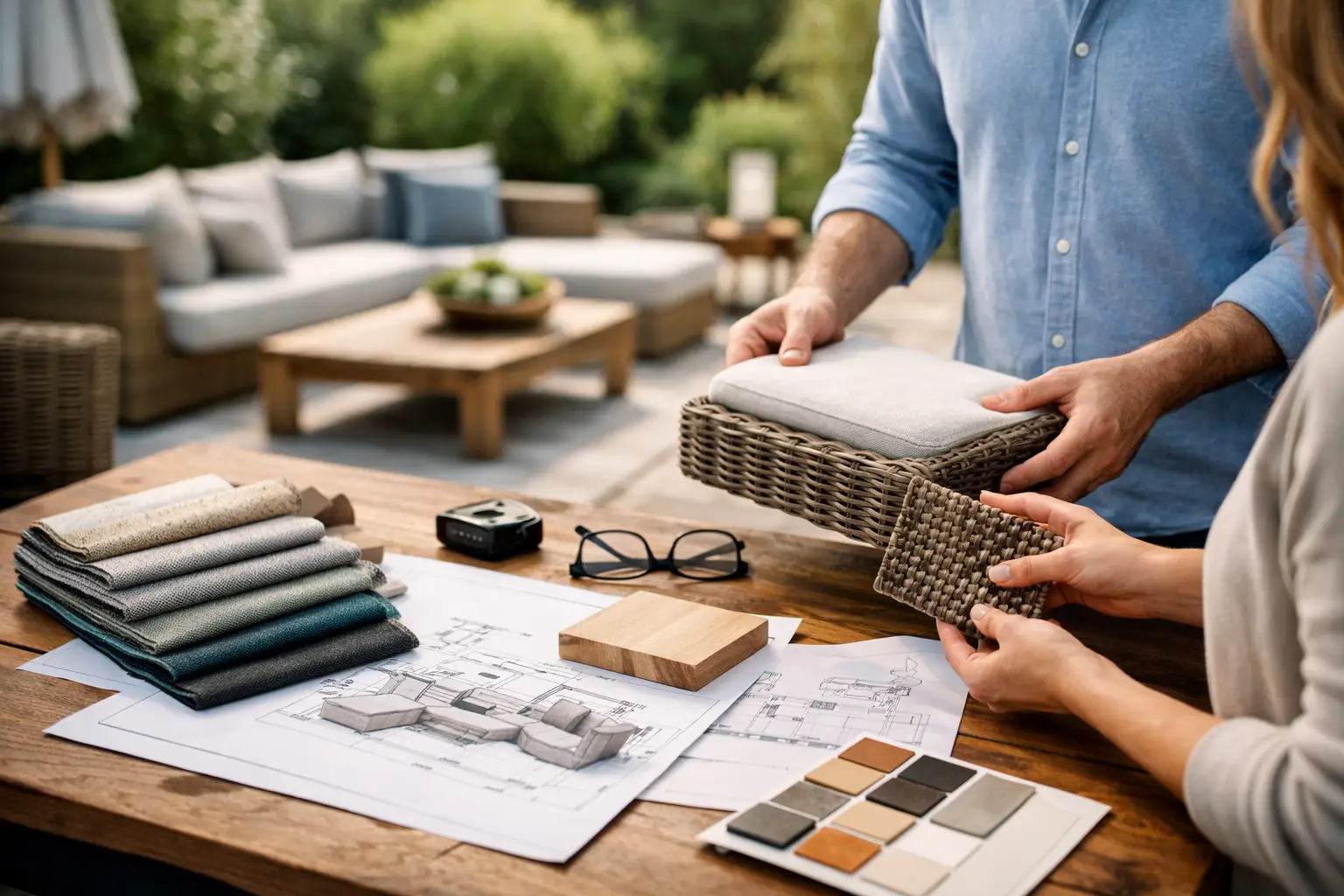
This is where 3D drawings and design consultation add real value. They help teams test proportions, layouts, and finish direction before production approvals begin. For multi-zone projects, visual coordination matters just as much as individual product quality. Lounge, dining, pool, and accessory categories should read as one environment, not a collection of isolated purchases.
The approval stage is where good projects protect themselves
An effective outdoor furniture customization process guide should place major weight on approvals. This is the control point between concept and factory execution.
Shop drawings, finish selections, dimensions, and material specifications all need sign-off. If a seat height changes, that should be documented. If a fabric is substituted due to lead time or performance requirements, it should be approved against a clear benchmark. If a woven detail or frame profile is custom-developed, the approval must go beyond a verbal green light.
Mock-ups are especially important for contract-grade work. A rendering can confirm direction, but a physical sample confirms reality. Buyers can evaluate comfort, scale, stitching quality, finish consistency, and material compatibility in actual light conditions. In hospitality and commercial projects, mock-up approvals reduce risk before volume production begins.
There is also a practical reason to slow down here. Late changes are expensive. Once production is scheduled, changes in fabric, frame finish, or dimensions can affect tooling, procurement, assembly planning, and shipping dates. Fast projects still need disciplined approval gates.
Material selection is a performance decision
Customization often gets framed as an aesthetic exercise. In outdoor projects, it is just as much a durability decision. Materials need to hold up to climate, use intensity, and maintenance routines.
Aluminum remains a strong choice for many large-scale outdoor specifications because it balances corrosion resistance, lighter weight, and design flexibility. Teak offers natural appeal and premium character, but it requires a clear maintenance understanding. Rope and woven elements can create visual softness and strong design identity, though they must be evaluated for wear patterns in high-use settings. Upholstery selection should consider not only color and hand feel, but also drying time, cleanability, and resistance to fading.
The same logic applies to tabletops, slings, foam, and protective coatings. A resort operator may prioritize quick-dry performance and easy replacement cycles. A luxury residential developer may accept more upkeep in exchange for a richer material expression. Neither approach is wrong. The right specification depends on the project model.
Experienced suppliers guide these decisions with samples, technical input, and clear trade-offs. That matters because value engineering is often part of the process. A project may need to preserve the design language while adjusting selected materials to keep the budget aligned. When done well, value engineering sharpens the specification. When done poorly, it creates visible compromises and future maintenance headaches.
Factory control changes the customization timeline
Not all suppliers manage custom work with the same level of control. If design, sourcing, production, and logistics are split across multiple parties, lead times become harder to predict and accountability becomes diffuse.
A vertically integrated manufacturing model gives project teams a stronger line of sight from approved concept to finished product. It supports better coordination across frame fabrication, finishing, upholstery, weaving, inspection, and packing. That matters even more when orders include broad category mixes such as lounge sets, dining collections, pool furniture, shade solutions, and accessories.
Scale matters too. A factory with meaningful capacity can handle repeatability across larger runs without treating custom work as a disruption. For developers, hospitality groups, and procurement teams furnishing multiple properties or large public-facing spaces, consistency is not a luxury. It is part of brand delivery.
This is one reason many buyers prefer a one-stop supplier model. Instead of sourcing every category from separate vendors, they can align specification, finish coordination, quantity planning, and delivery sequencing through a single project workflow. PNZ Space Global operates in that model, combining in-house design support with manufacturing depth and project fulfillment capacity.
The outdoor furniture customization process guide for delivery and installation
Production is not the finish line. Delivery planning should be built into the customization process from the beginning.
Outdoor furniture projects often involve site access limits, installation windows, staging constraints, and packaging requirements that affect how goods should be prepared. A rooftop lounge may require split deliveries and lift coordination. A hotel renovation may need white-glove delivery during restricted operating hours. A multi-villa development may need inventory separated by unit or zone.
These are not minor logistics details. They affect how products are labeled, packed, loaded, and scheduled. If the supplier is informed late, on-site handling becomes harder and project teams spend time solving preventable issues.
Quality control also extends into this stage. Finished goods should be checked against approved specifications before shipment, not after arrival. That includes finish consistency, count verification, assembly readiness, and packaging protection for long-distance or overseas transport. The farther the project travels, the more discipline this stage requires.
What buyers should ask before approving custom outdoor furniture
The strongest buyers ask operational questions early. Can the supplier provide 3D drawings or mock-ups? How are finish approvals documented? What are the realistic lead times for custom frames, fabrics, and mixed-category orders? How will replacements or add-on quantities be handled later? Can the same finish standard be maintained across phases or future sites?
They also ask about serviceability. A custom outdoor collection should not become impossible to maintain six months after installation. Replacement cushions, fabric continuity, hardware consistency, and care guidance all matter. This is especially true in hospitality and commercial settings, where furniture is part of ongoing operations rather than a one-time purchase.
The best customization process balances three things that often compete with one another: design freedom, production discipline, and delivery certainty. If one is ignored, the project usually pays for it somewhere else.
Custom outdoor furniture should make a space feel intentional, but for serious buyers, intention is only half the job. The other half is building a process that holds up under approvals, volume, and deadlines so the final installation arrives exactly as specified.