Bulk Outdoor Furniture Ordering Done Right
A rooftop opening date gets pushed back by two weeks, and suddenly every outdoor piece matters. Not just whether the furniture looks right, but whether it arrives in sequence, matches the approved finish, clears site access, and holds up under commercial use. That is the real challenge behind bulk outdoor furniture ordering. At scale, outdoor procurement is less about buying chairs and tables and more about controlling risk across design, production, logistics, and installation.
For developers, hospitality operators, procurement teams, and design firms, the margin for error is narrow. A small sample issue becomes a large site problem when multiplied across villas, pool decks, restaurant terraces, or multi-property rollouts. The suppliers that perform well in this space are not simply product vendors. They are operational partners with the capacity to manage volume without losing specification control.
What bulk outdoor furniture ordering actually requires
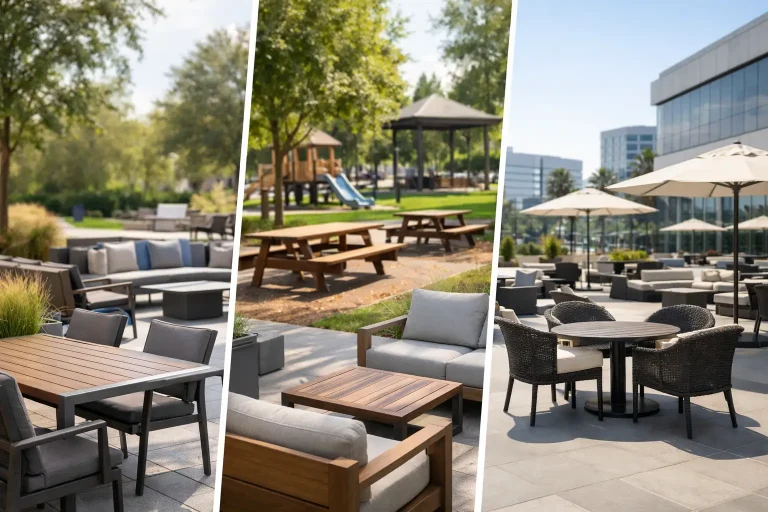
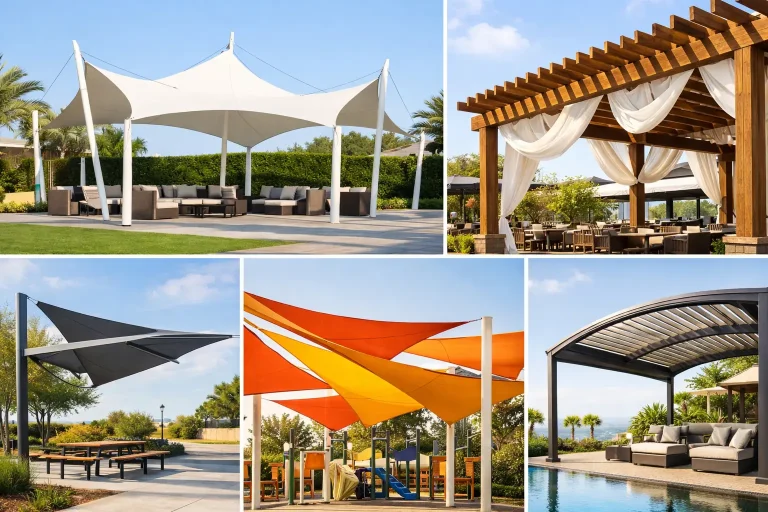
Large-volume outdoor furnishing projects usually look straightforward on paper. A lounge package for the pool, dining sets for the terrace, shade solutions for open-air seating, and accessories to complete the layout. In practice, every category introduces its own requirements around dimensions, material suitability, lead times, and coordination with site readiness.
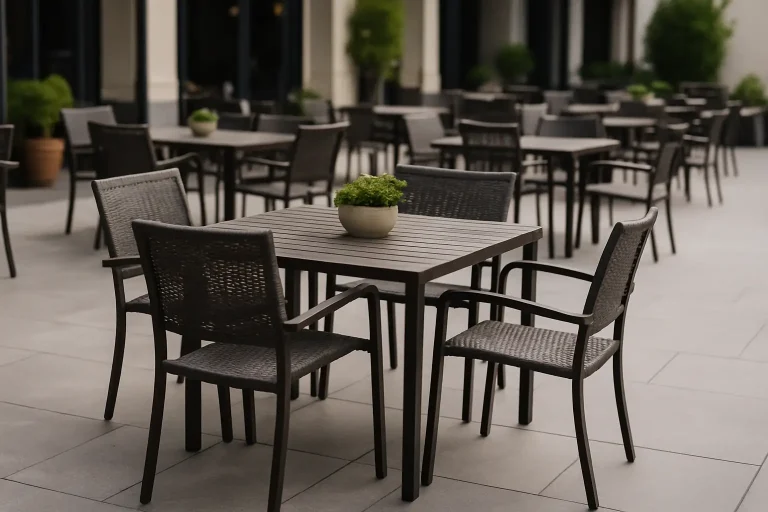
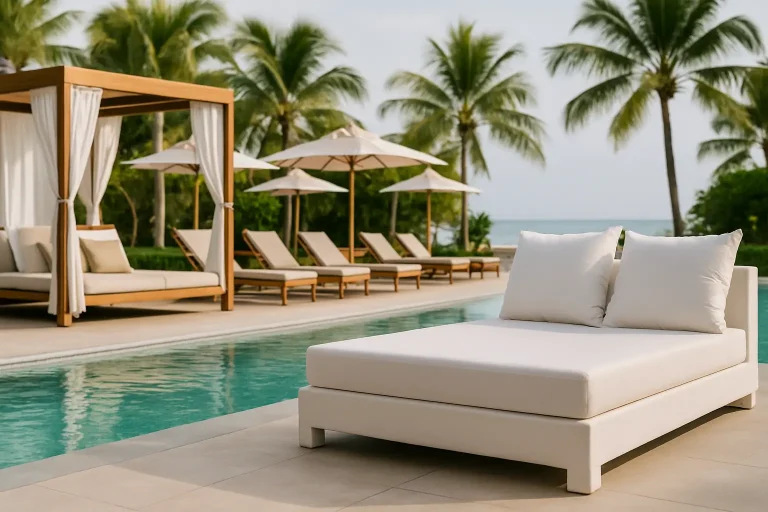
Lounge seating may need deeper cushions and a relaxed profile for hospitality use, but that decision affects foam specifications, fabric performance, packaging volume, and replacement planning. Dining collections need visual consistency across chairs, tables, and bar-height pieces while still meeting durability expectations for frequent turnover. Poolside furniture raises a different standard entirely, where sun exposure, moisture, and cleaning chemicals can shorten the life of the wrong material choice.
That is why experienced buyers approach ordering in phases, not as one large transaction. They validate product intent, approve finishes, confirm quantities by zone, and align delivery windows with construction and fit-out schedules. The more complex the project, the more valuable it is to work with a supplier that controls those moving parts under one roof.
Why supplier structure matters in bulk outdoor furniture ordering
When outdoor furniture is sourced from disconnected factories, trading companies, and freight coordinators, small delays tend to stack. One finish sample arrives late. One container misses the production sequence. One category is ready while another is still waiting on component confirmation. By the time the issue surfaces, the project team is managing exceptions instead of execution.
A vertically integrated supplier changes that equation. Design development, production planning, quality control, and logistics sit closer together, which improves response time and reduces handoff errors. It also gives the buyer a clearer line of accountability. If a finish adjustment is needed after mock-up review, the team handling the design intent is closer to the team running the manufacturing line.
For buyers ordering at scale, that structure is not just convenient. It affects schedule confidence. A 20,000-square-meter factory with modern machinery and skilled production teams offers a different level of throughput than a supplier that is assembling project orders through external vendors. Capacity matters, but so does control. You want a partner that can handle volume while keeping product standards consistent across every shipment.
Spec control is where projects are won or lost
Most bulk furniture problems start upstream. The approved image looks right, but the final delivered item differs in weave, frame tone, cushion density, or overall proportion. On a single order, that is frustrating. Across a hotel, resort, or residential development, it becomes expensive.
Strong spec control starts with precise documentation. Dimensions, material selections, finish references, fabric direction, packaging requirements, and intended application all need to be confirmed before production is locked. This is where 3D drawings, material swatches, and mock-up approvals do real work. They turn assumptions into approved details.
Design support is especially useful when the outdoor package spans several use cases. A property may need quiet villa terraces, high-traffic dining zones, shaded lounge areas, and poolside relaxation spaces that still feel visually connected. Buyers often need one supplier that can support those categories without forcing compromises on style or performance.
This is where a broad SKU base helps. A large catalog gives specifiers room to maintain design continuity while adjusting function by zone. Instead of piecing together separate vendors for dining, lounge, pool, and accessories, procurement can rationalize the package through one source and simplify approvals.
Materials should be chosen for use, not just appearance
Outdoor furniture is often approved in a showroom mindset and then judged in a site reality. Heat, UV exposure, chlorinated water, salty air, wind load, cleaning cycles, and guest traffic all test the product in different ways. Good procurement teams know that the right look is only half the decision.
For hospitality and commercial environments, material selection should follow use intensity. Powder-coated aluminum may suit many high-exposure applications because it balances strength, weight, and corrosion resistance. Synthetic wicker can work well when the fiber quality and frame construction are appropriate, but not every wicker product performs equally under heat and heavy use. Teak offers a premium natural finish, though it requires clear client alignment on maintenance expectations and weathering over time.
Cushions and textiles need the same discipline. Fabric performance, drainage, foam composition, and removable cover strategies all affect lifecycle cost. The cheapest cushion package rarely stays cheapest once replacement frequency is factored in. In bulk orders, that difference compounds quickly.
Logistics can protect the schedule or break it
Outdoor furniture procurement often gets treated as a procurement event when it is really a logistics program. Site sequencing matters. Access constraints matter. Storage conditions matter. A complete shipment arriving too early can be as disruptive as a late one if the project lacks protected storage or installation readiness.
The best ordering plans map delivery to site milestones. High-priority zones may need earlier release, while secondary areas can follow in later phases. For multi-site developers or hospitality groups, staggered delivery planning is often more efficient than a single consolidated drop. It reduces congestion, helps installation teams stay productive, and lowers the risk of onsite damage.
White-glove delivery becomes especially valuable at this stage. Not because it sounds premium, but because large orders create more chances for handling errors. Professional receiving, placement, assembly, and packaging removal shorten the path from container arrival to operational readiness. They also reduce the burden on site teams already managing trades, inspections, and final punch items.
How to evaluate a supplier before you place the order
Price will always matter, but bulk buyers know that line-item savings can disappear fast if the supplier lacks process discipline. The better question is whether the supplier can execute the full scope without creating downstream cost.
Start with category strength. Can the supplier cover lounge, dining, poolside, shade, and accessories with enough depth to support a coherent project? Then assess production capability. Ask how the order will move from approved specification into manufacturing, how quality checks are handled, and how timeline updates are communicated.
It is also worth testing consultative support early. A strong supplier should be able to help refine quantities by area, advise on material fit, and provide tools such as 3D drawings or mock-up approvals to reduce uncertainty before production. That level of support is not an add-on. It is part of risk management.
For many B2B buyers, this is where PNZ Space Global fits naturally. The value is not just in catalog breadth or customization options. It is in combining design consultation, manufacturing control, and high-volume fulfillment in one procurement path.
The hidden cost of fragmented buying
There are cases where splitting categories across vendors makes sense, especially when a project calls for highly specialized statement pieces. But in most large outdoor programs, fragmented buying introduces avoidable friction. More suppliers mean more finish approvals, more lead-time variables, more shipping coordination, and more accountability gaps.
A single-source approach is rarely about convenience alone. It gives procurement teams cleaner communication, designers stronger visual continuity, and project managers fewer surprises. That matters even more for GCC and international projects where shipping windows, customs timing, and site dependencies can shift quickly.
The goal is not merely to place a large order. The goal is to place an order that arrives as specified, supports the design intent, installs efficiently, and performs under real use. That takes more than inventory. It takes a supplier built for project execution.
Bulk outdoor furniture ordering works when every stage is treated as part of the product – design validation, material selection, factory control, logistics planning, and final placement. If your next project carries real scale, the smartest buying decision may be the one that removes complexity before it shows up on site.