3D Render vs Physical Mockup: Which Wins?
A finish that looks perfect on screen can fall flat under poolside sun. A chair that feels substantial in a showroom can suddenly look too heavy on a rooftop plan. That is the real issue behind 3d render vs physical mockup – not which one is better in theory, but which one gives buyers, designers, and project teams enough certainty to move fast without costly revisions.
For commercial outdoor projects, approvals are rarely about aesthetics alone. Procurement teams need specification control. Designers need visual alignment. Developers need confidence that what was approved will work across timeline, budget, and site conditions. In that environment, renders and mockups serve different jobs. Treating them as interchangeable is where delays start.
3d render vs physical mockup: the real difference
A 3D render is a decision tool for visualization. It helps stakeholders see layout, proportion, material direction, and design intent before production is locked. It is especially useful when a project includes multiple furniture categories, custom dimensions, or several outdoor zones such as dining terraces, pool decks, and lounge areas.
A physical mockup is a validation tool. It proves what the product actually looks and feels like in the real world. That includes scale, comfort, frame weight, weave tension, finish tone, cushion density, and how materials read in daylight rather than on a calibrated screen.
The distinction matters because each method reduces a different kind of risk. Renders reduce planning risk. Physical mockups reduce execution risk.
If your team is still shaping the concept, comparing zoning options, or aligning on style direction, a render usually does more work in less time. If the design is approved and the concern shifts to comfort, finish accuracy, or final signoff for a large order, a mockup becomes much more valuable.
Where 3D renders create the most value
In large-scale furnishing programs, speed at the front end matters. A render can compress early-stage decision-making because it shows how collections, finishes, and layouts work together before anyone commits to tooling, sampling, or shipment space.
This is particularly useful in hospitality and multi-unit residential projects where one product choice affects dozens or hundreds of placements. A render can quickly answer practical questions. Does the dining chair sit at the correct visual weight for the table? Does the sun lounger spacing allow proper circulation? Does a dark frame disappear against the flooring, or does it anchor the space the way the design team intended?
Renders are also strong when customization is involved. If a buyer is selecting among multiple frame colors, rope patterns, teak details, and upholstery options, digital visualization helps narrow the field before producing a physical sample. That saves time and prevents the approval process from turning into an expensive trial-and-error cycle.
For procurement teams, the benefit is clarity. A strong rendering package can align stakeholders across design, operations, and ownership early enough to avoid last-minute disagreement. That matters even more when projects are moving across borders, multiple decision-makers are reviewing remotely, or site readiness and delivery windows are tightly managed.
Still, renders have limits. They can suggest texture, but they do not reproduce touch. They can represent color, but screen settings and lighting conditions vary. They can show scale in context, but they do not let someone sit in the chair, test the arm height, or feel whether the cushion support matches the intended use.
Where physical mockups matter more
A physical mockup becomes critical when the cost of getting the final product wrong is high. That usually means custom product, large order quantities, brand-sensitive hospitality projects, or installations where guest experience is directly tied to comfort and finish quality.
In outdoor furniture, material behavior is not a minor detail. Powder-coated aluminum, natural teak, synthetic wicker, outdoor rope, and performance fabrics all read differently in person. The same taupe cushion can look warm and premium in one light condition and flat in another. The same frame profile that appears refined in a render can feel too light, too bulky, or simply not commercial enough when viewed on site.
Mockups also reveal practical issues that are hard to judge digitally. Seat depth may be slightly too relaxed for restaurant turnover. Table edge thickness may interfere with the intended chair arm clearance. A lounger may meet the drawing dimensions but still feel awkward when adjusted or moved by staff.
This is why experienced project teams use mockups to confirm the last 10 percent of the decision – the part that often causes 90 percent of the complaint if ignored.
For high-volume buyers, that validation is worth the effort. Approving one correct mockup is far less expensive than correcting a container-scale production run after the fact.
The trade-off is usually time, cost, and confidence
When clients ask whether they should choose a render or a mockup, the honest answer is that it depends on what kind of certainty they need and when they need it.
A render is faster, more flexible, and easier to revise. It supports concept development, budget conversations, and stakeholder alignment without adding shipping, sample production, or site review logistics. If the project is still fluid, a render keeps decisions moving.
A physical mockup takes more time and costs more to produce, but it gives a level of confidence that no screen can fully replace. It is harder to argue with a product that can be touched, tested, and reviewed in real conditions.
The wrong move is using a render to answer a question that requires physical proof, or insisting on a mockup before the design direction is stable enough to justify one.
How smart project teams use both
The strongest approval workflows do not frame 3d render vs physical mockup as a binary choice. They sequence both tools to reduce risk at the right stage.
The typical pattern is straightforward. First, use 3D drawings and renders to confirm layout, style direction, category mix, and broad material selection. This stage is where teams solve planning issues, compare options, and get early stakeholder buy-in.
Then move to a physical mockup once the product specification is narrow enough that real-world validation matters more than design exploration. At that point, the mockup is not replacing the render. It is confirming that the approved concept will perform as expected in form, feel, and finish.
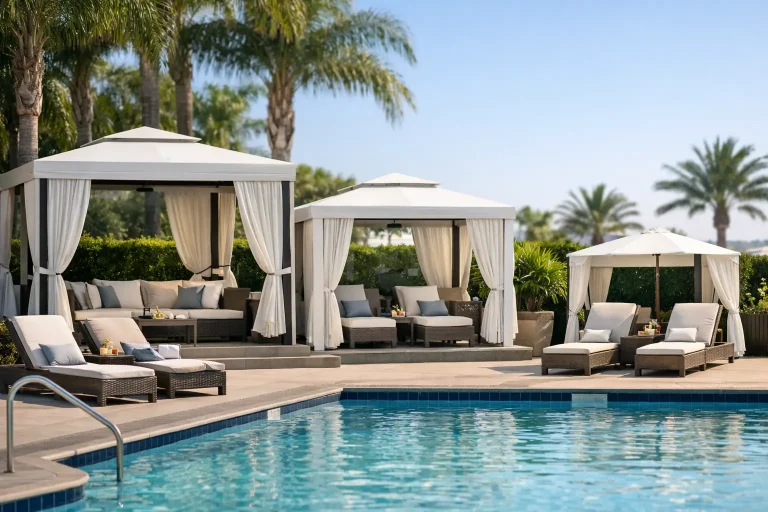
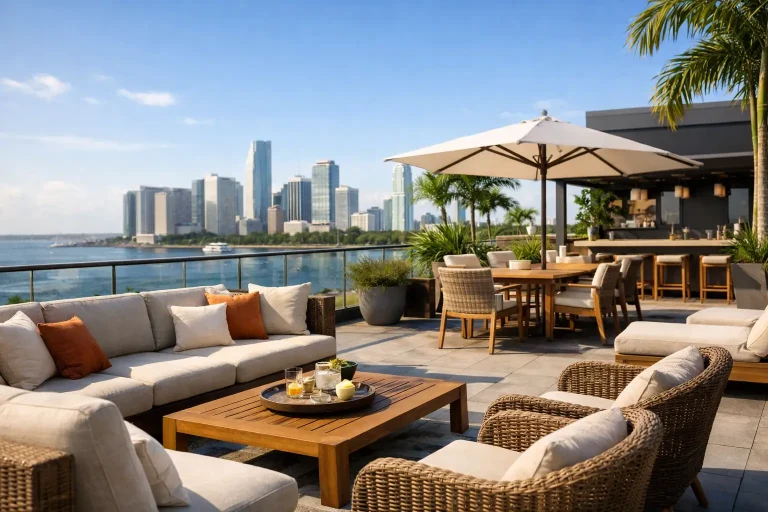
For example, a resort furnishing package may begin with rendered poolside zones, restaurant terraces, and villa patios to establish a cohesive design language across the property. Once the ownership team signs off on the direction, selected hero pieces or custom seating can move into mockup approval. That protects both the design intent and the production outcome.
This staged approach is especially effective when working with a vertically integrated supplier that can support design, sample review, manufacturing, and delivery under one process. It shortens feedback loops and keeps accountability clear.
When to choose one over the other
If your project is in early design, a render should come first. If you are coordinating multiple outdoor categories, testing layouts, or trying to secure stakeholder approval quickly, digital visualization gives you more range with less friction.
If your project is entering final approval, a physical mockup deserves priority when product comfort, finish fidelity, material quality, or brand presentation are under scrutiny. That is often the case for hotel terraces, branded F&B environments, luxury residential developments, and any custom collection with large-unit exposure.
If the budget is tight, the answer is not always to skip the mockup. It may be smarter to mock up only the highest-risk pieces – the custom sectional, the signature dining chair, or the lounger that will be repeated across the site. That focused investment can protect the wider order.
And if the schedule is compressed, relying only on a mockup may slow the process unnecessarily. In many cases, the render keeps the project moving while the physical sample is reserved for final checks where it adds the most value.
What experienced buyers should ask before approving
Before deciding between a render and a mockup, the better question is this: what could still go wrong if we approve now?
If the risk is visual alignment, category mix, spacing, or overall design cohesion, a render likely answers it. If the risk is comfort, material authenticity, perceived quality, or site-specific performance, a mockup is the safer tool.
Teams managing procurement at scale should also consider order volume, customization level, stakeholder count, and replacement cost. The larger and more customized the order, the less room there is for assumption.
That is why serious suppliers build approval support into the process rather than treating it as an add-on. At PNZ Space Global, 3D drawings, mock-up approvals, and design consultation are part of how complex outdoor projects move from concept to confident execution.
The best approval method is the one that removes doubt before production starts. When the stakes are high, clarity is not a luxury. It is part of delivering on time, on spec, and without expensive surprises.