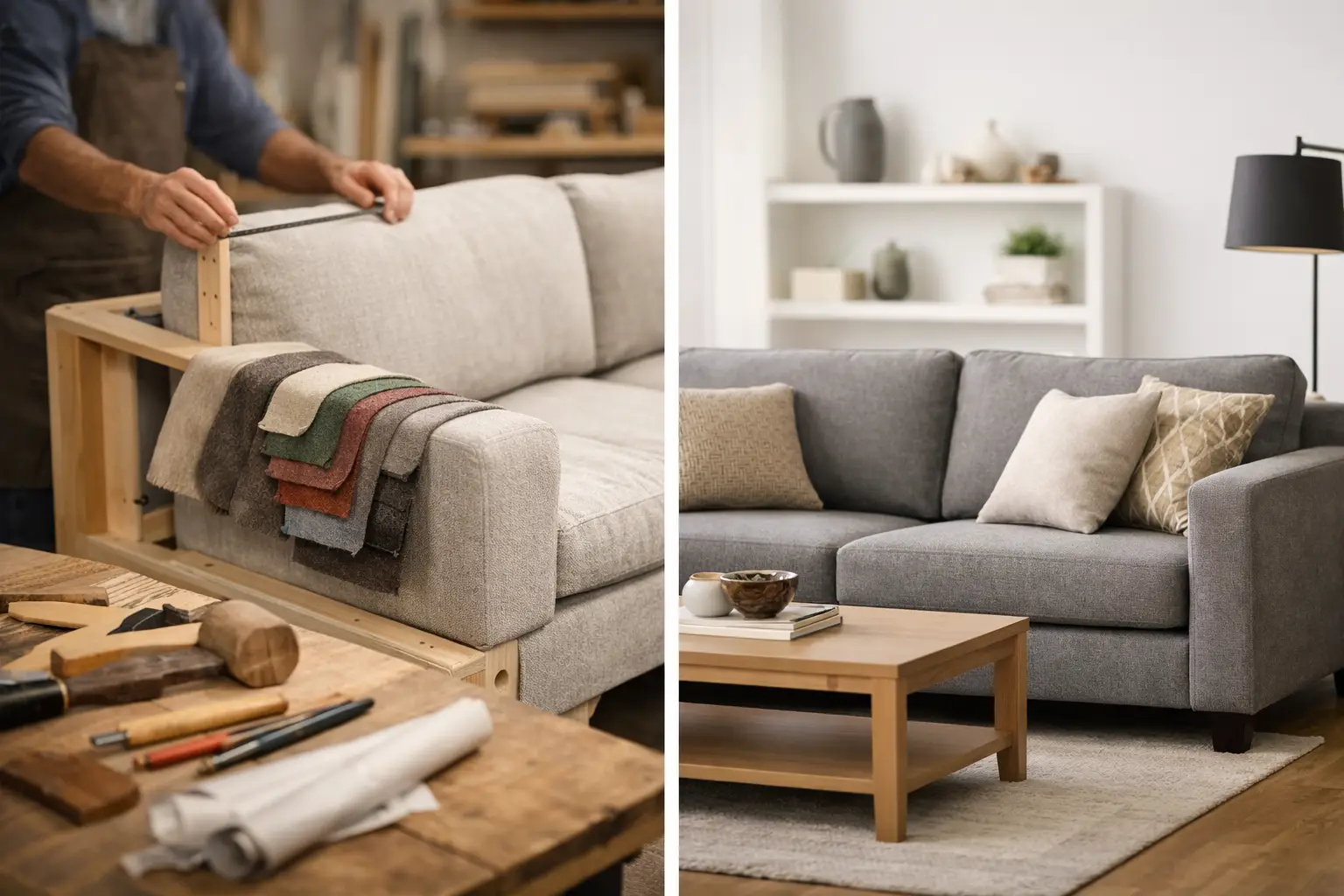
Custom Furniture vs Ready Made: What Fits?
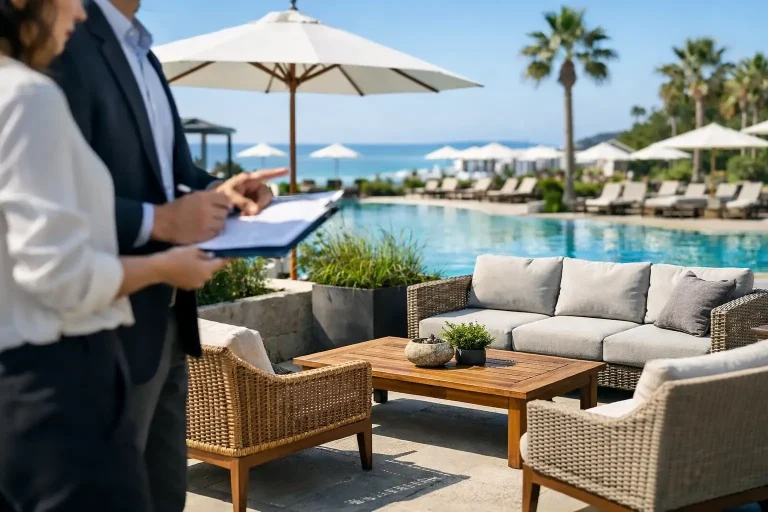
A pool deck launch gets delayed by three weeks, not because the build ran late, but because the furniture decision did. That is usually where the real custom furniture vs ready made conversation starts – not with style preference, but with project pressure, lead times, approval cycles, and the cost of getting the specification wrong.
For residential buyers, the choice can feel personal. For developers, hospitality operators, architects, and procurement teams, it is operational. Outdoor furniture is rarely just furniture. It affects opening dates, brand presentation, guest flow, maintenance planning, storage, replacement strategy, and budget control across a full site or even multiple sites. The right answer is not always custom, and it is not always ready made. It depends on what the project needs to accomplish.
Custom furniture vs ready made: the real decision points
At a surface level, custom furniture offers originality while ready made offers speed. That framing is too simple for commercial outdoor projects.
A more useful way to evaluate the decision is to look at five variables: timeline, specification control, quantity, budget structure, and replacement risk. If your team needs exact dimensions, brand-specific finishes, coordinated materials across lounge, dining, and pool areas, or furniture that solves a difficult site condition, custom starts to make sense quickly. If the project needs proven models, faster approvals, and straightforward replenishment, ready made often delivers more value.
The biggest mistake is treating custom as premium and ready made as compromise. In practice, both can be strategic choices. A rooftop restaurant may need custom banquette sizing to maximize seat count, while using ready made dining chairs to simplify maintenance and future reorders. A resort may specify custom sunbeds for signature pool zones, then use catalog side tables and accessories across secondary areas to control budget.
Where custom furniture wins
Custom furniture is strongest when the project cannot afford approximation. That usually happens in hospitality, branded environments, and high-spec residential developments where furniture must align with architecture, circulation, or a defined guest experience.
Dimension control is often the first driver. Outdoor spaces rarely behave like showroom floors. Columns interrupt layouts, terraces narrow unexpectedly, and poolside footprints need exact spacing for service movement and guest comfort. Custom furniture lets teams build to the site rather than forcing the site to accept standard dimensions.
Material and finish flexibility matter just as much. In the GCC and other demanding climates, outdoor performance is not a minor detail. UV exposure, humidity, salt air, heat retention, and cleaning frequency all affect product life. Custom programs give specifiers more control over frame materials, cushion construction, fabric grades, weave options, powder coat colors, and tabletop surfaces. That control is valuable when a project needs durability without losing design intent.
Custom is also a branding tool. Hotels, resorts, and premium F&B concepts often want a look that guests cannot immediately recognize elsewhere. Signature silhouettes, coordinated upholstery palettes, and tailored details can help create that distinction. For operators competing on experience, that matters.
But custom comes with obligations. Approval cycles are more detailed. Teams need design alignment, drawings, finish signoff, and in many cases mock-up review. Lead times are usually longer, especially if the brief is still evolving. There is also less room for late-stage indecision. A custom order rewards clarity and punishes slow approvals.
Where ready made wins
Ready made furniture performs best when speed, proven results, and repeatability matter more than originality. That is not a lesser outcome. For many procurement teams, it is the smarter one.
Catalog products reduce complexity. Dimensions are established, finishes are pre-selected, and performance expectations are easier to verify because the products already exist in a defined form. For time-sensitive projects, this can compress the path from specification to delivery.
Ready made also works well when scale is the priority. Multi-unit residential developments, serviced apartments, clubhouses, restaurants, and large terrace rollouts often benefit from furniture that can be selected across categories quickly. If a supplier has strong SKU depth across lounge seating, dining, poolside furniture, shade solutions, and accessories, teams can furnish complete outdoor environments without restarting the design process for every zone.
Replacement planning is another advantage. High-traffic sites need to think beyond opening day. Chairs get damaged, cushions wear, and expansion phases happen. Ready made collections make reordering simpler and more predictable, assuming the supplier has continuity and operational control.
The trade-off is obvious. Ready made may not solve every dimensional challenge, and it may offer less finish flexibility than a custom program. If the site has unusual spatial constraints or the brand requires a fully differentiated look, catalog options may need compromise.
Cost is not just price
In custom furniture vs ready made decisions, teams often compare unit prices too early. That can distort the real cost picture.
Custom furniture may carry a higher upfront price, but it can lower other project costs if it improves layout efficiency, supports brand value, or reduces the need for field modifications. A custom dining setup that fits a terrace precisely may increase seat count. A tailored lounge configuration may improve traffic flow and guest comfort. A better material specification may reduce replacement frequency over time.
Ready made furniture often lowers procurement costs at the start because development work is already complete. It may also reduce internal labor by shortening approvals and simplifying selection. For projects under deadline pressure, the value of time matters. Delays cost money, especially in hospitality openings and phased handovers.
The most disciplined buyers look at total project cost, not just product cost. That includes design hours, approval risk, shipping coordination, installation timing, replacement planning, and operational lifespan.
How to choose in real project conditions
The most effective procurement strategies rarely sit at one extreme. They combine custom and ready made where each performs best.
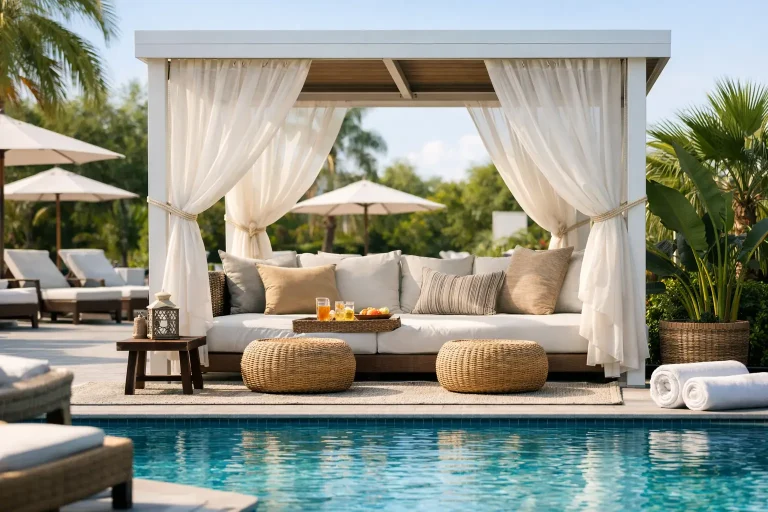
Use custom when the furniture affects architecture, branding, or space efficiency in a meaningful way. This is common for built-to-fit sectionals, daybeds, oversized dining tables, banquettes, and statement pieces in high-visibility zones. Use ready made where standardization improves speed and future replenishment, such as dining chairs, side tables, loungers, umbrellas, or accessory layers across repeated site areas.
This blended approach is especially effective for large outdoor projects. It protects design intent where it matters most while keeping the wider furnishing package easier to execute.
Supplier capability is what determines whether that strategy works. A vendor that only sells catalog products may not support design adjustments when the site gets complicated. A vendor focused only on custom may slow down projects that need fast category coverage and repeatable SKUs. The advantage comes from working with a partner that can handle both under one operational structure.
That is where vertical integration changes the equation. When design, manufacturing, approvals, and logistics are managed in one system, buyers gain more control over quality, timelines, and communication. Instead of splitting responsibility across multiple parties, teams can move from concept through 3D drawings, mock-up review, production, and white-glove delivery with fewer friction points.
Questions procurement teams should ask before deciding
Before committing to either route, ask a few hard questions. Does this project need exact dimensions, or just the right style category? Are approvals already clear, or is the design still moving? Is this a one-site install or part of a larger rollout? Will the operator need easy replenishment six months from now? Is the outdoor environment standard, or does climate exposure demand upgraded materials and construction?
The answers usually point in the right direction quickly. If the project needs speed, consistency, and lower complexity, ready made is often the practical answer. If it needs specification control, design distinction, or a better fit to the site, custom earns its place.
For many commercial outdoor environments, the smartest path is not choosing one side of custom furniture vs ready made. It is knowing where each creates the most value and building the package accordingly.
When furniture decisions are tied to opening dates, guest experience, and long-term operating performance, the strongest results come from a supplier that understands both design intent and execution reality. PNZ Space Global works in that space every day – supporting buyers with broad outdoor product coverage, custom development capability, and the manufacturing depth to deliver at project scale. The best choice is the one that keeps your specification sharp, your timeline protected, and your site ready when it needs to be.