Can Outdoor Furniture Be Customized?
A rooftop lounge rarely fails because the concept was weak. More often, it fails because the furniture arrives in the wrong finish, the sectional does not fit the planters, the dining chairs are too wide for the table spacing, or the fabric cannot handle the climate. That is why a common procurement question is simple and practical: can outdoor furniture be customized? In most contract and hospitality settings, the answer is yes – but the real issue is how far customization can go without creating delays, quality risks, or cost overruns.
Can outdoor furniture be customized for real projects?
Yes, outdoor furniture can be customized across form, finish, material, scale, and project packaging. For commercial and residential developments alike, customization is often less about novelty and more about fit. Designers need a product that aligns with brand standards. Developers need repeatability across multiple units or sites. Hospitality teams need pieces that meet both aesthetic and operational requirements.
The strongest customization programs are built around controlled flexibility. That means changing what matters most – frame finish, rope color, cushion fabric, tabletop surface, dimensions, or configuration – while keeping the engineering, durability standards, and production workflow consistent. This is where a vertically integrated supplier has a clear advantage. When design, manufacturing, and fulfillment are managed under one roof, custom requests are easier to validate, price, sample, and deliver on time.
What parts of outdoor furniture are usually customizable?
Customization can range from simple finish selections to fully project-specific development. The right option depends on timeline, budget, quantity, and installation environment.
Materials and finishes
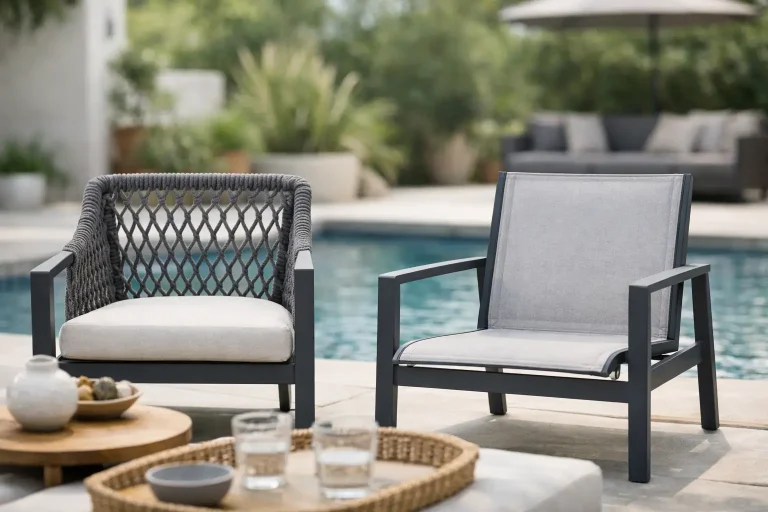
This is the most common level of customization and often the most valuable. Powder-coated aluminum frames can be matched to a project palette. Teak tones can be selected to align with surrounding decking. Wicker, rope, and sling materials can be adjusted to suit a softer resort look or a more architectural commercial setting.
These choices matter because outdoor environments are unforgiving. A finish that works in a shaded courtyard may not perform the same way on a high-exposure pool deck. Material customization is not only a design decision – it is a performance decision tied to UV resistance, corrosion exposure, cleaning requirements, and lifecycle cost.
Cushion fabrics and comfort profile
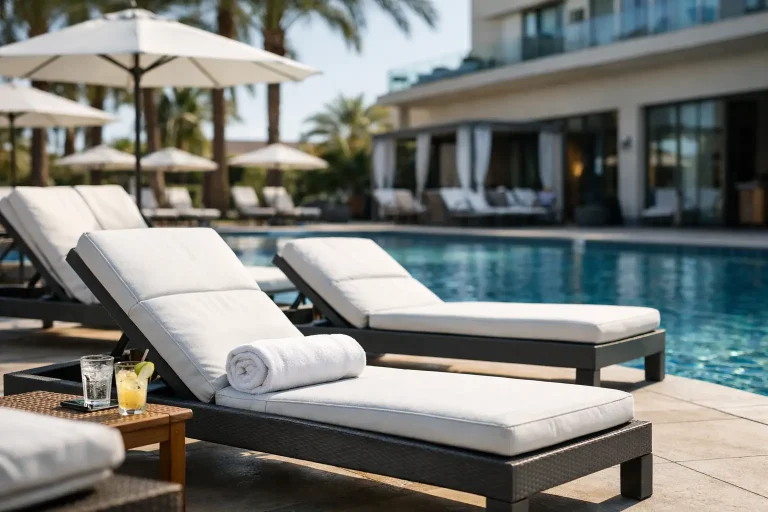
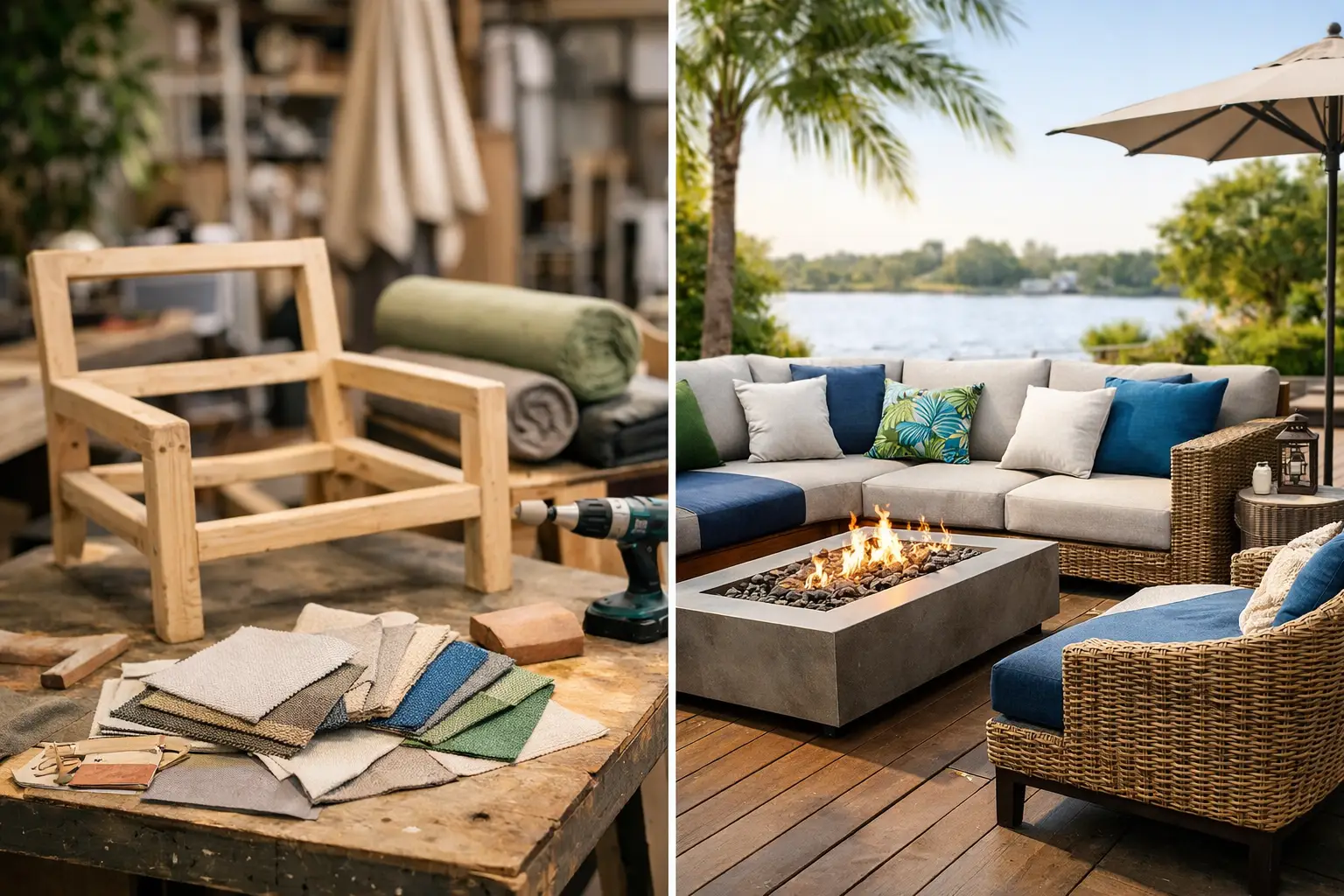
For lounges, dining seating, and poolside pieces, cushions are one of the easiest ways to tailor a collection. Fabric color, texture, piping, foam density, and quick-dry construction can all be adjusted depending on the application.
In hospitality, this is where branding often shows up most clearly. A neutral frame can serve many properties, while cushions carry the visual identity. The trade-off is maintenance. Light fabrics may look refined in staged imagery, but darker or patterned performance textiles often hold up better in high-turn environments.
Dimensions and proportions
This is where customization becomes strategic. Standard furniture dimensions do not always work for compact terraces, oversized villa patios, restaurant seating plans, or rooftop amenity decks with fixed circulation paths.
Adjusting width, depth, seat height, table diameter, or modular sectional length can improve layout efficiency and guest comfort at the same time. For procurement teams, dimensional control also reduces installation surprises. A customized footprint can mean the difference between a clean furniture plan and a site-level compromise.
Modular layouts and project-specific configurations
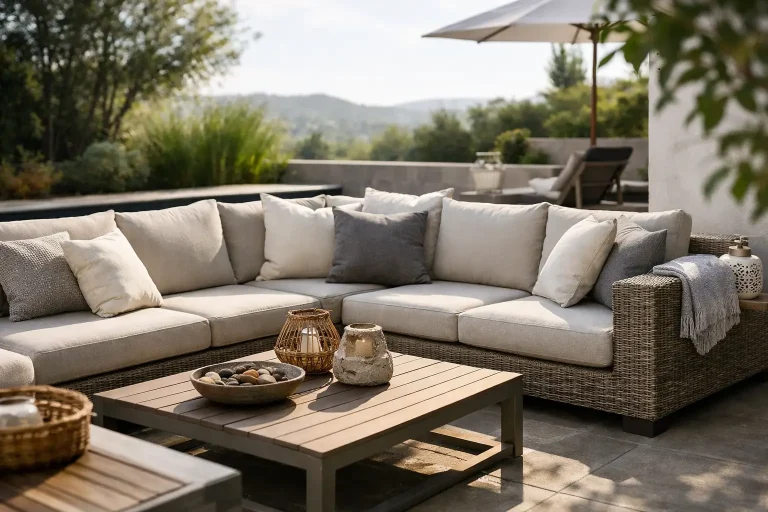
Many outdoor seating systems are designed to be reconfigured. That gives designers room to create custom arrangements without starting from zero. A modular sofa can be adapted to fit a long terrace edge, wrap around a fire feature, or create smaller social zones for hospitality use.
This approach is often smarter than commissioning a fully bespoke frame. It keeps production more predictable while still allowing the end result to feel tailored to the site.
When is customization worth it?
Customization is worth pursuing when standard catalog pieces create friction. If the project requires exact brand alignment, non-standard dimensions, specific material performance, or a consistent look across multiple spaces, custom options usually pay for themselves in reduced compromise.
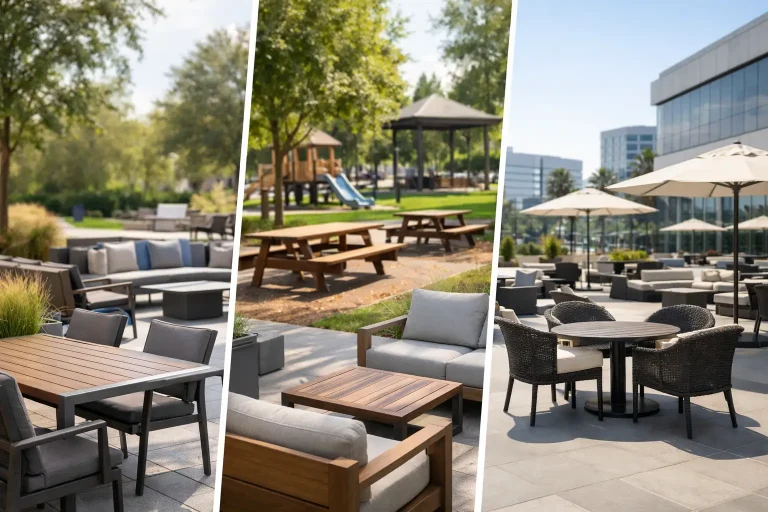
For large orders, the value is even clearer. A developer furnishing multiple villas, a hotel operator planning a pool and dining program, or a procurement team managing a multi-site rollout benefits from controlled standardization with selective customization. That balance helps preserve both design intent and operational efficiency.
Where buyers get into trouble is assuming every custom request is worth the lead time. A fully bespoke piece may be justified for a signature hospitality area, but not for every secondary terrace or casual dining zone. Good project planning means deciding where customization drives real impact and where catalog standardization keeps the program moving.
The trade-offs buyers should evaluate
Custom outdoor furniture offers control, but it also requires discipline. Every change affects sampling, approvals, production timing, and cost structure.
Lead time is the first consideration. Finish swaps and fabric selections are typically manageable. Structural changes, new molds, or unique frame engineering take longer and demand more approvals. If the project is already under schedule pressure, a lighter customization route is often the better decision.
Minimum order quantities also matter. Some custom materials and dimensions only make sense at scale. For a single residence, buyers may have fewer options than a hospitality group or commercial developer placing volume orders. The key is to match the customization level to the purchasing volume.
There is also the issue of consistency. The more variables introduced, the more important quality control becomes. This is why factory oversight, mock-up approvals, and technical drawings are not administrative extras. They are part of risk management. In a project setting, clarity up front is what protects the outcome later.
How the customization process should work
A reliable customization process is structured, not improvised. It usually starts with the product category and application. Lounge seating, dining, pool furniture, and shade products all have different technical demands, so the customization conversation should begin with use case, not just appearance.
From there, drawings and specifications need to confirm dimensions, materials, finish selections, and any performance requirements. For larger projects, 3D visuals can help stakeholders validate scale and layout before production starts. Material swatches and mock-up approvals then reduce ambiguity. This step is especially useful when several teams are involved, from design consultants to procurement leads to ownership groups.
Once approvals are locked, production planning becomes much more accurate. This is where an integrated manufacturing model matters. A supplier with in-house control over design development, fabrication, and logistics can move from concept to execution with fewer handoff risks. For buyers managing multiple deadlines, that operational control is often more important than the customization offer itself.
Can outdoor furniture be customized without sacrificing durability?
It can, provided the customization respects the realities of outdoor use. The mistake is treating outdoor furniture like indoor case goods with weather-resistant upholstery added at the end. Real outdoor performance depends on engineering choices from the start.
Frames must suit the environment, whether that means powder-coated aluminum for corrosion resistance or carefully selected teak for a natural finish. Cushions need outdoor-grade foam and fabrics that can handle sun, moisture, and repeated cleaning. Table surfaces should be chosen based on heat, scratching, and maintenance expectations. If a custom request undermines any of those basics, the result may look right on delivery and fail six months later.
The better approach is to customize within proven material systems. That allows a project to get the right visual identity and dimensional fit without compromising the product’s service life.
Why B2B buyers should ask more than design questions
For trade buyers, customization is not just about whether a chair can come in another color. It is about whether the supplier can support the project from specification to installation with consistency. Can they provide technical drawings? Can they manage approval cycles? Can they support mock sets? Can they deliver volume on schedule across one site or several?
That is where procurement decisions become more strategic. A supplier that offers many custom options but lacks manufacturing control can create downstream risk. A partner with design support, factory capacity, and white-glove delivery brings a different level of confidence to the table. PNZ Space operates in that lane, combining customization flexibility with the production depth and project support that larger outdoor programs require.
For most serious projects, the best answer to can outdoor furniture be customized is not just yes. It is yes, when the customization is backed by technical validation, production discipline, and a supplier built to deliver at scale. If the furniture needs to fit the space, the brand, and the schedule all at once, that is the standard worth holding.