Outdoor Sectional Sofa Durability Review
A sectional can look specification-ready in a showroom and still fail fast on a rooftop, pool deck, or exposed terrace. That is why an outdoor sectional sofa durability review should start with the conditions it will face, not the silhouette it presents. For procurement teams, designers, and hospitality operators, durability is less about marketing claims and more about how frame construction, joinery, finish systems, upholstery, and service support perform under sustained use.
What an outdoor sectional sofa durability review should actually measure
The first mistake buyers make is treating all-weather furniture as a single standard. It is not. A sectional installed in a shaded residential patio has a very different stress profile than one specified for a beachfront restaurant, a high-traffic hotel lounge, or a villa rooftop exposed to full afternoon sun. The right review framework looks at UV exposure, moisture cycles, airborne salt, cleaning frequency, movement between layouts, and how many users the seating will support every day.
Durability also has to be judged as a system. A strong aluminum frame can be undermined by weak welds. Premium fabric can be let down by low-density foam. Attractive woven detailing may degrade early if the fiber quality, tensioning, or attachment method is inconsistent. Buyers sourcing at scale need to evaluate the full build, because field failures rarely come from one obvious issue alone.
Frame performance decides the lifespan
If the frame is weak, the rest of the sectional becomes a maintenance plan. For most commercial and high-end residential applications, powder-coated aluminum remains the most dependable choice because it balances corrosion resistance, manageable weight, and layout flexibility. It is particularly useful for modular sectionals that need to be repositioned across projects, events, or seasonal operations.
That said, not all aluminum performs equally. Gauge thickness matters. Weld consistency matters. So does pretreatment before powder coating. A thin frame with inconsistent welds may look clean at delivery but start flexing under repetitive use. Once movement develops at connection points, cushions stop sitting evenly, woven elements loosen, and the product begins to age visually well before its actual replacement cycle.
Steel can work in certain covered settings, but in humid or coastal environments it creates more risk unless the finish system is exceptionally well controlled. Teak and other hardwoods can perform well too, especially for design-driven settings, but they require a different maintenance expectation. They weather, move, and patinate naturally. For buyers who want lower intervention and repeatable performance across multiple sites, aluminum is usually the safer specification.
Why joinery and modular connections matter
A sectional is only as stable as the way each unit locks together. This is often overlooked in product reviews because the eye goes to the arm profile, weave pattern, or cushion shape. In operation, however, poor connectors create drift, separation, and uneven seating lines. That is more than a cosmetic problem. In hospitality settings, it affects guest experience and increases maintenance calls.
Look closely at interlocking hardware, bracket strength, and how the modules behave after repeated movement. If the configuration shifts every time staff clean the terrace, the sectional is not truly durable for commercial use.
Wicker, rope, or exposed metal – the finish layer needs scrutiny
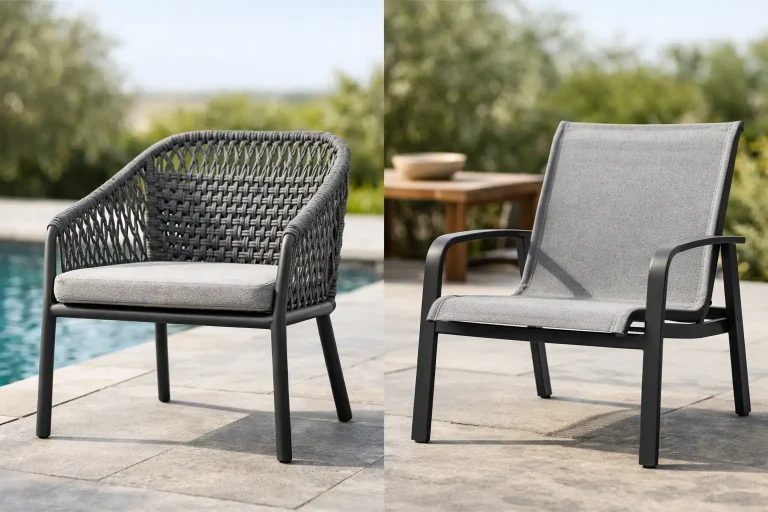
Many outdoor sectionals use synthetic wicker, braided rope, or exposed powder-coated frames to achieve a residential or resort aesthetic. These materials can perform very well, but only when specified correctly.
Synthetic wicker should be UV-stabilized, colorfast, and consistently woven over a stable frame. Cheap resin strands become brittle, flatten, or crack under heat. Better wicker retains flexibility and resists fading longer, especially in intense sun. The weave tension also matters. If the pattern loosens early, the sectional starts looking tired even if the frame remains structurally sound.
Rope detailing has become popular because it softens the profile and gives sectionals a more tailored look. The trade-off is that rope quality varies widely. High-performance outdoor rope resists mildew, fraying, and color loss. Lower-grade rope can absorb moisture, sag, or break down faster in high-traffic environments. For projects where appearance retention is critical, rope should be reviewed with the same seriousness as fabric.
Exposed metal frames with a powder-coated finish can be highly durable, but the finish system must be applied correctly. Surface prep, coating thickness, cure quality, and edge coverage all affect long-term performance. Chipping at corners and welds usually signals poor process control, not bad luck.
Cushions are where most durability claims fall apart
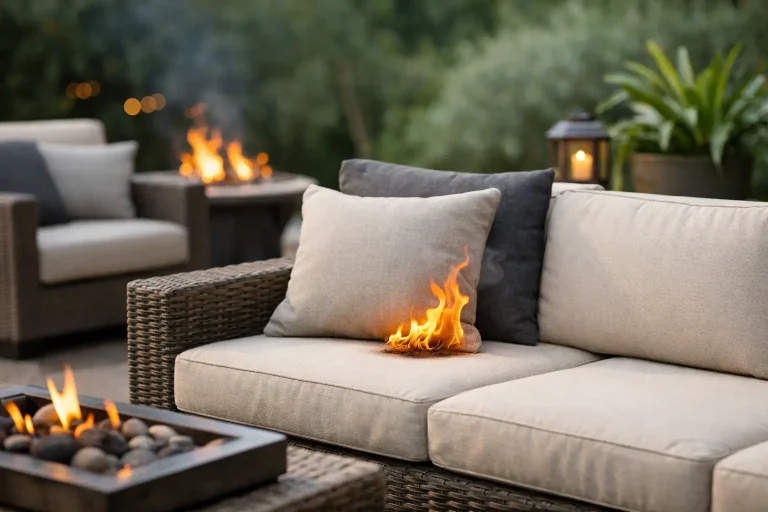
A sectional may have a contract-grade frame and still disappoint because the cushions flatten, hold water, or fade unevenly. In actual use, cushions take the most abuse. They are sat on, leaned against, moved, stacked, cleaned, and exposed to sunscreen, food service, and weather shifts.
Foam density is one of the biggest indicators of long-term comfort retention. Low-density foam loses shape quickly, especially in commercial settings. Higher-density constructions cost more, but they hold their profile better and reduce the tired, collapsed look that makes even premium furniture seem old.
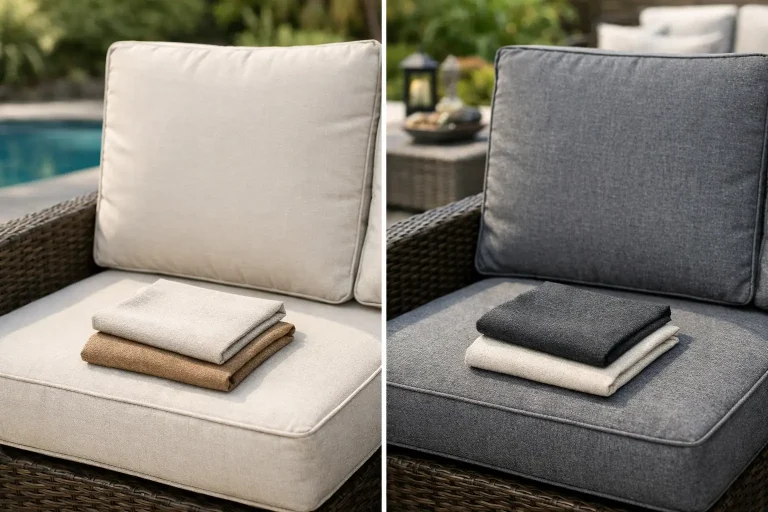
Drainage and dry time are equally important. Outdoor cushions should not trap water in a way that extends downtime after rain or cleaning. Quick-dry foam and breathable cushion construction improve turnaround, which matters for hotels, restaurants, and shared amenity spaces. Fabric choice then completes the equation. Solution-dyed acrylic and other proven outdoor textiles generally outperform lower-grade polyester in UV resistance and color stability.
Fabric durability is not just about fade resistance
Many buyers ask whether the fabric will fade, which is valid, but abrasion resistance, cleanability, and seam construction matter just as much. A beautiful neutral fabric that stains easily or pills under frequent use is not durable in a practical sense. Zippers, piping, stitching, and removable covers should all be reviewed, especially for operations that need fast cleaning and periodic replacement.
For large projects, material swatches and mock-up approval are not extras. They are risk control. Testing hand feel, dry time, cleanability, and visual stability before full rollout can prevent expensive sitewide issues later.
Weather exposure changes the right specification
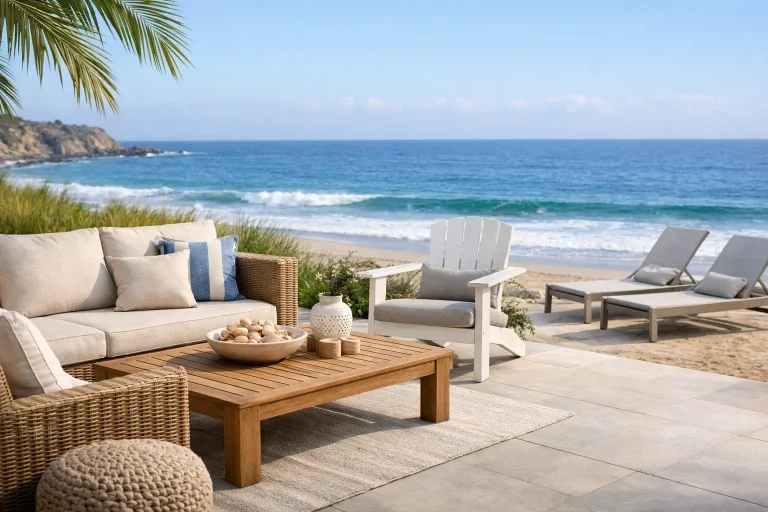
A useful outdoor sectional sofa durability review should never give one universal winner because site conditions change the answer. In dry, high-UV climates, fade resistance and heat stability become primary concerns. In coastal zones, corrosion protection moves to the top of the list. Around pools, constant moisture, chemical exposure, and frequent cleaning put extra pressure on fabrics, finishes, and cushion interiors.
For rooftop lounges, wind and module weight also matter. A very lightweight sectional may be easy to install and reconfigure, but it can become problematic in exposed elevations unless properly planned. Heavier builds often feel more substantial, but they also affect logistics, installation timelines, and floor loading considerations.
This is why serious buyers evaluate the furniture in the context of the whole project, not as an isolated product. The best-performing sectional is the one matched correctly to the environment, maintenance routine, and expected user volume.
Durability at scale depends on manufacturing control
For single-item retail purchases, buyers often rely on reviews and visual inspection alone. For contract and multi-unit sourcing, that is not enough. Consistency across production runs becomes part of durability. If the first sample is strong but the bulk order varies in finish quality, foam density, or weave execution, the project inherits unnecessary risk.
Vertically integrated production offers a real advantage here because it gives buyers more control over materials, approvals, and timeline management. It also improves accountability. When the same supplier manages design interpretation, manufacturing, quality review, and delivery coordination, issues are easier to identify before they reach site. That matters for developers, procurement teams, and hospitality groups that cannot afford uneven product performance across villas, restaurants, or guest areas.
PNZ Space approaches outdoor furniture with that project-level mindset, where durability is tied not only to material selection but also to manufacturing discipline, specification clarity, and dependable fulfillment.
What to ask before approving an outdoor sectional
The most useful review often happens in the approval process. Ask what metal is used, how it is finished, what foam grade is inside the cushions, whether fabrics are solution-dyed, how connectors are engineered, and what maintenance the supplier expects in your environment. Ask how the sectional performs in coastal conditions, how replacement components are handled, and whether mock-up review is available before mass production.
Also ask a harder question: what is the likely failure point? Every product has one. On some sectionals it is the weave. On others it is cushion fatigue, finish breakdown, or loose modular hardware. A credible supplier will answer directly and recommend the right application instead of claiming universal performance.
The strongest outdoor sectional specifications are rarely the flashiest. They are the ones built around realistic site conditions, repeatable manufacturing quality, and materials that can hold their look under pressure. When buyers evaluate durability with that lens, they make better long-term decisions and avoid replacing furniture long before the project itself is ready for renewal.
A good sectional should do more than photograph well on day one. It should keep working, keep its shape, and keep supporting the space you designed for the pace it actually runs.