Resin Wicker Dining Set Review for Buyers
A resin wicker dining set review should start where most projects go wrong – not with the look, but with the specification. On a hotel terrace, restaurant patio, rooftop lounge, or villa dining area, a dining set is judged long after installation day. It has to hold its shape, resist weather, stay stable under repeated use, and still present well when the property is fully occupied.
That is why resin wicker remains a practical category for outdoor dining. It offers the visual warmth of woven furniture without the maintenance burden of natural wicker. But performance varies widely between entry-level pieces built for occasional residential use and contract-grade sets intended for high-traffic environments. For procurement teams, designers, and developers, that difference matters more than the product photo.
Resin wicker dining set review – what actually matters
The strongest resin wicker dining sets balance three things at once: structure, finish consistency, and long-term usability. Buyers often focus first on the weave pattern or cushion color, but those are surface decisions. The core review starts with the frame.
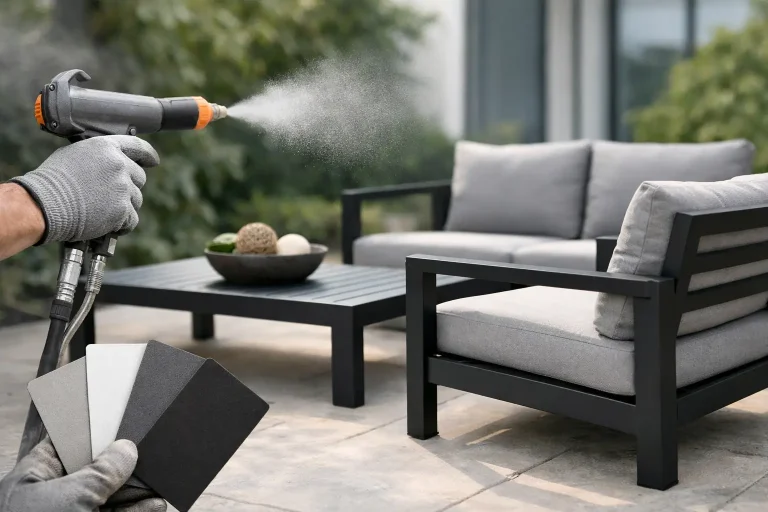
A resin wicker set is only as good as the metal underneath it. Powder-coated aluminum is usually the preferred frame material for outdoor dining because it keeps weight manageable while resisting corrosion. Steel can feel substantial at first, but in humid, coastal, or poolside conditions, it usually creates more risk over time unless it is exceptionally well treated. For commercial projects, aluminum is often the safer specification.
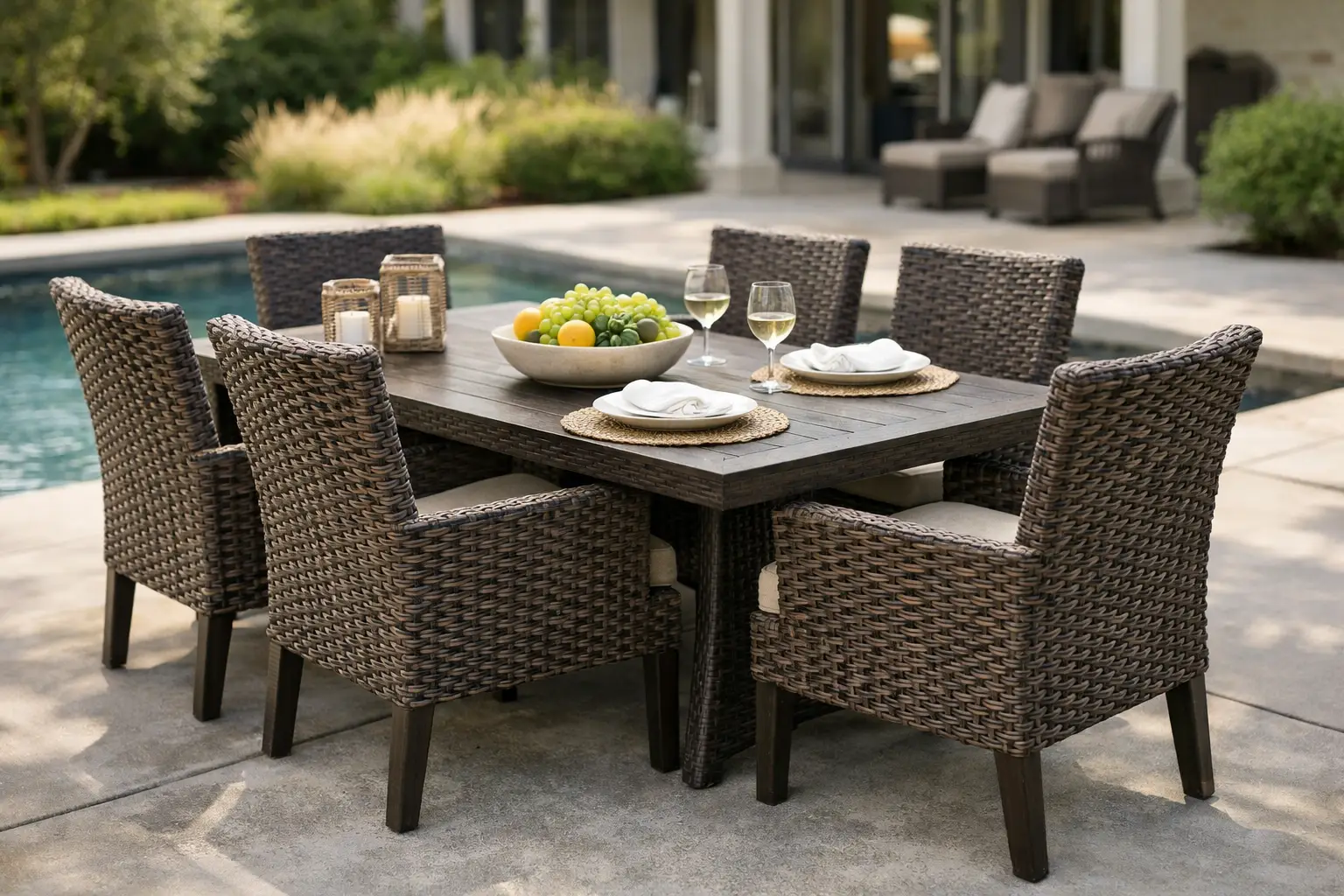
The next issue is the resin itself. High-quality synthetic wicker should feel flexible without seeming soft or thin. If the strand cracks under pressure, shows chalking early, or has inconsistent color across the set, that is a warning sign. A good weave should be tight and even, with no exposed sharp ends and no loose sections around the arms, seat edge, or back corners.
Just as important, the weave must be applied with repeatable quality control. In large projects, consistency across units is not cosmetic – it affects installation quality and the finished visual standard of the property. If one chair sits higher, one weave runs looser, or one table base arrives with a slightly different tone, the entire dining layout can look pieced together.
How resin wicker performs in real outdoor use
Resin wicker earns its place because it is relatively forgiving in outdoor environments. It handles sun, temperature changes, and light moisture better than natural wicker, and it gives buyers a wide range of silhouettes, from casual resort dining to more tailored contemporary looks.
That said, not every setting asks the same thing from the furniture. A six-seat dining set for a private covered terrace has different demands than a 40-table restaurant fit-out or a beachfront hospitality project. In lighter-use applications, design flexibility may lead the buying decision. In commercial settings, cleanability, structural integrity, stacking potential, and replacement planning tend to matter more.
Comfort is another trade-off that deserves a closer look. Resin wicker chairs can be comfortable even without heavy cushions, especially when the seat pitch and back angle are engineered correctly. That can be an advantage in food-and-beverage spaces where operators want faster turnover, simpler maintenance, and less fabric exposure. But if the chairs are too upright or the arm height interferes with table clearance, the set may photograph well and still perform poorly in service.
Tabletop material also changes the user experience. Some resin wicker dining sets include glass tops, which create a clean finished surface and help level out woven bases. Glass can work well in sheltered environments, but in high-wind areas or highly active hospitality use, other tops may be more practical. Ceramic, sintered stone, or compact laminate often make more sense when buyers need higher impact resistance and easier daily upkeep.
What separates residential-grade from contract-grade
This is where many reviews become too general. A residential buyer may be satisfied if a set looks good for a few seasons. A developer, hotel operator, or procurement team needs more than that. Contract-grade outdoor furniture is not just stronger – it is built for repeat use, repeat cleaning, and repeat handling.
Look closely at joinery and load-bearing points. Dining chairs are stressed at the front legs, seat frame, arm junctions, and back connection. If those areas feel flexible in a showroom sample, they will not improve once the furniture enters service. Weld quality, frame gauge, and leveling matter more than decorative detail.
Finish durability matters too. The best sets maintain a stable appearance across UV exposure and routine cleaning. Inferior resin can fade unevenly, while low-grade powder coating may chip near contact points or foot caps. These are not minor visual issues in hospitality environments. They turn into maintenance costs, guest-facing wear, and earlier replacement cycles.
Specification support is often the clearest dividing line. Contract buyers need dimensions they can trust, material details they can approve, and finish options that align with the wider scheme. They also need confidence that the set can be reproduced at scale. A supplier with in-house design support, mock-up capability, and manufacturing oversight reduces risk long before the furniture ships.
A practical resin wicker dining set review checklist
When reviewing any resin wicker dining set for project use, it helps to look at the furniture the way operations teams will. Start with frame material and coating, then inspect the weave tension and edge finishing. Sit in the chair, move it, and check for racking or wobble. Measure arm clearance against the table apron. Confirm whether cushions, if included, use outdoor-rated foam and removable covers.
Then assess the set in a layout, not as a single hero piece. Can service staff move around it easily? Does the footprint work for the required seat count? Does the visual weight fit the property concept? A compact woven chair may suit a rooftop dining plan where space efficiency matters, while a deeper, more sculptural chair may be better for destination dining where dwell time is longer.
Lead time and replenishment planning should be part of the review, not an afterthought. Many outdoor furniture problems are procurement problems in disguise. A beautiful set with unreliable availability is a risk on phased developments, multi-site rollouts, or properties that expect future expansion. Operational capacity matters as much as product styling.
Where resin wicker works best – and where it may not
Resin wicker is especially effective in projects that want a softer, more approachable outdoor look without giving up weather resistance. It fits villa terraces, resort dining zones, casual hotel restaurants, poolside cafes, and mixed-use residential amenities. It can bridge traditional and modern design languages depending on weave profile, frame shape, and cushion treatment.
Still, it is not the answer for every concept. In very sharp architectural schemes, a fully woven dining set can sometimes read too relaxed unless it is paired with cleaner-lined frames and tailored proportions. In extremely exposed sites, buyers may prefer simpler hard-surface materials that are easier to wash down and inspect. And in some luxury projects, resin wicker works best as part of a broader material mix rather than the only outdoor dining expression.
That is why specification should stay project-led. The right question is not whether resin wicker is good or bad. It is whether the specific set matches the use case, climate, maintenance plan, and brand standard of the property.
Final assessment for serious buyers
A strong resin wicker dining set review comes down to disciplined evaluation, not trend appeal. The best options combine an aluminum structure, well-controlled synthetic weave, commercial-ready dimensions, and supply consistency that supports real project timelines. They deliver the relaxed visual texture many outdoor schemes need while still meeting the demands of repeated use.
For buyers managing outdoor dining at scale, the safest path is to treat resin wicker as a performance category, not just a style category. Ask how it is built, how it is tested, how it will be replenished, and how it will look after a full season of service. That is the level of review that protects both the design intent and the operating budget.
When the specification is right, resin wicker does its job quietly – it supports the layout, holds up in service, and helps the space feel finished without creating extra work later.