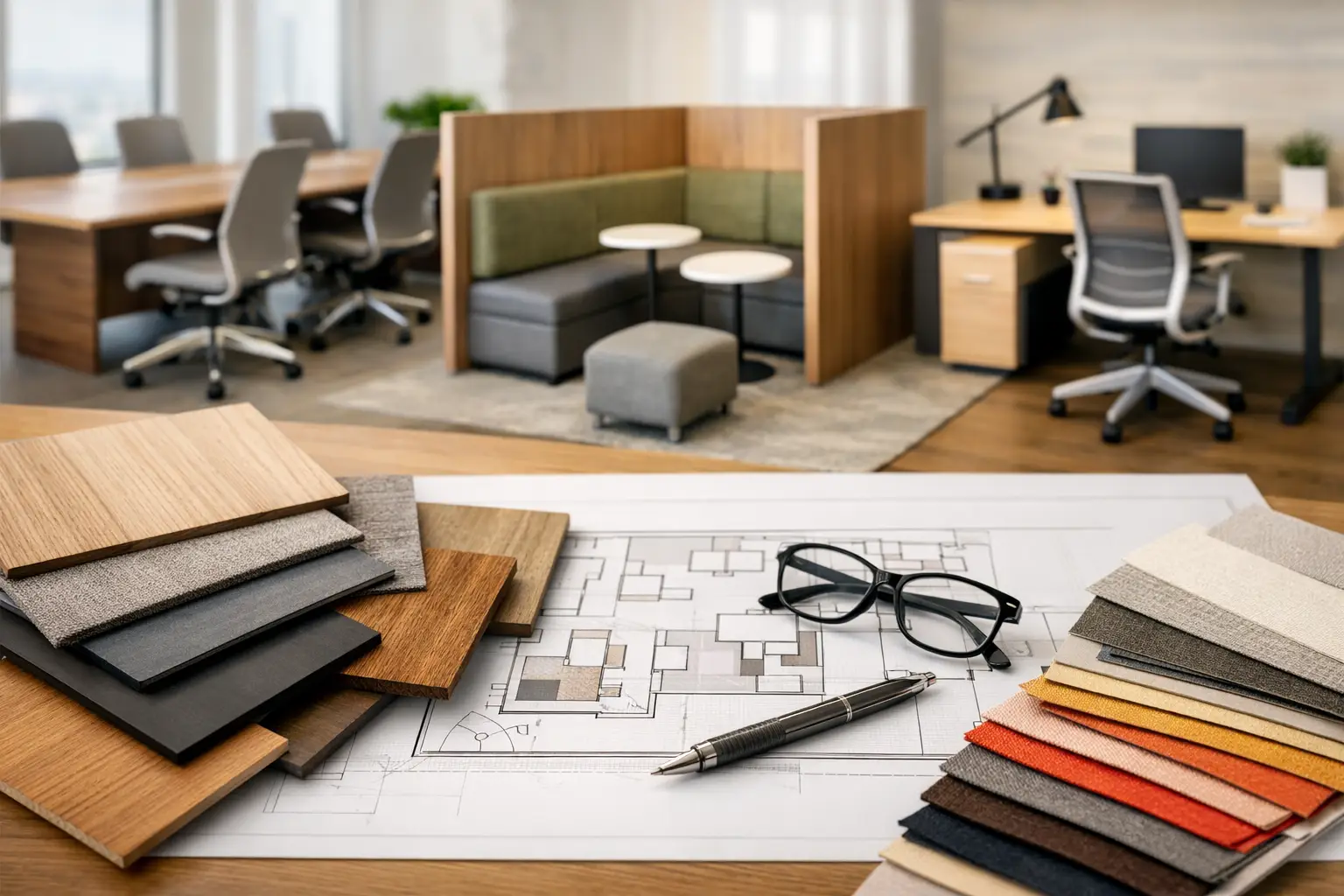
Commercial Furniture Customization Options
A pool deck that looks right in a rendering can fail fast on site if the furniture was specified from a standard catalog without enough adjustment. Seat heights miss the dining table, frame finishes fight the facade, cushions fade under intense sun, and replacement planning becomes an afterthought. That is why commercial furniture customization options matter so much for outdoor projects where design intent, heavy use, and operating conditions all have to align.
For designers, developers, hotel operators, and procurement teams, customization is not about making furniture look different for the sake of it. It is about controlling performance, lead times, brand consistency, and installation outcomes across villas, restaurants, resorts, rooftops, and multi-site commercial properties. The right supplier helps you shape the product to the project, not force the project to work around fixed specifications.
What commercial furniture customization options actually cover
In commercial outdoor furnishing, customization usually starts with appearance but quickly moves into specification control. Most buyers first think about frame color, fabric selection, and cushion details. Those matter, but they are only part of the decision.
A serious customization program can include dimensions, material combinations, weave patterns, tabletop surfaces, foam density, branding details, and packaging requirements. It can also extend to project services such as 3D drawings, mock-up approvals, and sample reviews so stakeholders can verify the result before full production begins.
That broader view is especially important in contract and hospitality work. A lounge chair for a hotel pool has different demands than one for a private terrace, even if they look similar at first glance. The commercial requirement is not just visual alignment. It is repeated-use durability, serviceability, and the ability to deliver the same standard at scale.
Start with the product category, not the finish card
Customization works best when it follows the function of the space. Lounge seating, dining furniture, poolside pieces, shade solutions, and accessories all solve different operational problems, so the right options vary by category.
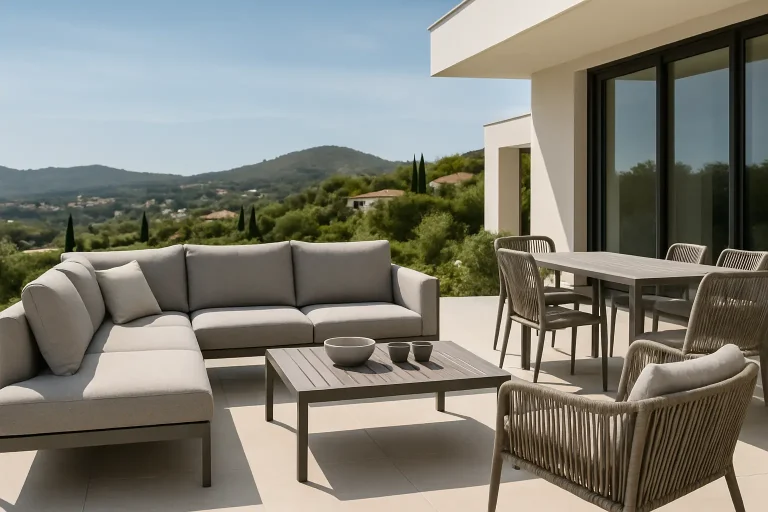
For lounge collections, comfort and silhouette usually lead the conversation. Designers may want deeper seating, slimmer arms, lower profiles, or modular formats that fit irregular footprints. In hospitality settings, cushion construction also matters because a beautiful seat that loses shape after one season creates a replacement cycle nobody wants.
Dining furniture tends to be more specification-sensitive. Table height, chair clearance, stackability, and top material all affect service flow. A restaurant terrace may need compact footprints and easy-clean surfaces, while a resort dining venue may prioritize a warmer material mix and more generous spacing.
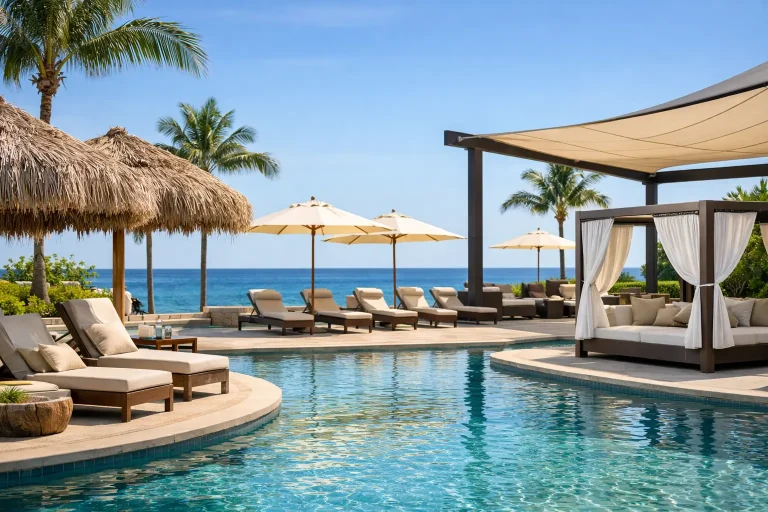
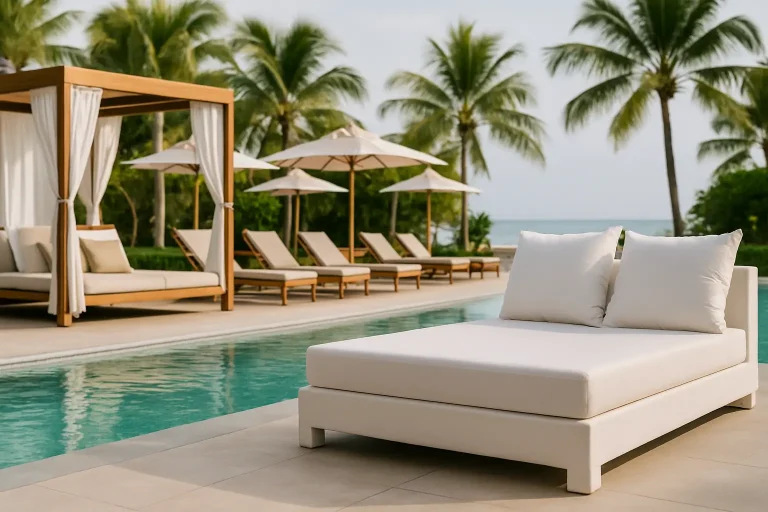
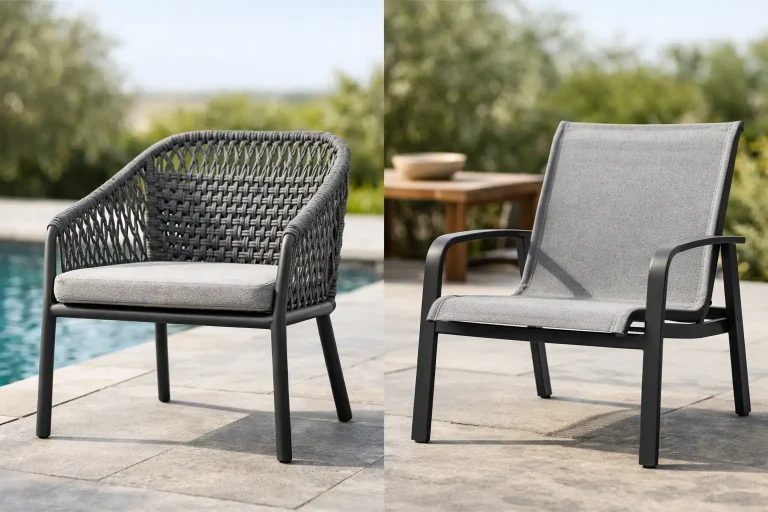
Pool furniture introduces another set of concerns. Adjustable backrests, sling versus cushion construction, quick-dry materials, mobility, and corrosion resistance all move to the front. The project may call for a custom frame finish that matches the architecture, but if the material system is wrong for water exposure and chemical contact, the visual win will not last.
The most valuable commercial furniture customization options
Materials are usually the first place buyers create meaningful differentiation. Powder-coated aluminum, teak, rope, wicker, sling, ceramic, sintered stone, and outdoor upholstery each bring a different balance of appearance, maintenance, weight, and weather resistance. There is no universal best choice. It depends on the site, service model, budget, and expected lifecycle.
Finish customization is often underestimated. In commercial work, color is not just a style decision. It affects brand consistency across properties and can help furniture integrate with flooring, facades, landscaping, and shade structures. Standard finishes may be enough for some projects, but custom powder-coat tones, wood-look effects, or coordinated material palettes can make a large outdoor scheme feel intentional instead of pieced together.
Sizing is another high-value option. Standard dimensions work for many projects, but not all. Banquette-compatible dining heights, narrower lounge widths for rooftop circulation, or custom table sizes for specific guest counts can solve planning issues without compromising the concept. The trade-off is that custom dimensions usually require tighter approval discipline because small changes can affect structure, packing density, and freight efficiency.
Cushions and upholstery deserve more technical attention than they often get. Fabric color and texture are visible, but foam specification, water drainage, UV resistance, and cleanability are just as important. A hospitality operator may prefer removable covers for maintenance control, while a high-end residential developer may prioritize a more tailored upholstered look. Both are valid. The right choice depends on who will maintain the furniture after installation.
Tabletops are another area where customization pays off. Stone-look surfaces, slatted tops, compact laminate, ceramic, or composite options each change the user experience and maintenance profile. A refined top material can elevate the setting, but weight, chipping risk, and cleaning routines need to be considered early.
Why mock-ups and drawings matter in custom work
The more tailored the specification, the more important the approval process becomes. Custom furniture should not move from concept straight to volume production on confidence alone. Drawings, material swatches, and mock-up approvals reduce risk before schedules and budgets are exposed.
For procurement teams, 3D drawings help confirm scale and coordinate product selections across multiple outdoor zones. For designers and developers, they make it easier to assess whether proportions, finishes, and combinations actually support the intended environment. For operators, mock-ups provide a practical checkpoint for comfort, usability, and maintenance questions.
This stage is where many future problems are avoided. A weave may look refined in a sample but read too busy across 200 units. A custom cushion thickness may improve comfort but interfere with table clearance. A powder-coat tone may be perfect indoors and too flat under direct sun. It is better to discover those issues before production than after containers are booked.
Commercial furniture customization options and project scale
Customization becomes more complex as volume increases. A single flagship rooftop can absorb more bespoke detailing than a multi-site hospitality rollout with aggressive opening dates. That does not mean large projects should avoid customization. It means they need a supplier with enough manufacturing control to standardize what must stay consistent while flexing where the design requires it.
This is where vertical integration changes the conversation. When design, manufacturing, quality control, and logistics are coordinated under one operating model, buyers get clearer communication and fewer handoff issues. It is easier to manage finish matching, approval revisions, production sequencing, and delivery windows when the supplier has direct control over the process.
For GCC and international buyers sourcing at scale, that operational discipline matters as much as the product itself. A custom finish has little value if it arrives late. A tailored seating profile is not a win if consistency breaks across batches. Commercial customization only works when execution is as controlled as the design intent.
How to evaluate a supplier beyond the sample set
Many suppliers can offer alternate fabrics and finishes. Fewer can support true project customization with confidence. Buyers should look at manufacturing footprint, category breadth, mock-up capability, lead-time discipline, and the ability to coordinate mixed outdoor packages from lounge to dining to accessories.
Catalog depth is part of the value. A large SKU base gives designers and procurement teams more flexibility to build coherent schemes without fragmenting the vendor list. That matters because every additional supplier adds communication layers, approval steps, and freight complexity.
Project support also matters. If your team needs design consultation, drawings, material matching, bulk purchasing coordination, and white-glove delivery, the supplier should be structured to provide that from the start. Customization is not just a factory feature. It is a project management function.
PNZ Space Global approaches this with a vertically integrated model, a 20,000-square-meter factory, in-house design support, and contract-grade outdoor categories built for commercial and hospitality environments. For buyers managing demanding timelines and high unit counts, that kind of control reduces friction where it counts most.
Getting the specification right the first time
The strongest custom outcomes usually come from a simple discipline: define the performance requirements before debating the decorative details. Start with site exposure, usage intensity, maintenance expectations, target lifespan, and budget range. Then move into dimensions, materials, finishes, and upholstery.
That order helps teams make better trade-offs. If the project needs fast turnarounds across multiple properties, a semi-custom approach using standard frames with approved finish and fabric options may be smarter than fully bespoke development. If the site is a signature resort launch, custom proportions and premium material combinations may justify the added approval cycle.
Commercial outdoor furniture is expected to do more than fill space. It has to support the brand, the guest experience, and the daily operation of the property. The best customization choices are the ones that still make sense a year after installation, when the furniture is being used hard and judged on performance rather than presentation.