Sunbrella vs Olefin Outdoor Cushions
Specify the wrong cushion fabric on a pool deck or rooftop lounge, and the problem shows up fast – fading, mildew, flattened seats, or replacement cycles that arrive far too early. When clients ask about sunbrella vs olefin outdoor cushions, they are usually not asking for a marketing answer. They want to know which fabric protects the budget, holds the design intent, and performs in the actual conditions of the project.
For commercial terraces, hospitality seating groups, multifamily amenity decks, and high-use residential installations, this decision is less about brand familiarity and more about lifecycle value. Both fabrics are widely used outdoors. Both can perform well. The right choice depends on UV exposure, moisture, cleaning expectations, guest traffic, and the level of finish the project demands.
Sunbrella vs olefin outdoor cushions: the real difference
At a high level, Sunbrella is an acrylic performance fabric engineered for long-term outdoor exposure, color retention, and a more refined hand. Olefin is a polypropylene-based fabric known for value, strong moisture resistance, and practical durability. That sounds simple, but in specification work, the differences become more meaningful.
Sunbrella is often selected when appearance retention matters as much as physical durability. In hospitality and design-led residential projects, it is favored for its softer feel, broad color offering, and reputation for resisting fading over time. It tends to support a more elevated finish, especially in premium lounge seating and dining cushions where the fabric is expected to stay visually sharp through heavy sun exposure.
Olefin earns attention for a different reason. It is cost-efficient, resistant to moisture, and often a smart fit for projects that need scale, speed, and controlled spending. In many outdoor applications, olefin delivers dependable performance without pushing the budget into premium territory. That makes it attractive for large procurement programs, secondary seating zones, and projects where replacement planning is part of the operating model.
Fade resistance and appearance retention
If the cushions will live in direct sun for long stretches, Sunbrella usually has the edge. Its color performance is one of the main reasons designers and procurement teams continue to specify it for exposed environments. On open patios, resort decks, and rooftops with minimal shade, that added fade resistance can preserve the look of the installation much longer.
Olefin also performs well outdoors, especially compared with lower-grade fabrics, but it is typically seen as a step below Sunbrella in long-term color retention. That does not mean it fades quickly in every setting. In partially shaded areas, covered terraces, or lower-exposure residential use, olefin may hold its appearance very well and deliver a strong return on cost.
This is where project context matters. A boutique hotel with a highly visible poolscape may value visual consistency enough to justify the premium. A multifamily developer furnishing several amenity zones may decide olefin provides the better balance across the full site package.
Water, mildew, and poolside performance
Both fabrics are outdoor-capable, but they behave differently in moisture-heavy environments. Olefin is inherently hydrophobic, which means it resists water absorption well. For poolside settings, splash zones, and humid climates, that can be a real advantage. Faster drying can support better day-to-day usability and reduce discomfort for guests or residents.
Sunbrella also performs strongly around moisture and mildew when paired with the right cushion construction, quick-dry foam, and breathable design. In practice, fabric choice alone does not determine success. The full cushion build matters – the foam core, mesh bottoms, venting, seam quality, and how water is allowed to escape.
For specifiers, that means the fabric conversation should never be isolated from product engineering. A well-built olefin cushion can outperform a poorly constructed premium cushion. Likewise, a contract-grade Sunbrella cushion system can deliver excellent results in demanding wet environments when the internal materials are specified correctly.
Feel, finish, and design positioning
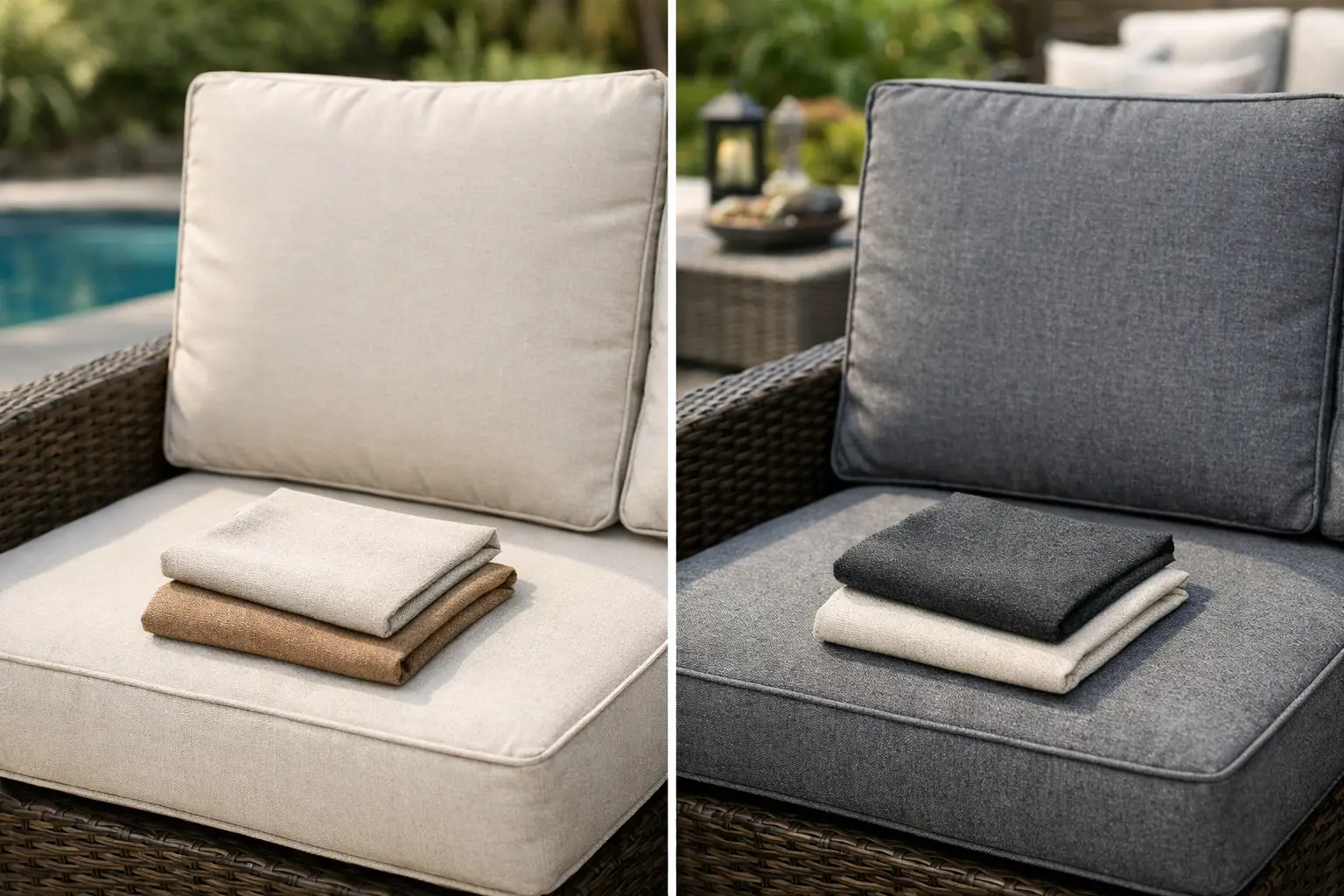
Sunbrella generally feels softer and more tailored, which is part of why it is frequently used in higher-end outdoor collections. If the goal is to make exterior spaces feel closer to indoor lounges – something many hospitality and luxury residential projects now prioritize – that tactile quality matters. Guests notice it. So do clients comparing samples side by side.
Olefin can look clean and attractive, but it may feel more utilitarian depending on the weave and grade. That is not always a drawback. In casual dining terraces, family-use patios, or projects where function leads the brief, a more practical fabric can be the right call. The question is not which one feels better in abstract terms. The question is which one fits the positioning of the space.
For designers working across multiple zones, a mixed approach often makes sense. Premium focal areas can use Sunbrella, while supporting seating areas use olefin to control cost without compromising overall durability.
Cleaning, maintenance, and operating reality
Maintenance teams care less about fabric reputation and more about what happens after spills, sunscreen, food service, and frequent turnover. Sunbrella is well known for cleanability, and that matters in hospitality, food and beverage settings, and high-use family environments. When stains are handled promptly, it tends to maintain appearance well over time.
Olefin is also relatively easy to maintain and performs especially well against moisture-related issues. However, performance can vary by fabric quality, weave, and finish. In procurement, that is why broad labels are not enough. Asking for fabric specifications, cleaning guidance, abrasion performance, and sample approvals is part of protecting the project.
For commercial buyers, replacement cost is only one part of the equation. Labor, operational downtime, and visual inconsistency also carry cost. A cushion that lasts longer or cleans more predictably may offer better value even if the initial unit cost is higher.
Cost and procurement strategy
This is often where the decision gets made. Sunbrella usually costs more. Olefin usually costs less. But the smarter comparison is not price per cushion. It is total cost over the expected service life of the installation.
If a project requires long-term brand presentation, high UV stability, and a premium guest-facing finish, Sunbrella may justify its higher upfront cost. If the installation is large, budget-sensitive, or designed around periodic refresh cycles, olefin may be the stronger procurement choice.
Large-scale buyers should also consider where the cushions are going. Not every zone needs the same fabric tier. Pool cabanas, rooftop lounges, restaurant banquettes, villa terraces, and public seating areas experience different wear patterns. Segmenting fabric choices by zone can improve both budget efficiency and performance.
This is where a vertically integrated supplier adds value. When design support, mock-up approvals, material options, and manufacturing control sit under one roof, it becomes easier to align cushion fabric with each use case instead of forcing a single answer across the whole project.
Which fabric is better for your project?
There is no universal winner in sunbrella vs olefin outdoor cushions. There is only the better fit for the conditions, budget, and design standard you are managing.
Choose Sunbrella when the project has heavy sun exposure, premium design expectations, and a longer replacement horizon. It is especially well suited to hospitality lounges, luxury residential outdoor seating, and showcase environments where texture and color retention influence the client experience.
Choose olefin when value efficiency is critical, moisture resistance is a priority, and the project needs dependable outdoor performance at scale. It is often a strong choice for multifamily developments, secondary seating areas, and broader procurement packages where durability matters but premium fabric spend needs to stay controlled.
In many cases, the best answer is a specification strategy rather than a single fabric decision. The right outdoor program balances fabric performance, cushion construction, aesthetic goals, and replacement planning. That is how procurement teams reduce risk and keep outdoor spaces looking intentional long after installation.
If you are specifying cushions for a single terrace, a resort rollout, or a multi-site commercial package, ask for real samples, compare the hand and weave in person, and evaluate the full cushion build – not just the fabric name. The strongest outdoor environments are rarely the result of one premium material. They come from good specification discipline, matched to how the space will actually be used.