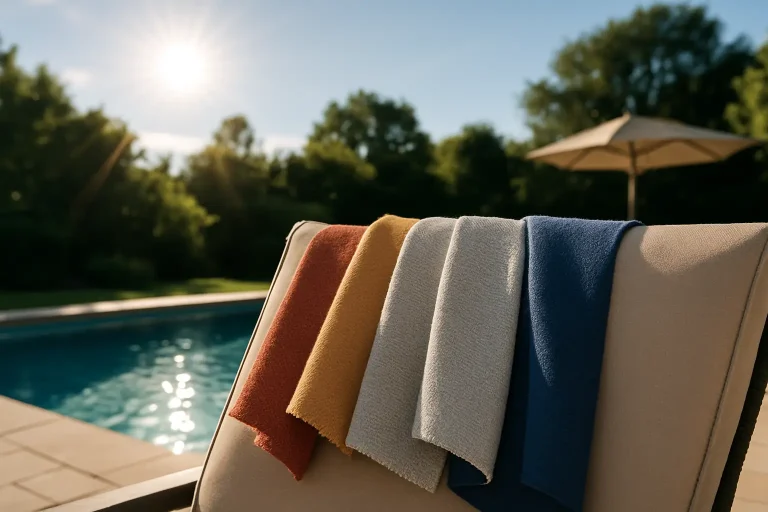
UV Resistant Outdoor Fabric for Resorts
A resort pool deck can look fully specified on paper and still fail in six months once the sun, chlorine, sunscreen, and daily turnover get to work. That is why UV resistant outdoor fabric for resorts is not a styling detail. It is a performance decision that affects appearance, replacement cycles, guest perception, and operating costs across every outdoor zone.
For hospitality teams, the fabric choice shows up fast. Cushions bleach unevenly. straps dry out. Seams weaken. Premium seating starts to read as tired long before the frame reaches end of life. When a property is managing pool loungers, dining chairs, cabanas, daybeds, and rooftop seating at scale, fabric failure is rarely isolated. It becomes a site-wide maintenance issue.
What resorts actually need from outdoor fabric
Resort environments are harsher than most residential patios and more demanding than many commercial terraces. The sun exposure is constant, the cleaning cycles are frequent, and guest use is high. Add humidity, salt air, chlorinated water, spilled beverages, and body oils, and the textile is doing much more than carrying a color story.
A fabric specified for resort use needs to keep its shade under sustained UV exposure, but that is only the starting point. It also has to resist mildew, handle routine cleaning, maintain hand feel, and perform across cushion covers, sling applications, and upholstered lounge pieces. A fabric that looks excellent in a showroom but breaks down under operational use is not contract-grade in any meaningful sense.
This is where procurement teams have to separate decorative outdoor labeling from real project suitability. Many materials are marketed as outdoor capable. Fewer are built for hospitality turnover, aggressive weather, and long installation timelines across multiple seating categories.
How to evaluate UV resistant outdoor fabric for resorts
The most reliable way to evaluate UV resistant outdoor fabric for resorts is to look at performance as a full system, not as a single claim. UV resistance matters, but it should be assessed alongside construction, application, cleaning requirements, and replacement planning.
Colorfastness is the obvious first test. In resort settings, fading is not only a visual issue. It creates mismatch across phased replacements, especially when one group of cushions is exposed more directly than another. Uniformity matters for brand presentation. If a property is balancing poolside loungers, shaded dining seating, and open-sun cabanas, the same fabric can age differently by zone unless it is properly specified.
Fiber type also matters. Solution-dyed acrylics are often preferred for premium outdoor applications because the color runs through the fiber rather than sitting only on the surface. That generally gives better fade resistance over time. Certain high-performance polyesters and coated textiles can also work well depending on the seating type, budget, and expected wear pattern. The right answer depends on whether the fabric is being used for loose cushions, fixed upholstery, slings, umbrellas, or privacy panels.
Then there is cleanability. Resorts cannot spec materials that require delicate treatment or inconsistent maintenance methods. Housekeeping and facilities teams need fabrics that stand up to routine cleaning without losing shape, coating, or finish. If a textile performs under UV but degrades after repeated cleaning cycles, it still creates replacement pressure.
Why application matters more than many buyers expect
One of the most common specification mistakes is assuming the same fabric should run across every outdoor category. It can, in some projects, but often it should not.
Pool loungers may need a breathable sling or mesh that dries quickly and handles constant wet use. Deep seating cushions in a shaded lounge may support a softer woven texture with stronger visual depth. Dining seat pads need a material that resists food stains and frequent turnover. Cabanas and daybeds usually face the highest combined pressure from sun, fabric tension, cosmetics, and guest contact.
That means the best specification is often a coordinated material package rather than a single fabric rolled out everywhere. Visually, the site can still feel unified. Operationally, each zone gets the performance profile it actually needs.
For developers and hospitality operators, this approach reduces hidden costs. Instead of replacing the same underperforming textile in multiple formats, the project is designed around use conditions from the start.
The trade-off between softness, structure, and service life
There is no perfect outdoor fabric that wins every category at once. Softer hand feel can improve guest comfort, especially in luxury lounge settings, but very soft constructions may need closer scrutiny for abrasion, stretching, or moisture behavior. Tighter and more technical fabrics can improve durability, though they may feel less residential.
That trade-off is where project context matters. A five-star resort with design-led cabanas may accept a more premium textile with a higher maintenance standard because the guest experience demands it. A high-volume family resort may prioritize easy-clean performance and replacement consistency over an ultra-soft finish. Neither choice is wrong. The issue is whether the specification matches the operating model.
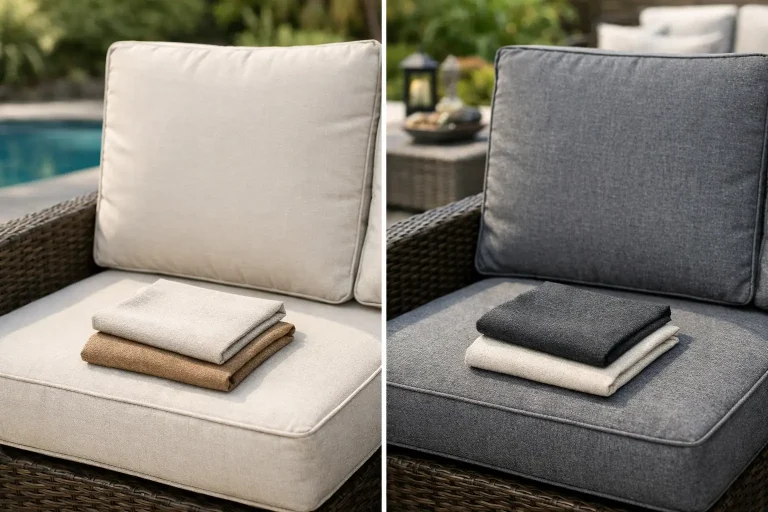
This is also why mock-up approvals matter. Material samples can narrow options, but full-scale review is where teams see how a fabric sits on a frame, reflects light, and interacts with the rest of the outdoor palette. Texture, seam visibility, and cushion recovery are easier to judge in context than from swatches alone.
UV resistant outdoor fabric for resorts and replacement planning
Fabric should be selected with lifecycle in mind, not just opening-day appearance. Resorts that treat textile selection as a capex-only decision often end up with avoidable opex pressure later.
If the fabric fades too quickly, the property may replace only the most visible pieces first. That creates inconsistency across the site. If the textile is too specialized or lacks continuity in supply, exact matches become difficult in the next season. If the chosen material is available only in limited runs, multi-site groups can struggle to maintain standards across properties.
This is where supply chain control becomes part of the specification conversation. Buyers need confidence that materials can be planned, approved, produced, and replenished without guesswork. For hospitality projects moving on opening deadlines, the fabric program has to work within furniture production schedules, freight timing, and installation sequencing.
A vertically integrated supplier brings an advantage here because material selection is tied directly to manufacturing execution. That means fewer disconnects between what is approved in design development and what can actually be built, delivered, and supported after installation.
What procurement teams should ask before approval
Before approving any outdoor textile package, buyers should ask practical questions that go beyond aesthetics. How will the fabric perform in direct sun versus partial shade? Is it intended for cushion covers, upholstery, or sling use? What cleaning methods are recommended for hospitality turnover? How will the fabric respond to sunscreen, chlorine, salt exposure, and regular sanitizing routines? Can replacement quantities be supported without major variation?
It is also worth asking how the fabric integrates with foam, frame design, and construction details. A good textile paired with poor cushion engineering will still disappoint in service. Water management, seam placement, zipper quality, and internal fill all affect the final result.
That is why many large projects benefit from working with one supplier across furniture categories instead of splitting sourcing between multiple vendors. The more integrated the program, the easier it is to control specification quality, visual consistency, and delivery timing.
For resort developments furnishing pool, dining, lounge, and accessory categories together, this integrated approach reduces approval cycles and simplifies accountability. At PNZ Space Global, that process is supported through in-house design consultation, 3D drawings, mock-up approvals, and factory-backed production control, which helps buyers move from concept to installation with fewer variables in play.
Design still matters, but it has to survive the climate
Hospitality buyers are right to care about palette, texture, and brand fit. Guests notice fabric before they notice frame construction. The problem starts when visual decisions are isolated from performance requirements.
The strongest resort specifications do both. They build a clear aesthetic across loungers, dining settings, and shaded retreat spaces while selecting materials that can hold up under the property’s actual conditions. Neutral tones may mask fading better in some settings, while saturated colors can deliver impact if backed by the right fiber construction. Pattern can help disguise wear, but it may complicate phased replacement. Every design move has an operational side.
That is the real standard for UV-resistant outdoor fabric in resort work. It should support the design intent, protect the investment, and reduce friction for the teams maintaining the property every day.
If a fabric looks right at handover but not after one high season, it was never the right fabric. The better choice is the one that keeps performing when the terrace is full, the sun is relentless, and the next guest has no reason to think about what it took to keep the space looking finished.